
Close Menu
    Facebook X (Twitter) Instagram
    SciTechDaily
    • Biology
    • Chemistry
    • Earth
    • Health
    • Physics
    • Science
    • Space
    • Technology
    Facebook X (Twitter) Pinterest YouTube RSS
    SciTechDaily
    Home»Space»“We Can’t Help It.” – Watch NASA’s Official James Webb Space Telescope Mission Trailer
    Space

    “We Can’t Help It.” – Watch NASA’s Official James Webb Space Telescope Mission Trailer

    By NASADecember 21, 20213 Comments2 Mins Read
    Facebook Twitter Pinterest Telegram LinkedIn WhatsApp Email Reddit
    Share
    Facebook Twitter LinkedIn Pinterest Telegram Email Reddit
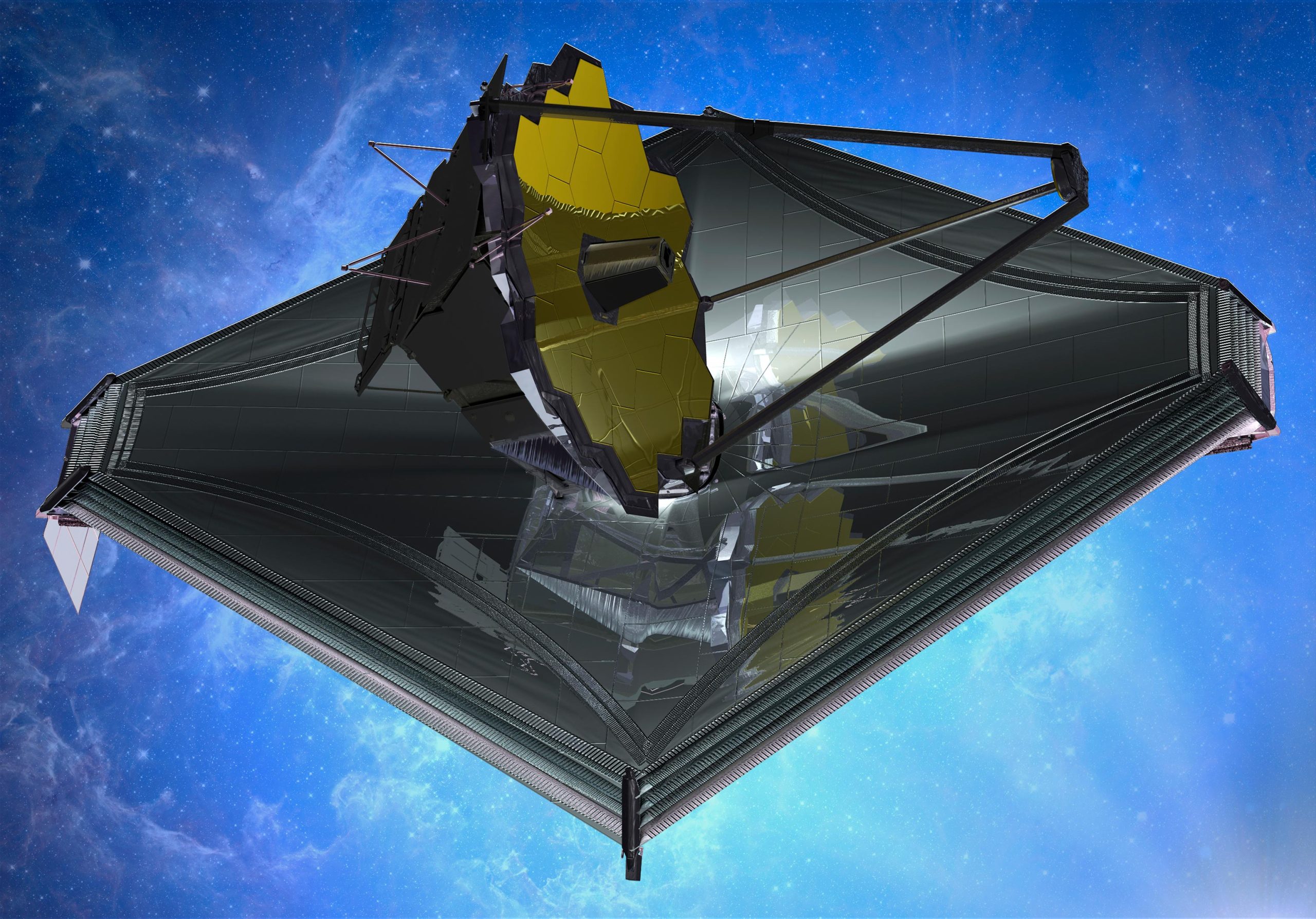
    James Webb Space Telescope Mural
    Artistic mural of the James Webb Space Telescope. Credit: NASA

    We don’t yet know what the James Webb Space Telescope will uncover. Will we get answers? Will we have more questions? One thing’s certain: The story of us is a never-ending quest for knowledge.

    The James Webb Space Telescope (sometimes called JWST or Webb) is a large infrared telescope with a 6.5-meter (21.3-foot) primary mirror. The telescope will be launched on an Ariane 5 rocket from French Guiana on December 24, 2021.

    The Webb telescope will be the premier observatory of the next decade, serving thousands of astronomers worldwide. It will study every phase in the history of our Universe, ranging from the first luminous glows after the Big Bang, to the formation of solar systems capable of supporting life on planets like Earth, to the evolution of our own Solar System.

    The Webb telescope was formerly known as the “Next Generation Space Telescope” (NGST); it was renamed in September 2002 after a former NASA administrator, James Webb.

    Webb is an international collaboration between NASA, ESA (the European Space Agency), and the Canadian Space Agency (CSA). NASA’s Goddard Space Flight Center in Greenbelt, Maryland, is managing the development effort. The main industrial partner is Northrop Grumman; the Space Telescope Science Institute will operate Webb after launch.

    Several innovative technologies have been developed for Webb. These include a primary mirror made of 18 separate segments that unfold and adjust to shape after launch. The mirrors are made of ultra-lightweight beryllium. Webb’s biggest feature is a tennis court sized five-layer sunshield that attenuates heat from the Sun more than a million times. The telescope’s four instruments — cameras and spectrometers — have detectors that are able to record extremely faint signals. One instrument (NIRSpec) has programmable microshutters, which enable observation up to 100 objects simultaneously. Webb also has a cryocooler for cooling the mid-infrared detectors of another instrument (MIRI) to a very cold 7 kelvins (minus 447 Fahrenheit) so they can work.

    Never miss a breakthrough: Join the SciTechDaily newsletter.
    Follow us on Google and Google News.

    Astronomy James Webb Space Telescope NASA
    Share. Facebook Twitter Pinterest LinkedIn Email Reddit

    Related Articles

    The Secret Science Behind Webb’s Mirror Mastery

    Legendary Star’s Smooth Disk Mystifies Astronomers, Challenges Planet Formation Theories

    Cosmic Horror Unveiled: NASA Reveals “Blood-Soaked Eyes” Staring From Deep Space [Video]

    Webb’s “Weird” Discovery: Meet the Galaxy Where Gas Outshines the Stars

    Webb Space Telescope Unveils the Hidden Winds That Forge Stars and Craft Planets

    Webb Telescope Captures Mysterious Gas Jets From Speeding Object in the Outer Solar System

    James Webb Uncovers the Whirling Origins of Planetary Systems

    Webb Telescope’s Encounter With a Time-Bending Supernova: Rewriting Cosmic Rules

    Webb’s Unprecedented Discovery: Potential Missing Link to First Stars in the Universe

    3 Comments

    1. John Branscombe on December 23, 2021 12:17 am

      This mission is the pinnacle of rocket science!
      I also think it may last much longer than the expected lifespan. It was conceived when the shuttle was the only means to service the Hubble. The idea it can never be serviced or repaired may be transient. If we can talk of people to Mars and lunar colonies, then rescue missions to JWST are not an impossibility.

      Reply
    2. EP on December 23, 2021 5:05 am

      Unlikely but I would love to see a refueling mission in the future. It has a docking ring after all.

      Reply
    3. David Crockett on December 27, 2021 2:25 am

      Great accomplishment for NASA and everyone involved in the mission. This will be a great leap forward for optical astronomy. Together with China’s FAST radio telescopic array, a tremendous amount of data should be forthcoming in the years ahead. Too bad China (and even Russia) couldn’t have contributed to this. Politics divides, science unites!.

      Reply
    Leave A Reply Cancel Reply

    • Facebook
    • Twitter
    • Pinterest
    • YouTube

    Don't Miss a Discovery

    Subscribe for the Latest in Science & Tech!

    Trending News

    One of the Universe’s Largest Stars May Be Getting Ready To Explode

    Scientists Discover Enzyme That Could Supercharge Ozempic-Like Weight Loss Drugs

    Popular Sweetener Linked to DNA Damage – “It’s Something You Should Not Be Eating”

    Ancient “Rock” Microbes May Reveal How Complex Life Began

    Researchers Capture Quantum Interference in One of Nature’s Rarest Atoms

    “A Plague Is Upon Us”: The Mass Death That Changed an Ancient City Forever

    Scientists Discover Game-Changing New Way To Treat High Cholesterol

    This Small Change to Your Exercise Routine Could Be the Secret to Living Longer

    Follow SciTechDaily
    • Facebook
    • Twitter
    • YouTube
    • Pinterest
    • Newsletter
    • RSS
    SciTech News
    • Biology News
    • Chemistry News
    • Earth News
    • Health News
    • Physics News
    • Science News
    • Space News
    • Technology News
    Recent Posts
    • Scientists Rethink Extreme Warming After Surprising Ocean Discovery
    • The Surprising Role of Asteroids in the Origin of Life
    • Scientists Raise Concerns Over Newly Recognized Pollutant Found Everywhere in the Air
    • New Study Challenges 40-Year Puzzle About Childhood Body Fat
    • 20-Year Study Finds Daily Multivitamins Don’t Extend Lifespan
    Copyright © 1998 - 2026 SciTechDaily. All Rights Reserved.
    • Science News
    • About
    • Contact
    • Editorial Board
    • Privacy Policy
    • Terms of Use

    Type above and press Enter to search. Press Esc to cancel.