
Close Menu
    Facebook X (Twitter) Instagram
    SciTechDaily
    • Biology
    • Chemistry
    • Earth
    • Health
    • Physics
    • Science
    • Space
    • Technology
    Facebook X (Twitter) Pinterest YouTube RSS
    SciTechDaily
    Home»Space»Webb Space Telescope: Second and Third Layers of Sunshield Fully Tightened
    Space

    Webb Space Telescope: Second and Third Layers of Sunshield Fully Tightened

    By NASAJanuary 3, 20223 Comments2 Mins Read
    Facebook Twitter Pinterest Telegram LinkedIn WhatsApp Email Reddit
    Share
    Facebook Twitter LinkedIn Pinterest Telegram Email Reddit
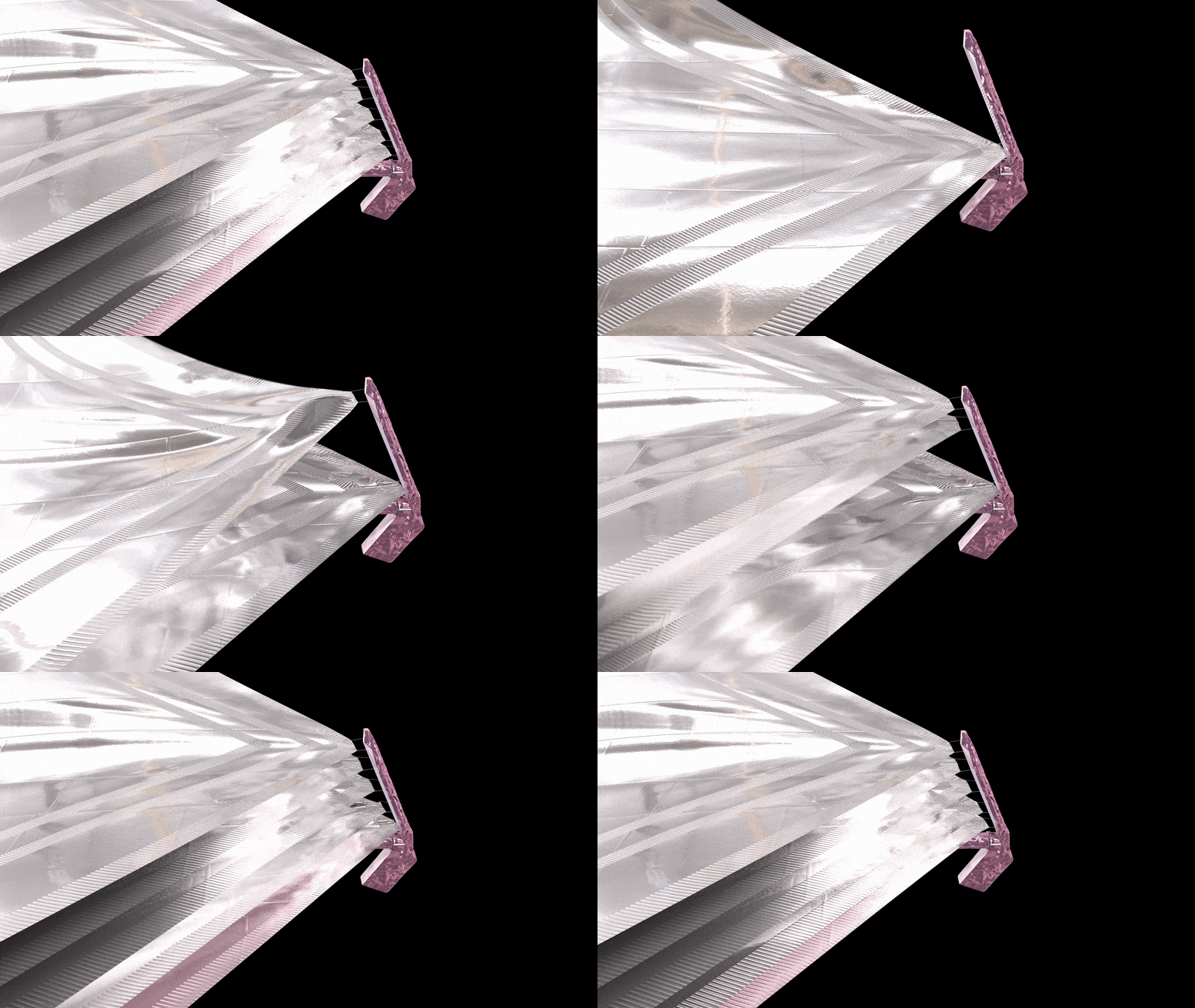
    Webb Sunshield Tensioning
    Webb sunshield tensioning. Credit: NASA’s Goddard Space Flight Center Conceptual Image Lab

    Over five and a half hours, the Webb team achieved tensioning of the first three layers of the observatory’s sunshield, essential for protecting the telescope from solar heat.

    The Webb team has completed tensioning for the first three layers of the observatory’s kite-shaped sunshield, 47 feet across and 70 feet long.

    The first layer – pulled fully taut into its final configuration – was completed mid-afternoon.

    The team began the second layer at 4:09 pm EST today, and the process took 74 minutes. The third layer began at 5:48 pm EST, and the process took 71 minutes. In all, the tensioning process from the first steps this morning until the third layer achieved tension took just over five and a half hours.

    These three layers are the ones closest to the Sun. Tensioning of the final two layers is planned for tomorrow.

    “The membrane tensioning phase of sunshield deployment is especially challenging because there are complex interactions between the structures, the tensioning mechanisms, the cables and the membranes,” said James Cooper, NASA’s Webb sunshield manager, based at Goddard Space Flight Center. “This was the hardest part to test on the ground, so it feels awesome to have everything go so well today. The Northrop and NASA team is doing great work, and we look forward to tensioning the remaining layers.”

    Once fully deployed, the sunshield will protect the telescope from the Sun’s radiation. It will reach a maximum of approximately 383K, approximately 230 degrees F, while keeping the instruments cold at a minimum of approximately 36K or around -394 degrees F.

    Never miss a breakthrough: Join the SciTechDaily newsletter.
    Follow us on Google and Google News.

    James Webb Space Telescope NASA
    Share. Facebook Twitter Pinterest LinkedIn Email Reddit

    Related Articles

    Webb Discovers “Dirty Snowballs” Orbiting a Sun-Like Star 155 Light-Years Away

    Clear Skies, Strange Chemistry: Webb Just Changed What We Know About Sub-Neptunes

    Unveiling Alien Oceans: Webb’s Breakthrough in the Hunt for Life

    Webb Telescope Uncovers Star Birth Struggles in a Magnetic Maze at the Milky Way’s Core

    Cosmic Castaways: Webb Unveils the Flame Nebula’s Smallest “Almost-Stars”

    Webb Captures a Planet’s Final Plunge Into Its Star – And It Wasn’t What Scientists Expected

    Webb Telescope Reveals Hidden Galaxy Behind “Cosmic Tornado”

    NASA’s Webb Telescope Reveals a Never-Ending Cosmic Firestorm at the Center of the Milky Way

    NASA’s Webb Just Found Something Unexpected Beyond Neptune

    3 Comments

    1. Mark on January 4, 2022 2:16 am

      Why are you using Fahrenheit? Pretty poor show for a science and technology news provider.

      Reply
    2. Thee Mann on January 4, 2022 4:42 am

      Mark, You must be a blast at parties…

      Reply
    3. Charles on January 4, 2022 7:57 am

      Fahrenheit is used because the American public is too lazy to adopt the Metric System.

      Reply
    Leave A Reply Cancel Reply

    • Facebook
    • Twitter
    • Pinterest
    • YouTube

    Don't Miss a Discovery

    Subscribe for the Latest in Science & Tech!

    Trending News

    The Universe Is Expanding Too Fast and Scientists Can’t Explain Why

    “Like Liquid Metal”: Scientists Create Strange Shape-Shifting Material

    Early Warning Signals of Esophageal Cancer May Be Hiding in Plain Sight

    Common Blood Pressure Drug Shows Surprising Power Against Deadly Antibiotic-Resistant Superbug

    Scientists Uncover Dangerous Connection Between Serotonin and Heart Valve Disease

    Scientists Discover a “Protector” Protein That Could Help Reverse Hair Loss

    Bone-Strengthening Discovery Could Reverse Osteoporosis

    Scientists Uncover Hidden Trigger Behind Stem Cell Aging

    Follow SciTechDaily
    • Facebook
    • Twitter
    • YouTube
    • Pinterest
    • Newsletter
    • RSS
    SciTech News
    • Biology News
    • Chemistry News
    • Earth News
    • Health News
    • Physics News
    • Science News
    • Space News
    • Technology News
    Recent Posts
    • Scientists Create “Liquid Gears” That Spin Without Touching
    • The Simple Habit That Could Help Prevent Cancer
    • Forgotten Medicinal Plant Shows Promise in Fighting Dangerous Superbugs
    • Millions Take These IBS Drugs, But a New Study Finds Serious Risks
    • 5 Common Myths About Learning a New Language, Debunked
    Copyright © 1998 - 2026 SciTechDaily. All Rights Reserved.
    • Science News
    • About
    • Contact
    • Editorial Board
    • Privacy Policy
    • Terms of Use

    Type above and press Enter to search. Press Esc to cancel.