
Close Menu
    Facebook X (Twitter) Instagram
    SciTechDaily
    • Biology
    • Chemistry
    • Earth
    • Health
    • Physics
    • Science
    • Space
    • Technology
    Facebook X (Twitter) Pinterest YouTube RSS
    SciTechDaily
    Home»Biology»What You Learned About Zoonotic Disease Spillover Risk During COVID-19 Pandemic May Be Wrong
    Biology

    What You Learned About Zoonotic Disease Spillover Risk During COVID-19 Pandemic May Be Wrong

    By American Institute of Biological SciencesSeptember 16, 20221 Comment3 Mins Read
    Facebook Twitter Pinterest Telegram LinkedIn WhatsApp Email Reddit
    Share
    Facebook Twitter LinkedIn Pinterest Telegram Email Reddit
    Human Infectious Disease Threats Illustration
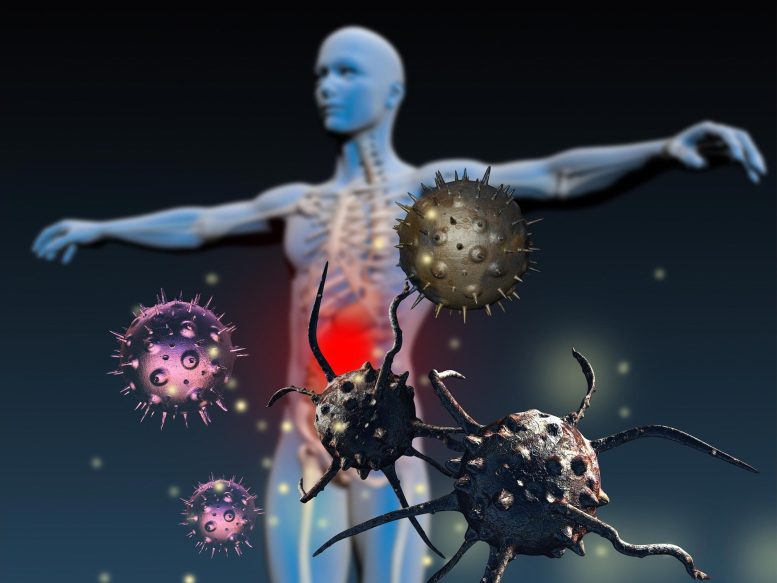
    Research reveals inconsistencies in how media and scientific literature communicate the link between land use changes and zoonotic disease risk, highlighting the need for nuanced science communication.

    Disease Spillover Risk Was Poorly Communicated and Oversimplified During COVID-19 Pandemic

    COVID-19 has been the first pandemic that has taken place alongside the interconnectivity of the Internet and pervasive social media. As a consequence, the spread of ideas and information about the disease has been unprecedented—but not always accurate. Among the widely circulated headlines was one about the relationship between land change and the spillover of diseases from wildlife to humans.

    Writing in the journal BioScience on September 16, Andre D. Mader of the Institute for Global Environmental Strategies and colleagues survey primary and secondary literature, as well as webpage content on the subject of land change and zoonotic disease risk. Based on the troubling patterns picked up from this literature and media coverage, Mader and colleagues describe what amounts to a case study in improper science communication and its possible consequences.

    According to the researchers, media messaging throughout the pandemic consistently described direct causality between zoonotic disease spread and land use change. This was despite the fact that only 53% of the surveyed peer-reviewed literature made this association. In the report the authors delve into theoretical scenarios that would demonstrate the difficulty of tracing the real risk of zoonotic spillover, emphasizing that the “complexity of pathogen responses to land change cannot be reduced to one-size-fits-all proclamations.”

    Overstating the Evidence in Secondary Sources and Webpages

    Furthermore, the authors discovered that as the literature moves from primary research to review articles and commentaries, and finally to webpages, the “overstating of the evidence” continually increases. In fact, 78% of secondary papers imply the land use–zoonotic spillover association, and all but one of the sampled webpages make this association. In addition, the researchers also noted that secondary sources and web pages frequently failed to mention the uncertainty associated with their conclusions.

    There are significant potential consequences of simplistic messaging and a lack of proper communication regarding zoonotic spillover. It can erode credibility, neglect the local community’s specific needs when it comes to policymaking, and detract attention from other factors that can lead to zoonotic spillover, say Mader and colleagues. They recommend more accurate, nuanced, and explanatory dissemination of the studies on zoonotic spillover risk, arguing that such an approach would also benefit science more broadly.

    As Mader and colleagues conclude, “if the goal of science communication is to improve understanding, it must strike a balance: sufficient simplicity to be grasped by as broad an audience as possible but sufficient nuance to capture the complexity of an issue and contribute meaningfully to the discussion around it, especially when it goes viral.”

    Reference: “Messaging Should Reflect the Nuanced Relationship between Land Change and Zoonotic Disease Risk” by André D Mader, Neil A Waters, Erin C Kawazu, Michelle Marvier, Noémie Monnin and Daniel J Salkeld, 16 September 2022, BioScience.
    DOI: 10.1093/biosci/biac075

    Never miss a breakthrough: Join the SciTechDaily newsletter.
    Follow us on Google and Google News.

    COVID-19 Infectious Diseases Popular Public Health Virology
    Share. Facebook Twitter Pinterest LinkedIn Email Reddit

    Related Articles

    Swarming Secrets: Bat ‘Nightclubs’ Hold the Key to Preventing Future Viral Outbreaks

    Novel Coronavirus Discovered in British Bats – Related to the Virus That Causes COVID-19

    Researchers Examined What COVID-19 Does to Taste Bud Cells – Here’s What They Found

    Genetic Comparison of 24 Coronaviruses – Including SARS-CoV-2 Viruses From the U.S. and China – Yields Clues to COVID-19 Treatments

    Common Molecular Feature of Antibodies That Neutralize SARS-CoV-2 Discovered, Boosting COVID-19 Vaccine Prospects

    Far-UVC Light Safely Kills 99.9% of Airborne Coronaviruses

    How COVID-19 Kills: New Study Explains the Mechanisms of the New Coronavirus

    Vitamin D Linked to Low Coronavirus Death Rate

    Different Groups of Bats Have Their Own Unique Strains of Coronavirus – They Have Been Evolving Together for Millions of Years

    1 Comment

    1. FB36 on September 16, 2022 12:43 pm

      The root cause of pretty much ALL (past/current/future) pandemics is the contact w/ wild animals (which carry absolutely massive numbers of viruses, diseases, parasites)!
      & the real best/effective solution would be a global law/agreement that absolutely bans sale/trade/hunting/eating/petting of ALL wild animals (starting by a certain future date like 10 or 20 years ahead (so all countries can prepare themselves))!

      Reply
    Leave A Reply Cancel Reply

    • Facebook
    • Twitter
    • Pinterest
    • YouTube

    Don't Miss a Discovery

    Subscribe for the Latest in Science & Tech!

    Trending News

    Beyond Pain Relief: Scientists Discover a Protein That Could Stop Osteoarthritis in Its Tracks

    Scientists Discover Why Alcohol Prevents the Liver From Healing, Even After You Quit

    Scientists Stunned As Volcano Removes Methane From the Air

    Scientists Discover Signs Africa May Be Splitting Apart Beneath Zambia

    Common Blood Pressure Drug Supercharges Cancer Treatment in Surprising New Study

    540-Million-Year-Old Fossils Reveal a Huge Surprise About Early Life on Earth

    Scientists Reverse Stroke Damage Using Stem Cells in Breakthrough Study

    Eating One Egg a Day Could Cut Alzheimer’s Risk by 27%

    Follow SciTechDaily
    • Facebook
    • Twitter
    • YouTube
    • Pinterest
    • Newsletter
    • RSS
    SciTech News
    • Biology News
    • Chemistry News
    • Earth News
    • Health News
    • Physics News
    • Science News
    • Space News
    • Technology News
    Recent Posts
    • Common Cleaning Chemical Could Triple Your Risk of a Dangerous Liver Disease
    • New Brain “Bypass” Technology Could Transform Treatment for Neurological Disorders
    • Physicists Observe Strange Quantum Rotation Effect That Defies Intuition
    • Europe Was Never a Giant Dark Forest, New 20-Million-Year Study Reveals
    • Scientists Discover Bizarre 100-Million-Year-Old Insect With Giant Claws
    Copyright © 1998 - 2026 SciTechDaily. All Rights Reserved.
    • Science News
    • About
    • Contact
    • Editorial Board
    • Privacy Policy
    • Terms of Use

    Type above and press Enter to search. Press Esc to cancel.