
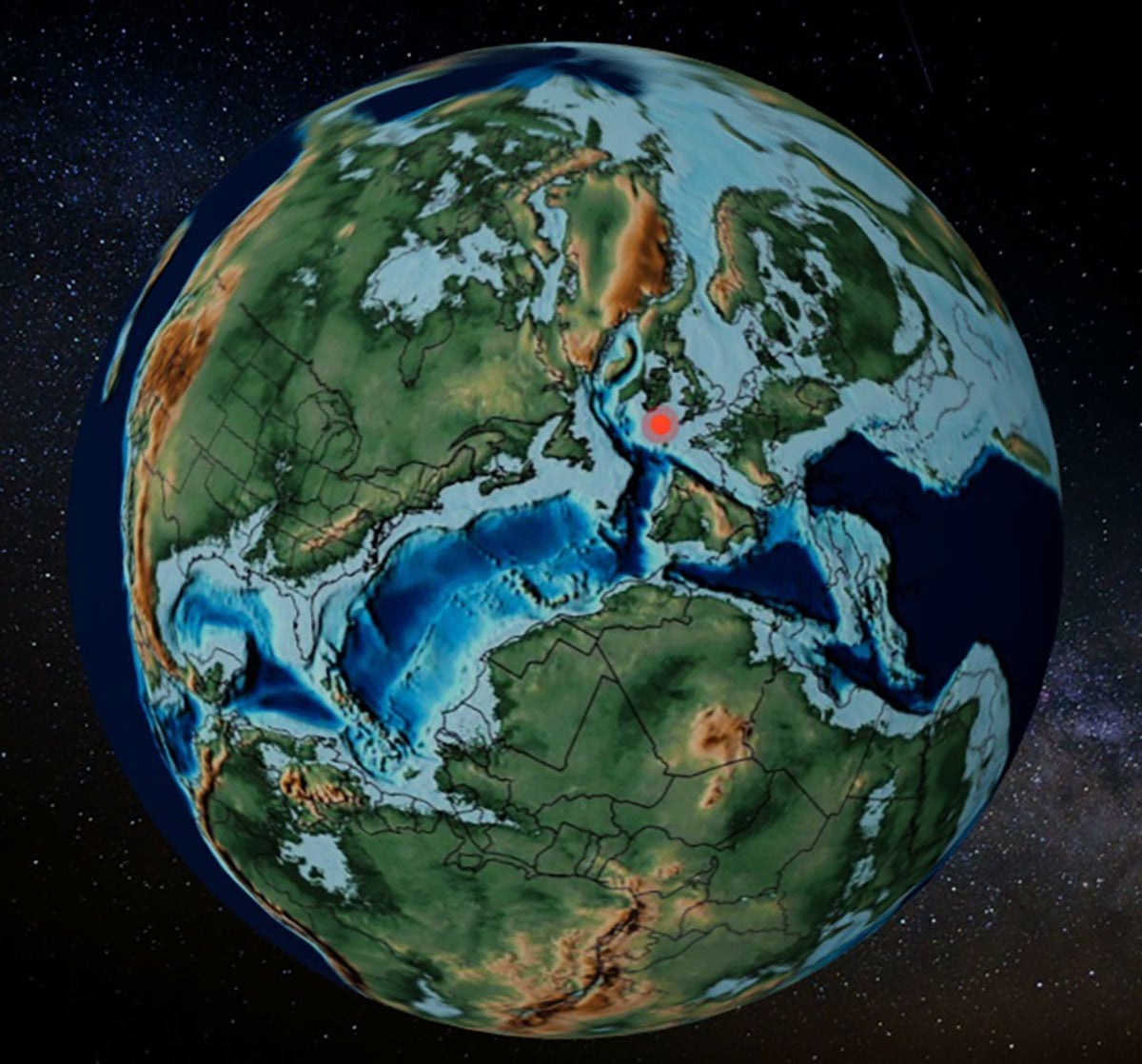
Researchers have created an open-access interface that turns present-day locations into ancient coordinates with near-desktop-level accuracy.
A fossil’s modern coordinates reveal where it was found, but not where that location sat millions of years ago as tectonic plates shifted across the planet. Reconstructing that ancient position is a demanding task in paleontology and related fields, especially when researchers must process large datasets with specialized computational tools.
The BIOST3 Research Group at the University of Barcelona has developed an open-access web interface that makes these reconstructions easier to perform. Called the Paleocoordinates Calculator (PACA), the tool gives researchers, educators and members of the public access to high-quality maps of Earth’s past geography without requiring advanced technical expertise.
The tool is described in Scientific Reports by Noa Scholz-Murcia, Alejandro Rodríguez-Mena, Víctor Madarnás-Gómez and Antonio Monleón-Getino of the Department of Genetics, Microbiology and Statistics at the University of Barcelona’s Faculty of Biology.
PACA removes the coding barrier
The effort to map Earth and understand how its surface has changed has driven major advances in cartography. Yet conventional software for reconstructing tectonic plates often demands programming knowledge or experience with complicated desktop programs.
PACA converts present-day locations into paleocoordinates using current models of plate tectonics, allowing users to explore where places were positioned at different points in geological history.
“This innovative interface removes methodological barriers: you simply upload a CSV file containing the current coordinates and the geological age of the find to obtain the exact paleocoordinates in seconds,” explains Professor Antonio Monleón-Getino, head of the BIOST3 Research Group and member of the Bioinformatics Barcelona (BIB) platform.
Following open science principles, the researchers made both PACA’s source code and its 3D conversion scripts publicly available through the Zenodo repository. The interface can process large volumes of information while supporting transparency and reproducibility in Earth science research. It allows users to trace locations through geological time regardless of their computing experience.
Five models expose tectonic uncertainty
PACA’s mathematical framework uses the R package palaeoverse, which connects directly with the GPlates web service. “The tool allows users to compare their data simultaneously with up to five global plate models (GPM) widely used by the scientific community: PALEOMAP, GOLONKA, MERDITH2021, TorsvikCocks2017 and MATTHEWS2016_pmag_ref,” explains Noa Scholz-Murcia, first author of the article and a member of the Biodiversity Research Institute (IRBio) at the UB.
Beyond calculating ancient coordinates, PACA automatically compares the results produced by different models. It measures values such as the paleolatitudinal range and the greatest geographic distance in kilometers between model predictions, giving researchers an immediate estimate of tectonic uncertainty for a particular area.
Users can export optimized tables for statistical analysis and view the reconstructed points through an interactive 3D display built with React and Blender. The viewer places the calculated locations directly onto paleogeographic maps from the PALEOMAP Project, created by geographer Christopher Scotese and adapted to the International Chronostratigraphic Table.
Web access preserves reconstruction accuracy
Does moving the process from desktop software to a web interface reduce accuracy? “Absolutely not,” says the BIOST3 team, which tested PACA through cross-validation using 142 reconstructions from locations around the world.
The automated results were almost mathematically identical to those produced through the conventional GPlates workflow. PACA showed an average spatial error of less than 17 meters, a negligible difference at the scale of the planet, along with a concordance correlation coefficient (CCC) of 1.000 for every model and no evidence of systematic processing bias.
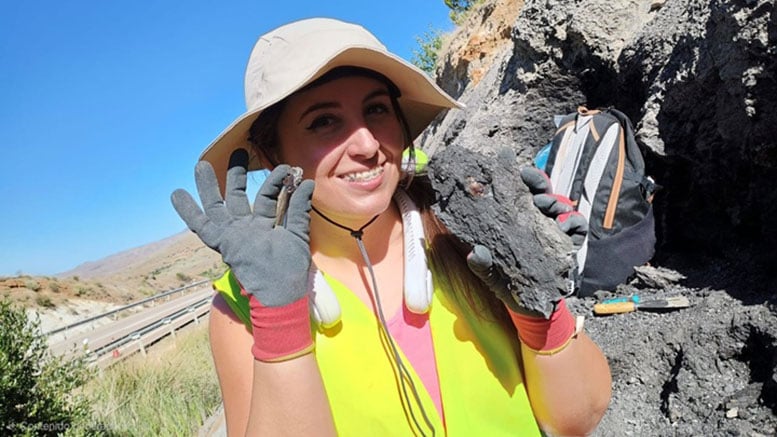
PACA was created through the research project “Cretaceous Resin Interval. Abiotic and biotic causes and their paleoecological implications (CREI),” funded by the Spanish Ministry of Science, Innovation and Universities. Antonio Monleón-Getino and Xavier Delclòs of the Faculty of Earth Sciences and IRBio coordinate the project, which investigates the enormous production of resin during part of the Cretaceous period that formed many of the fossil resin deposits now known as amber.
Reference: “A user-friendly online tool for paleocoordinate calculation and 3D visualization” by Noa Scholz-Murcia, Alejandro Rodríguez-Mena, Víctor Madarnás-Gómez and Antonio Monleón-Getino, 15 June 2026, Scientific Reports.
DOI: 10.1038/s41598-026-46309-z
This work is a contribution to the project PID2022-137316NB-C21, funded by MICIU/AEI/https://doi.org/10.13039/501100011033 and by ERDF/EU.
Never miss a breakthrough: Join the SciTechDaily newsletter.
Follow us on Google and Google News.