
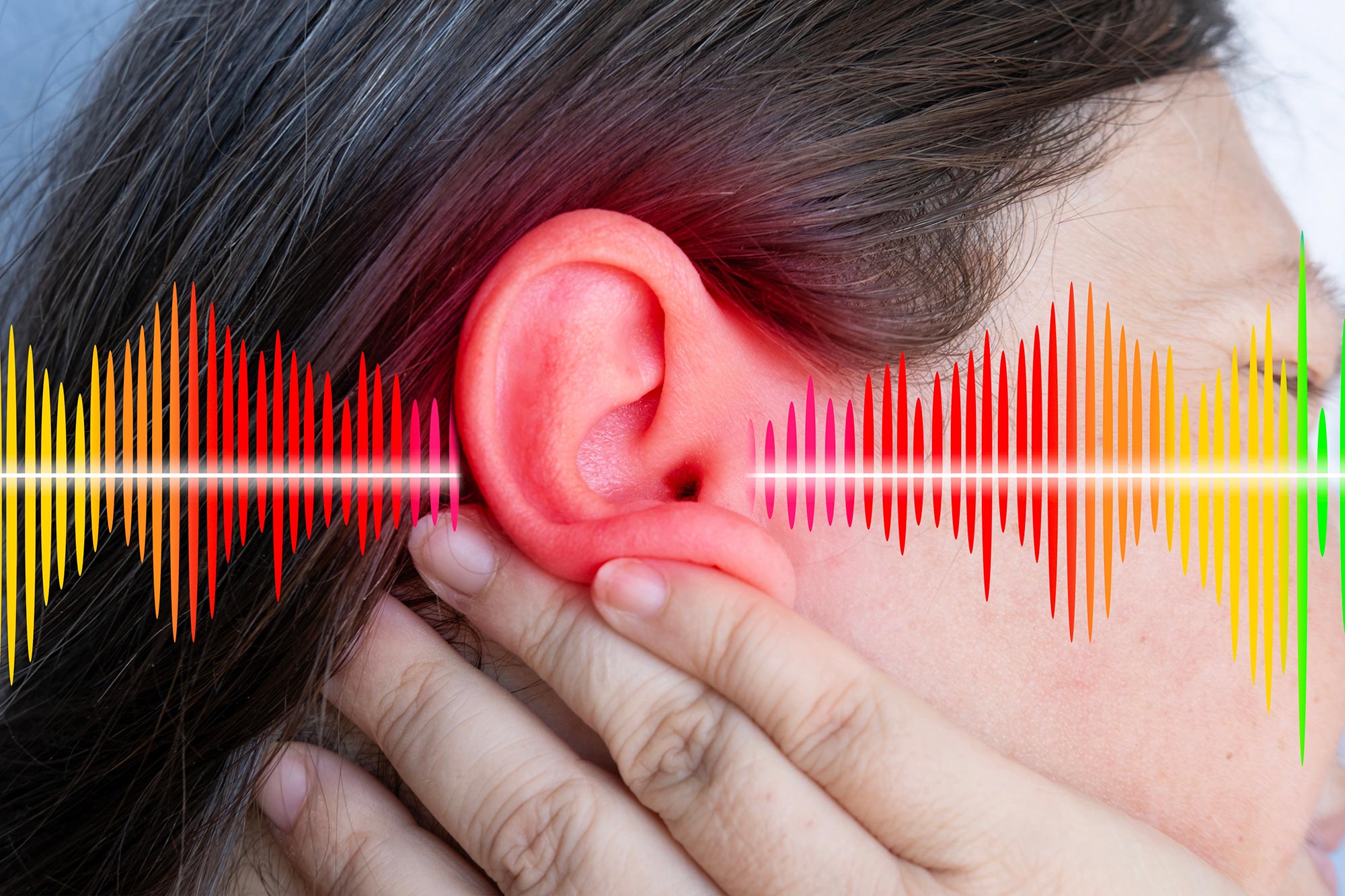
Understanding how hearing loss and tinnitus develop reveals why early prevention and treatment matter.
Susan Bianco, an 87-year-old resident of Lancaster, began to notice changes in her hearing when she repeatedly had to ask her husband to say things again. Conversations on the phone became difficult, and social gatherings were especially challenging.
“It’s very hard to hear in a crowd,” she says. “I can’t understand what one person is saying if other people are talking.”
Soon after, Bianco noticed a new symptom. She began hearing a persistent buzzing sound in her ears that became more noticeable when she was tired.
According to the Centers for Disease Control and Prevention, Bianco is one of the 13 percent of adults in the United States, and 27 percent of adults age 65 and older, who experience hearing difficulty. She is also among the 10 percent of people with tinnitus, a condition commonly associated with hearing loss. Both hearing loss and tinnitus become more likely with increasing age and exposure to loud noise.
“You can’t stop aging, but you can take steps to conserve your hearing and reduce your risk of developing hearing loss and tinnitus,” says Dr. Jackie Price, an audiologist at Penn State Health Otolaryngology – Head and Neck Surgery.
What is tinnitus
Tinnitus refers to sounds such as ringing, buzzing, hissing, or whooshing that are heard in one or both ears. Some people describe the noise as resembling cicadas or a freight train, Price says.
“For some people, the noise is constant and bothersome, interfering with their productivity and quality of life,” Price says.
The noise doesn’t come from an external source. It stems from a miscommunication between your brain and ears.
Other common sound-related disorders include hyperacusis, which makes everyday sounds feel too intense, and misophonia, where certain sounds trigger strong emotional reactions.
What causes tinnitus and hearing loss?
Price explains that tinnitus and similar sound-related conditions are often early indicators of hearing loss.
Hearing loss begins when tiny hair cells inside the cochlea, a spiral-shaped structure in the inner ear, are damaged. These cells normally transform sound waves into electrical signals that the brain can interpret. When the hair cells are injured, those signals are disrupted, making sounds harder to hear. This breakdown in communication can also distort signals, leading the brain to perceive sounds that are not actually present, which is experienced as tinnitus.
Hearing loss and sound disorders can affect more than just your ears. They often affect sleep, concentration, and relationships. They can also speed up cognitive decline, raise depression risk, and increase the risk of falls.
How can hearing loss and tinnitus be prevented?
Protect your ears from loud noise: Use hearing protection when noise exceeds 85 decibels. That means wearing earplugs or earmuffs at concerts, sporting events, fireworks, and when using power tools.
“I counsel people to wear hearing protection when they’re mowing grass instead of listening to music through earbuds,” Price says. “It’s like a double whammy because people have the noise from the mower, and then they crank up the music so they can hear it, and then they listen to excess noise for 45 minutes or more, sometimes twice a week.”
Choose the right earplugs or earmuffs: Buy earplugs or earmuffs with a Noise Reduction Rating of at least 22 decibels. This number, listed on the product package, tells you how much sound the product will eliminate. Insert earplugs correctly for full protection.
“Take a foam earplug between your two fingers and smoosh it down and roll it,” Price explains. “Then, when you go to put it in your ear, pull on your ear lobe with the opposite hand to open up the ear canal, insert the earplug, and let it fully expand.”
Most foam earplugs are meant for one-time use to maintain a complete seal that keeps noise out.
How are hearing loss and tinnitus treated?
Hearing loss and tinnitus have no cure, but treatment can improve hearing and quality of life.
Hearing loss is managed based on its underlying cause and how much hearing has been affected. In many situations, doctors recommend hearing aids or other assistive devices to support clearer communication.
For tinnitus, one commonly used approach is Tinnitus Retraining Therapy, which aims to reduce how disruptive the condition feels in everyday life. This method combines counseling to help individuals adjust to the sounds they hear with sound therapy that introduces soft background noise, such as white noise, to draw attention away from the tinnitus.
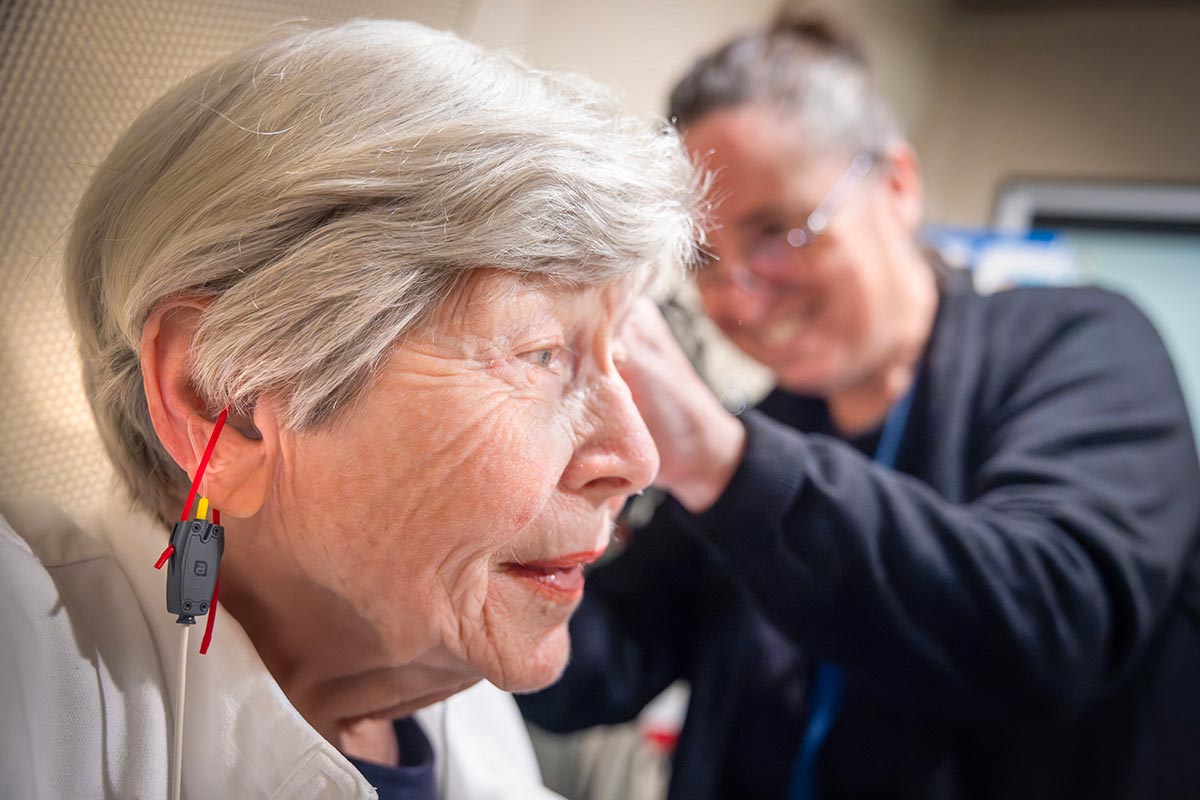
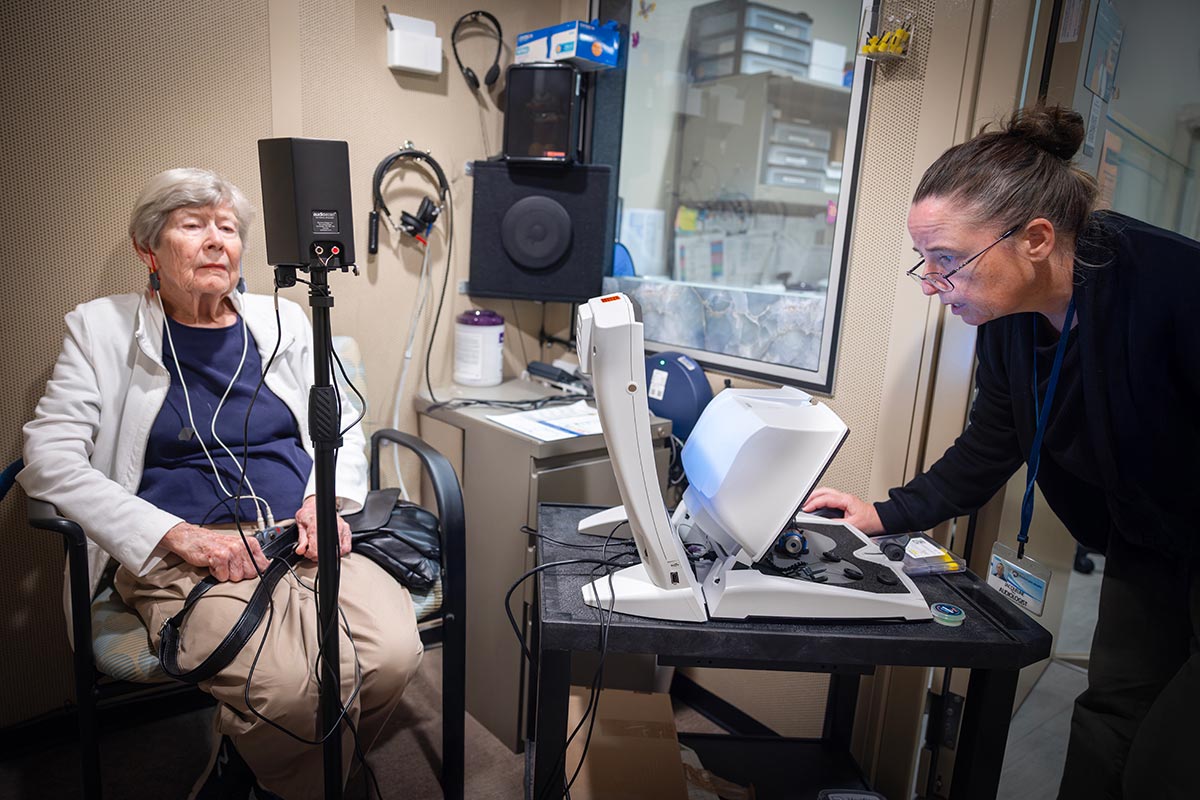
Bianco now wears hearing aids and recently started Tinnitus Retraining Therapy. Price programmed a soft, pleasant, constant noise into Bianco’s hearing aid as part of her sound therapy. Bianco hopes the new noise can help her feel less distracted by her tinnitus.
“It sounds like it’s raining, which is a sound I don’t mind too much,” Bianco says.
When to get a hearing test
If you notice ringing in your ears, seek out a hearing evaluation, Price advises.
“Sometimes people think they hear fine, but there are signs of change inside the ear, such as hair cell damage or hearing loss at the highest frequencies,” Price says. “Testing can help you become better educated about what’s going on so you can manage those changes.”
If you live nearby, you can contact Penn State Health Audiology to schedule a hearing evaluation: 717-531-6822
Never miss a breakthrough: Join the SciTechDaily newsletter.
Follow us on Google and Google News.
11 Comments
Who can read light Grey text? Not me. I’m more worried about eye strain from the many sites who waste our time playing games like this than the ringing in my ears.
Agreed. I use the Chrome browser. You can search the app store for your browser and find extensions that will aglow you to change how text is rendered. I use one called Colorfy. There are numerous others to try and see which works best for you.
For dome it is the eyesight for others tinnitus… in both cases it is not waisted time or effort, in one moment you can have both, how about that. One more thing… tinnitus makes people more agitated, but we seldom are & silently looking for cure
This is a standard tinnitus pap article of little use or help. It is criminal that these researchers have nothing to offer other than distract your attention from the problem.
If the problem causing tinnitus is due to the cilia hairs in the ears, them why does my hissing sometimes disappear and other times become quite evident? The hairs haven’t changed!
What are researchers doing with their millions upon millions of $$ in money? They can’t figure out what really causes tinnitus nor how to repair it, just as brain scientists, after decades of detailed study, STILL don’;t know how information is store din the brain nor how to read it.
Let’s pass these problems to an AI and eliminate the useless humans.
Your anger is misplaced and less effective with some of your word choices: ‘criminal’, ‘pap’, “$$ in money” and your lack of proofing your writing. The programs and results you deride are headed and operated by serious, well trained, and highly educated individuals. AI is not the answer yet, but it’s coming. “Useless humans” created all of this.
The “serious” people pushing these useless solutions are generally doctors and audiologist’s who make their livings selling people hearing aids and devices to “distract” them from the sound tinnitus sufferers hear. THAT is not a solution!
The solution is to find out exactly WHY some people suffer this problem and others don’t.
Last evening the hissing sound I hear was quite loud and almost a bit annoying. Today. it is barely audible. That variance is not due to hairs in my ears since the hairs haven’t change from last evening..
Yes, I have had hearing tests and exams. And as a senior person, I of course have frequency drop off over around 11.5khz. Most everyone loses the high frequencies as we get older. Which is a shame as it is primarily older people who most frequently listen to and attend classical music concerts!
Otherwise, I hear very well. But I was pitched hearing aids anyway, even though they would not restore the upper frequency recognition that I have lost.
I have had tinnitus my whole life and I don’t remember a time that I didn’t have it. I have no idea what true silence sounds and feels like. So I feel your pain. Here are some things doctors won’t tell you because they are clueless. Salicylates are part of the problem. Do a search online for foods/beverages that are high in salicylates. I recently started putting ground pepper on things I was eating and my tinnitus flared up. I googled it and pepper is very high in salicylates.
Another thing is blood pressure medication. Most of them work by directly or indirectly lowering aldosterone. But aldosterone has a protective effect on the inner ear so taking blood pressure meds can leave you vulnerable to damage to the inner ear which would make tinnitus worse.
Another thing that makes tinnitus worse is taking certain medications that are ototoxic. I had a barium swallow imaging done to look at my esophagus and stomach and drinking the barium swallow and/or the bubbly liquid (to create gas in the stomach to expand it for better viewing) permanently made my tinnitus and hyperacusis worse. I also had an upper endoscopy and the propofol anesthesia also permanently made my tinnitus and hyperacusis worse. I had both these things done while taking an ACE inhibitor for my blood pressure.
So, basically it’s doctors who damaged my inner ears permanently. They won’t admit to it or acknowledge it or apologize. They just write in my chart that I’m “allergic” to propofol and barium swallow solution.
Oh, almost forgot…PPIs are awful for tinnitus. Very ototoxic. I tried taking Dexilant for my stomach pain and it also permanently damaged my inner ear making my tinnitus and hyperacusis.
Sometimes the inner ear symptoms improve with time after the damage occurs, but I never fully recover and go back to how I was before. The effects are permanent in the cases of ototoxicity. With the dietary salicylates, luckily that is temporary and will go away when you stop eating/drinking things that are high in salicylates.
Oh, and of course, aspirin IS a salicylate so stay away from that, too. And check other products you use, such as creams or shampoos or toothpastes (especially mint flavors)…they all can contain salicylates that can be absorbed into the body through the skin or mouth.
Sometimes tinnitus has other causes, like vascular issues or muscular issues or even jaw misalignment. Saying all tinnitus is hearing loss and a hearing aid will help is reductive at best. See an ENT first, THEN an audiologist. Best to eliminate possible viral causes as well – these conditions do not necessarily indicate hearing loss. If you’re bothered – see a physician first. Not a rando comment – I sold hearing devices for 20 years and have seen quite a variety of causes and solutions for the problem.
The problem is that our medical system isn’t set up for individuals to do the type of exploration you recommend.
I’ve been to an ENT. Looked and found nothing out of order in ears, nose or throat. Go to audiologist. Get tests done. Received standard recommendation of buying $4k set of ear aids. Declined.
Insurance companies will not pay for every exam and test in the book because someone on the internet said something (like vascular) is a possible cause. And in any case, I have no vascular problems (resting BPM 51). Normal blood pressure. Only prescription drug I take is Metformin because I tend to having high sugar readings (99-102). The Metformin brings these down and also purportedly has other benefits.
Given how much tinnitus is a problem, how many millions suffer with this problem, there doesn’t seem to be much going on it terms of research. I have been a medical research study subject in probably 30-40 studies over the years. I’ve had brain MRI’s, all parts of my body examined and MRI’d at one time or another. I’ve taken physical and cognitive tests. I’ve had my blood analyzed and DNA done multiple times. But I have never seen a study for tinnitus, which I would certainly volunteer for. WHY NOT?
The cause can be the nerve & not the ear, as mentioned. There are some treatments for it, but few.