
Close Menu
    Facebook X (Twitter) Instagram
    SciTechDaily
    • Biology
    • Chemistry
    • Earth
    • Health
    • Physics
    • Science
    • Space
    • Technology
    Facebook X (Twitter) Pinterest YouTube RSS
    SciTechDaily
    Home»Space»Why Scientists Are Living Underwater to Prepare for Mars and Beyond
    Space

    Why Scientists Are Living Underwater to Prepare for Mars and Beyond

    By European Space Agency (ESA)February 5, 20251 Comment4 Mins Read
    Facebook Twitter Pinterest Telegram LinkedIn WhatsApp Email Reddit
    Share
    Facebook Twitter LinkedIn Pinterest Telegram Email Reddit
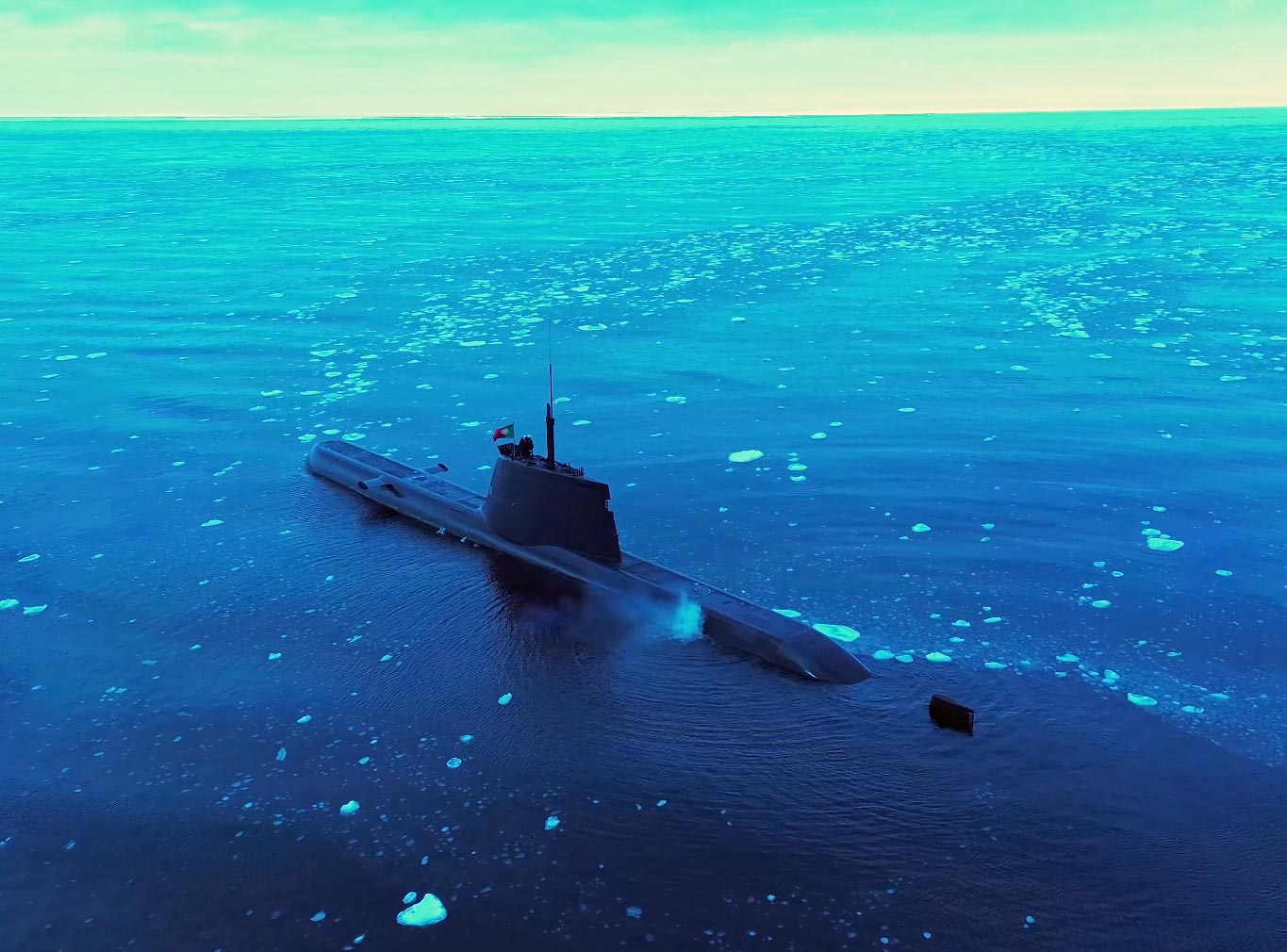
    Portuguese Submarine for Space Research
    The SubSea project utilizes submarines to simulate space mission conditions, studying the psychological and physiological effects of extended isolation. This research aids in preparing for future spaceflights and addresses broader health issues. Credit: Portuguese Navy

    Submarines serve as a vital research platform in the SubSea project, where the effects of extreme isolation similar to space missions are studied.

    A diverse team has spent 60 days underwater to explore how such conditions impact human health and crew dynamics, offering valuable insights for future space explorations and addressing wider health challenges like depression and sleep disorders.

    From Ocean Depths to Space Challenges

    Submarines are becoming a valuable tool for studying how humans adapt to extreme environments, from the deep ocean to outer space.

    The European Space Agency (ESA), the Portuguese Space Agency, and the Portuguese Navy are using submarines to simulate the isolation and confinement challenges faced during space missions.

    Recently, the first crew of the SubSea project completed a 60-day underwater expedition and returned to shore. Scientists from universities in Germany, Italy, and Portugal are analyzing how stress, mood, and teamwork evolve among 25 volunteers living in tight quarters — similar to conditions experienced by astronauts on long-duration space missions.

    Studying Human Resilience

    Submarines replicate the isolation, confinement, and operational challenges of space missions, making them ideal for studying how these conditions affect crew members and for developing strategies to help them cope.

    Underwater expeditions serve as high-fidelity analogs for testing new techniques and for gathering data to improve future human spaceflight missions.

    To understand how body and mind adapt throughout the mission, scientists used questionnaires and collected hair and saliva samples. The results will help them track stress markers like cortisol, as well as monitor changes in the crew’s immune health.
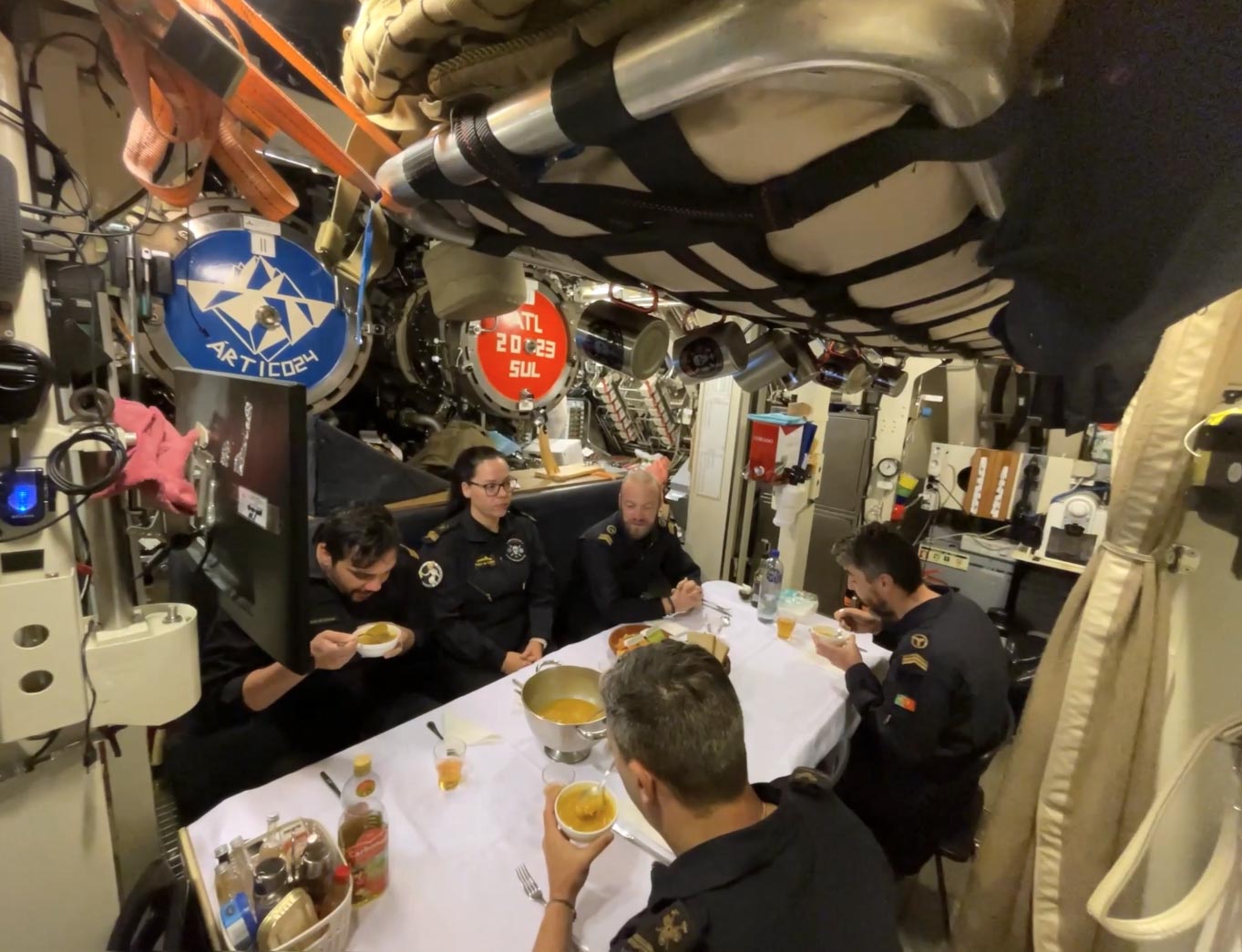
    Dining in Submarine
    Crew members of the SubSea project dine in a submarine. Credit: ESA/Portuguese Space Agency/Portuguese Navy

    Advancements in Space Readiness

    ESA and its international partners have been using the International Space Station for more than two decades to conduct hundreds of experiments, including the study of the effects of spaceflight on human health.

    On the Space Station, astronauts are exposed to microgravity and space radiation while living and working in a confined environment.

    ESA astronaut Andreas Mogensen, who recently spent six months orbiting Earth with the Huginn mission, believes that missions like SubSea help them prepare for the many physiological and psychological challenges of space. “SubSea is an essential initiative to understand human resilience in extreme environments,” says Andreas.
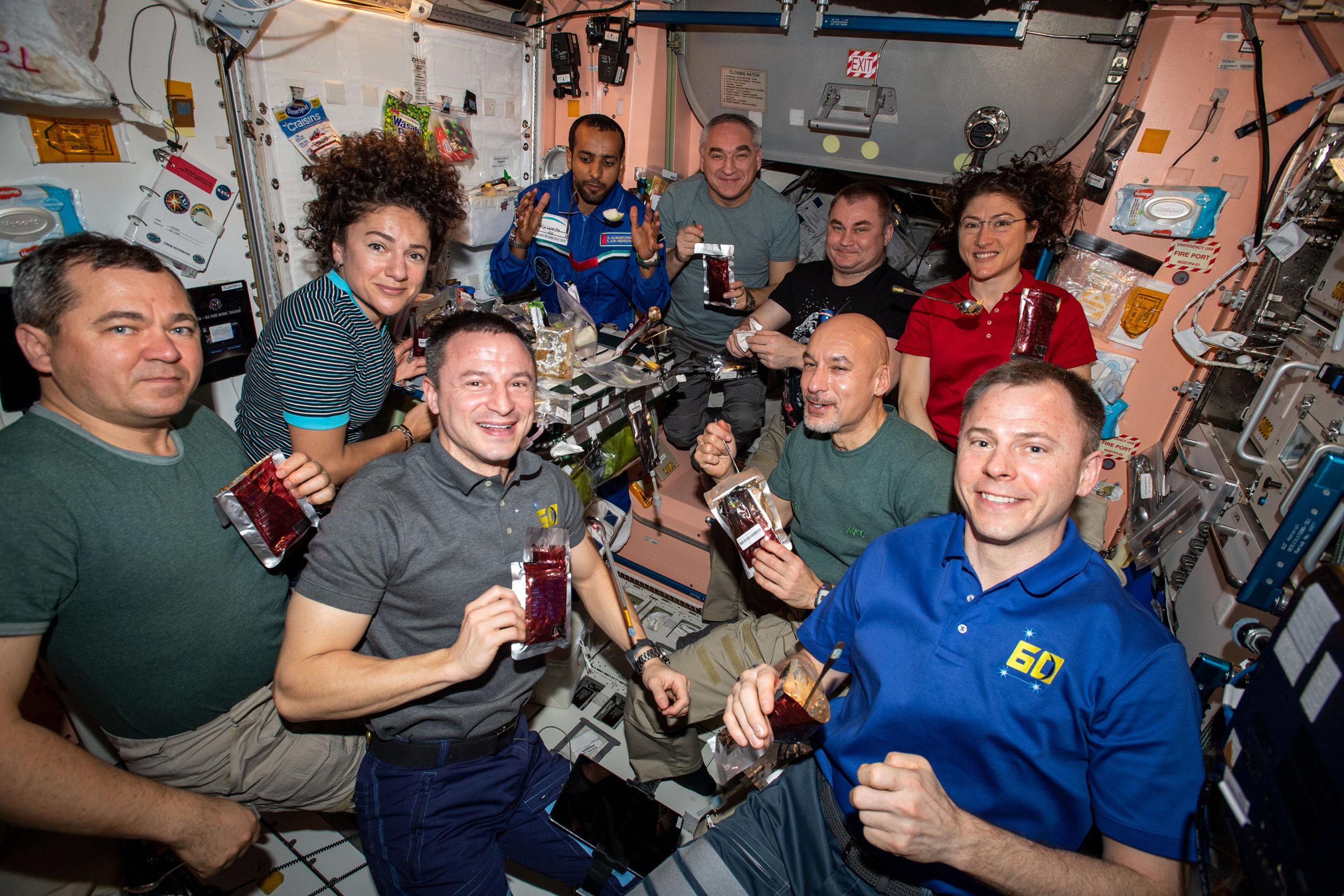
    Celebratory ISS Dinner in Russian Zvezda Module
    A crew of 9 gathered for a celebratory dinner in the Russian Zvezda module of the International Space Station. Credit: NASA

    “Research into life and work in confined environments, whether under the sea, in space or in remote locations on Earth provide invaluable insights into how humans adapt physically and mentally to isolation and stress,” he adds.

    “These efforts deepen our understanding of extreme environments and play a crucial role in preparing the global space community for the challenges of future missions to the Moon, Mars, and beyond,” says Daniel Neuenschwander, ESA’s Director of Human and Robotic Exploration.
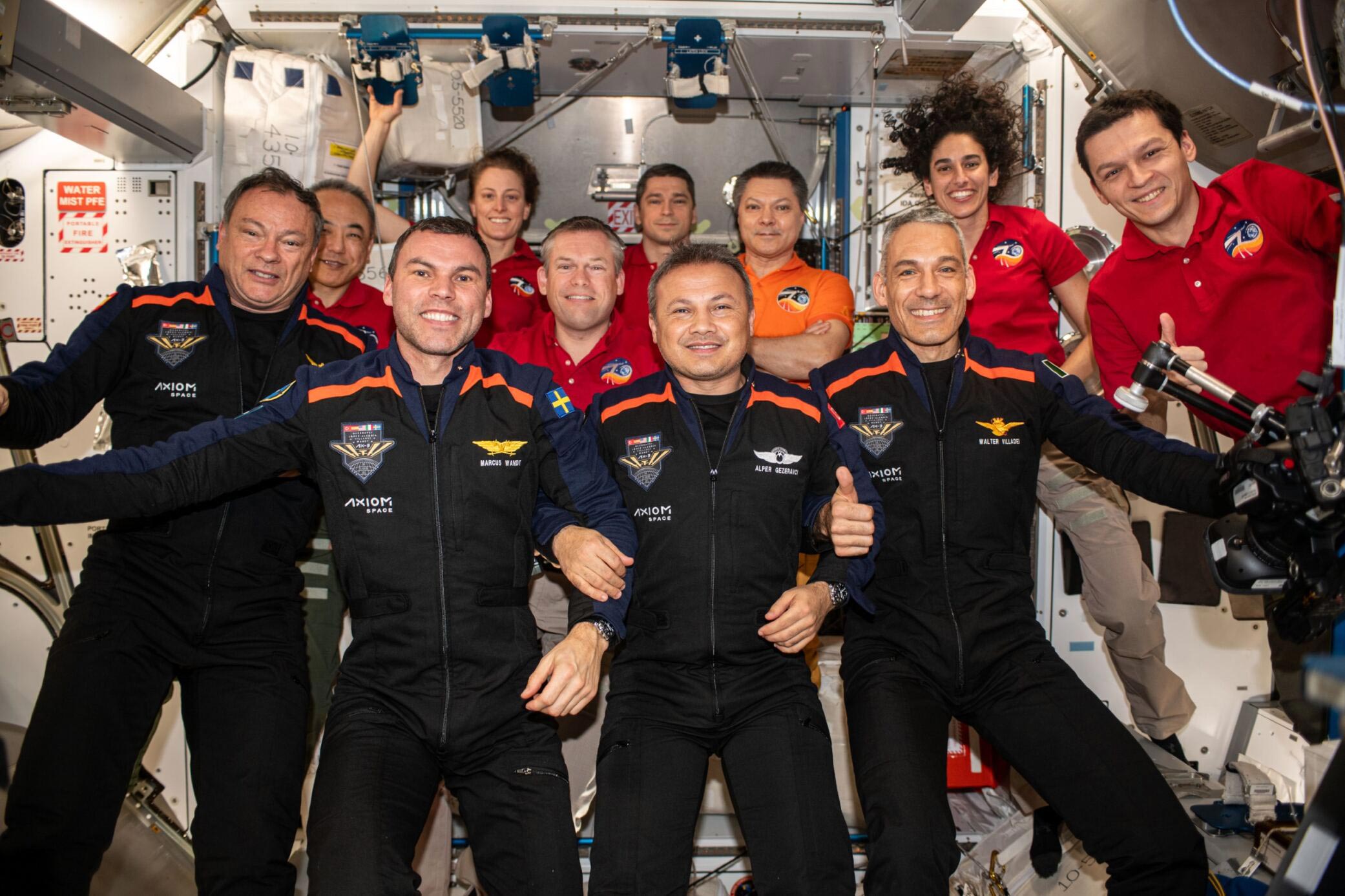
    Axiom 3 Mission Portrait on ISS
    Holding on to each other to keep from floating away, the newcomers from the Axiom 3 mission (Ax-3) pose up front for a crowded crew picture on the International Space Station. At the time, there were 11 people and eight nationalities onboard the orbital complex. Credit: NASA/J. Moghbeli

    Integrating knowledge from submarine and astronaut research communities could drive innovation in healthcare for polar stations, military deployments, hiking expeditions, populations living in prolonged darkness, and even mining operations. Findings could address clinical disorders such as seasonal affective disorder, depression, and sleep disturbances.

    This SubSea mission marks the initial phase of a project designed to expand its research scope in subsequent stages.
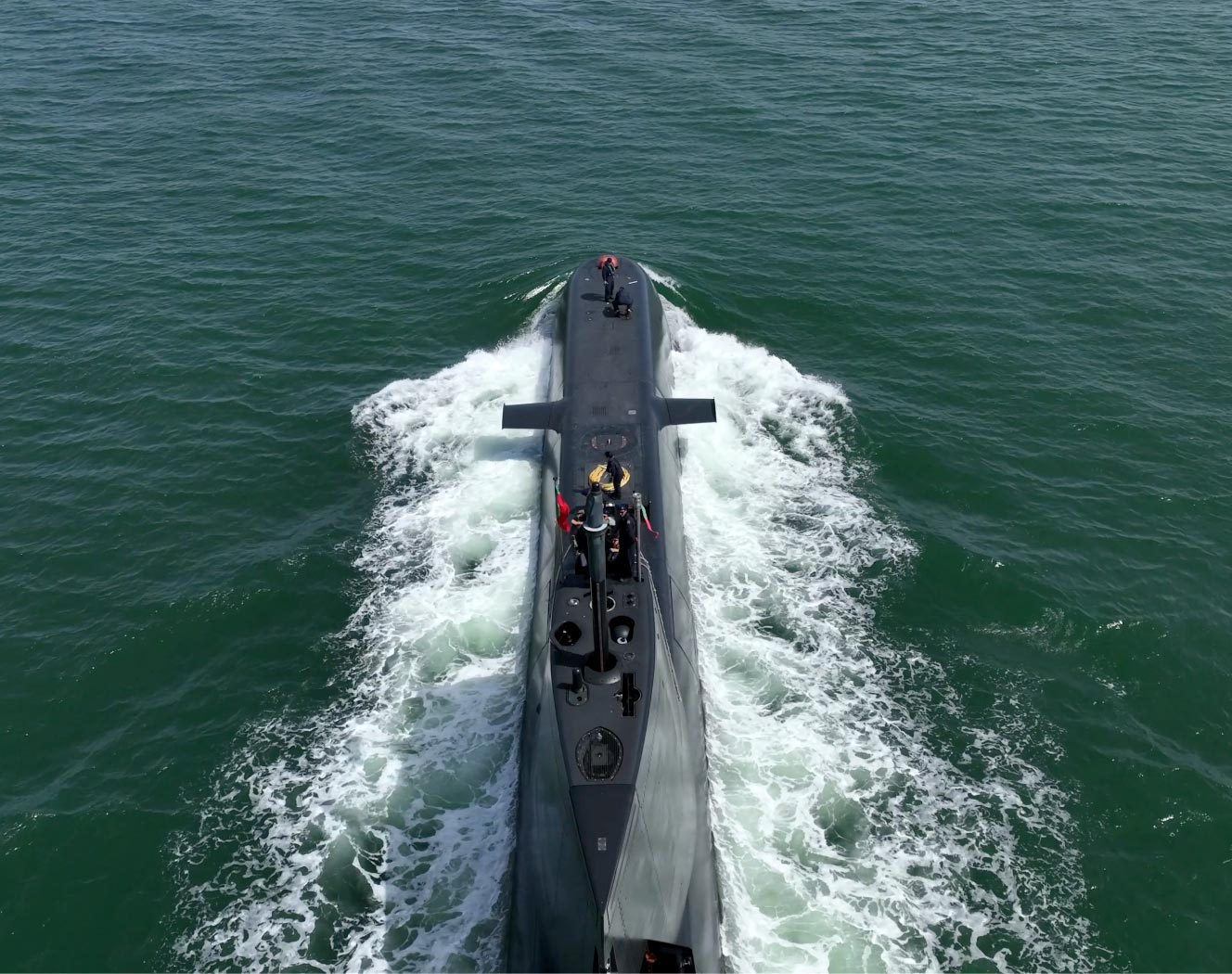
    Portuguese Submarine From Above
    Submarines are emerging as a unique research platform to study human adaption to extreme environments – from ocean depths to outer space. Credit: Portuguese Navy

    Portugal’s Strategic Role

    “SubSea aligns perfectly with Portugal’s growing focus on analog activities and space medicine,” states Ricardo Conde, president of the Portuguese Space Agency.

    Portugal has several terrestrial analog sites, such as the Capelinhos Volcano and Barreiro da Faneca in the Azores and the Selvagens Islands in Madeira. These locations resemble conditions found on celestial bodies like the Moon and Mars.

    By leveraging its unique terrestrial and marine resources, Portugal is positioning itself as an essential hub for research, innovation, and training to support future space missions.

    Never miss a breakthrough: Join the SciTechDaily newsletter.
    Follow us on Google and Google News.

    Astronaut European Space Agency
    Share. Facebook Twitter Pinterest LinkedIn Email Reddit

    Related Articles

    Life Beyond Earth: A Detailed Concept for a Moon Habitat

    How to Keep Shared Spacesuit “Underwear” Clean?

    Calling All Future Astronauts! Applications Are Open for ESA’s First Astronaut Selection in Over a Decade

    NASA Astronaut Gets a Good GRASP on Gravity

    Astronauts Chosen for NASA SpaceX Crew-3 Mission to Space Station

    Words of Wisdom: Advice From an Astronaut [Video]

    Alpha Mission: First ESA Astronaut to Ride a Dragon to Space

    Get Your Ticket to the Moon: Europe’s First Ever Lunar Lander

    “Beyond” Record-Breaking Spacewalker Returns From Orbit

    1 Comment

    1. Boba on February 5, 2025 3:05 pm

      Because they’re idiots.

      Reply
    Leave A Reply Cancel Reply

    • Facebook
    • Twitter
    • Pinterest
    • YouTube

    Don't Miss a Discovery

    Subscribe for the Latest in Science & Tech!

    Trending News

    Scientists Discover 132-Million-Year-Old Dinosaur Tracks on South Africa’s Coast

    Scientists Uncover the Secret Ingredient Behind the Spark That May Have Started Life on Earth

    Physicists Observe Matter in Two Places at Once in Mind-Bending Quantum Experiment

    Stanford Scientists Discover Hidden Brain Circuit That Fuels Chronic Pain

    New Study Reveals Why Ozempic Works Better for Some People Than Others

    Climate Change Is Altering a Key Greenhouse Gas in a Way Scientists Didn’t Expect

    New Study Suggests Gravitational Waves May Have Created Dark Matter

    Scientists Discover Why the Brain Gets Stuck in Schizophrenia

    Follow SciTechDaily
    • Facebook
    • Twitter
    • YouTube
    • Pinterest
    • Newsletter
    • RSS
    SciTech News
    • Biology News
    • Chemistry News
    • Earth News
    • Health News
    • Physics News
    • Science News
    • Space News
    • Technology News
    Recent Posts
    • The Ideal Temperature for Storing Mangoes Isn’t What You Think
    • Groundbreaking Enzyme Atlas Rewrites Decades of Biology Research
    • New “Nanozyme Hypothesis” Could Rewrite the Story of Life’s Origins
    • Anatomy Isn’t Finished: The Human Body Still Holds Secrets
    • Researchers Discover Long-Lost Words of Ancient Greek Philosopher After 2,000 Years
    Copyright © 1998 - 2026 SciTechDaily. All Rights Reserved.
    • Science News
    • About
    • Contact
    • Editorial Board
    • Privacy Policy
    • Terms of Use

    Type above and press Enter to search. Press Esc to cancel.