
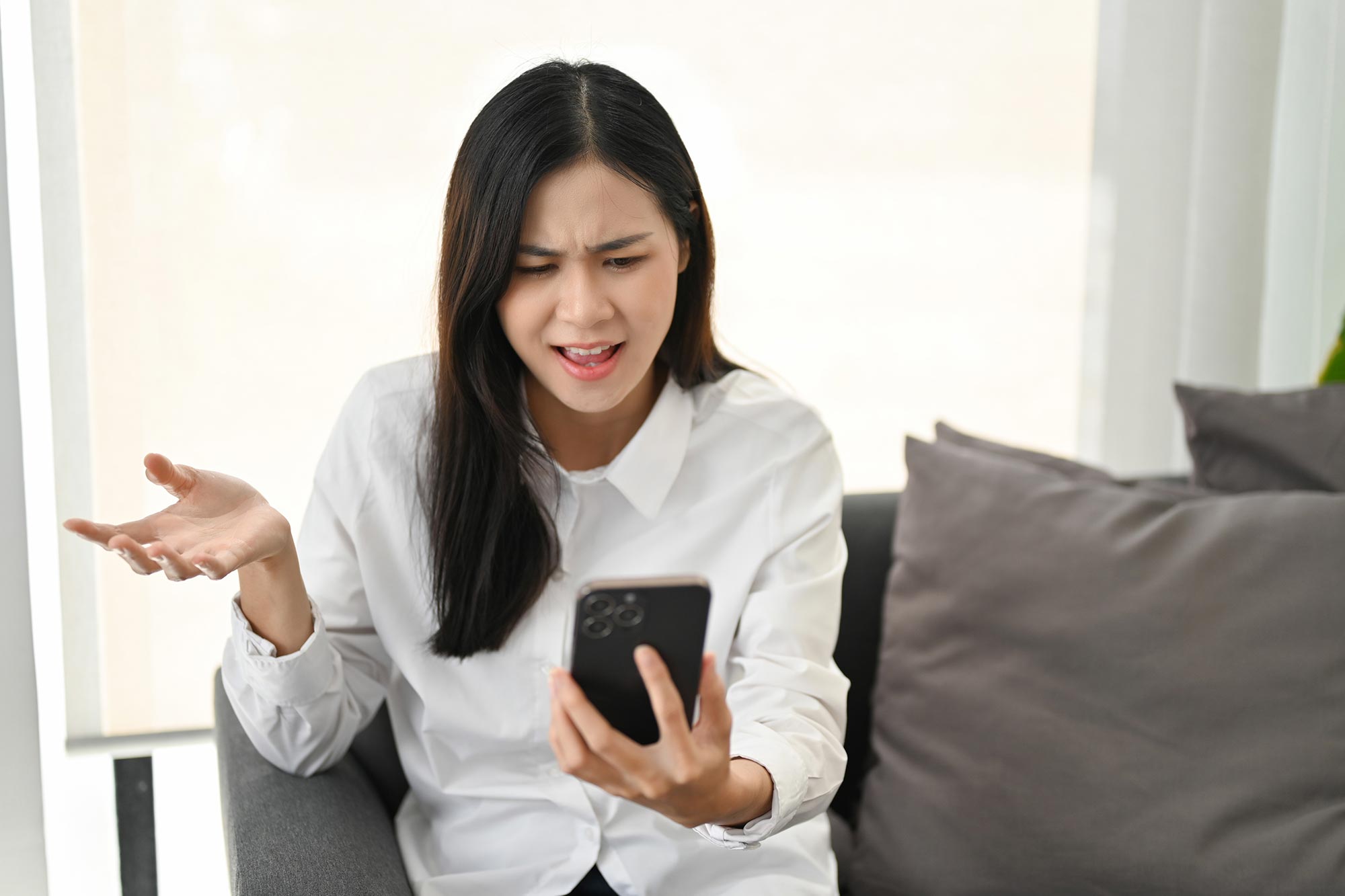
A simple tweak to a text — like breaking words into separate bubbles or punctuating every word — can completely shift its tone.
Research confirms that these textisms amplify emotional intensity, making messages feel sharper or more dramatic.
The Power of Textisms
Imagine you receive this text message:
“Buy some milk”
It’s clear and straightforward — nothing unusual. But what if the message looked like this?
“Buy. Some. Milk.”
That feels different, right? It seems more urgent, maybe even frustrated. Does the sender need the milk immediately? Are they upset?
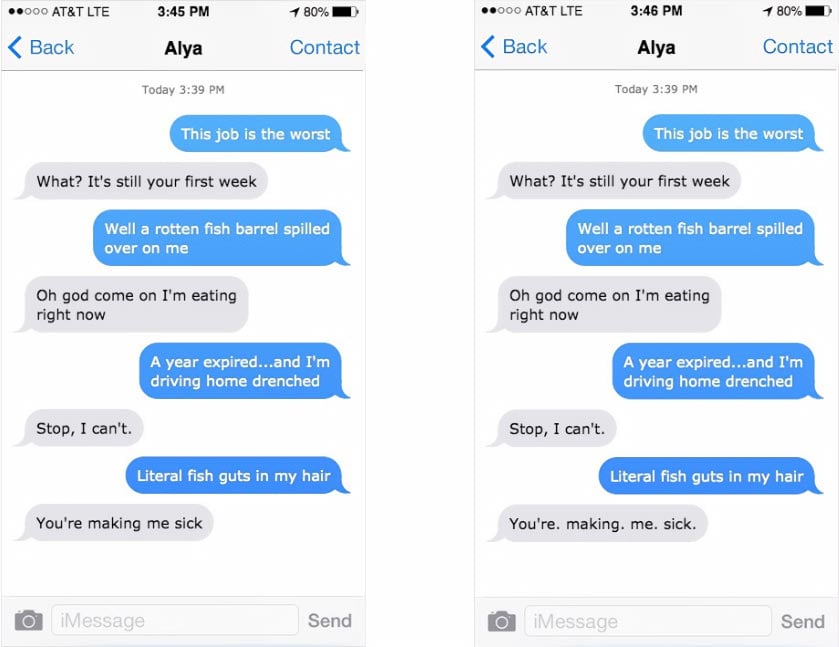
According to new research from Binghamton University, State University of New York, small changes in text formatting — such as adding a period after each word or placing each word in a separate text bubble — can convey emotion and intensity.
Psychologist Celia Klin from Binghamton University has studied how punctuation affects the way we interpret texts. In previous research in 2016 and 2018, she found that adding a period to short, single-word responses like “okay.” or “nope.” can change their tone. Instead of simply marking the end of a sentence, the period can add a sense of finality, seriousness, or even coldness.
New Research on Emotional Intensity
In a new paper published recently in Frontiers in Psychology, Klin and former Binghamton University graduate students Rachel Poirier and Andrew Cook studied two new textisms. They asked groups of undergraduate students to examine a series of text exchanges and rate how disgusted or frustrated they believed the texter who sent them to be.
The first type of textism was the inclusion of a period after each word:
Yuck. get. an. exterminator.
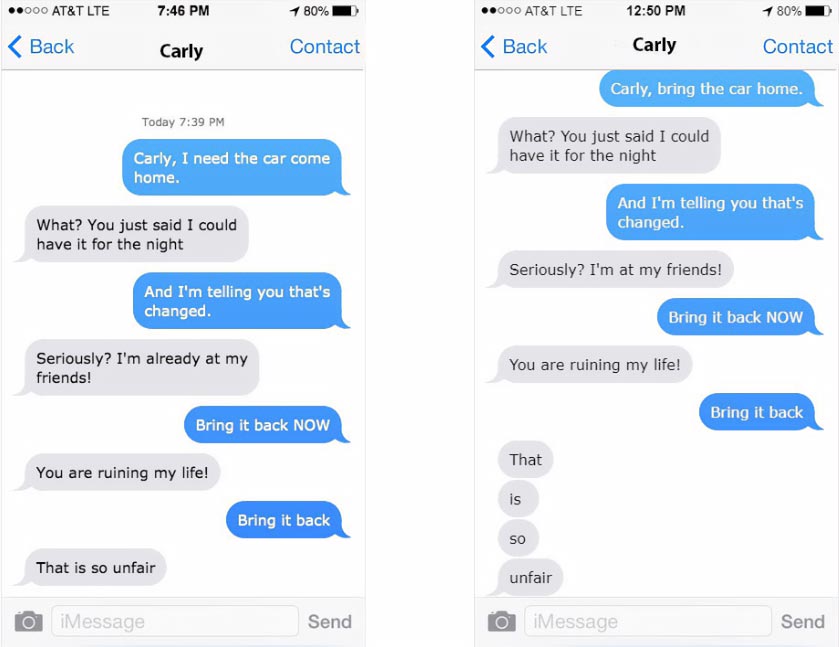
The second type of textism put each word into its own text bubble:
No
just
go
In both instances, these textisms were understood to add emotional intensity to the messages.
Why Textisms Work Like Spoken Cues
“Texters are much more limited than speakers in conveying important social and pragmatic information,” said Klin. “Textisms, such as irregular punctuation and deliberate misspellings, are sometimes used to replace the multimodal cues, such as tone of voice and gestures, that are available in spoken language. Critically, our findings indicate that the recipients of texts often interpret textisms as they were intended, as conveying emotion and intensity.”
In a spoken conversation, we expect our conversational partner’s contributions to be meaningful rather than random, and Klin said that we also expect the same meaning in text messages.
The Psychology Behind Textism Meaning
“Readers assume that the decision to include a textism – such as including a period after each word or putting each word in its own text bubble – was deliberate and meaningful,” said Klin. “That is, they believe that the textisms were included to communicate meaning. This can be thought of with regard to the concept of ‘emotion work’: Text recipients understand that the inclusion of textisms required work and assume this work was undertaken deliberately. In the case of the textisms we studied, the work was undertaken to add emotional intensity.”
Klin said that additional research is needed to investigate the range of factors that influence the comprehension of textisms. The findings might be different in more formal communicative settings, such as between an employee and a boss, for example. She also noted that this study only examined texts conveying negative emotions and a wider range of materials, and the individual characteristics of readers, should be examined.
Textisms as Written Pauses
Although speculative, Klin and her colleagues conclude that both of the textisms they examined were understood by readers as a pause, perhaps mimicking the vocal prosody of a dramatic pause.
“One can imagine that the presence of a period after each word was “heard” by readers as a staccato speech: No. Just. Stop,” said Klin. “The same can be argued for the second textism we examined, with words being read one at a time in individual text bubbles. Pauses in spoken language have been found to have important communicative functions. Thus, it would be unsurprising if texters have found a way to communicate pauses as well.”
Reference: “Read. This. Slowly: mimicking spoken pauses in text messages” by Rachel C. Poirier, Andrew M. Cook and Celia M. Klin, 8 January 2025, Frontiers in Psychology.
DOI: 10.3389/fpsyg.2025.1410698
Never miss a breakthrough: Join the SciTechDaily newsletter.
Follow us on Google and Google News.