
Close Menu
    Facebook X (Twitter) Instagram
    SciTechDaily
    • Biology
    • Chemistry
    • Earth
    • Health
    • Physics
    • Science
    • Space
    • Technology
    Facebook X (Twitter) Pinterest YouTube RSS
    SciTechDaily
    Home»Space»World’s First Gas Sample From Deep Space Returned With Asteroid Ryugu Material From Hayabusa2
    Space

    World’s First Gas Sample From Deep Space Returned With Asteroid Ryugu Material From Hayabusa2

    By JAXADecember 15, 20203 Comments2 Mins Read
    Facebook Twitter Pinterest Telegram LinkedIn WhatsApp Email Reddit
    Share
    Facebook Twitter LinkedIn Pinterest Telegram Email Reddit
    Hayabusa2
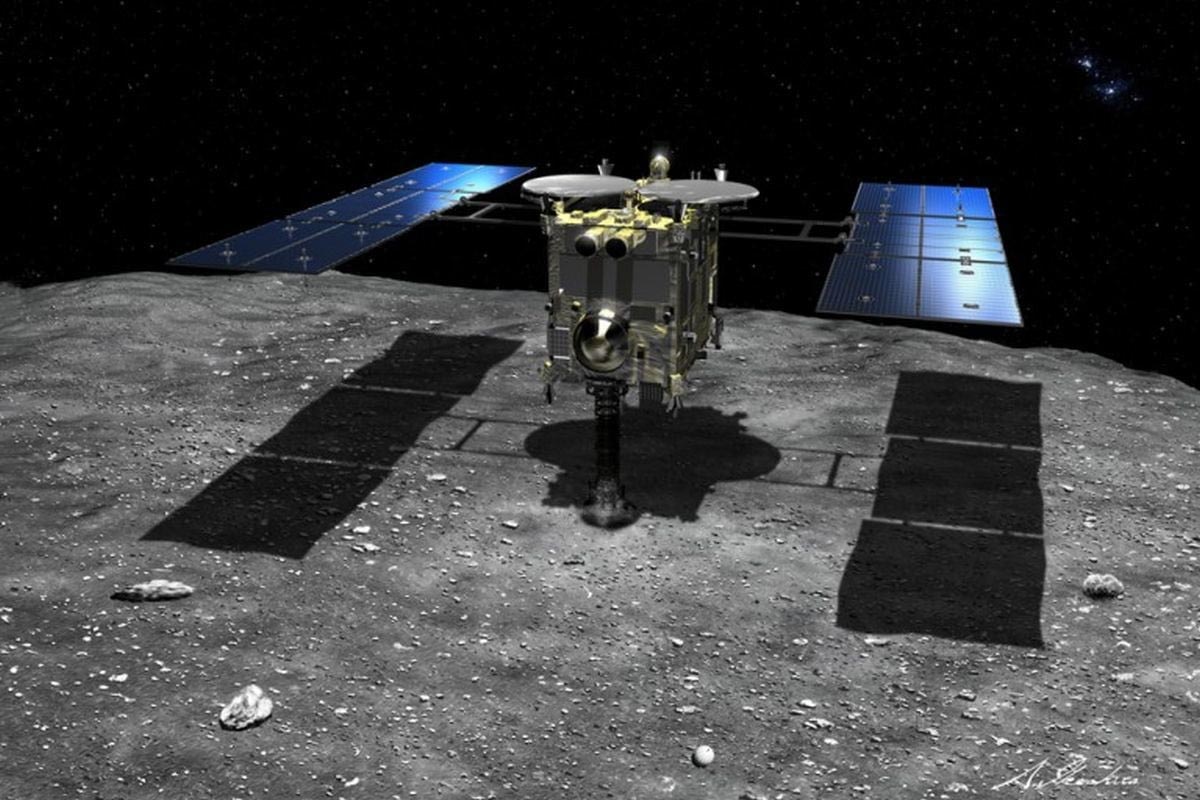
    Japan’s Hayabusa2 mission to asteroid Ryugu. Credit: JAXA

    The Japan Aerospace Exploration Agency (JAXA) has confirmed that the gas collected from the sample container inside the re-entry capsule of the asteroid explorer, Hayabusa2, is a gas sample originating from asteroid Ryugu.

    The result of the mass spectrometry of the collected gas within the sample container performed at the QLF (Quick Look Facility) established at the Woomera Local Headquarters in Australia on December 7, 2020, suggested that the gas differed from the atmospheric composition of the Earth. For additional confirmation, a similar analysis was performed on December 10 – 11 at the Extraterrestrial Sample Curation Center on the JAXA Sagamihara Campus. This has led to the conclusion that the gas in the sample container is derived from asteroid Ryugu.
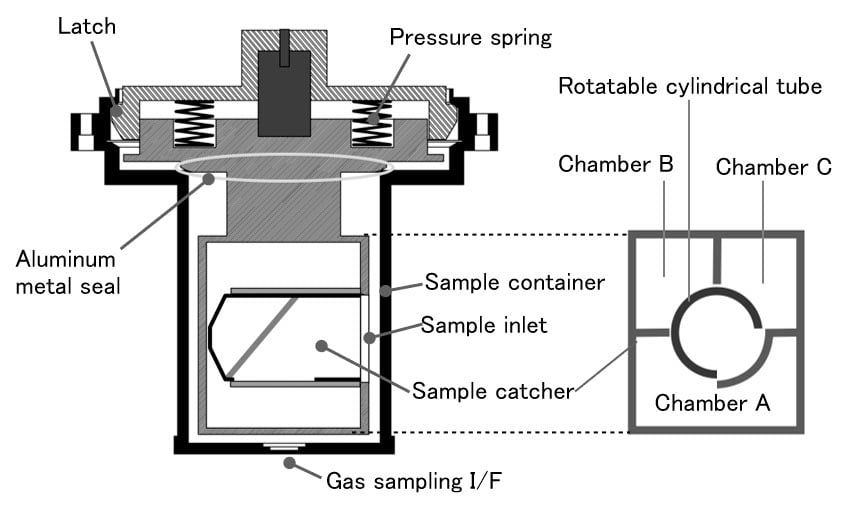
    Hayabusa2 Sample Container Structure
    Sample container structure. Credit: JAXA

    The grounds for making this decision are due to the following three points.

    • Gas analysis at the Extraterrestrial Sample Curation Center and at the Woomera Local Headquarters in Australia gave the same result.
    • The sample container is sealed with an aluminum metal seal and the condition of the container is as designed, such that the inclusion of the Earth’s atmosphere was kept well below the permissible level during the mission.
    • Since it was confirmed on the Sagamihara campus that gas of the same composition had been generated even after the removal of the container gas in Australia, it is considered that the collected gas must be due to the degassing from the sample.

    This is the world’s first sample return of a material in the gas state from deep space.

    The initial analysis team will continue with opening the sample container and performing a detailed analysis of the molecular and isotopic composition of the collected gas.
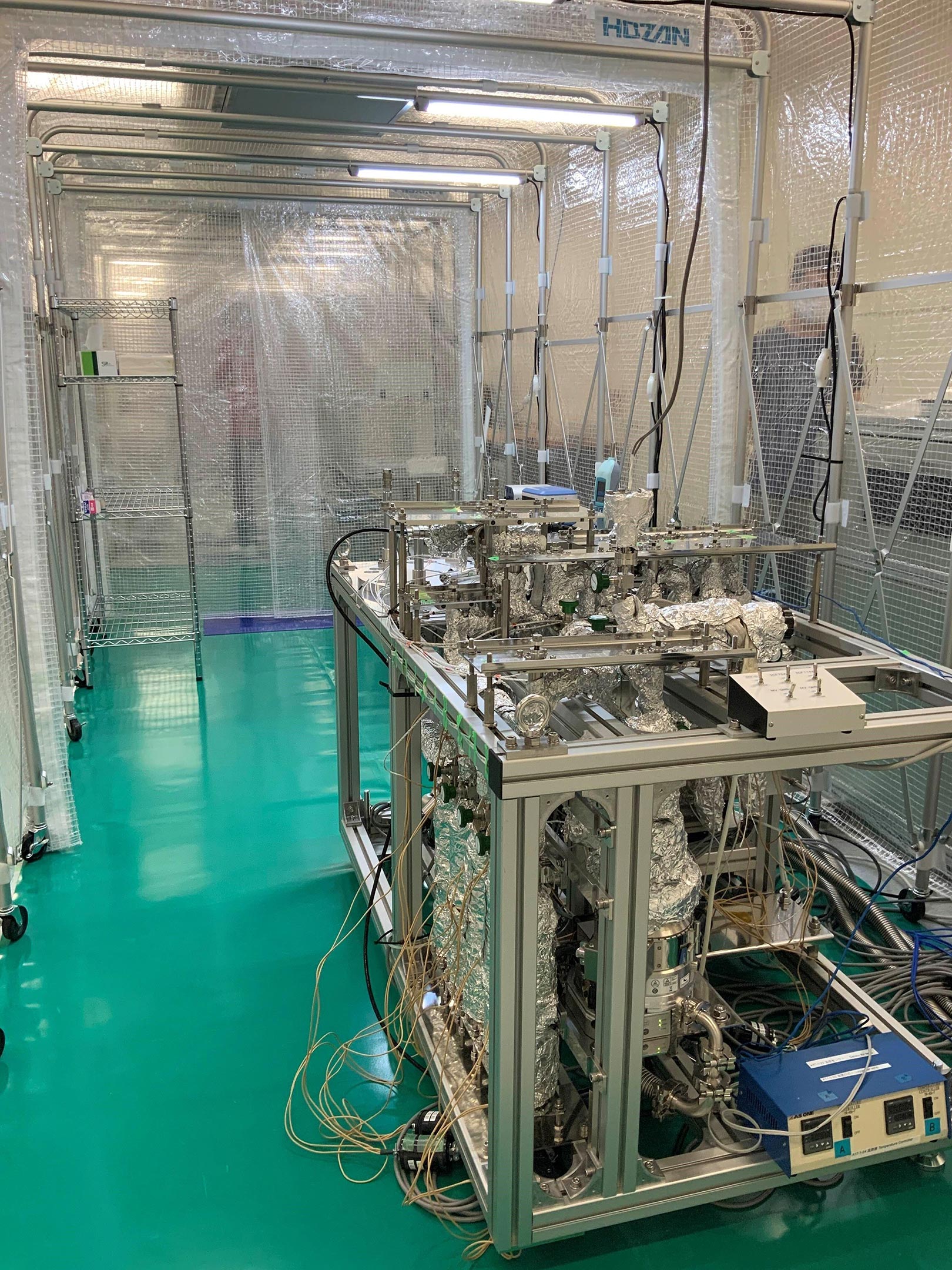
    Woomera Local Headquarters Gas Analysis Equipment
    Equipment for gas analysis brought to the Woomera Local Headquarters in Australia. Credit: JAXA

    Never miss a breakthrough: Join the SciTechDaily newsletter.
    Follow us on Google and Google News.

    Asteroid Hayabusa2 Mission JAXA Popular
    Share. Facebook Twitter Pinterest LinkedIn Email Reddit

    Related Articles

    Rethinking Cosmic Origins: The Ryugu Asteroid Samples’ Revelatory Findings

    Samples From Asteroid Ryugu Shed New Light on Solar System History

    “It’s Spectacular” – First Analysis of Rocks Plucked From Speeding Asteroid

    Next Target Asteroid for Hayabusa2 Photographed by Subaru Telescope

    NASA to Study Ryugu Asteroid Sample Collected by Japan’s Hayabusa2 in New Astromaterials Research Lab

    Asteroid Ryugu Sample Collected in Space and Delivered to Earth – Now NASA Astrobiologists Prepare to Probe It

    Hera Team Congratulates Japan Aerospace Exploration Agency on Hayabusa2’s Asteroid Sample Return

    Australia-Bound Asteroid Sample From Japan’s Hayabusa2 Mission May Reveal Life’s Origins

    Japanese Hayabusa2 Spacecraft Reveals More Secrets From Asteroid Ryugu

    3 Comments

    1. Tom Gordon on December 16, 2020 6:34 am

      This accomplishment is groundbreaking & important. Learning & understanding what our solar system & the local environment that surrounds it is made of can help us understand where we come from. How likely life is & where we fit in.

      Reply
    2. Behrooz Abhari on December 17, 2020 3:43 am

      Is it possible scientise create energy power to moce solare system to the space to avoid time and distanse to reach other planets and asteroids or comets to redice light years time

      Reply
    3. Saju on December 17, 2020 8:09 am

      [email protected]

      Reply
    Leave A Reply Cancel Reply

    • Facebook
    • Twitter
    • Pinterest
    • YouTube

    Don't Miss a Discovery

    Subscribe for the Latest in Science & Tech!

    Trending News

    Popular Supplement Ingredient Linked to Shorter Lifespan in Men

    Scientists May Have Found a Way To Repair Nerve Damage in Multiple Sclerosis

    “Totally Unexpected” – Scientists Discover Pancreatic Cancer’s Fatal Addiction

    A Strange Quantum Effect May Explain One of Biology’s Greatest Mysteries

    James Webb Telescope Reveals the Universe’s Hidden Cosmic Web in Stunning Detail

    Scientists Identify Simple Supplement That Greatly Reduces Alzheimer’s Damage

    You May Have a Dangerous Type of Cholesterol Even if Your Tests Look Normal

    Your Blood Pressure Reading Could Be Wrong Because of One Simple Mistake

    Follow SciTechDaily
    • Facebook
    • Twitter
    • YouTube
    • Pinterest
    • Newsletter
    • RSS
    SciTech News
    • Biology News
    • Chemistry News
    • Earth News
    • Health News
    • Physics News
    • Science News
    • Space News
    • Technology News
    Recent Posts
    • Cancer Mystery Solved: Scientists Discover How Melanoma Becomes “Immortal”
    • Scientists Uncover Cancer-Fighting Power of Popular Fatty Liver Drug
    • Beyond Pain Relief: Scientists Discover a Protein That Could Stop Osteoarthritis in Its Tracks
    • NASA’s New AI Processor Is 500x Faster Than Current Space Computers
    • Scientists Find Evidence Earth Is Drifting Through the Ashes of an Exploded Star
    Copyright © 1998 - 2026 SciTechDaily. All Rights Reserved.
    • Science News
    • About
    • Contact
    • Editorial Board
    • Privacy Policy
    • Terms of Use

    Type above and press Enter to search. Press Esc to cancel.