
Scientists have uncovered a fascinating way the brain learns to override instinctive fears, shedding light on how we adapt to perceived threats over time.
The discovery could pave the way for new treatments targeting fear-related disorders like PTSD and anxiety, using the brain’s own mechanisms to unlearn irrational fears.
Unveiling the Brain’s Fear Suppression Mechanism
Scientists at the Sainsbury Wellcome Centre (SWC) at UCL have identified the brain mechanisms that help animals overcome instinctive fears. Their study, published today (February 6) in the journal Science, explores how mice learn to suppress fear responses to perceived threats that turn out to be harmless. These findings could contribute to developing treatments for fear-related conditions such as phobias, anxiety, and post-traumatic stress disorder (PTSD).
Led by Dr. Sara Mederos and Professor Sonja Hofer, the research team mapped how the brain adapts to fear by learning to suppress responses to perceived threats that prove harmless over time.
How Experience Overrides Instinctive Fear
“Humans are born with instinctive fear reactions, such as responses to loud noises or fast-approaching objects,” explains Dr. Mederos, Research Fellow in the Hofer Lab at SWC. “However, we can override these instinctive responses through experience – like children learning to enjoy fireworks rather than fear their loud bangs. We wanted to understand the brain mechanisms that underlie such forms of learning”.
Using an innovative experimental approach, the team studied mice presented with an overhead expanding shadow that mimicked an approaching aerial predator. Initially, the mice sought shelter when encountering this visual threat. However, with repeated exposure and no actual danger, the mice learned to remain calm instead of escaping, providing researchers with a model to study the suppression of fear responses.
The Brain’s Fear-Regulating Powerhouse
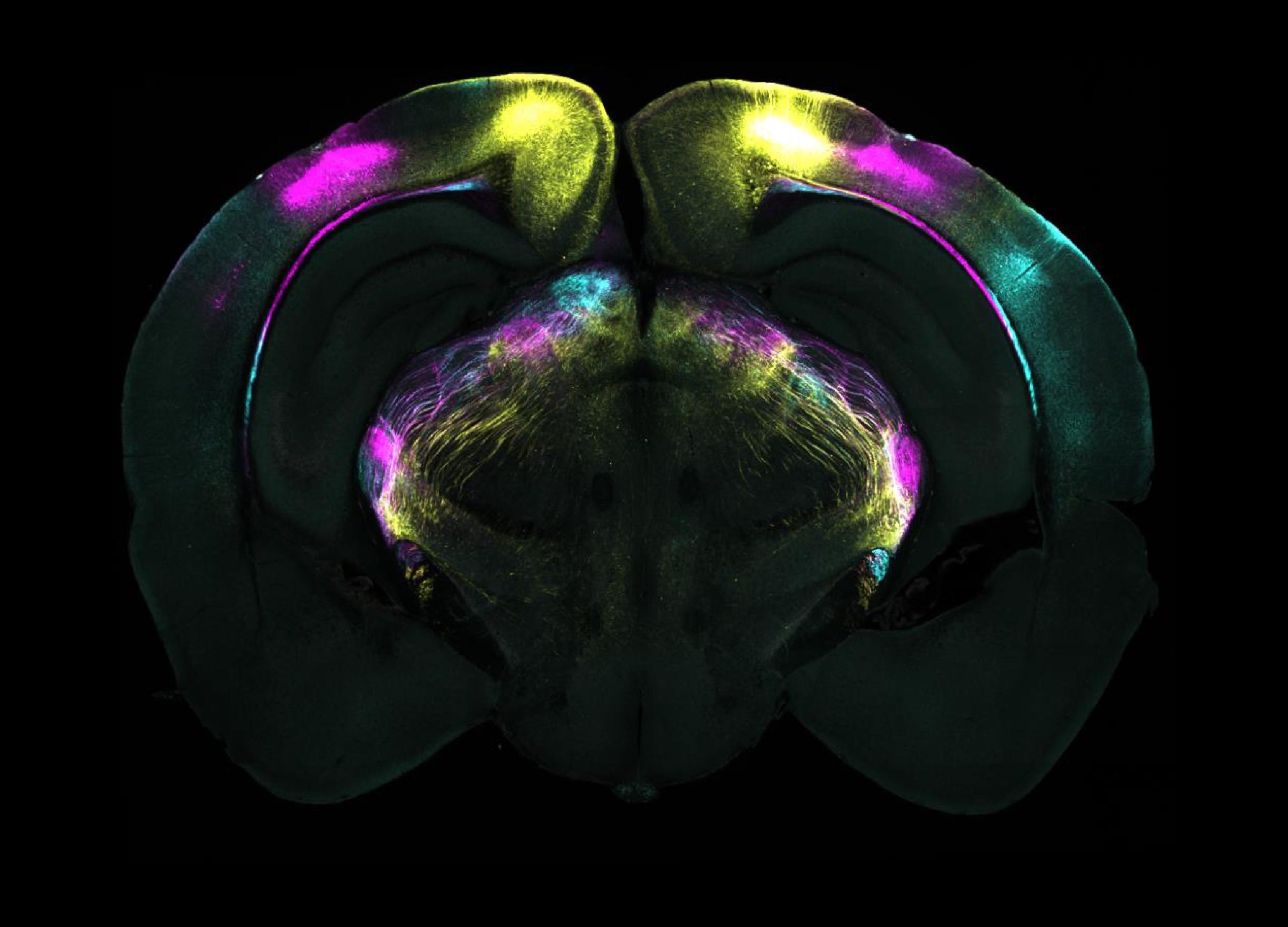
Based on previous work in the Hofer Lab, the team knew that an area of the brain called the ventrolateral geniculate nucleus (vLGN) could suppress fear reactions when active and was able to track knowledge of previous experience of threat. The vLGN also receives strong input from visual areas in the cerebral cortex, and so the researchers explored whether this neural pathway had a role in learning not to fear a visual threat.
The study revealed two key components in this learning process: (1) specific regions of the visual cortex proved essential for the learning process, and (2) a brain structure called the ventrolateral geniculate nucleus (vLGN) stores these learning-induced memories.
“We found that animals failed to learn to suppress their fear responses when specific cortical visual areas were inactivated. However, once the animals had already learned to stop escaping, the cerebral cortex was no longer necessary,” explained Dr. Mederos.
Rethinking How the Brain Stores Fear Memories
“Our results challenge traditional views about learning and memory,” notes Professor Hofer, senior author of the study. “While the cerebral cortex has long been considered the brain’s primary center for learning, memory, and behavioral flexibility, we found the subcortical vLGN and not the visual cortex actually stores these crucial memories. This neural pathway can provide a link between cognitive neocortical processes and ‘hard-wired’ brainstem-mediated behaviors, enabling animals to adapt instinctive behaviors.”
The researchers also uncovered the cellular and molecular mechanisms behind this process. Learning occurs through increased neural activity in specific vLGN neurons, triggered by the release of endocannabinoids – brain-internal messenger molecules known to regulate mood and memory. This release decreases inhibitory input to vLGN neurons, resulting in heightened activity in this brain area when the visual threat stimulus is encountered, which suppresses fear responses.
Implications for Anxiety and PTSD Treatments
The implications of this discovery extend beyond the laboratory. “Our findings could also help advance our understanding of what is going wrong in the brain when fear response regulation is impaired in conditions such as phobias, anxiety, and PTSD. While instinctive fear reactions to predators may be less relevant for modern humans, the brain pathway we discovered exists in humans too,” explains Professor Hofer. “This could open new avenues for treating fear disorders by targeting vLGN circuits or localized endocannabinoid systems.”
The research team is now planning to collaborate with clinical researchers to study these brain circuits in humans, with the hope of someday developing new, targeted treatments for maladaptive fear responses and anxiety disorders.
Reference: “Overwriting an instinct: Visual cortex instructs learning to suppress fear responses” by Sara Mederos, Patty Blakely, Nicole Vissers, Claudia Clopath and Sonja B. Hofer, 6 February 2025, Science.
DOI: 10.1126/science.adr2247
This research was funded by the Sainsbury Wellcome Centre core grant from the Gatsby Charity Foundation and Wellcome (090843/F/09/Z); a Wellcome Investigator Award (219561/Z/19/Z); an EMBO postdoctoral fellowship (EMBO ALTF 327-2021) and a Wellcome Early Career Award (225708/Z/22/Z).
Never miss a breakthrough: Join the SciTechDaily newsletter.
Follow us on Google and Google News.