
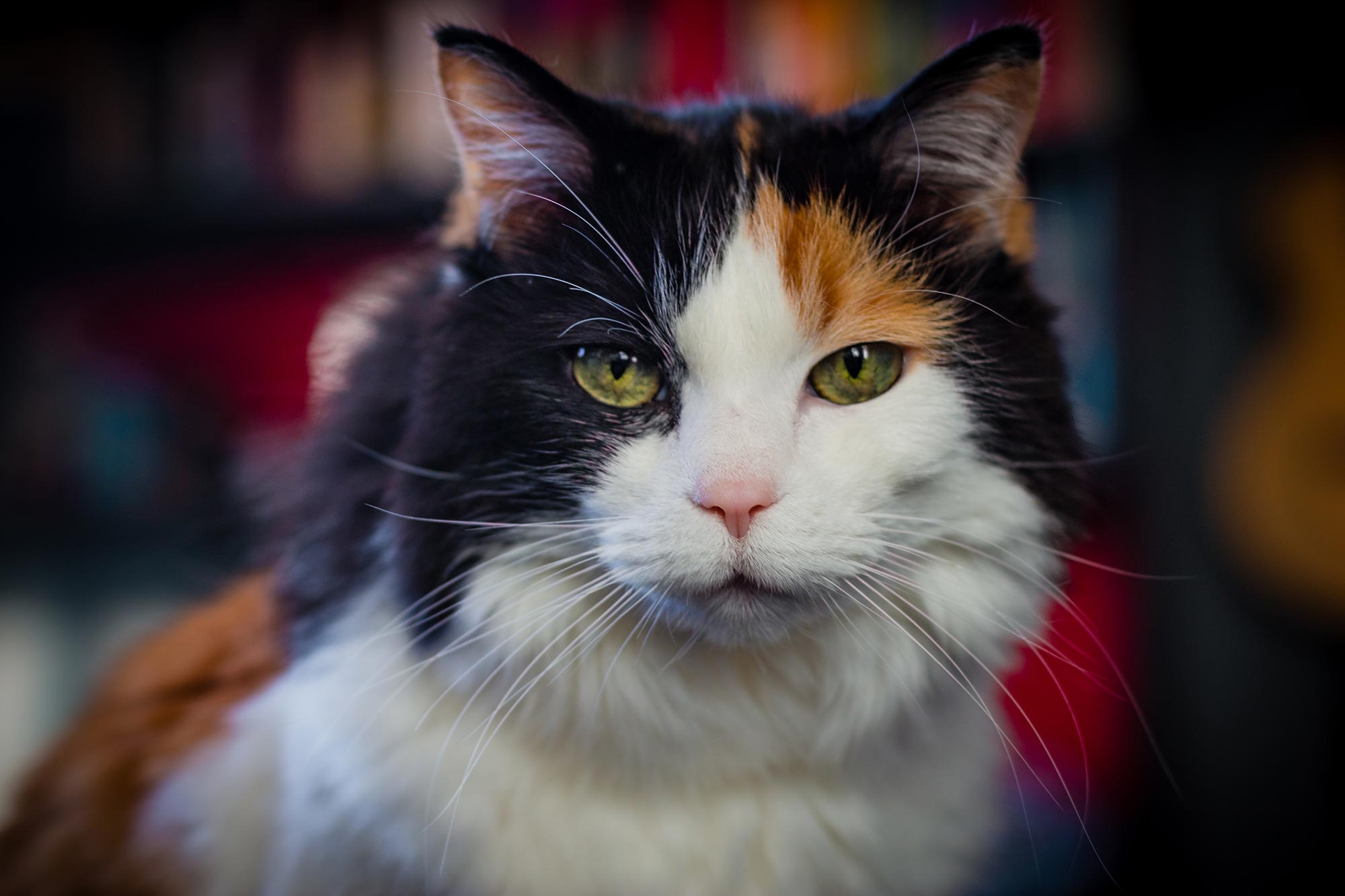
Cats with dementia show the same brain changes seen in Alzheimer’s patients, suggesting that our feline companions could hold vital clues to unlocking new treatments for memory loss in humans.
Research shows that cats experiencing dementia develop brain alterations that closely resemble those seen in individuals with Alzheimer’s disease. According to the study, this makes aging cats a promising natural model for investigating how the condition develops in humans.
Scientists identified an accumulation of amyloid-beta, a toxic protein associated with Alzheimer’s, in the brains of cats with dementia. This discovery strengthens the understanding of how amyloid-beta is linked to memory decline and age-related cognitive problems in both species.
Dementia Symptoms in Older Cats
Many senior cats begin to show behavioral changes that parallel those of people with Alzheimer’s. These can include increased vocalisation (or meowing), disorientation, and disrupted sleep patterns.
Examining Feline Brains for Clues
Researchers at the University of Edinburgh analyzed brain tissue from 25 cats of various ages after they had died, including animals that showed signs of dementia. Using high-resolution microscopy, the team observed amyloid-beta accumulating within synapses, which are the communication points between brain cells.
Synapses play an essential role in healthy brain activity by carrying signals from one nerve cell to another. In humans with Alzheimer’s disease, the loss of synapses is strongly linked to declining memory and reduced thinking skills.
How Support Cells May Contribute to Damage
The study also identified activity from astrocytes and microglia, two types of brain support cells, which appeared to engulf or “eat” synapses affected by amyloid-beta. This process, known as synaptic pruning, is important during early brain development but may contribute to harmful synapse loss later in life when associated with dementia.
Experts believe these findings will not only help veterinarians better understand and manage cognitive decline in cats but may also support the development of future Alzheimer’s treatments for people.
Why Cats Could Improve Alzheimer’s Research
For decades, Alzheimer’s research has relied heavily on genetically modified rodents. Because rodents do not naturally develop dementia, studying cats may provide a more realistic way to explore how the condition progresses and how it might be treated in both animals and humans.
The study, supported by Wellcome and the UK Dementia Research Institute, was published in the European Journal of Neuroscience. Contributors included researchers from the Universities of Edinburgh and California, the UK Dementia Research Institute, and Scottish Brain Sciences.
Expert Perspectives
Dr. Robert McGeachan, study lead from the University of Edinburgh’s Royal (Dick) School of Veterinary Studies, said: “Dementia is a devastating disease – whether it affects humans, cats, or dogs. Our findings highlight the striking similarities between feline dementia and Alzheimer’s disease in people. This opens the door to exploring whether promising new treatments for human Alzheimer’s disease could also help our ageing pets. Because cats naturally develop these brain changes, they may also offer a more accurate model of the disease than traditional laboratory animals, ultimately benefiting both species and their caregivers.”
Professor Danièlle Gunn-Moore, Personal Chair of Feline Medicine at the Royal (Dick) School of Veterinary Studies, said: “Feline dementia is so distressing for the cat and for its person. It is by undertaking studies like this that we will understand how best to treat them. This will be wonderful for the cats, their owners, people with Alzheimer’s and their loved ones. Feline dementia is the perfect natural model for Alzheimer’s; everyone benefits.”
Reference: “Amyloid-Beta Pathology Increases Synaptic Engulfment by Glia in Feline Cognitive Dysfunction Syndrome: A Naturally Occurring Model of Alzheimer’s Disease” by Robert I. McGeachan, Lucy Ewbank, Meg Watt, Lorena Sordo, Alexandra Malbon, Muhammad Khalid F. Salamat, Makis Tzioras, Joao Miguel De Frias, Jane Tulloch, Fiona Houston, Danièlle Gunn-Moore and Tara L. Spires-Jones, 11 August 2025, European Journal of Neuroscience.
DOI: 10.1111/ejn.70180
Never miss a breakthrough: Join the SciTechDaily newsletter.
Follow us on Google and Google News.
14 Comments
In other words, they want to experiment on cats. Note that they admit the limitation of using non-humans for human diseases. “For decades, Alzheimer’s research has relied heavily on genetically modified rodents. Because rodents do not naturally develop dementia, studying cats may provide a more realistic way to explore how the condition progresses and how it might be treated in both animals and humans.” And, yet, they still use genetically engineered rodents. Cats are not humans, either, and their “dementia” is not the same as human Alzheimer’s, which takes decades to develop. Of course, it’s less acceptable to experiments on cats than rats, so they are saying this will benefit cats. In reality, there will be cats in cages being experimented on by researchers who lack empathy for animals. We need human research for human disease. See my article, Stop Vivisection: Human Research for Human Disease. https://www.academia.edu/37390709/Stop_Vivisection_Human_Research_for_Human_Disease
Yes, that was my first concern and takeaway from the article as well. I’m picturing all these cats from shelters or the streets getting ‘disappeared’ and having to suffer in cages and endure horrible experiments.
Ditto =>
Ditto
Agree, the idea of animals in this situation is uncivilized.
Ditto =>
Ditto
They already do research on humans after experimenting on mice and mice showed no side effects but humans did !
Agree, the idea of animals in this situation is uncivilized.
So they want to experiment on cats. Everyone knows how to prevent dementia but they’re too fat and lazy. Stop torturing animals.
The extent that animals could possibly be useful at this stage is nil. This likely a scheme for grant funding. This cruel and should not be allowed to go forward. There are hundreds of thousands of people that have donated themselves to this research. Millions of people willing to try experimental medicines nothing positive will come from experimenting on animals.
The extent that animals could possibly be useful at this stage is nil. This likely a scheme for grant funding. This cruel and should not be allowed to go forward. There are hundreds of thousands of people that have donated themselves to this research. Millions of people willing to try experimental medicines nothing positive will come from experimenting on animals.
No to experiments on animals. People are asking to take part in research with no caging required.
Bad kitty