
Close Menu
    Facebook X (Twitter) Instagram
    SciTechDaily
    • Biology
    • Chemistry
    • Earth
    • Health
    • Physics
    • Science
    • Space
    • Technology
    Facebook X (Twitter) Pinterest YouTube RSS
    SciTechDaily
    Home»Earth»AIM Spacecraft Observes Early Noctilucent Ice Clouds Over Antarctica
    Earth

    AIM Spacecraft Observes Early Noctilucent Ice Clouds Over Antarctica

    By Lina Tran, NASA’s Goddard Space Flight CenterDecember 2, 2016No Comments2 Mins Read
    Facebook Twitter Pinterest Telegram LinkedIn WhatsApp Email Reddit
    Share
    Facebook Twitter LinkedIn Pinterest Telegram Email Reddit
    NASA’s AIM Observes Early Noctilucent Ice Clouds Over Antarctica
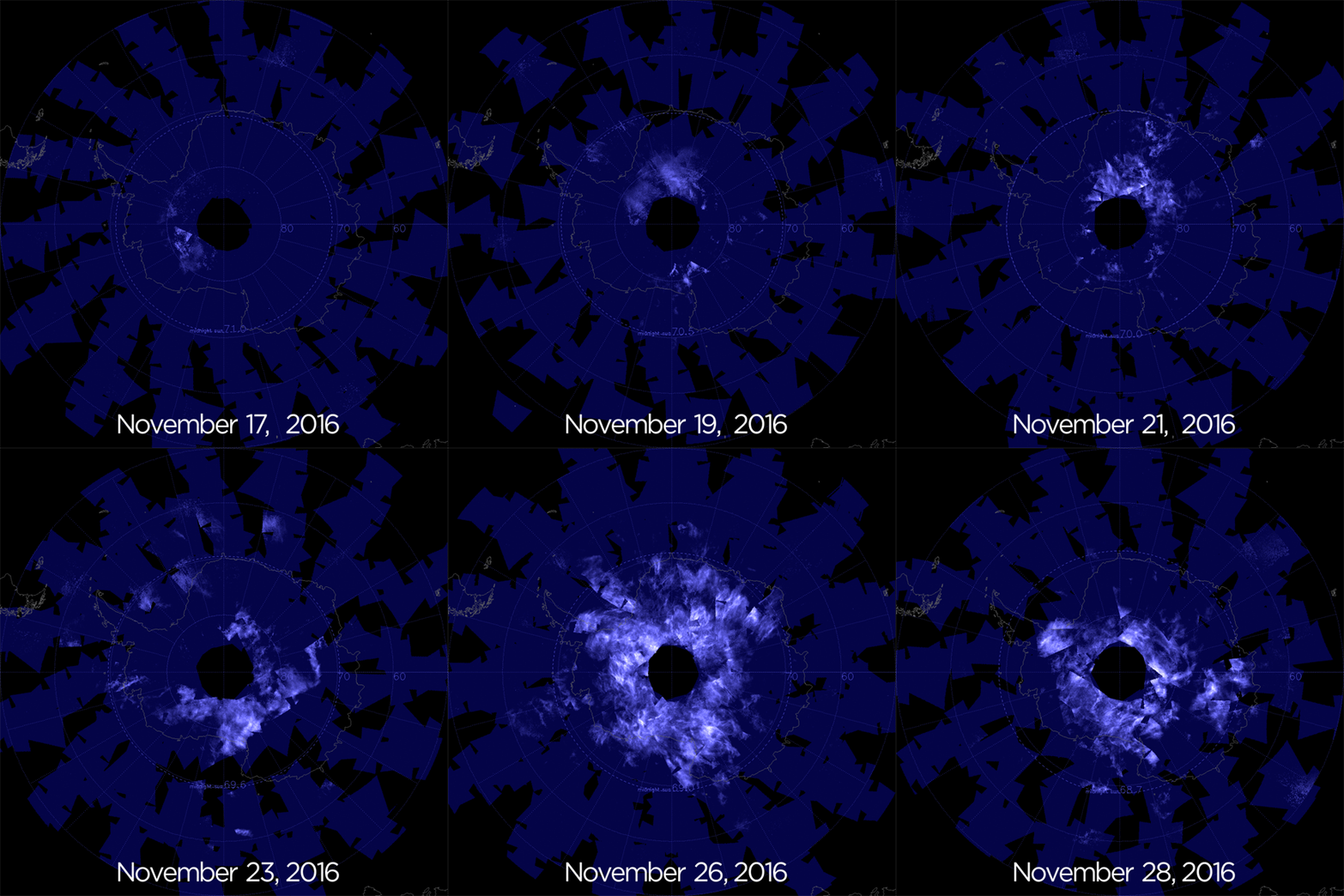
    Data from NASA’s Aeronomy of Ice in the Mesosphere, or AIM, spacecraft shows the sky over Antarctica is glowing electric blue due to the start of noctilucent, or night-shining, cloud season in the Southern Hemisphere. This data was collected from November 17-28, 2016.

    Data from NASA’s Aeronomy of Ice in the Mesosphere spacecraft shows the sky over Antarctica is glowing electric blue due to the start of noctilucent, or night-shining, cloud season in the Southern Hemisphere – and an early one at that.

    Noctilucent clouds are Earth’s highest clouds, sandwiched between Earth and space 50 miles (80 kilometers) above the ground in a layer of the atmosphere called the mesosphere. Seeded by fine debris from disintegrating meteors, these clouds of ice crystals glow a bright, shocking blue when they reflect sunlight.

    Aeronomy of Ice in the Mesosphere, or AIM, studies noctilucent clouds in order to better understand the mesosphere, and its connections to other parts of the atmosphere, weather, and climate. We observe them seasonally, during summer in both the Northern and Southern hemispheres. This is when the mesosphere is most humid, with water vapor wafting up from lower altitudes. Additionally, this is also when the mesosphere is the coldest place on Earth – dropping as low as minus 210 degrees Fahrenheit (-134 degrees Celsius) – due to seasonal airflow patterns.

    This year, AIM saw the start of noctilucent cloud season on November 17, 2016 – tying with the earliest start yet in the AIM record of the Southern Hemisphere. Scientists say this corresponds to an earlier seasonal change at lower altitudes. Winter-to-summer changes in the Antarctic lower atmosphere sparked a complex series of responses throughout the atmosphere – one of which is an earlier noctilucent cloud season. In the Southern Hemisphere, AIM has observed seasons beginning anywhere from November 17 to December 16.

    Since its 2007 launch, AIM data has shown us that changes in one region of the atmosphere can affect responses in another distinct, and sometimes distant, region. Scientists call these relationships atmospheric teleconnections. Now, due to natural precession, the spacecraft’s orbit is evolving, allowing the measurement of atmospheric gravity waves that could be contributing to the teleconnections.

    Never miss a breakthrough: Join the SciTechDaily newsletter.
    Follow us on Google and Google News.

    Antarctica Climate Science Earth Science NASA NASA AIM Weather
    Share. Facebook Twitter Pinterest LinkedIn Email Reddit

    Related Articles

    “Uncharted Territory” – Exceptionally Low Antarctic Sea Ice Observed by NASA

    NASA’s AIM Mission Spots First Night-Shining Clouds of Antarctic Summer

    NASA Study Shows Wind and Warm Water Accelerating Glacier Melt

    2015 El Niño Appears Likely to Equal the Event of 1997-98

    NASA’s Oceans Melting Greenland Mission Maps Greenland’s Coastline

    California Valley Land Continues to Sink

    NASA Study Provides New Estimates for the Global Water Cycle

    New NASA/NOAA Animations Reveal Water Vapor Over Oceans

    AIM Monitors Electric-Blue Noctilucent Clouds over Antarctica

    Leave A Reply Cancel Reply

    • Facebook
    • Twitter
    • Pinterest
    • YouTube

    Don't Miss a Discovery

    Subscribe for the Latest in Science & Tech!

    Trending News

    289-Million-Year-Old Reptile Mummy Reveals Origin of Human Breathing System

    New Brain Discovery Challenges Long-Held Theory of Teenage Brain Development

    Scientists Discover Plants “Scream” – We Just Couldn’t Hear Them Until Now

    Scientists Discover a Surprising Reason Intermittent Fasting Extends Life

    This Simple Fruit Wash Could Make Produce Safer and Last Days Longer

    Scientists Say Adding This Unusual Seafood to Your Diet Could Reverse Signs of Aging

    Scientists Say a Hidden Structure May Exist Inside Earth’s Core

    Doctors Surprised by the Power of a Simple Drug Against Colon Cancer

    Follow SciTechDaily
    • Facebook
    • Twitter
    • YouTube
    • Pinterest
    • Newsletter
    • RSS
    SciTech News
    • Biology News
    • Chemistry News
    • Earth News
    • Health News
    • Physics News
    • Science News
    • Space News
    • Technology News
    Recent Posts
    • Scientists Propose Radical New Way To Detect Alien Life – Without Traditional Biosignatures
    • Scientists Just Discovered Light Can Actually Slow Plant Growth
    • Scientists Finally Solved One of Water’s Biggest Mysteries
    • 7,000-Year-Old DNA Rewrites the Story of the “Neolithic Revolution”
    • Missing Medieval Relic of Legendary English King Found After Being Missing for 40 Years
    Copyright © 1998 - 2026 SciTechDaily. All Rights Reserved.
    • Science News
    • About
    • Contact
    • Editorial Board
    • Privacy Policy
    • Terms of Use

    Type above and press Enter to search. Press Esc to cancel.