
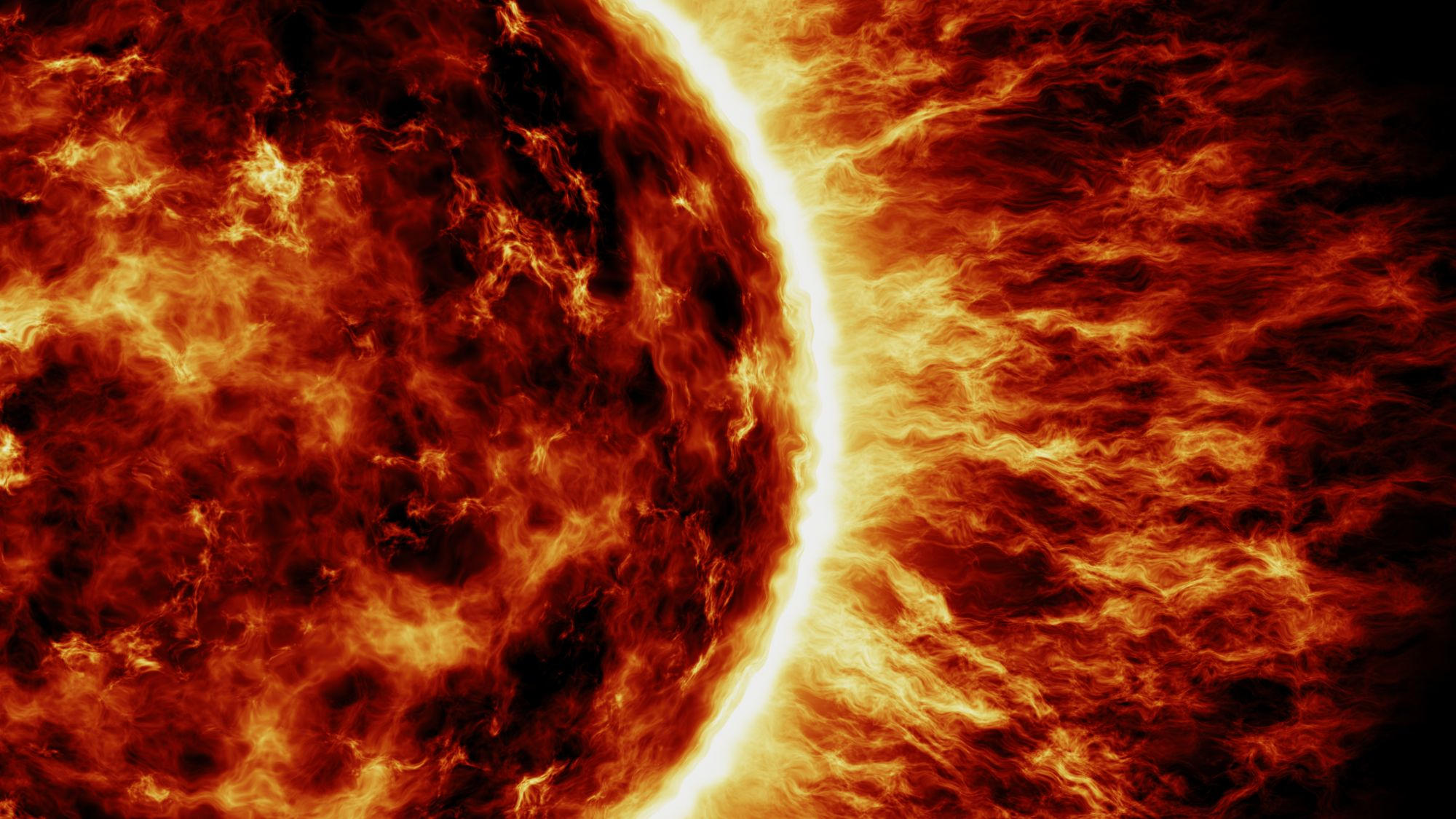
Researchers at IISER Kolkata’s Center of Excellence in Space Sciences India have uncovered a novel link between the Sun’s magnetic field and its sunspot cycle. This finding could enable predictions of the peak in solar activity. According to their study, the peak of solar cycle 25, which is currently in progress, is expected to happen soon, possibly within the next year. Their findings have been published in the journal Monthly Notices of the Royal Astronomical Society: Letters.
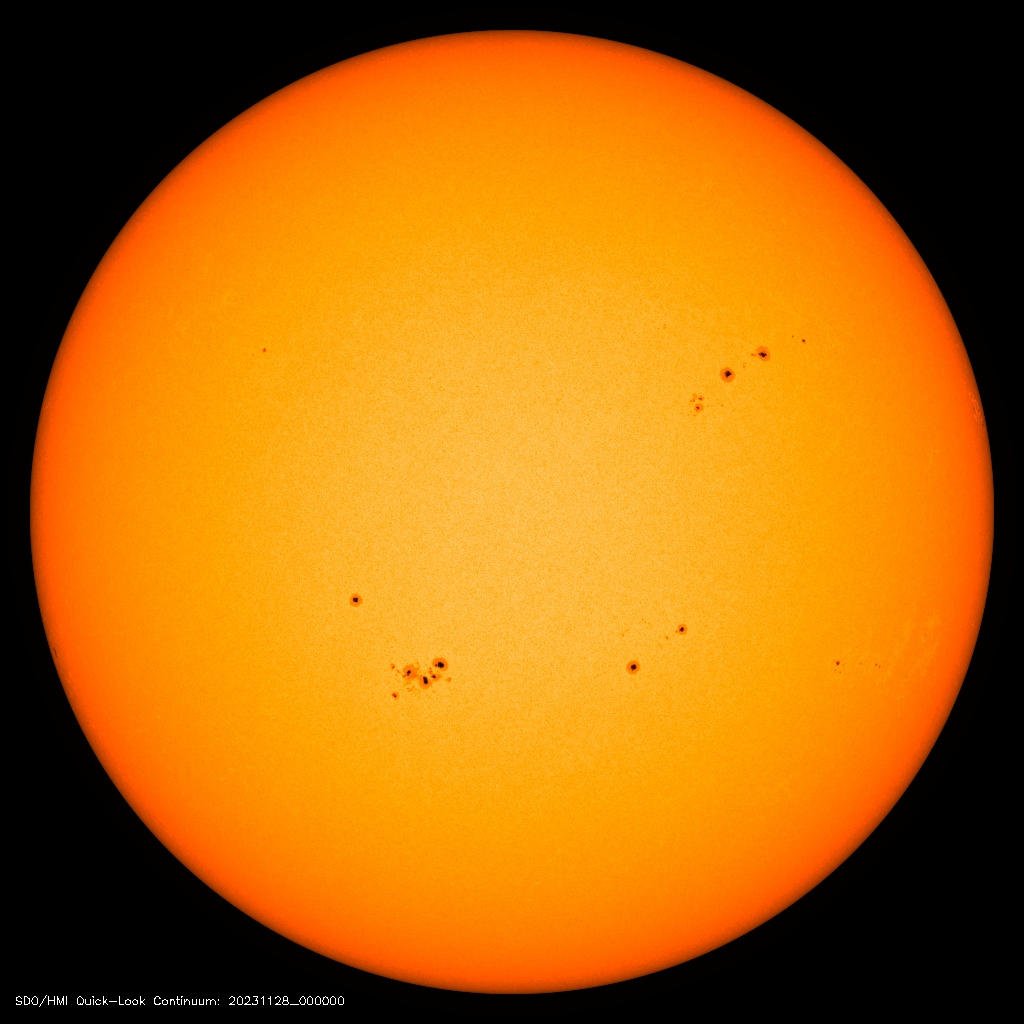
Our star, the Sun, is made up of hot ionized gas known as plasma. Huge plasma flows and convection conspire together to form magnetic fields inside the Sun which manifest on the surface as dark spots. These sunspots are comparable to the size of the Earth and are seats of intense magnetism, about 10,000 times stronger than the Earth’s magnetic field.
Sometimes the sunspot magnetic fields are disrupted in violent events which result in the birth of solar magnetic storms such as flares or coronal mass ejections. These storms release high-energy radiation and hurl vast amounts of magnetized plasma into outer space. The most intense of these storms can cause serious damage to orbiting satellites, electric power grids, and telecommunications when Earth-directed.
The Sunspot Cycle and Historical Observations
Centuries of observations starting from the early 1600s show that the number of sunspots observed on the Sun varies periodically. Approximately every 11 years the number of spots and the intensity of solar activity reach a peak when the most violent perturbations in planetary space environments – or space weather – are expected. However, predicting when this peak is going to occur has remained challenging.
The solar cycle is produced by a dynamo mechanism driven by energy from plasma flows inside the Sun. This dynamo mechanism is understood to involve two primary components of the Sun’s magnetic field, one which manifests in the cycle of sunspots and another which manifests in a recycling of the large-scale dipole field of the Sun; the latter is much like the Earth’s magnetic field – stretching from one pole of the Sun to another. With the cycle of sunspots, the Sun’s dipole field is also observed to wax and wane in strength, the north and south magnetic poles swap places, also every 11 years.
The Waldmeier Effect and New Discoveries
In 1935, Swiss astronomer Max Waldmeier discovered that the faster the rate of rise of a sunspot cycle the stronger its strength, so stronger cycles take less time to rise to their peak intensity. This relationship has often been utilized to forecast the strength of a sunspot cycle based on observations of its early rising phase.
In a research manuscript appearing in the Monthly Notices of the Royal Astronomical Society Letters, Priyansh Jaswal, Chitradeep Saha, and Dibyendu Nandy of IISER Kolkata report the discovery of a new relationship, namely, the rate of decrease in the Sun’s dipole magnetic field is also related to the rate of rise of the ongoing sunspot cycle.
This discovery, utilizing decades-old data archives from multiple ground-based solar observatories around the world, complements the Waldmeier effect, connecting the two primary magnetic field components of the Sun and supporting the theory that the evolution of sunspots is integral to the functioning of the solar dynamo process rather than being a mere symptom of it.
The scientists demonstrate how observations of the rate of decrease of the Sun’s dipole magnetic field can be usefully combined with sunspot observations to predict when the ongoing cycle would peak. Their analysis suggests that the maximum of solar cycle 25 is most likely to occur in early 2024 with an uncertainty in the estimate that ranges to September 2024.
With this discovery, a new window opens up for forecasting the timing of the peak of solar cycles – when the most intense activity and most frequent space weather disturbances are expected.
Reference: “Discovery of a relation between the decay rate of the Sun’s magnetic dipole and the growth rate of the following sunspot cycle: a new precursor for solar cycle prediction” by Priyansh Jaswal, Chitradeep Saha and Dibyendu Nandy, 28 November 2023, Monthly Notices of the Royal Astronomical Society: Letters.
DOI: 10.1093/mnrasl/slad122
Never miss a breakthrough: Join the SciTechDaily newsletter.
Follow us on Google and Google News.
2 Comments
Good grief, who’d have thunk it, the solar maximum means that the earth will warm slightly and it’s not CO2 at 0.04% after all. Meanwhile the hysteria continues while ignoring that big hot white thing on the sky.
Come on now Sheikh. Stop try to infuse logic into the established narrative. 🙂