
A new study reveals surprising clues about the beginnings of subduction on Earth.
The Hadean Eon, which lasted from 4.6 to 4.0 billion years ago, is still the least understood period in Earth’s past. It began with the birth of the planet and was quickly marked by a giant impact with a Mars-sized object. This event produced the Moon and caused Earth’s interior to melt entirely. The crust began to solidify around 4.5 billion years ago, yet scientists continue to debate what conditions were like after this early cooling.
Most researchers have long proposed that Earth spent this time operating in a “stagnant lid” tectonic state. Under this idea, the planet’s surface consisted of a thick, unmoving shell while convection occurred only within the mantle below. This scenario would not include subduction, i.e. the downward sinking of crust into the Earth’s interior, or the formation of continental crust that characterizes the plate tectonics we see today.
A Challenge to Old Assumptions
Now, researchers from the ERC Synergy Grant Project “Monitoring Earth Evolution through Time” (MEET)—a collaboration between geochemists from Grenoble (France) and Madison (USA), and geodynamic modelers from GFZ Helmholtz Centre for Geosciences in Potsdam (Germany)—are challenging that view.
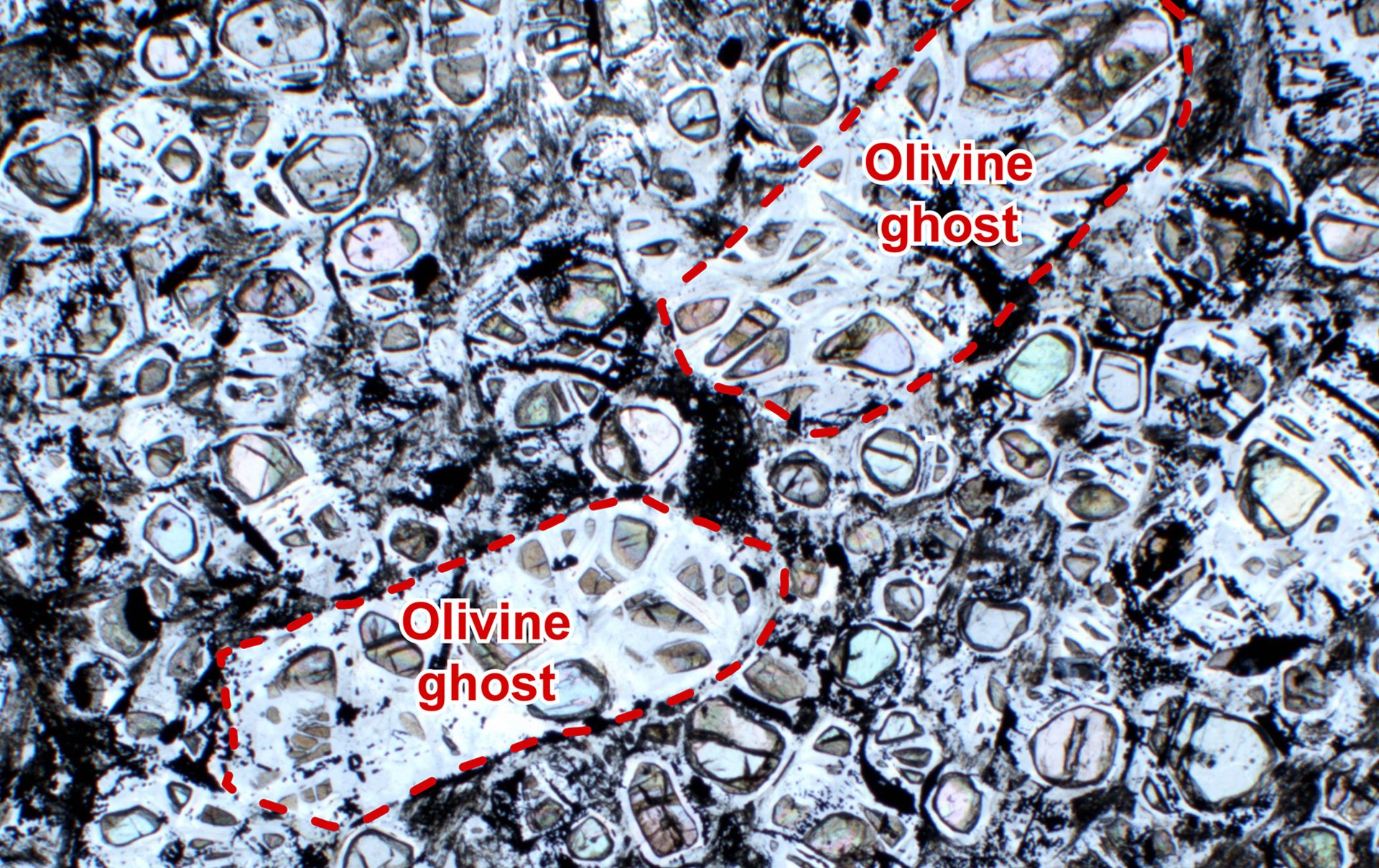
In their new study, published in Nature Communications, the MEET team presents evidence that subduction and continental crust formation were already active and more vigorous in the Hadean than previously thought. Using an innovative analytical technique, the Grenoble team measured strontium isotopes and trace elements in melt inclusions preserved within 3.3-billion-year-old olivine crystals. Meanwhile, the GFZ team used cutting-edge geodynamic simulations to interpret these geochemical signals in terms of early Earth processes.
Their combined findings suggest a much more active early Earth, indicating that extensive subduction and continent formation may have started hundreds of millions of years earlier than previously believed.
Reference: “Growth of continental crust and lithosphere subduction in the Hadean revealed by geochemistry and geodynamics” by Adrien Vezinet, Aleksandr V. Chugunov, Alexander V. Sobolev, Charitra Jain, Stephan V. Sobolev, Valentina G. Batanova, Evgeny V. Asafov, Alina N. Koshlyakova, Nicholas T. Arndt, Leonid V. Danyushevsky and John W. Valley, 25 April 2025, Nature Communications.
DOI: 10.1038/s41467-025-59024-6
Never miss a breakthrough: Join the SciTechDaily newsletter.
Follow us on Google and Google News.
3 Comments
One wonders what geological research, especially of such innovative quality, is occurring in Australia. The bums-on-seats model of funding may fund Vice Cancellors’ and administrators salaries’ but Australia’s universities are castrating if not closing their Departments of Geology.
The problem isn’t unique to Australia. It has been happening in the USA since about the 1970s. Stanford University no longer actually has a “geology” department. Instead, a collection of Earth science departments, with woke titles that give little hint as to what they do, has replaced the original geology department, at one time one of the premier university geology departments in the world.
Organizations like Friends of Mineralogy (of which I’m a former president) are struggling, in part because the members are older and retired. The Midwest Chapter has been without a president and vice-president for a few years now. Part of the reason(s) is(are) that it has become unfashionable to be involved with natural resource industries and younger people seem to be attracted to disciplines that they mistakenly believe will ‘save’ the world.
This is one of the reasons I tend to be critical of the climatology news articles here. I don’t find the rigor and competence that I have come to expect from geology. It seems that the standards have declined.
Saving the planet is one of the biggest myths that man has ever imposed on himself. Climate change, evolution and extinction is nature at work. Change is the constant and adaptation is the solution.