
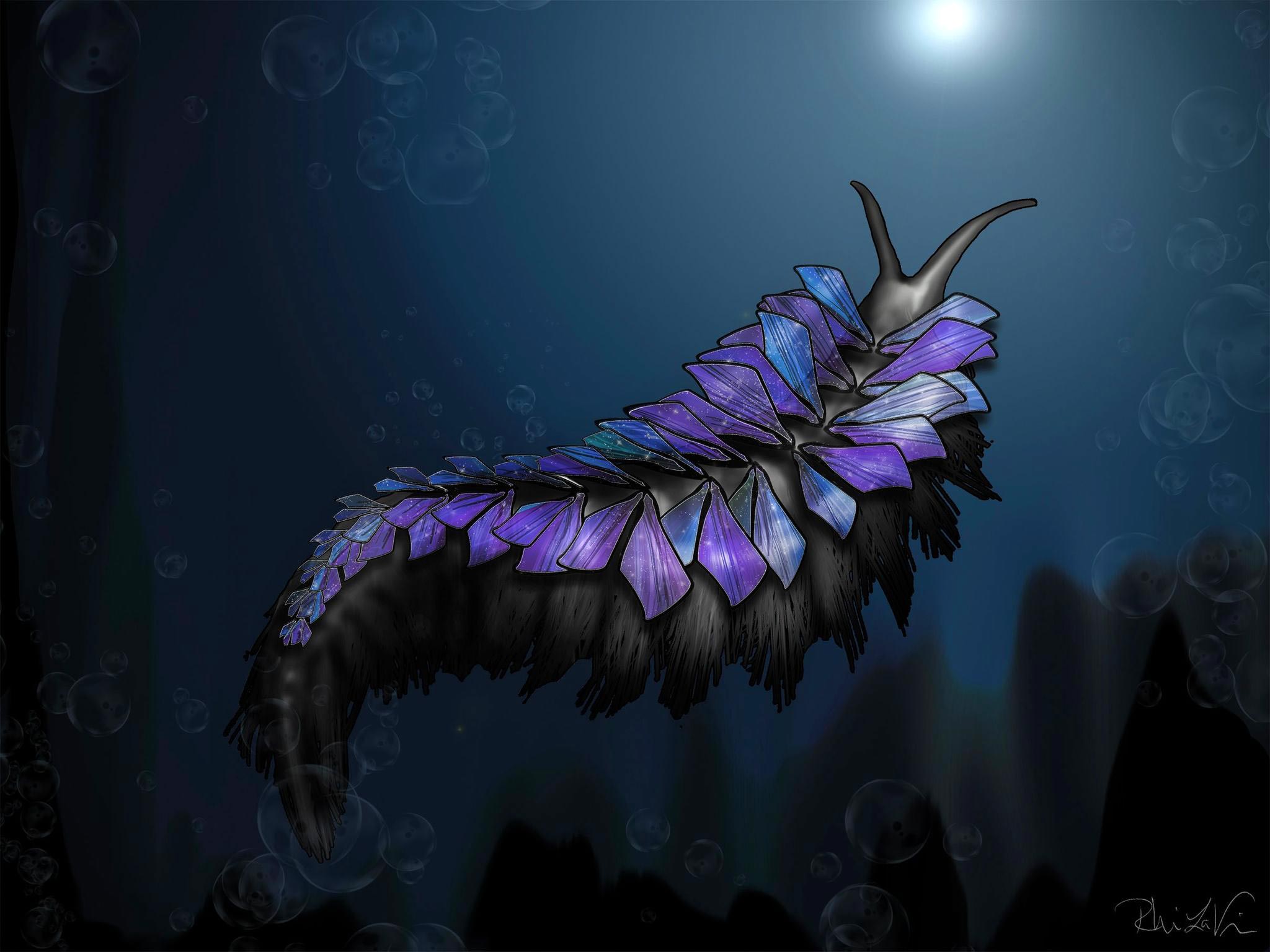
Researchers from the University of Kansas have discovered a previously unknown species of ancient sea worm, named Shaihuludia shurikeni. Another fossil at the same site was reclassified as a species, Burgessochaeta, thought to exist only in Canada, highlighting the diversity of the mid-Cambrian marine ecosystem.
Excavations by a University of Kansas paleontologist working in a treasure trove of fossils called the “Spence Shale Lagerstätte” have revealed an ancient sea worm that until now was unknown to science.
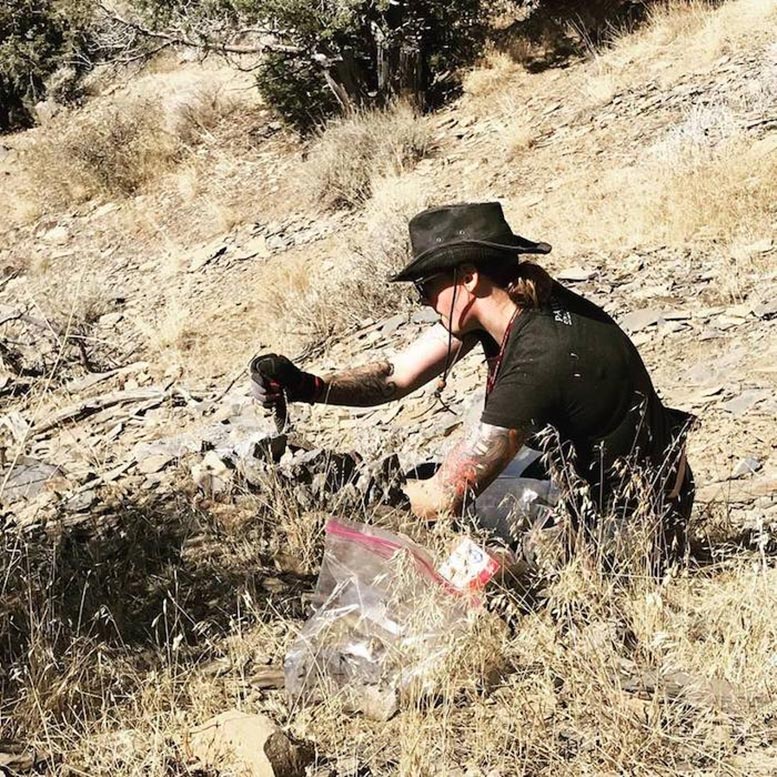
When she found the fossil, Rhiannon LaVine, a research associate with the KU Biodiversity Institute and Natural History Museum, was part of a team camping and carrying out fieldwork in the High Creek area of the Spence Shale. This is a geologic formation straddling northern Utah and southern Idaho. Since the 1900s, the area has been famed for its abundance of some 90 species of Cambrian trilobites and soft-bodied fossils.
Their findings were published recently in the peer-reviewed journal Historical Biology.
The Discovery
“One of the last times we were out there, I split open one of these pieces of rock and instantly knew it was something that wasn’t typical,” LaVine said. “The first thing we see are these radial blades that look like stars or flowers. Immediately, I showed it to (lead author) Julian Kimmig. He was perplexed. He’s said, ‘I’ve never seen anything like that.’ We were out with Paul Jamison, a local who’s been working the site for years — and if there’s something in there that somebody’s seen, he’s seen it. But he hadn’t seen it.”
After transporting the fossil specimen back to the KU Biodiversity Institute — where today it’s part of the permeant paleontological collection — LaVine consulted with colleagues about the mysterious fossil.
Scientific Investigation
“I was showing it to everybody, asking, ‘What do you think this is?’,” LaVine said. “Nobody had an idea. We thought maybe it’s a wiwaxia, a very peculiar animal from about that time — but we don’t have too many representatives of it from the Spence area. Or maybe it’s a scale worm, but there’s no real scale worms known from that time. Maybe it was a juvenile jellyfish, but it’s so bladed and the lines are so straight on those things, it would be kind of odd. So, I couldn’t get a solid answer.”
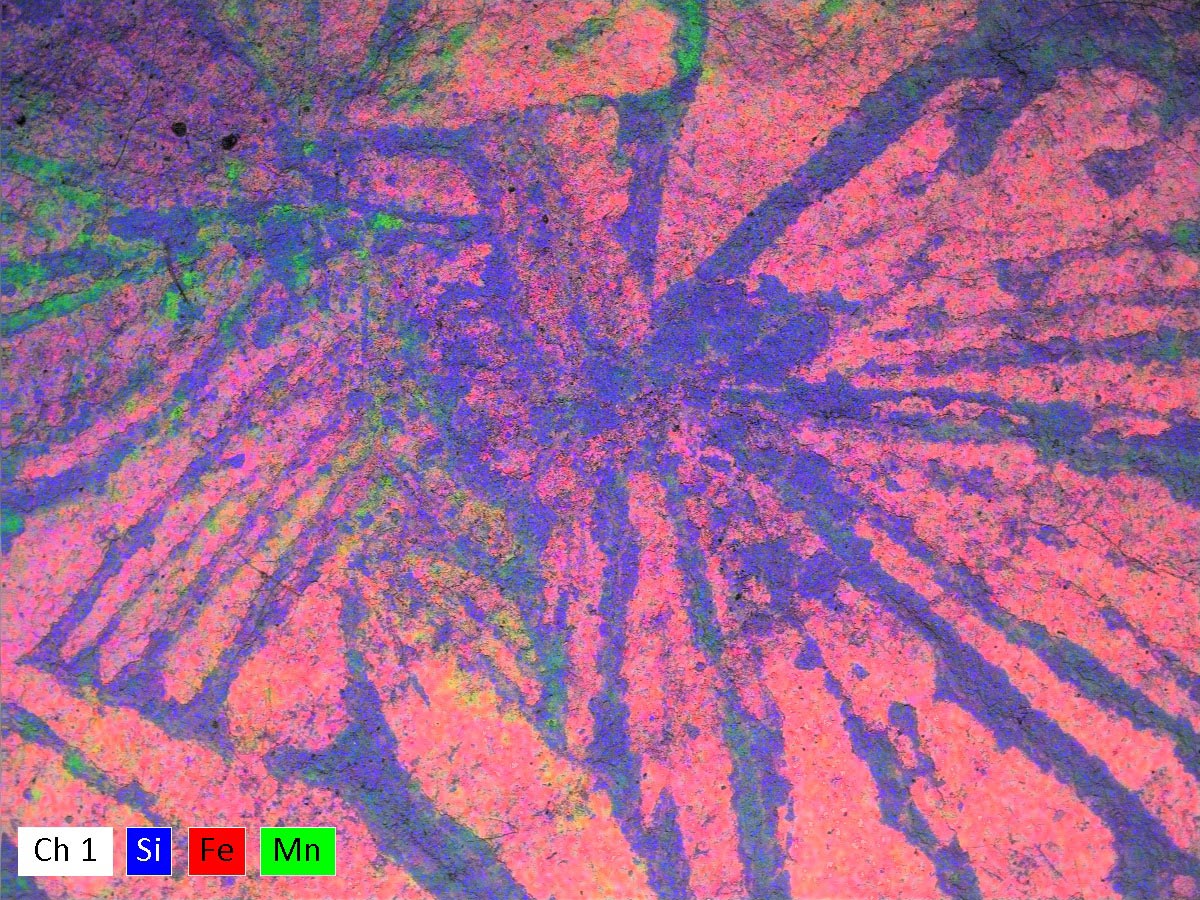
Next, LaVine teamed with colleagues at the University of Missouri to conduct scanning electron microscopy and energy-dispersive X-ray spectrometry on the fossil.
“We mainly wanted to make sure that this was a biological thing, because it’s possible it could have just been some weird mineral growth with the way it looked,” said the KU researcher. “So that was primarily why we brought it to them. It’s about 7 or 8 centimeters long, maybe a little shorter than the length of a smartphone. It’s sizable for a fossil of that sort. We did the scanning to rule out that it wasn’t just a mineral growth, and we were able to do that.”
Final Classification and Naming
LaVine and her co-authors eventually classified the fossil to be a previously unknown species of annelid, a diverse phylum of some 21,000 “segmented worm” species found in terrestrial, freshwater, and marine environments all over the world.
As the discoverer of the new fossil worm and a co-author on the paper describing it, LaVine bestowed the species with its scientific name: Shaihuludia shurikeni. Shai-Hulud is the indigenous name for the worms on the planet Arrakis in the “Dune” novels by Frank Herbert, while “shuriken” is the Japanese word for throwing star, representing the shape of the blade-like chaetae (chaetae are the stiff bristles that characterize many annelids).
“I’ve been involved in describing species before, but this is the first one I’ve named,” LaVine said. “Actually, I was able to name its genus — so I can put that feather in my cap. It was the first thing that came to mind, because I’m a big ol’ nerd and at the time I was getting really excited for the ‘Dune’ movies.”
Like worm’s sci-fi namesake, Shaihuludia shurikeni is a big deal: Describing a new species of Cambrian annelid doesn’t happen every day.
“Annelids are very rare in the Cambrian of North America, and so far we only knew of a single specimen from the Spence Shale,” said lead author Julien Kimmig, a paleontologist with the State Museum of Natural History in Karlsruhe, Germany. “The new annelid Shaihuludia shurikeni is especially interesting, as it had some very impressive chaetae, which makes it unique among the Cambrian annelids. The way that the fossil is preserved is also of particular interest, because most of the soft tissue is preserved as an iron oxide ‘blob,’ suggesting the animal died and was decomposing for a while before it was fossilized. However, with the analytical methods used in the paper, we show that even with limited preservation you can identify fossils.”
Other Discoveries
In the process, the team reexamined a fossilized annelid previously found in the Spence Shale and reclassified it as Burgessochaeta — a surprise because until then, Burgessochaeta have only been found in another famed fossil deposit in British Columbia, Canada.
“Burgessochaeta is really only known from the Burgess Shale,” LaVine said. “A similar worm was collected in our Spence Shale decades ago, and it was named Canadia, which is kind of a wastebasket genus for a lot of the annelids that come out of these types of deposits.
“Nobody really looked into it for a long time, but when we got this one, we took a little closer look at the other annelid found there. Maybe this was another version of it, or it was related in some way,” LaVine said. “We determined the other annelid from the Spence Shale is actually closer to Burgessochaeta — this is the first time it’s been described outside of the Burgess Shale.”
Both worm species would have inhabited a marine ecosystem ruled by invertebrate organisms, like trilobites, brachiopods, mollusks, and early forms of arthropods. The mid-Cambrian is noted for the intense biodiversity of its marine life.
Deep Time and Evolution
“This discovery gets us to think about deep time,” LaVine said. “When we look outside, we see all the animals that we know. Now we can walk past a duck, go to the beach and see a starfish and all the critters that exist in the ocean. We kind of know what to expect. But then we can let our imaginations go a little bit to imagine what happened a million years ago or, in this case, over 500 million years ago. What does the ocean look like then? You’re going to see a lot of the similar players, but they’re a little bit alien because evolution has taken place.
“It’s very cool to think about our planet as a record of history and all of the different environments that have happened over billions of years, all on the same ground we stand on. We’ve had alien worlds beneath our feet.”
Reference: “Annelids from the Cambrian (Wuliuan Stage, Miaolingian) Spence Shale Lagerstätte of northern Utah, USA” by Julien Kimmig, Rhiannon J. LaVine, James D. Schiffbauer, Sven O. Egenhoff, Kevin L. Shelton and Wade W. Leibach, 8 April 2023, Historical Biology.
DOI: 10.1080/08912963.2023.2196685
LaVine and Kimmig’s co-authors were James Schiffbauer, Sven Egenhoff, Kevin Shelton, and Wade Leibach.
Never miss a breakthrough: Join the SciTechDaily newsletter.
Follow us on Google and Google News.
1 Comment
I’d take your scientific content more seriously if the page wasn’t stuffed full of clickbait for sketchy websites and ads for offensive sexist T shirts.