

Litoria tylerantiqua, a 55-million-year-old fossil, is Australia’s oldest known tree frog. It shifts the timeline for frog evolution and underscores the resilience of frogs across mass extinction events.
New evidence of Australia’s earliest known tree frog species is reshaping our understanding of when Australian and South American frogs diverged on the evolutionary tree.
Until now, scientists believed that the two groups split around 33 million years ago.
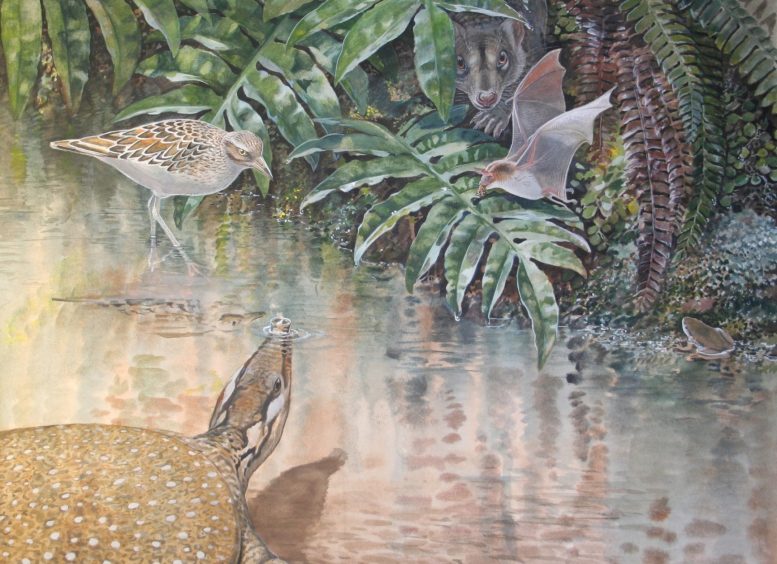
However, a new study published in the Journal of Vertebrate Palaeontology by palaeontologists at UNSW Sydney identifies a species named Litoria tylerantiqua as approximately 55 million years old, making it the earliest known member of the pelodryadid family of Australian tree frogs.
The fossils were discovered at Murgon, located on the traditional lands of the Waka Waka people in south-eastern Queensland. The species was named in honor of the late Michael Tyler, a distinguished Australian herpetologist recognized worldwide for his pioneering work on frogs and toads.
“It is only fitting to name Australia’s earliest tree frog in honour of a man who was a giant in Australian frog research and in particular the first to explore the fossil record for Australian frogs,” says study lead author Dr. Roy Farman, an adjunct associate lecturer with UNSW School of Biological, Earth & and Environmental Sciences.
Evolutionary history of Australian tree frogs
About 55 million years ago, Australia, Antarctica, and South America were still connected as the final pieces of the ancient southern supercontinent Gondwana. During this time, the global climate was warmer, and a forested land corridor provided a direct link between South America and Australia.
Up until now, it was thought the earliest Australian tree frogs came from the Late Oligocene (about 26 million years ago) and the Early Miocene (23 million years ago). Fossils of the Late Oligocene were found at Kangaroo Well in the Northern Territory and Etadunna Formation at Lake Palankarinna, South Australia, while the Riversleigh World Heritage Area in Queensland revealed tree frogs from the Early Miocene.
But the new species extends the fossil record of pelodryadids by approximately 30 million years, to a time potentially close to the divergence of Australian tree frogs from the South American tree frogs.
Previous estimates based on molecular clock studies – a method scientists use to figure out when different species split from a common ancestor by looking at the rate of genetic changes over time – suggested that Australian and South American tree frogs separated from each other at about 33 million years ago.
“Our research indicates that that date is at least 22 million years too young,” Dr. Farman says.
“While molecular studies are important for understanding the evolutionary relationships of different groups of animals, these studies should be calibrated using knowledge from the fossil record and in this case the fossil record provides a more accurate time for separation of the southern world’s tree frogs.”
Using new technology to study ancient frogs
To conduct this research, the authors used CT scans of spirit-preserved frogs from Australian museum collections to compare the three-dimensional shape of the fossil bones with those of living species. The technique – called three-dimensional geometric morphometrics – has only been used on fossil frogs once before. Using these new methods, they were able to unravel the relationships of these fossils to all other groups of frogs living and extinct.
“We had a real problem at the start of this study because the pelvic bones of most living frogs were invisible inside whole pickled frogs rather than available for study as skeletons,” Dr. Farman says.
“Museums understandably want to ensure these often unique or rare pickled specimens remain intact for molecular studies because DNA can be obtained from their soft tissues. This meant that instead of skeletonising these specimens, we needed instead to make CT scans of them, enabling us to create 3D models of their otherwise invisible skeletons.
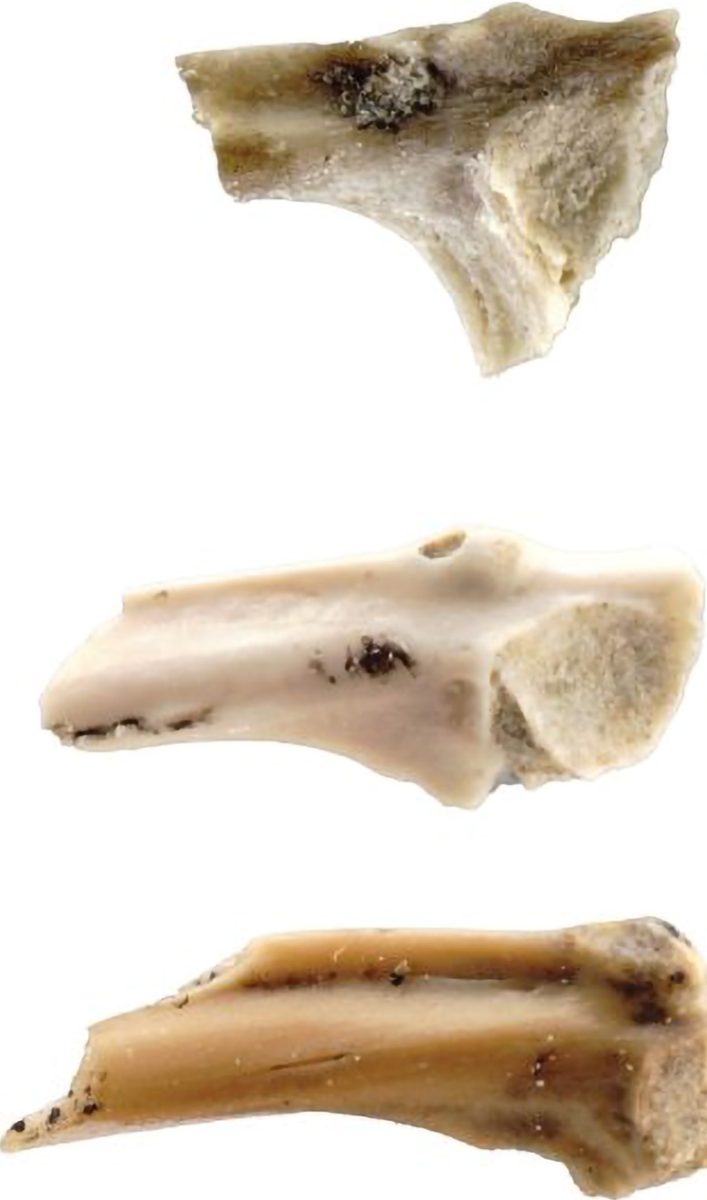
“Using these cutting-edge investigative methods, we were able to determine from the shape of the fossil ilia – one of three bones that make up each side of the pelvis – that this new Murgon species of frog is more closely related to the Australian tree frogs (pelodryadids) than the South American tree frogs (phyllomedusids).”
Seasoned survivors that outlasted the dinosaurs
Litoria tylerantiqua joins the only other Murgon frog, the ground-dwelling Platyplectrum casca (previously described as Lechriodus casca), as the oldest frogs known from Australia. Both have living relatives in Australia and New Guinea, demonstrating remarkable resilience over time.
“Despite their delicate nature, frogs have been surprisingly successful at surviving several mass extinction events since their origins about 250 million years ago, including the mass extinction 66 million years ago that took out the non-flying dinosaurs,” Dr. Farman says.
“Although global extinction events triggered by human activities, such as rapid climate change and the spread of chytrid fungus, may be among the worst challenges frogs have had to face, the fossil record could reveal how some frog groups overcame previous challenges, perhaps by adapting to new, less-threatening habitats. This could provide clues about how we might be able to help by translocating some threatened frogs into more future-secure habitats.”
Frogs such as the southern corroboree frog are threatened in their current habitats, which have become more hostile due to climate change. The authors say that if the fossil record shows physically similar frogs living in very different habitats, today’s frogs may benefit by being reintroduced into similar environments.
Reference: “Early Eocene pelodryadid from the Tingamarra Local Fauna, Murgon, southeastern Queensland, Australia, and a new fossil calibration for molecular phylogenies of frogs” by Roy M. Farman, Michael Archer and Suzanne J. Hand, 14 May 2025, Journal of Vertebrate Paleontology.
DOI: 10.1080/02724634.2025.2477815
Funding: CREATE Fund UNSW, Australian Research Council, Frog and Tadpole Society
Never miss a breakthrough: Join the SciTechDaily newsletter.
Follow us on Google and Google News.