
Close Menu
    Facebook X (Twitter) Instagram
    SciTechDaily
    • Biology
    • Chemistry
    • Earth
    • Health
    • Physics
    • Science
    • Space
    • Technology
    Facebook X (Twitter) Pinterest YouTube RSS
    SciTechDaily
    Home»Science»Researchers Unravel the Secret of a 45 Million-Year-Old Death Trap
    Science

    Researchers Unravel the Secret of a 45 Million-Year-Old Death Trap

    By University College CorkAugust 28, 20221 Comment3 Mins Read
    Facebook Twitter Pinterest Telegram LinkedIn WhatsApp Email Reddit
    Share
    Facebook Twitter LinkedIn Pinterest Telegram Email Reddit
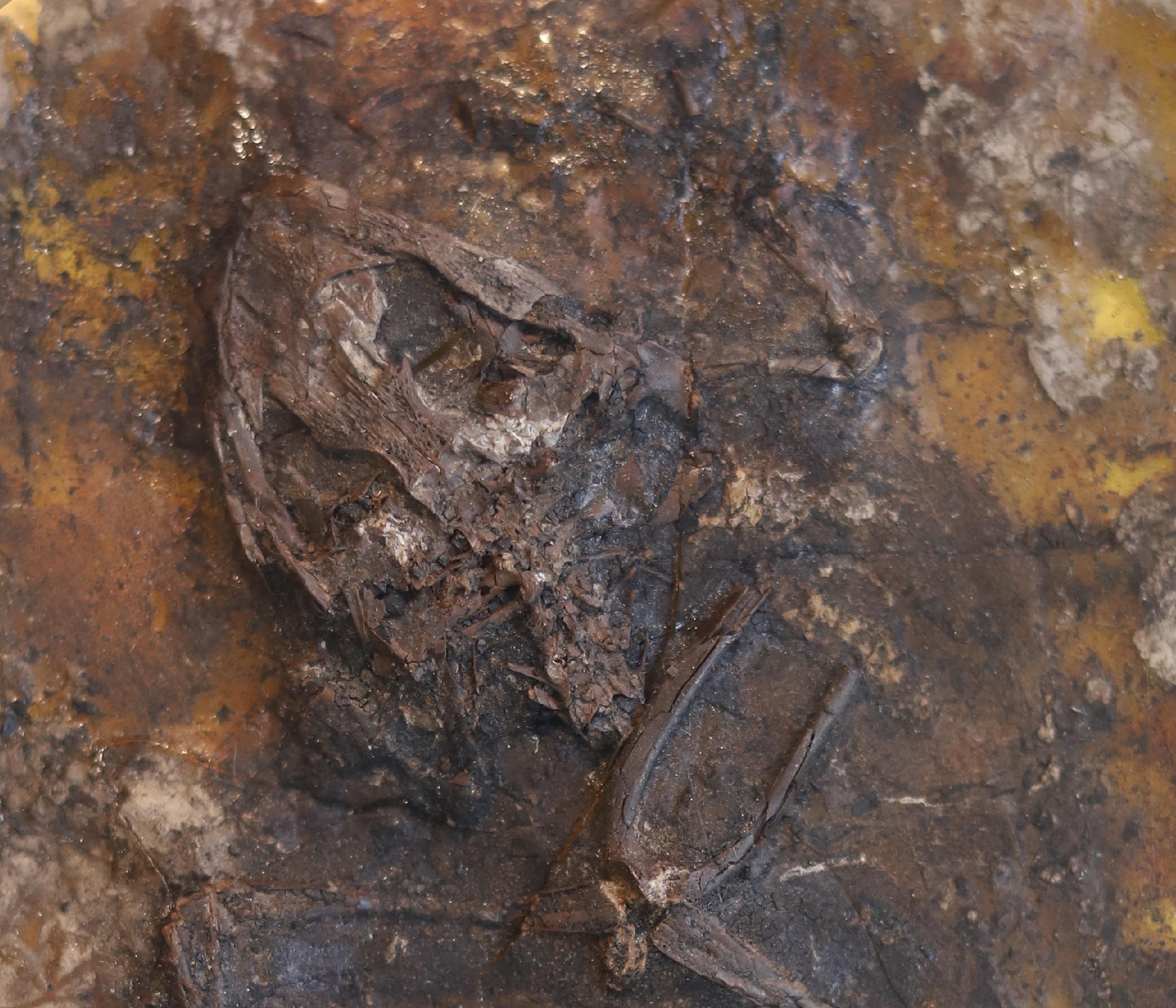
    Fossil Frog Skeleton
    A well-preserved skeleton of a fossil frog from the Geiseltal Collection. The frog likely died during mating in a swamp environment and broke into two pieces due to currents on the lake bottom. Credit: D. Falk

    For Fossil Frogs, an Ancient Swamp Is a Sex Death Trap

    Paleontologists at University College Cork (UCC) have determined why hundreds of fossil frogs in a prehistoric swamp perished 45 million years ago while mating.

    Over 50,000 prehistoric animals perished in the watery death trap in the Geiseltal region of central Germany, including birds, horses, bats, fish, and hundreds of frogs. The former coalfield of Geiseltal in Saxony-Anhalt is regarded as a scientific treasure trove because of its distinctive geological characteristics and numbers of fossils, offering a unique view into how the Earth’s vegetation and animals developed over millions of years.
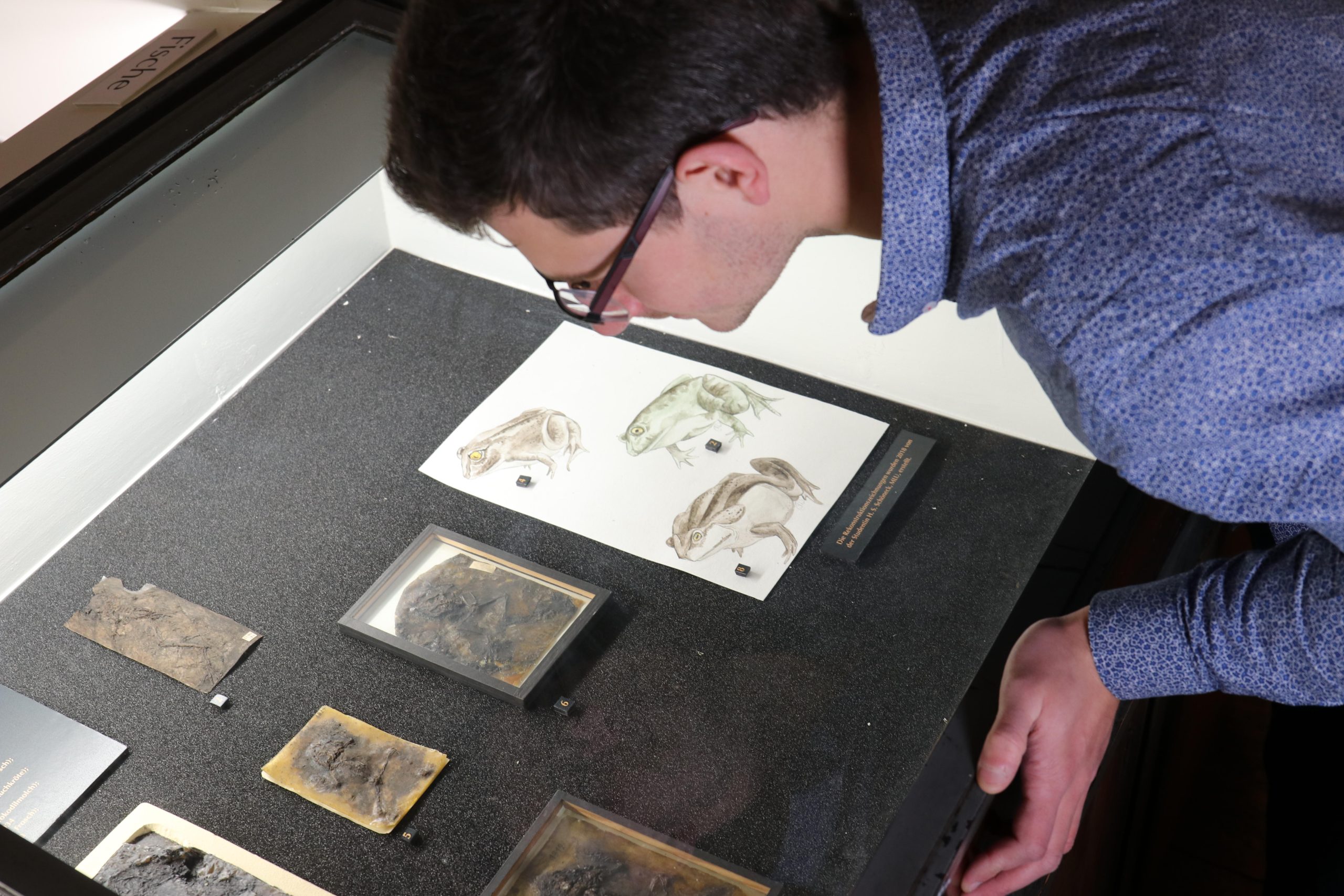
    Daniel Falk
    Daniel Falk investigates Geiseltal frogs, that died around 45 million years ago. The fossil frogs are stored in the Natural Sciences Collections, Halle (Saale), Germany. Credit: D. Falk

    Nearly 50 million years ago, during the middle Eocene, when Earth was considerably warmer, the area of Geiseltal was a swampy subtropical forest home to anurans, or frogs and toads, as well as large crocodiles, gigantic snakes, lizards, ground-dwelling birds, and progenitors of the horse.

    According to earlier research, the Geiseltal frogs perished when lakes dried up or the water’s oxygen levels dropped. But until today, it was unclear precisely what killed these creatures.
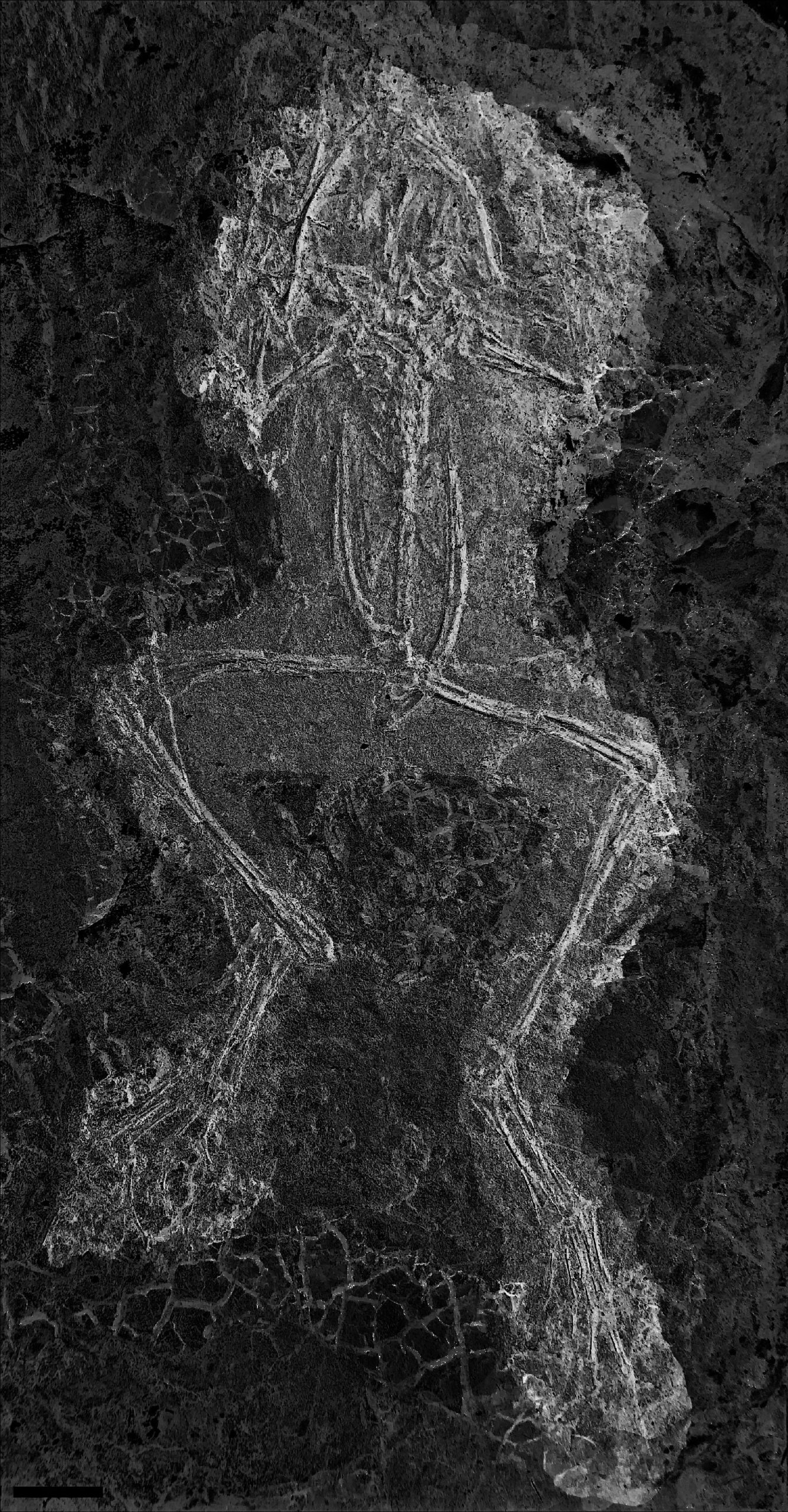
    Frog Skeleton
    The frog skeleton shows exceptional high completeness and articulation (false colors). Credit: D. Falk

    By studying the bones of the fossil frogs, the UCC team was able to narrow down the options. “As far as we can tell, the fossil frogs were healthy when they died, and the bones don’t show any signs of predators or scavengers – there’s also no evidence that they were washed in during floods, or died because the swamp dried up,” said UCC researcher and study leader Daniel Falk. What’s more, most of the Geiseltal fossil frogs are species that spend their lives on land, returning to the water only to breed. “By process of elimination, the only explanation that makes sense is that they died during mating.”
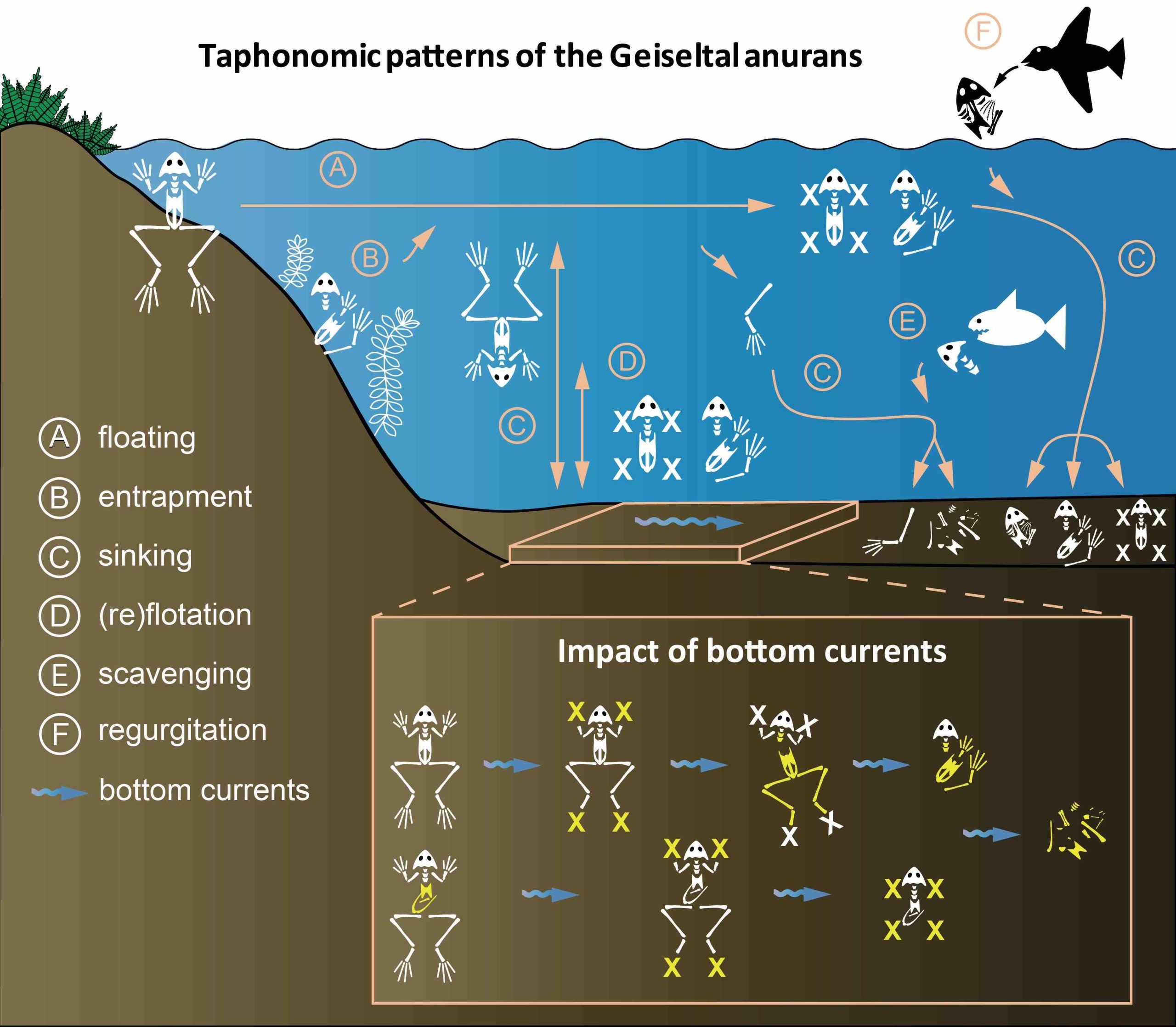
    Taphonomy of the Geiseltal Frogs
    The taphonomy of the Geiseltal frogs at a glance. Credit: D. Falk

    This phenomenon is common in frogs today. “Female frogs are at higher risk of drowning as they are often submerged by one or more males – this often happens in species that engage in mating congregations during the short explosive breeding season,” said senior author Professor Maria McNamara. “What’s really interesting is that fossil frogs from other sites also show these features, suggesting that the mating behaviors of modern frogs are really quite ancient and have been in place for at least 45 million years”.

    Reference: “The skeletal taphonomy of anurans from the Eocene Geiseltal Konservat-Lagerstätte, Germany: insights into the controls on fossil anuran preservation” by Daniel Falk, Oliver Wings and Maria E. McNamara, 5 July 2022, Papers in Palaeontology.
    DOI: 10.1002/spp2.1453

    These findings are among the first new discoveries to come to light following the reopening of the famous Geiseltal fossil collections of the “Zentralmagazin Naturwissenschaftlicher Sammlungen (ZNS)” in Halle (Saale), Germany to the public. The study is part of a research cooperation between UCC and Martin-Luther-University Halle-Wittenberg with funding from the Irish Research Council.

    Never miss a breakthrough: Join the SciTechDaily newsletter.
    Follow us on Google and Google News.

    Fossils Frogs Paleontology Popular University College Cork
    Share. Facebook Twitter Pinterest LinkedIn Email Reddit

    Related Articles

    Ancient Fossils Reveal Survival Secrets of Earth’s Worst Mass Extinction

    Old Science, New Twists: Ancient Frog Fossils Disrupt 100-Year-Old Beliefs

    Named After Kermit the Frog – Paleontologists Discover 270-Million-Year-Old Ancient Amphibian Ancestor

    The Mysterious 280-Million-Year-Old Fossil That Fooled Scientists for Decades

    Paleontologists Unearth Ginger Pigment Secrets From 10-Million-Year-Old Frogs

    Prehistoric Fossilized Eocene Epoch Turtles Died Locked In Coitus

    Cretaceous Period Sankofa Pyrenaica Fossilized Eggs Are Unusually Shaped

    Microraptor Feathers Were Black With Iridescent Sheen

    Hundreds of Lost Fossils From the Darwin Collection Rediscovered by the British Geological Survey

    1 Comment

    1. The 10th Man on August 28, 2022 11:41 am

      Pretty sure you nerds got it wrong. Those Toads were flushed into the lake by deluges from monster storms. Remember a warmer Earth makes bigger storms.

      Reply
    Leave A Reply Cancel Reply

    • Facebook
    • Twitter
    • Pinterest
    • YouTube

    Don't Miss a Discovery

    Subscribe for the Latest in Science & Tech!

    Trending News

    Your Blood Pressure Reading Could Be Wrong Because of One Simple Mistake

    Astronomers Stunned by Ancient Galaxy With No Spin

    Physicists May Be on the Verge of Discovering “New Physics” at CERN

    Scientists Solve 320-Million-Year Mystery of Reptile Skin Armor

    Scientists Say This Daily Walking Habit May Be the Secret to Keeping Weight Off After Dieting

    New Therapy Rewires the Brain To Restore Joy in Depression Patients

    Giant Squid Detected off Western Australia in Stunning Deep-Sea Discovery

    Popular Sugar-Free Sweetener Linked to Liver Disease, Study Warns

    Follow SciTechDaily
    • Facebook
    • Twitter
    • YouTube
    • Pinterest
    • Newsletter
    • RSS
    SciTech News
    • Biology News
    • Chemistry News
    • Earth News
    • Health News
    • Physics News
    • Science News
    • Space News
    • Technology News
    Recent Posts
    • Hidden Warm Water Beneath Antarctica Could Rapidly Raise Global Sea Levels
    • Scientists Revive Ancient Chemistry Trick To Engineer Next-Generation Glass
    • Scientists Use AI To Supercharge Ultrafast Laser Simulations by More Than 250x
    • Scientists Just Found a Surprising Way To Destroy “Forever Chemicals”
    • Popular Supplement Ingredient Linked to Shorter Lifespan in Men
    Copyright © 1998 - 2026 SciTechDaily. All Rights Reserved.
    • Science News
    • About
    • Contact
    • Editorial Board
    • Privacy Policy
    • Terms of Use

    Type above and press Enter to search. Press Esc to cancel.