
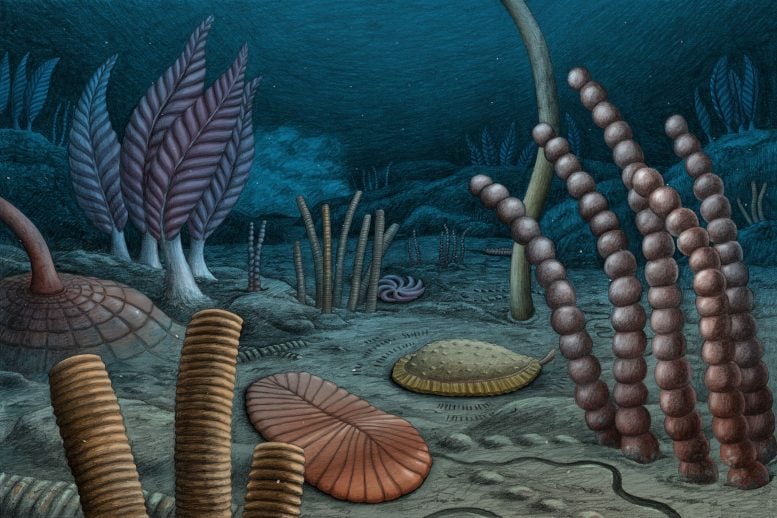
The story of Earth’s first animals may need rewriting after ancient fossils revealed an earlier start to complex life.
From butterflies to blue whales, corals, and worms, Earth is home to an incredible diversity of animals. How all of these animals evolved from earlier, simpler ancestors is one of the most exciting stories in the history book of life on our 4.5 billion-year-old planet.
A new study, published in Science Advances, adds crucial information to this story. Led by Scott Evans, assistant curator of invertebrate paleontology at the American Museum of Natural History, it draws on rare 567-million-year-old fossils to show animal evolution may have started far earlier than previously thought.
Long before life on land or even fish, Earth’s seafloor was home to large and complex animals.
The Ediacaran World and Its Three Fossil Chapters
Some of these soft-bodied and strange animals were shaped like pancakes. Others were more like soft tubes or spirals that pressed into the mud.
We call this time, from about 635 to 538 million years ago, the Ediacaran Period. Do animals from this period represent our ancient ancestors before the Cambrian explosion, which produced most of the basic groups of animals we know today? Or are they failed evolutionary experiments?
To help us answer these questions, we divide the Ediacaran fossil record into three broad chapters: the Avalon, White Sea, and Nama assemblages. Each represents a distinctive community of Ediacaran animals that tend to appear at different times and in different environments.
These chapters help scientists track how early animal life changed from mostly deep-water organisms that were stuck in mud to more diverse shallow-water communities that included animals.
Ancient Fossils Rewrite the Timeline
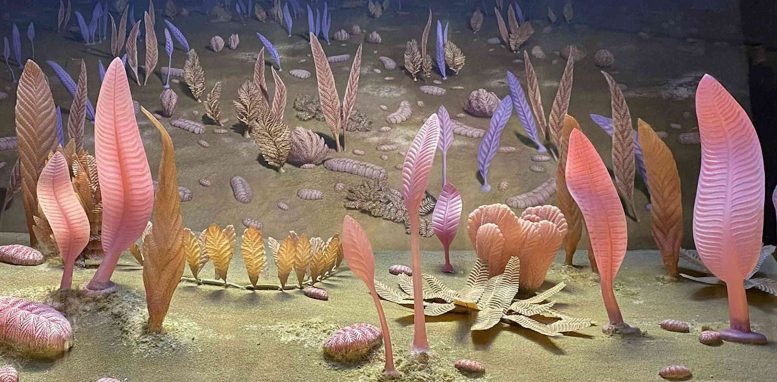
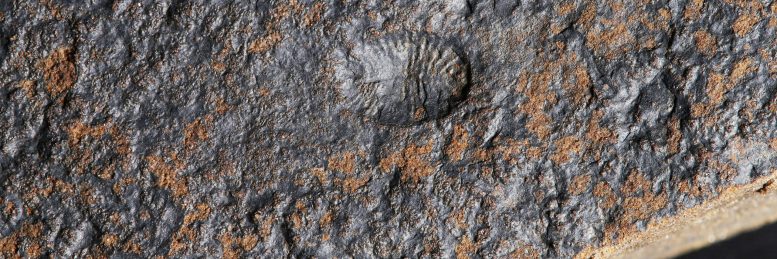
The Avalon assemblage is the oldest chapter, dominated by simple yet strange deeper-water organisms. The White Sea assemblage is the middle chapter. It is characterized by larger, more varied animals, including forms such as the famous Dickinsonia, a ribbed, oval organism a bit like a quilted placemat. The Nama assemblage comes last and includes some of the earliest animals with hard, shell-like parts.
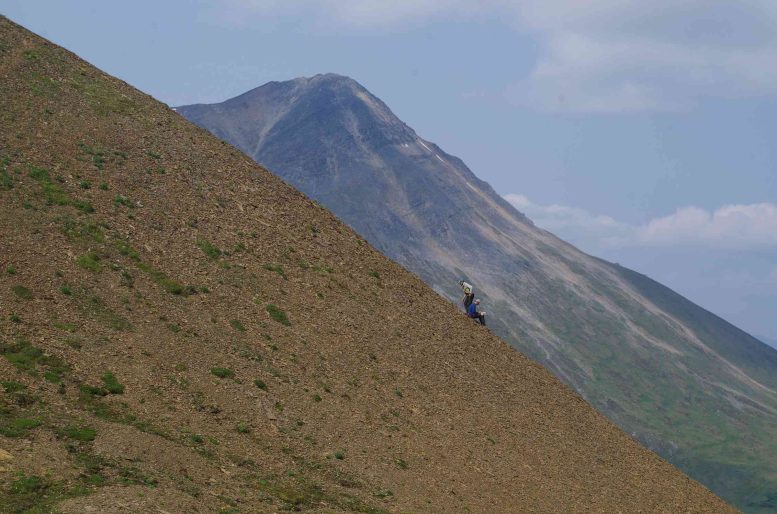
The team behind the new study combined fossil hunting with geological detective work. They collected and photographed fossil-bearing rocks from the remote Mackenzie Mountains in Canada, compared the fossils with other Ediacaran organisms, and studied nearby rocks to reconstruct where and when these animals lived.
Remarkably, several of the fossils, with frond-like forms, segmented and quilted bodies, resembled those from the White Sea assemblage. That matters because the White Sea animal community was previously best known from famous sites in Russia and Australia.
The new fossils show that similar communities had also reached the deep waters of Laurentia, the ancient continent that included much of present-day North America.
Deep Oceans May Have Been Animal Evolution’s Cradle
In early animal evolution, a few million years can matter. The fossil-bearing rocks appear to correlate with nearby layers dated at about 567–566 million years old.
If that correlation is correct, this makes the community considerably older than the classic White Sea assemblage, which is usually placed at about 560–550 million years ago. Their discovery pushes back the timing of some important early animals, including mobile forms such as Dickinsonia.
It also dramatically changes the environmental picture.
White Sea-type fossils are usually associated with shallower marine settings. But these rocks suggest the Canadian animals lived in a deep-water slope environment. Together, that implies these early animal communities were both more geographically widespread and more environmentally flexible than previously recognized.
A More Gradual Story of Early Evolution
That raises an intriguing question. Did early animal ecosystems first develop far offshore, in deeper and perhaps more stable marine settings, before later becoming common in shallower seas?
The discovery matters because it blurs the boundaries between the classic Ediacaran “chapters.” The Avalon and White Sea assemblages may not represent a clean handover, with one world disappearing and another suddenly replacing it.
Instead, the new Canadian fossils suggest overlap: Avalon-style frond-like organisms and more diverse White Sea-style animals may have shared the darkness and lived together in similar deep-water settings.
That makes early animal evolution look less like a sudden switch and more like a gradual ecological expansion. Animals were experimenting with new body shapes, new ways of living on the seafloor, and perhaps new ways of moving and feeding.
How Environments Shaped Early Animal Life
The roots of modern animal diversity may therefore lie in a long, uneven process that began in deeper marine environments far from the warmth of the Ediacaran sun, and before many animal groups became common in shallower seas.
The study also raises a broader evolutionary idea.
Environments help shape life. A soft-bodied animal living on a quiet, deeper seafloor faced different challenges from one living in shallow water affected by waves, light, currents, and shifting sediment. Those pressures can influence which body shapes and behaviors are useful and are passed on.
This is where the idea of convergent evolution can become helpful. Convergent evolution is when unrelated organisms evolve similar solutions to similar problems, like wings in birds, bats, and insects, or streamlined bodies in fish, dolphins, and extinct marine reptiles.
Evolution as Nature’s Problem Solver
In this sense, evolution is repeated problem-solving under changing environmental rules over billions of years.
The same broad solutions, tubes, fronds, and flattened bodies, may have been tried repeatedly as early animals explored the seafloor.
Over deep time, life can look uncannily inventive. But it’s shaped by the relentless testing ground of Earth itself.
Adapted from an article originally published in The Conversation.
Never miss a breakthrough: Join the SciTechDaily newsletter.
Follow us on Google and Google News.
1 Comment
Interesting study. One thing I appreciate is that the paper seems to distinguish between evidence and inference. The fossils may push back the earliest known occurrence of White Sea type communities, but that is not necessarily the same as proving the exact origin of animals. Since the fossil record is incomplete, could future discoveries push this timeline back even further, or even change the interpretation of these fossils? It will be interesting to see whether independent fossil sites confirm these findings.