Close Menu
    Facebook X (Twitter) Instagram
    SciTechDaily
    • Biology
    • Chemistry
    • Earth
    • Health
    • Physics
    • Science
    • Space
    • Technology
    Facebook X (Twitter) Pinterest YouTube RSS
    SciTechDaily
    Home»Space»Pareidolia: Seeing Recognizable Shapes in the Cosmos
    Space

    Pareidolia: Seeing Recognizable Shapes in the Cosmos

    By NASAJanuary 8, 2021No Comments2 Mins Read
    Facebook Twitter Pinterest Telegram LinkedIn WhatsApp Email Reddit
    Share
    Facebook Twitter LinkedIn Pinterest Telegram Email Reddit
    PSR B1509-58
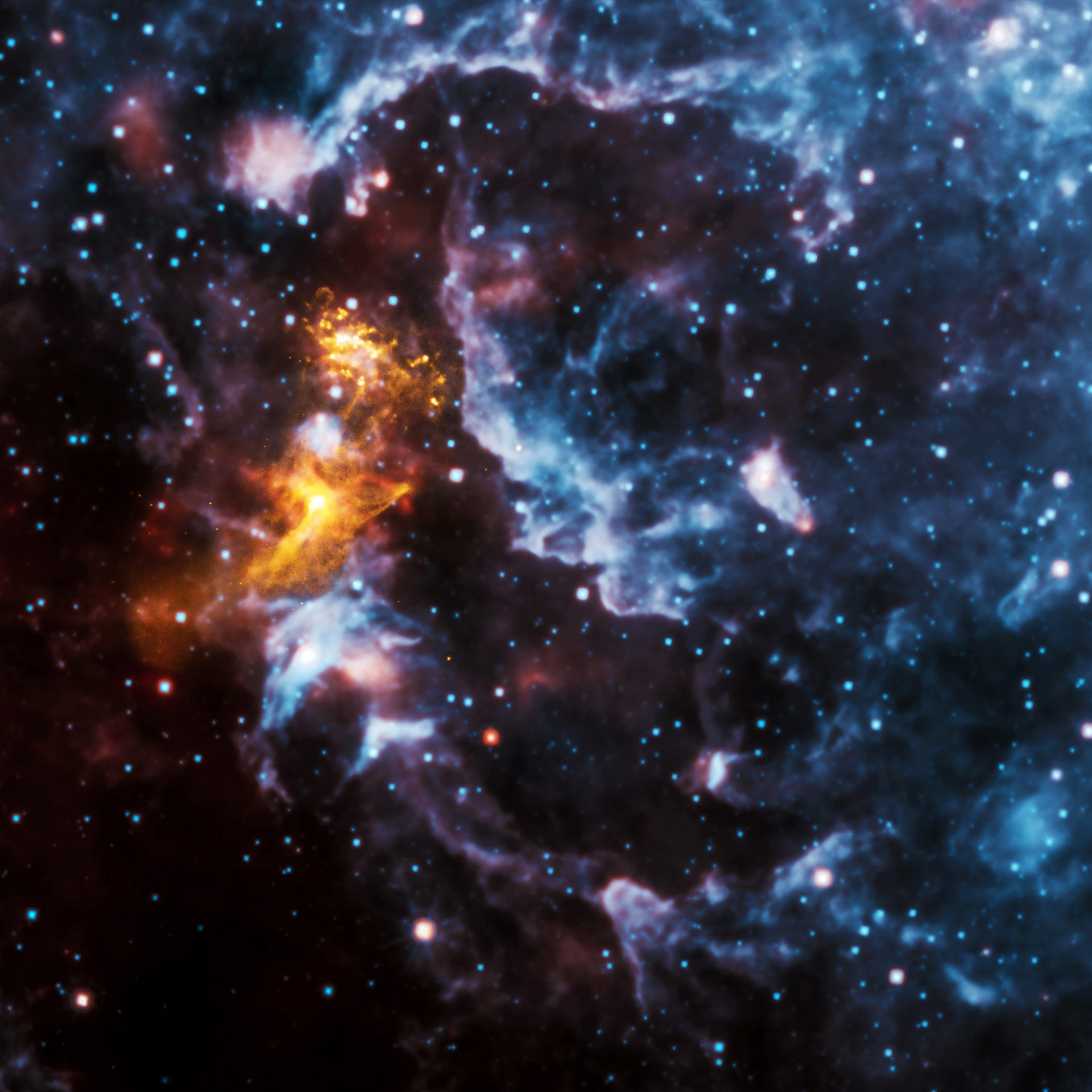
    First released in 2009, this Chandra image shows PSR B1509-58 – a spinning neutron star surrounded by a cloud of energetic particles. Credit: X-ray: NASA/CXC/SAO; Infrared: NASA/JPL-Caltech

    What is pareidolia? It is the psychological phenomenon where we see recognizable shapes in clouds, rock formations, or otherwise unrelated objects or data.

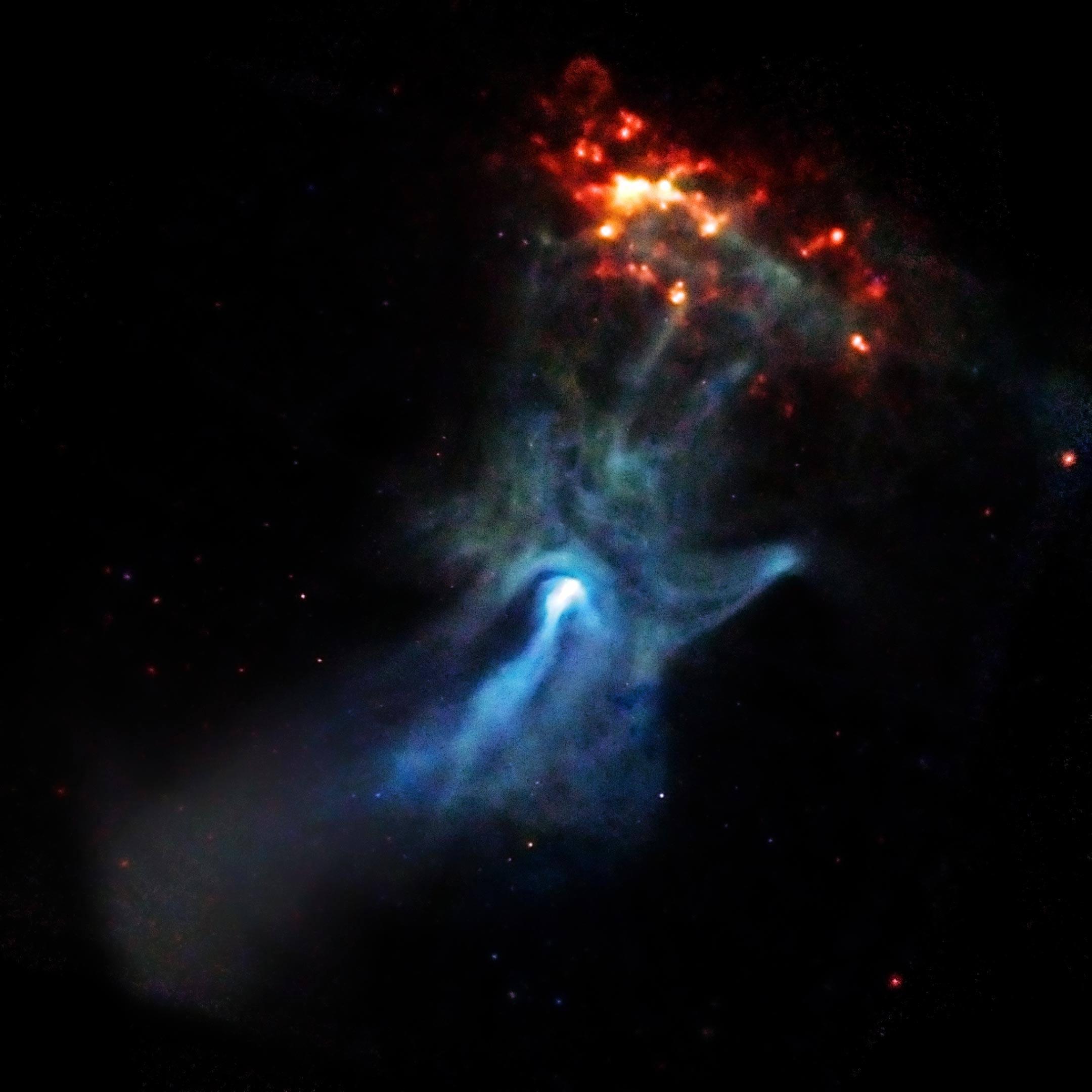
    When an image from NASA’s Chandra X-ray Observatory of PSR B1509-58 – a spinning neutron star surrounded by a cloud of energetic particles about 17,000 light-years from Earth – was released in 2009, it quickly gained attention because many saw a hand-like structure in the X-ray emission.

    Pulsar Hand
    A small, dense object only twelve miles in diameter is responsible for this beautiful X-ray nebula that spans 150 light years. At the center of this image made by NASA’s Chandra X-ray Observatory is a very young and powerful pulsar, known as PSR B1509-58, or B1509 for short. The pulsar is a rapidly spinning neutron star which is spewing energy out into the space around it to create complex and intriguing structures, including one that resembles a large cosmic hand. Credit: NASA/CXC/SAO/P.Slane, et al.

    In this image of the system, X-rays from Chandra in gold are seen along with infrared data from NASA’s Wide-field Infrared Survey Explorer (WISE) telescope in red, green and blue. Pareidolia may strike again as some people report seeing a shape of a face in WISE’s infrared data. What do you see?

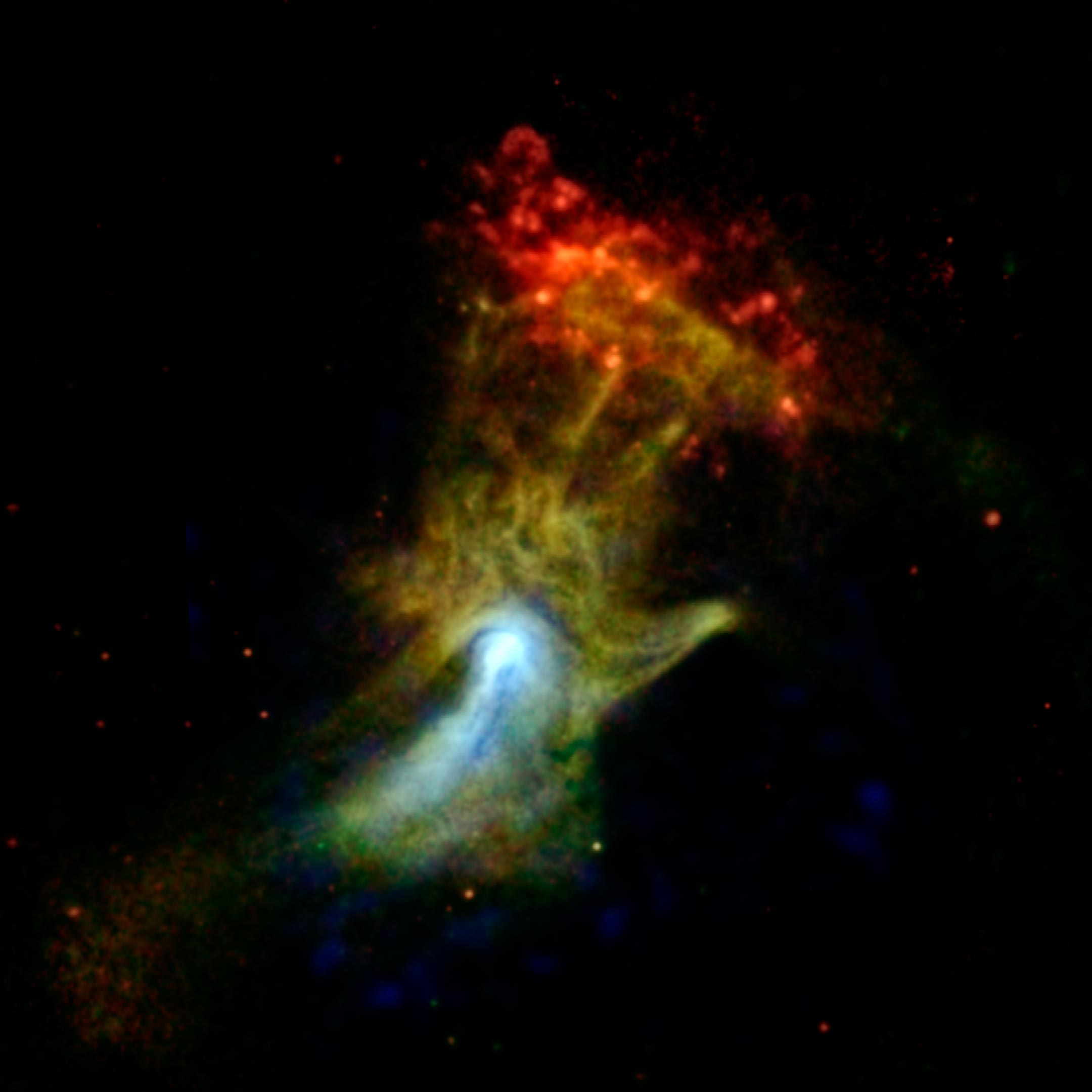
    NASA’s Nuclear Spectroscopic Telescope Array, or NuSTAR, also took a picture (below) of the neutron star nebula in 2014, using higher-energy X-rays than Chandra.

    High Energy X ray Hand of God
    The hand might look like an X-ray from the doctor’s office, but it is actually a cloud of material ejected from a star that exploded. NASA’s Nuclear Spectroscopic Telescope Array, or NuSTAR, has imaged the structure in high-energy X-rays for the first time, shown in blue. Lower-energy X-ray light previously detected by NASA’s Chandra X-ray Observatory is shown in green and red. Credit: NASA/JPL-Caltech/McGill

    Never miss a breakthrough: Join the SciTechDaily newsletter.
    Follow us on Google and Google News.

    Astronomy Chandra X-ray Observatory NASA
    Share. Facebook Twitter Pinterest LinkedIn Email Reddit

    Related Articles

    Red Dwarf Fury: How Wolf 359’s Radiation May Fry Alien Atmospheres

    X-Ray Echoes Unveil the Milky Way’s Hidden 3D Blueprint

    X-Ray Flares Turn Alien Worlds Into Cosmic Battlefields

    X-Ray Echoes Unveil the Hidden 3D Landscape of Our Galaxy’s Heart

    Black Holes Cook Their Own Fuel in a Cosmic Feast

    NASA Reveals Cosmic Christmas Tree and Celestial Wreath Illuminating Star Birth

    NASA Captures Black Hole’s Double-Star Destruction in Epic Collision

    Black Hole Tears Star to Shreds, Unleashing Cosmic Shockwaves

    Centaurus A’s Massive 13,000 Light-Year Jet Captured in Stunning Detail

    Leave A Reply Cancel Reply

    • Facebook
    • Twitter
    • Pinterest
    • YouTube

    Don't Miss a Discovery

    Subscribe for the Latest in Science & Tech!

    Trending News

    Mushroom Mystery: The Fungus That Makes People See Tiny Humans

    Popular Erectile Dysfunction Drug Linked to Vision-Threatening Eye Disease

    Scientists Find a Smarter Way To Turn Used Coffee Grounds Into Clean Fuel

    Did Cellular Life Begin Twice? New Study Points to Two Independent Origins

    Sitting Up Straight Could Actually Help You Make Better Decisions

    Never-Before-Seen Vortices Are Swirling Across the Sun

    This Common Amino Acid May Help the Body Fight Cancer and Viruses

    Low-Protein “Longevity Diet” Linked to Fat Loss, Muscle Preservation, and Healthy Aging

    Follow SciTechDaily
    • Facebook
    • Twitter
    • YouTube
    • Pinterest
    • Newsletter
    • RSS
    SciTech News
    • Biology News
    • Chemistry News
    • Earth News
    • Health News
    • Physics News
    • Science News
    • Space News
    • Technology News
    Recent Posts
    • Cancer Stem Cells Have an “Energy Addiction” – and Scientists Found a Way To Exploit It
    • Scientists Say This Simple Habit Could Lead to a Happier Marriage
    • This Simple Measurement Could Expose a Hidden Diabetes Risk (And It’s Not Your Waistline)
    • 520-Million-Year-Old Fossil Reveals How Cephalopods Learned To Float
    • “Find of the Year” – Archaeologists Discover the Smallest Ice Age Figurines Ever Found
    Copyright © 1998 - 2026 SciTechDaily. All Rights Reserved.
    • Science News
    • About
    • Contact
    • Editorial Board
    • Privacy Policy
    • Terms of Use

    Type above and press Enter to search. Press Esc to cancel.