
Close Menu
    Facebook X (Twitter) Instagram
    SciTechDaily
    • Biology
    • Chemistry
    • Earth
    • Health
    • Physics
    • Science
    • Space
    • Technology
    Facebook X (Twitter) Pinterest YouTube RSS
    SciTechDaily
    Home»Biology»One of the Most Abundant Bats in Europe Is Attracted to Wind Turbines – Increasing Risk of Fatality
    Biology

    One of the Most Abundant Bats in Europe Is Attracted to Wind Turbines – Increasing Risk of Fatality

    By University of ExeterFebruary 11, 2021No Comments3 Mins Read
    Facebook Twitter Pinterest Telegram LinkedIn WhatsApp Email Reddit
    Share
    Facebook Twitter LinkedIn Pinterest Telegram Email Reddit
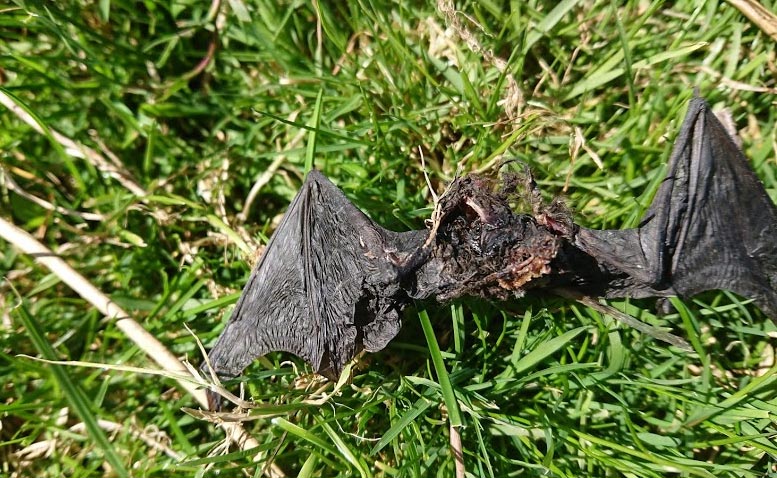
    Dead Bat at Wind Farm
    A dead bat at a wind farm. Credit: Fiona Mathews

    Common pipistrelle bats show more activity around wind turbines, potentially explaining their high fatality rates at such sites.

    One of the most abundant bats in Europe may be attracted to wind turbines, a new study shows.

    The activity of common pipistrelle bats was monitored at 23 British wind farms and similar “control” locations close by without turbines.
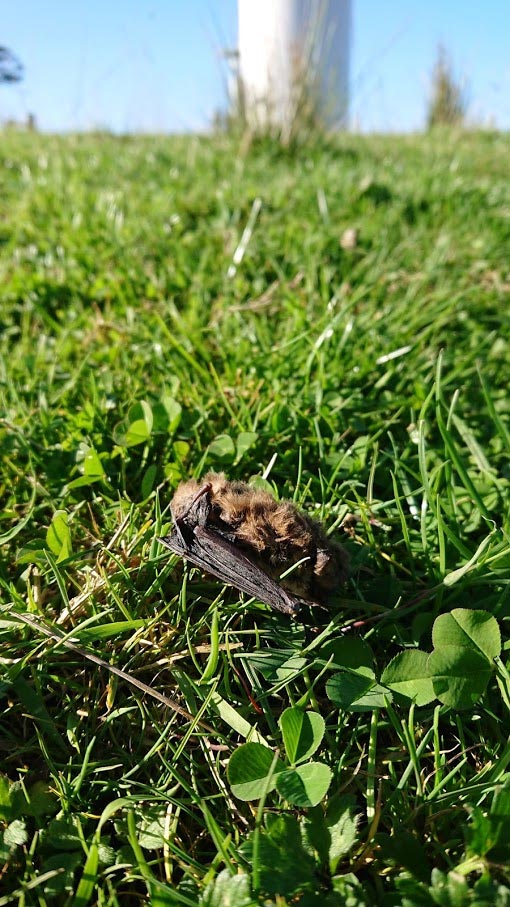
    Dead Pipistrelle Bat at Wind Farm
    A dead pipistrelle at a wind farm. Credit: Fiona Mathews

    Activity was around a third higher at turbines than at control locations, and two thirds of occasions with high activity were recorded at turbines rather than the controls.

    The reasons for this are not clear. Possibilities include attraction to the turbines themselves, or the presence of more of the bats’ insect prey around turbines.

    “Either way it means the risk of fatality at wind turbines is increased, and probably explains the high fatalities of common pipistrelle bats seen at some wind farms across Europe,” said Dr. Suzanne Richardson.

    Common pipistrelle bats account for more than half of all bat fatalities at turbine sites in Europe.

    Predictive Challenges and Solutions

    “We know bats are killed by turbines worldwide, and reducing these fatalities is essential to ensuring a global increase in wind energy with minimal impact on bats,” said Professor David Hosken, of the University of Exeter.

    “To do that, we need to understand whether bats are actively attracted to, indifferent to, or repelled by, the turbines at large wind-energy installations.

    “Our findings help explain why Environmental Impact Assessments conducted before the installation of turbines are poor predictors of actual fatality rates.

    “Turbines are generally built in areas where bat activity is thought to be low, but this may not be an effective strategy if bats are attracted once turbines are built.

    Search Dog Breeze
    Search dog Breeze. Dogs are used to locate dead bats at wind farms. Credit: Katharine Evans

    “Ongoing monitoring is required, and measures such as minimizing blade rotation in periods of high collision risk are likely to be the most effective way to reduce fatalities.”

    The study also monitored soprano pipistrelle bats, finding no conclusive evidence that this species is more active around turbines.

    Professor Fiona Mathews of the University of Sussex, who led the research, said: “Bat activity at wind farms is very variable.

    “During periods of high wind speed, when most energy is generated, bat activity is low and so there is little risk to bats.

    “In contrast, there can be high activity at turbines on nights with light winds and warm temperatures.

    “Most of the attraction to turbines appears to be happening on these high activity nights.

    Reducing Harm Without Sacrificing Energy

    “We have worked with the Statutory Nature Conservation Organisations and industry to produce guidance to help minimize the risks to bats.

    “These include stopping blades rotating when no energy is being produced (‘idling’). This is a win-win situation as little electricity generation is lost during these periods.”

    Reference: “Peaks in bat activity at turbines and the implications for mitigating the impact of wind energy developments on bats” by Suzanne M. Richardson, Paul R. Lintott, David J. Hosken, Theo Economou and Fiona Mathews, 11 February 2021,  Scientific Reports.
    DOI: 10.1038/s41598-021-82014-9

    The research was funded by the UK government’s Department for Environment, Food and Rural Affairs (Defra), the Department of Energy and Climate Change, Natural England, Natural Resources Wales, Scottish Natural Heritage, RenewableUK and the Natural Environment Research Council (NERC).

    Never miss a breakthrough: Join the SciTechDaily newsletter.
    Follow us on Google and Google News.

    Bats Ecology Green Energy University of Exeter
    Share. Facebook Twitter Pinterest LinkedIn Email Reddit

    Related Articles

    Fatal Attraction: Bats With White-Nose Syndrome Prefer Deadly Habitats Despite the Consequences

    Climate Change Drives Babbler Birds Into “Ecological Trap”

    Plant Used in Traditional Chinese Medicine Evolves to Become Less Visible to Humans

    Poop Is Full of Secrets: DNA in Fringe-Lipped Bat Poop Reveals Unexpected Eating Habits

    Underwater Sound Devices Called “Pingers” Could Save Porpoises From Fishing Nets

    Corrugated Pipes Installed to Help Bats Access Their Roosts May Actually Interfere With Echolocation

    Mini GPS Systems Show How Bats Cope With Berlin’s Bright Night Sky

    Illumination Drives Bats Out of Caves, No Matter the Color of the Light

    New Hope for Coral Reef Restoration From Playing Sounds of Healthy Reefs on Loudspeakers

    Leave A Reply Cancel Reply

    • Facebook
    • Twitter
    • Pinterest
    • YouTube

    Don't Miss a Discovery

    Subscribe for the Latest in Science & Tech!

    Trending News

    Breakthrough Bowel Cancer Trial Leaves Patients Cancer-Free for Nearly 3 Years

    Natural Compound Shows Powerful Potential Against Rheumatoid Arthritis

    100,000-Year-Old Neanderthal Fossils in Poland Reveal Unexpected Genetic Connections

    Simple “Gut Reset” May Prevent Weight Gain After Ozempic or Wegovy

    2.8 Days to Disaster: Scientists Warn Low Earth Orbit Could Suddenly Collapse

    Common Food Compound Shows Surprising Power Against Superbugs

    5 Simple Ways To Remember More and Forget Less

    The Atomic Gap That Could Cost the Semiconductor Industry Billions

    Follow SciTechDaily
    • Facebook
    • Twitter
    • YouTube
    • Pinterest
    • Newsletter
    • RSS
    SciTech News
    • Biology News
    • Chemistry News
    • Earth News
    • Health News
    • Physics News
    • Science News
    • Space News
    • Technology News
    Recent Posts
    • Powerful Antioxidant Found To Play a Key Role in Proper Protein Folding
    • MIT Laser Breakthrough Lets Scientists Watch Drugs Enter the Brain in Real Time
    • Study Reveals Malaria’s Hidden Role in Human Evolution
    • Scientists Print Artificial Neurons That Can Talk to the Brain
    • Bowel and Ovarian Cancers Are Dramatically Rising in Young Adults and Scientists Aren’t Sure Why
    Copyright © 1998 - 2026 SciTechDaily. All Rights Reserved.
    • Science News
    • About
    • Contact
    • Editorial Board
    • Privacy Policy
    • Terms of Use

    Type above and press Enter to search. Press Esc to cancel.