
Close Menu
    Facebook X (Twitter) Instagram
    SciTechDaily
    • Biology
    • Chemistry
    • Earth
    • Health
    • Physics
    • Science
    • Space
    • Technology
    Facebook X (Twitter) Pinterest YouTube RSS
    SciTechDaily
    Home»Biology»Island Gigantism and Dwarfism: Evolutionary “Island Rule” Confirmed
    Biology

    Island Gigantism and Dwarfism: Evolutionary “Island Rule” Confirmed

    By Radboud University NijmegenApril 15, 2021No Comments3 Mins Read
    Facebook Twitter Pinterest Telegram LinkedIn WhatsApp Email Reddit
    Share
    Facebook Twitter LinkedIn Pinterest Telegram Email Reddit
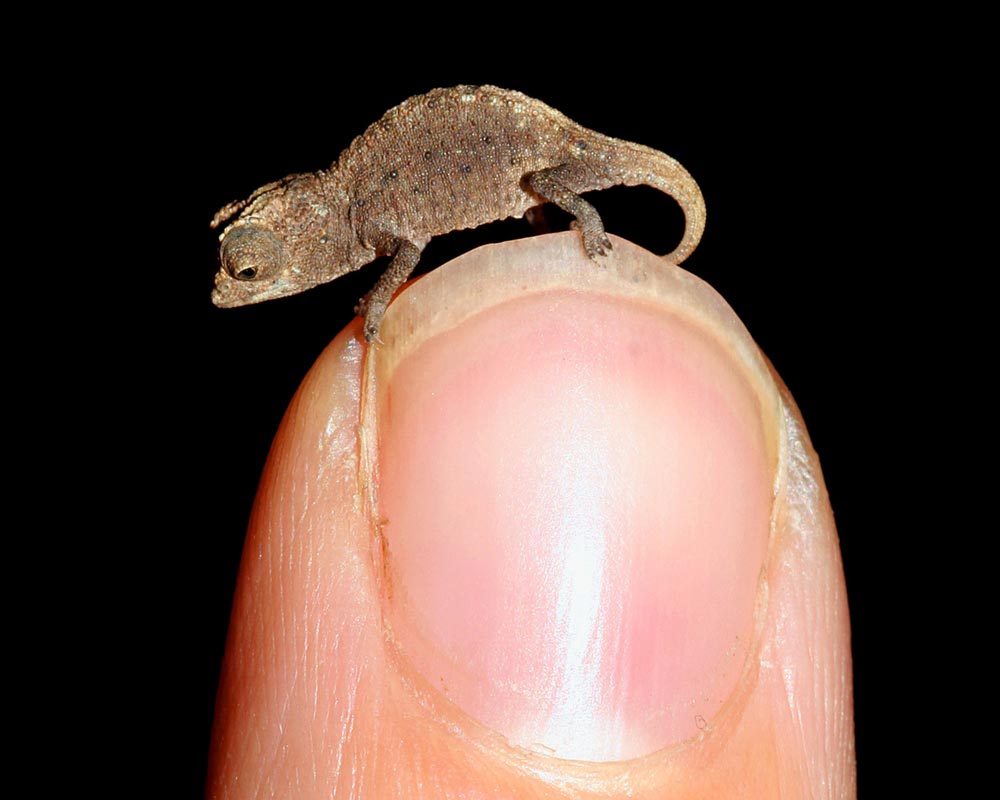
    Brookesia micra
    A juvenile Brookesia micra standing on a human finger tip. Credit: Frank Glaw, Jörn Köhler, Ted M. Townsend, Miguel Vences, CC BY 2.5, via Wikimedia Commons

    New research confirms that island animals commonly evolve into giants or dwarfs, supporting the island rule as a broad evolutionary pattern.

    It is an old-standing theory in evolutionary ecology: animal species on islands have the tendency to become either giants or dwarfs in comparison to mainland relatives. Since its formulation in the 1960s, however, the ‘island rule’ has been severely debated by scientists. In a new publication in Nature Ecology and Evolution on April 15, 2021, researchers solved this debate by analyzing thousands of vertebrate species. They show that the island rule effects are widespread in mammals, birds, and reptiles, but less evident in amphibians.

    Dwarf hippos and elephants in the Mediterranean islands are examples of large species that exhibited dwarfism. On the other hand, small mainland species may have evolved into giants after colonizing islands, giving rise to such oddities as the St Kilda field mouse (twice the size of its mainland ancestor), the infamous dodo of Mauritius (a giant pigeon), and the Komodo dragon.

    In 1973, Leigh van Valen was the first that formulated the theory, based on the study by mammologist J. Bristol Foster in 1964, that animal species follow an evolutionary pattern when it comes to their body sizes. Species on islands have the tendency to become either giants or dwarfs in comparison to mainland relatives. “Species are limited to the environment on an island. The level of threat from predatory animals is much lower or non-existent,” says Ana Benítez-Lopez, who carried out the research at Radboud University, now a researcher at Doñana Biological Station (EBD-CSIC, Spain). “But also limited resources are available.” However, until now, many studies showed conflicting results which led to severe debate about this theory: is it really a pattern, or just an evolutionary coincidence?

    Island rule Confirmed

    The team of scientists at Radboud University, Doñana Biological Station, National Museum of Natural Sciences and Imperial College London has revisited the island rule, aiming to solve this debate by performing a meta-analysis of over a thousand vertebrate species. They show that island rule effects are widespread in mammals, birds and reptiles, but less evident in amphibians, which mostly tend towards gigantism. The study also indicates that the magnitude of insular dwarfism and gigantism is more pronounced in smaller, more remote islands for mammals and reptiles.

    Size is context-dependent

    They also found an effect of climate and seasonality on the island rule. Small mammal and bird species grew larger and large species stayed the same size to conserve heat in colder, harsher insular environments. Furthermore, when seasons are present, the availability of resources becomes less predictable for reptiles, leading smaller reptile species to become larger. Benítez-López: “Using a wealth of data from museum and live specimens, we were able to rigorously demonstrate for the first time that insular gigantism and dwarfism across vertebrates is a generalized pattern and not just an evolutionary coincidence.”

    Reference: “The island rule explains consistent patterns of body size evolution in terrestrial vertebrates” by Ana Benítez-López, Luca Santini, Juan Gallego-Zamorano, Borja Milá, Patrick Walkden, Mark A. J. Huijbregts and Joseph A. Tobias, 15 April 2021, Nature Ecology & Evolution.
    DOI: 10.1038/s41559-021-01426-y

    Never miss a breakthrough: Join the SciTechDaily newsletter.
    Follow us on Google and Google News.

    Environment Evolution Physiology Popular Radboud University Zoology
    Share. Facebook Twitter Pinterest LinkedIn Email Reddit

    Related Articles

    Evidence of “Hibernation-Like” State Discovered in Early Triassic Creature

    The Mystery of Why Zebras Have Their Stripes Has Baffled Scientists – Now a Dazzling Answer

    Mystery of How Flying Snakes Move Solved by 3D Modeling and Motion Capture

    Testing the Patience of Predators and Prey – Snakes and Frogs Appear to Anticipate Each Other

    “Wonderchicken” – Origin of Modern Birds Revealed by Fossil From the Age of Dinosaurs

    Scientists Built an Underwater Theater and Attached 3D Glasses to Cuttlefish – Here’s What They Learned

    Mysterious Endangered Mammal Has a Venomous Bite – See the Horrifying Venom Delivery Tooth

    71 New Species From 2019 Described by Scientists: From Geckos to Goblin Spiders

    Extra Finger Discovered on Aye-Aye, Making the World’s Weirdest Primate Even Weirder [Video]

    Leave A Reply Cancel Reply

    • Facebook
    • Twitter
    • Pinterest
    • YouTube

    Don't Miss a Discovery

    Subscribe for the Latest in Science & Tech!

    Trending News

    Wasp Colonies Explode Into Violence After Losing Their Queen

    Scientists Create “Living Plastic” That Self-Destructs in Just Six Days

    Your Blood May Carry a 700-Million-Year-Old Secret

    Scientists Discover Some “Zombie Cells” May Actually Help You Live Longer

    Earth May Be Seeding Venus With Life, According to New Research

    What Scientists Found Inside a 117-Year-Old Woman Reveals New Clues to Long Life

    Scientists Discover Mysterious Creature Living in the Great Salt Lake – and It Exists Nowhere Else on Earth

    It’s Alive? Surprising Discovery Changes What We Know About Fog

    Follow SciTechDaily
    • Facebook
    • Twitter
    • YouTube
    • Pinterest
    • Newsletter
    • RSS
    SciTech News
    • Biology News
    • Chemistry News
    • Earth News
    • Health News
    • Physics News
    • Science News
    • Space News
    • Technology News
    Recent Posts
    • Scientists Crack Major Ammonia Problem With a Platinum Catalyst Breakthrough
    • MIT Engineers Solve a Major Lidar Problem That Has Stumped Researchers for Years
    • NASA’s X-59 Sonic Boom Killer Is Ready for Its Biggest Test Yet
    • Why Some Cancers Turn Deadly: Researchers Uncover a Hidden Trigger
    • The Best Exercise Combination for Longevity, According to a 30-Year Study
    Copyright © 1998 - 2026 SciTechDaily. All Rights Reserved.
    • Science News
    • About
    • Contact
    • Editorial Board
    • Privacy Policy
    • Terms of Use

    Type above and press Enter to search. Press Esc to cancel.