
Close Menu
    Facebook X (Twitter) Instagram
    SciTechDaily
    • Biology
    • Chemistry
    • Earth
    • Health
    • Physics
    • Science
    • Space
    • Technology
    Facebook X (Twitter) Pinterest YouTube RSS
    SciTechDaily
    Home»Biology»African Spiny Mice Regenerate Lost Tissue
    Biology

    African Spiny Mice Regenerate Lost Tissue

    By SciTechDailySeptember 27, 20121 Comment2 Mins Read
    Facebook Twitter Pinterest Telegram LinkedIn WhatsApp Email Reddit
    Share
    Facebook Twitter LinkedIn Pinterest Telegram Email Reddit
    acomys-kempi
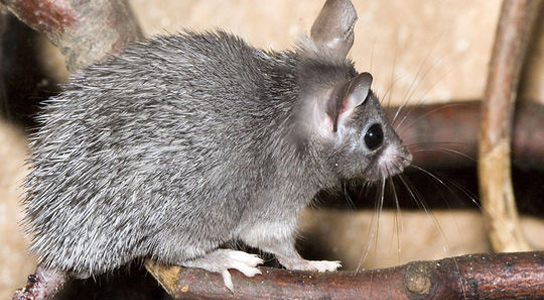
    African spiny mice

    African spiny mice, specifically the species Acomys kempi and Acomys percivali, have skin that is brittle and can be easily torn. This evolutionary adaptation allows them to escape predators by jettisoning whole patches of skin when caught or bitten.

    The scientists published their findings in the journal Nature. The tiny mammals are the first that can completely regenerate damaged tissue. This could potentially help with healing in humans.
    original-tissue-regenerating
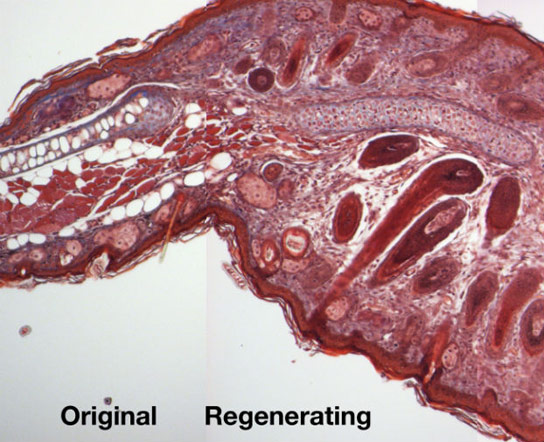
    Original tissue on the left versus the regenerated tissue on the right.

    The mice can regrow complete suites of hair follicles, skin, sweat glands, fur, and even cartilage. Normal laboratory mice (Mus musculus) grow scar tissue in this situation. While tissue regeneration is common in crustaceans, insects, reptiles, and amphibians, it hasn’t been seen before in mammals. Salamanders can regenerate entire limbs, complete with bones and muscles.

    The next step involves figuring out the exact molecular mechanisms and genetic circuits that cause and direct the regeneration process. It’s unlikely that these mice evolved an entirely new method of regrowing tissue, states Ashley Seifert, lead author and a developmental biologist at the University of Florida in Gainesville. The genes responsible are probably switched off in mammals, but have been switched back on in the African spiny mice.

    The switch could possibly be turned on in humans to help with various types of healing if scientists figure out how the process works. Genomic resources are so powerful these days that it’s entirely feasible that someone could identify some aspect of regeneration in mice that could be used in humans.

    Reference: “Skin shedding and tissue regeneration in African spiny mice (Acomys)” by Ashley W. Seifert, Stephen G. Kiama, Megan G. Seifert, Jacob R. Goheen, Todd M. Palmer and Malcolm Maden, 26 September 2012, Nature.
    DOI: 10.1038/nature11499

    Never miss a breakthrough: Join the SciTechDaily newsletter.
    Follow us on Google and Google News.

    Developmental Biology Evolutionary Biology Regeneration Skin Tissue
    Share. Facebook Twitter Pinterest LinkedIn Email Reddit

    Related Articles

    New Comprehensive Map of How Butterflies Are Related to Each Other

    New Research Shows World’s Most Venomous Spiders Are Cousins

    Genetic Variability Supports Plant Survival During Droughts

    New Insight on CLOCK Gene May Hold Answers to Human Brain Evolution

    New Research Shows Neanderthals Were Born with Wide Bodies and Robust Bones

    Single Factor Can Reset the Immune System Back 500 Million Years

    Visual System of Marine Annelids Provides Insight Into the Evolution of Eyes

    New Demographic Data Show How Diversely Different Species Age

    A Natural Example of a Functioning Gear Mechanism Discovered in an Insect

    1 Comment

    1. Nathaniel on April 26, 2018 12:20 pm

      An babies regenerate too?

      Reply
    Leave A Reply Cancel Reply

    • Facebook
    • Twitter
    • Pinterest
    • YouTube

    Don't Miss a Discovery

    Subscribe for the Latest in Science & Tech!

    Trending News

    Mezcal “Worm” in a Bottle Mystery: DNA Testing Reveals a Surprise

    New Research Reveals That Your Morning Coffee Activates an Ancient Longevity Switch

    This Is What Makes You Irresistible to Mosquitoes

    Shockingly Powerful Giant Octopuses Ruled the Seas 100 Million Years Ago

    Scientists Stunned by New Organic Molecules Found on Mars

    Rewriting Dinosaur Evolution: Scientists Unearth Remarkable 150-Million-Year-Old Stegosaur Skull

    Omega-3 Supplements Linked to Cognitive Decline in Surprising New Study

    First-of-Its-Kind Discovery: Homer’s Iliad Found Embedded in a 1,600-Year-Old Egyptian Mummy

    Follow SciTechDaily
    • Facebook
    • Twitter
    • YouTube
    • Pinterest
    • Newsletter
    • RSS
    SciTech News
    • Biology News
    • Chemistry News
    • Earth News
    • Health News
    • Physics News
    • Science News
    • Space News
    • Technology News
    Recent Posts
    • Scientists Map Thousands of Brain Connections With RNA Barcodes
    • This Gene Tweak Turns Strawberries Into Healthier, Tastier Superfruit
    • This New Chip Could Make GPUs Far More Efficient
    • This Tiny World in the Outer Solar System Should Be Airless, but It Has an Atmosphere
    • NASA’s Webb Space Telescope Reveals a Dark Airless Super-Earth That Looks Like Mercury
    Copyright © 1998 - 2026 SciTechDaily. All Rights Reserved.
    • Science News
    • About
    • Contact
    • Editorial Board
    • Privacy Policy
    • Terms of Use

    Type above and press Enter to search. Press Esc to cancel.