
Close Menu
    Facebook X (Twitter) Instagram
    SciTechDaily
    • Biology
    • Chemistry
    • Earth
    • Health
    • Physics
    • Science
    • Space
    • Technology
    Facebook X (Twitter) Pinterest YouTube RSS
    SciTechDaily
    Home»Space»NASA Mars Perseverance Rover: New Software, New Drill Target, and an Existential Question
    Space

    NASA Mars Perseverance Rover: New Software, New Drill Target, and an Existential Question

    By Matt Muszynski, NASA/JPLNovember 26, 2021No Comments4 Mins Read
    Facebook Twitter Pinterest Telegram LinkedIn WhatsApp Email Reddit
    Share
    Facebook Twitter LinkedIn Pinterest Telegram Email Reddit
    Mars Perseverance Sol 264
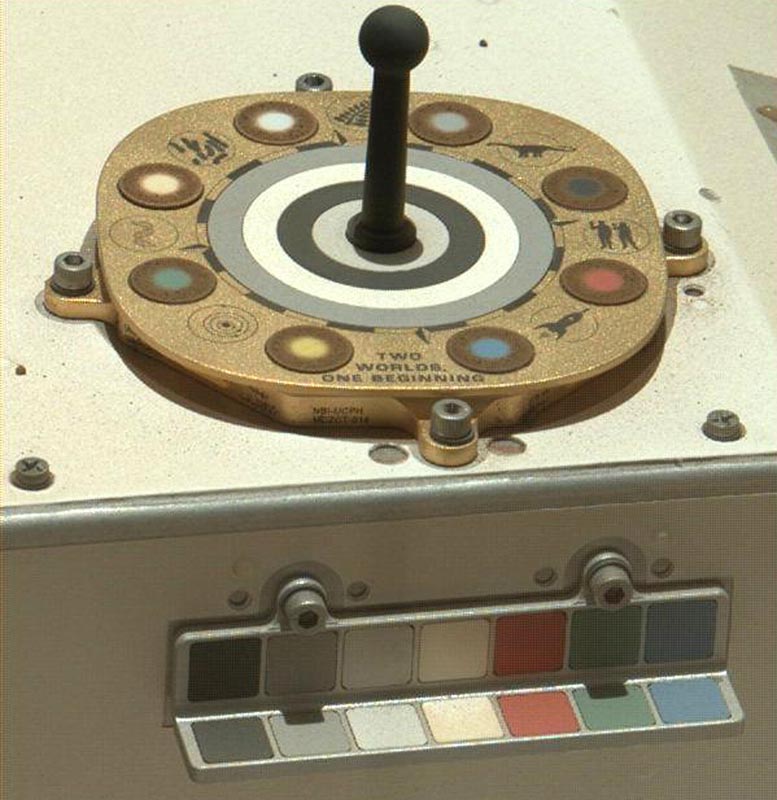
    NASA’s Mars Perseverance rover acquired this image using its Left Mastcam-Z camera. Mastcam-Z is a pair of cameras located high on the rover’s mast. Credit: NASA/JPL-Caltech/ASU

    A Mars rover has no single driver—its success comes from thousands working together, combining expertise like an ant colony to extend human consciousness to Mars.

    A plane has a pilot. A bus has a driver. A train has a conductor. But who controls a Mars rover? During the last seven years that I have operated spacecraft both in orbit and on the surface of Mars, I’ve come back again and again to the question of who is most responsible for making a spacecraft go.

    Is it the ACE who sends the commands to the Deep Space Network (DSN) to be sent to the spacecraft? But they didn’t write the commands. Then is it the science Payload Uplink Lead who wrote them? But they only wrote them out in plain text, which a rover can’t read. Maybe it’s the Sequence Integration Engineer who converted them to a binary file the rover could understand? But they don’t understand the nuance of how or where to point an instrument or how long to expose the camera’s detector in order to get the crisp images we’ve become so familiar with, nor can they point an antenna at Mars like a DSN operator needs to. Perhaps the rover controls itself with its sophisticated onboard automation. Or should that credit go to the flight software developer who wrote the algorithms?

    After seven years of thinking about this question and discussing it with colleagues, the best answer I can give is this: All of us are, and none of us are.

    As one of the thousands of engineers and scientists who have worked on Perseverance, I’ve come to see the project as an ant hill. Just as no one ant is smart or strong enough to build an ant hill on its own, none of us is smart enough or capable enough to design, build, test, or operate a Mars rover on our own. Instead, we rely on each other’s expertise, diversity, and our hard won experience through the various successes and failures of our careers. None of us is smart enough to do the entire job. Not even the sum of our intelligences is enough. Instead, just as with an ant colony, we only get the job done through the emergent intelligence that stems from every small interaction we have with each other, making us better than the sum of our parts.

    In the last month, this has been on full display as we have loaded a new version of flight software, selected the next core sample target at the “Brac” outcrop, and drilled at that location. It couldn’t be any other way as each of these tasks is complex, requires expertise in very different skills, and takes many more hours than a single person or even a single team could manage.

    Working on a system as complex as Perseverance is humbling and awe inspiring. As deeply as I understand my own work, the design of the rover, and the ways we operate it, there’s just so much more that I don’t know. And there always will be. But that’s not a problem because wherever my knowledge ends, a colleague’s begins. In that way, the rover is far more than a robot on Mars. It’s an extension of the minds and the community of engineers and scientists who have worked on it. It’s a shining beacon of human consciousness on another world.

    Written by Matt Muszynski, Vehicle Systems Engineer at NASA/JPL.

    Never miss a breakthrough: Join the SciTechDaily newsletter.
    Follow us on Google and Google News.

    JPL Mars 2020 Perseverance Rover NASA
    Share. Facebook Twitter Pinterest LinkedIn Email Reddit

    Related Articles

    Lasers, Gas Blasts, and Hidden Water: How Perseverance Cracked Mars’ Stubborn Rock

    Inside Krokodillen: NASA Hunts Signs of Life in Mars’ Oldest Rocks

    NASA’s Perseverance Mars Rover Hits a Geologic Goldmine at Jezero Crater Rim

    From Light Stones to Dark Mysteries: Perseverance’s Thrilling Hunt on Mars

    Dark, Pitted, and Possibly Alien: The Skull Hill Rock That Has Scientists Stumped

    Shocking Spherules on Mars: NASA’s Perseverance Rover Finds a Rock That Defies Explanation

    NASA’s Perseverance Rover Captures Rare Martian Dust Devil Collision in Stunning Detail

    How Mars Is Shredding Spacesuits: NASA’s Perseverance Tests the Future of Astronaut Gear

    NASA’s Perseverance Rover Conquers Jezero Crater Rim Revealing Mars’ Hidden History

    Leave A Reply Cancel Reply

    • Facebook
    • Twitter
    • Pinterest
    • YouTube

    Don't Miss a Discovery

    Subscribe for the Latest in Science & Tech!

    Trending News

    Monster Storms on Jupiter Unleash Lightning Beyond Anything on Earth

    Scientists Create “Liquid Gears” That Spin Without Touching

    The Simple Habit That Could Help Prevent Cancer

    Millions Take These IBS Drugs, But a New Study Finds Serious Risks

    Scientists Unlock Hidden Secrets of 2,300-Year-Old Mummies Using Cutting-Edge CT Scanner

    Bread Might Be Making You Gain Weight Even Without Eating More Calories

    Scientists Discover Massive Magma Reservoir Beneath Tuscany

    Europe’s Most Active Volcano Just Got Stranger – Here’s Why Scientists Are Rethinking It

    Follow SciTechDaily
    • Facebook
    • Twitter
    • YouTube
    • Pinterest
    • Newsletter
    • RSS
    SciTech News
    • Biology News
    • Chemistry News
    • Earth News
    • Health News
    • Physics News
    • Science News
    • Space News
    • Technology News
    Recent Posts
    • Scientists Discover a Surprising Reason Intermittent Fasting Extends Life
    • Scientists Discover a New Meteor Shower From a Mysterious Crumbling Asteroid
    • This Simple Fruit Wash Could Make Produce Safer and Last Days Longer
    • These Tiny Robots 50x Smaller Than a Hair Can Hunt and Move Bacteria
    • Simple Blood Test May Predict Alzheimer’s Years Before Brain Scans Show Signs
    Copyright © 1998 - 2026 SciTechDaily. All Rights Reserved.
    • Science News
    • About
    • Contact
    • Editorial Board
    • Privacy Policy
    • Terms of Use

    Type above and press Enter to search. Press Esc to cancel.