
Close Menu
    Facebook X (Twitter) Instagram
    SciTechDaily
    • Biology
    • Chemistry
    • Earth
    • Health
    • Physics
    • Science
    • Space
    • Technology
    Facebook X (Twitter) Pinterest YouTube RSS
    SciTechDaily
    Home»Biology»Antibiotics Might Contribute to the Health Problems of the Bee Colonies
    Biology

    Antibiotics Might Contribute to the Health Problems of the Bee Colonies

    By Bill Hathaway, Yale UniversityOctober 30, 2012No Comments3 Mins Read
    Facebook Twitter Pinterest Telegram LinkedIn WhatsApp Email Reddit
    Share
    Facebook Twitter LinkedIn Pinterest Telegram Email Reddit
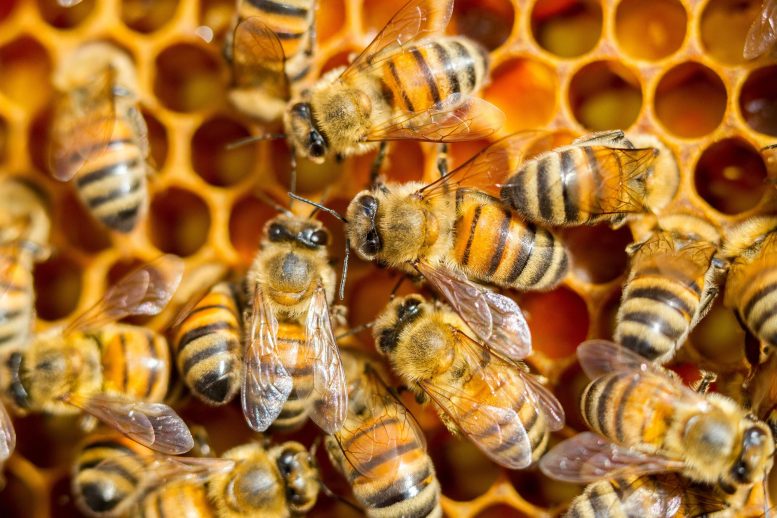
    Honeybee Colony
    The use of antibiotics by beekeepers could be a contributing factor to the mysterious colony collapse disorder affecting bee populations.

    A new study from Yale University shows that eight beneficial gut bacteria common in honeybees and bumblebees have acquired genes that make them resistant to tetracycline, possibly contributing to the health problems of bee colonies.

    The gut bacteria of honeybees have acquired several genes that confer resistance to tetracycline, a direct result of more than five decades of use of antibiotics by American beekeepers and a potential health hazard for bee colonies, a new study by Yale University researchers show.

    The genetic analysis of the gut bacteria, which are believed to help in bees’ digestion and ability to ward off parasites, suggests changing antibiotic use by beekeepers might be one factor in the mysterious colony collapse disorder afflicting bee populations.
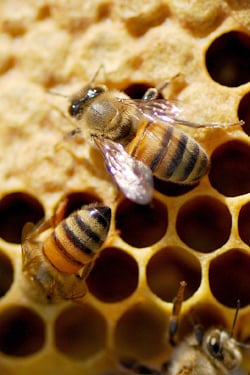
    antibiotics might be another suspect in honey bee die-off
    Credit: Image courtesy of Waldan Kwong/Yale University

    “No one pathogen or parasite is responsible for the mass die-offs, and many factors seem to be involved,” said Nancy Moran, senior author of the paper and the Regents’ Professor of Ecology and Evolutionary Biology at Yale and the Microbial Diversity Institute at West Campus. “But it is interesting that major problems with these colonies began at the same time as the introduction of a new antibiotic in 2006.”

    Honeybee pollination is crucial to agriculture, worth an estimated $15 billion in the United States alone. Tetracycline has been used for decades to ward off a potential colony-destroying infection called American foulbrood. The Yale study published in the October 30 issue of the journal mBio shows eight beneficial gut bacteria common in honeybees and bumblebees have acquired genes that make them resistant to tetracycline. These genes are not found in colonies in countries where antibiotic use is not allowed. Moreover, one of the resistance genes has been found in American foulbrood, an evolutionary event that led beekeepers to adopt a new antibiotic Tylosin around 2006 — about the time colony collapse disorder was first detected.

    Moran speculated the new drug may have disrupted beneficial gut bacteria in bees, contributing to the health problems of the bee colonies.

    She also noted that antibiotic resistance genes are able to jump between unrelated bacterial species and that the genes found in the gut of honey bees were identical to those found in bacterial pathogens in humans and isolated from livestock.

    Reference: “Long-Term Exposure to Antibiotics Has Caused Accumulation of Resistance Determinants in the Gut Microbiota of Honeybees” by Baoyu Tian, Nibal H. Fadhil, J. Elijah Powell, Waldan K. Kwong and Nancy A. Moran, 30 October 2012, mBio.
    DOI: 10.1128/mBio.00377-12

    Lead author of the paper was former Yale postdoctoral researcher Baoyu Tian, now of Fujian Normal University in China. Other Yale authors are Nibal H. Fadhil, J. Elijah Powell and Waldan K. Kwong.

    Never miss a breakthrough: Join the SciTechDaily newsletter.
    Follow us on Google and Google News.

    Antibiotics Bees Ecology Evolutionary Biology Yale University
    Share. Facebook Twitter Pinterest LinkedIn Email Reddit

    Related Articles

    Yale Study Shows Gradual Environmental Change is an Ally to Viral Pathogens

    Study Projects How Climate Change Will Affect the Functions Birds in Ecosystems Worldwide

    Barb Geometry of Asymmetrical Feathers Sheds Light on Evolution of Flight

    Yale Study Details Recent Shifts in Occurrence, Cause, and Magnitude of Mass Animal Die-Offs

    Scientists Detail the Evolutionary Success of Spiny-Rayed Fishes

    Genetic Analysis Reveals New Family Tree for Ray-Finned Fish

    Extinctions Due to Habitat Loss are Proportional to the Area Destroyed

    Evolution Shapes Ecology of Dammed Connecticut Lakes

    “Map of Life” to Illustrate All Living Things Geographically

    Leave A Reply Cancel Reply

    • Facebook
    • Twitter
    • Pinterest
    • YouTube

    Don't Miss a Discovery

    Subscribe for the Latest in Science & Tech!

    Trending News

    Black Hole Collisions May Follow a Surprisingly Simple Rule

    The Eye Has a Hidden Cleanup System and Scientists Just Discovered It

    The Truth About Vikings Is More Complicated Than Museums Admit

    New Catalyst Turns Stubborn Plant Waste Into Valuable Chemicals

    Quantum Gravity May Be Far Less Quantum Than Physicists Expected

    New Tool Supercharges Immunotherapy Against Prostate Cancer

    The Hidden Cancer Risk of Ketogenic Diets

    One Asteroid Collision May Have Rocked Earth, Mars, and the Moon

    Follow SciTechDaily
    • Facebook
    • Twitter
    • YouTube
    • Pinterest
    • Newsletter
    • RSS
    SciTech News
    • Biology News
    • Chemistry News
    • Earth News
    • Health News
    • Physics News
    • Science News
    • Space News
    • Technology News
    Recent Posts
    • Scientists Crack the Code for Making “Impossible” Nanocrystals
    • Earth’s Hidden Thermostat Has Regulated Climate for 60 Million Years
    • This 518-Million-Year-Old Creature Reveals How Spiders Got Their Bite
    • Forgotten for 20 Years, This 240-Million-Year-Old Fossil Reveals a New Reptile Species
    • 190-Year-Old Museum Specimen Solves a Pangolin Mystery
    Copyright © 1998 - 2026 SciTechDaily. All Rights Reserved.
    • Science News
    • About
    • Contact
    • Editorial Board
    • Privacy Policy
    • Terms of Use

    Type above and press Enter to search. Press Esc to cancel.