
Close Menu
    Facebook X (Twitter) Instagram
    SciTechDaily
    • Biology
    • Chemistry
    • Earth
    • Health
    • Physics
    • Science
    • Space
    • Technology
    Facebook X (Twitter) Pinterest YouTube RSS
    SciTechDaily
    Home»Biology»Yale Study Shows Gradual Environmental Change is an Ally to Viral Pathogens
    Biology

    Yale Study Shows Gradual Environmental Change is an Ally to Viral Pathogens

    By Bill Hathaway, Yale UniversityFebruary 2, 2017No Comments2 Mins Read
    Facebook Twitter Pinterest Telegram LinkedIn WhatsApp Email Reddit
    Share
    Facebook Twitter LinkedIn Pinterest Telegram Email Reddit
    New Study Shows Gradual Environmental Change is an Ally to Viral Pathogens
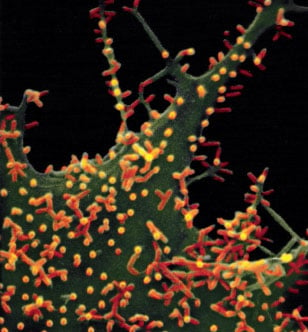
    Particles of the RNA virus vesicular stomatitis virus (VSV) on tissue culture cell.

    New research shows that with more time, viruses have the luxury to infect the old host while exploring adaptive tweaks to infect a new host.

    How viruses like Ebola, influenza or even the common cold adapt is a question that affects the health of everyone on earth. A new Yale University study reveals that gradual exposure to new host species leads to major genetic changes in these pathogens — and possibly makes them more dangerous.

    In environments marked by more gradual change, the molecular alterations are more like “tweaks, as if the virus is keeping its options open,” said Yale’s Paul Turner, professor of ecology, evolutionary biology and co-author of the research published online February 1 in the journal Evolution.

    Turner and colleague Valerie J. Morley subjected RNA viruses — a group that includes flu and cold bugs as well as more dangerous pathogens that cause Ebola fever and SARs — to novel hosts either quickly or gradually. They then measured genetic changes to the virus. The major changes found after the gradual introduction of novel hosts, such as humans who move into a deforested and previously uninhabited area, might help explain the higher virulence of emerging diseases such as Ebola, which move from animals to humans, said the researchers.

    “With more time, viruses have the luxury to infect the old host while exploring adaptive tweaks to infect a new host,” Turner said. Although both sudden and gradual host changes can lead to virulent pathogens, the gradual exposure to new hosts seems to allow a greater opportunity for high-virulence genetic changes, the study found.

    Reference: “Dynamics of molecular evolution in RNA virus populations depend on sudden versus gradual environmental change” Valerie J. Morley and Paul E. Turner, Evolution.
    DOI: 10.1111/evo.13193

    Never miss a breakthrough: Join the SciTechDaily newsletter.
    Follow us on Google and Google News.

    Disease Ecology Evolutionary Biology Pathogens Yale University
    Share. Facebook Twitter Pinterest LinkedIn Email Reddit

    Related Articles

    Yale Study Shows Disease-Bearing Mosquitoes Adapt to Winters

    Yale Study Details Recent Shifts in Occurrence, Cause, and Magnitude of Mass Animal Die-Offs

    Scientists Detail the Evolutionary Success of Spiny-Rayed Fishes

    Antibiotics Might Contribute to the Health Problems of the Bee Colonies

    Genetic Analysis Reveals New Family Tree for Ray-Finned Fish

    Extinctions Due to Habitat Loss are Proportional to the Area Destroyed

    Preserved Frogs May Hold Past Clues About Batrachochytrium Dendrobatidis

    Evolution Shapes Ecology of Dammed Connecticut Lakes

    “Map of Life” to Illustrate All Living Things Geographically

    Leave A Reply Cancel Reply

    • Facebook
    • Twitter
    • Pinterest
    • YouTube

    Don't Miss a Discovery

    Subscribe for the Latest in Science & Tech!

    Trending News

    Scientists Just Discovered a Hidden Freshwater World Beneath the Great Salt Lake

    Why Your Daily Shower Could Be Worsening the Water Crisis

    Scientists Discover New “Magic Mushroom” Species That Rewrites Evolutionary History

    Mystery Deepens: Astrophysicists Say Dark Matter May Not Be One Thing

    Your BMI Might Be Wrong: Study Finds Millions Are Misclassified

    A Simple Blood Test Could Predict Dementia Risk 25 Years Early

    3.5-Billion-Year-Old Rocks Rewrite the Story of Plate Tectonics

    Why Aging Lungs Turn Mild Infections Into Life-Threatening Illness

    Follow SciTechDaily
    • Facebook
    • Twitter
    • YouTube
    • Pinterest
    • Newsletter
    • RSS
    SciTech News
    • Biology News
    • Chemistry News
    • Earth News
    • Health News
    • Physics News
    • Science News
    • Space News
    • Technology News
    Recent Posts
    • This Alga Rewrites the Rules of Photosynthesis To Survive in the Dark
    • Are Humans Naturally Violent? Scientists Challenge Long-Held Assumptions
    • Scientists Say This Popular Food Could Help Your Body Get Rid of Microplastics
    • Scientists Build Five-in-One “Super Molecule” for Next-Gen Electronics
    • Physicists Discover Magnetic Mechanism That Challenges a 300-Year-Old Law of Friction
    Copyright © 1998 - 2026 SciTechDaily. All Rights Reserved.
    • Science News
    • About
    • Contact
    • Editorial Board
    • Privacy Policy
    • Terms of Use

    Type above and press Enter to search. Press Esc to cancel.