
Close Menu
    Facebook X (Twitter) Instagram
    SciTechDaily
    • Biology
    • Chemistry
    • Earth
    • Health
    • Physics
    • Science
    • Space
    • Technology
    Facebook X (Twitter) Pinterest YouTube RSS
    SciTechDaily
    Home»Biology»Why Children Believe Hiding Their Eyes Makes Them Disappear
    Biology

    Why Children Believe Hiding Their Eyes Makes Them Disappear

    By SciTechDailyNovember 2, 20121 Comment3 Mins Read
    Facebook Twitter Pinterest Telegram LinkedIn WhatsApp Email Reddit
    Share
    Facebook Twitter LinkedIn Pinterest Telegram Email Reddit
    alice-eyes-audi-flickr
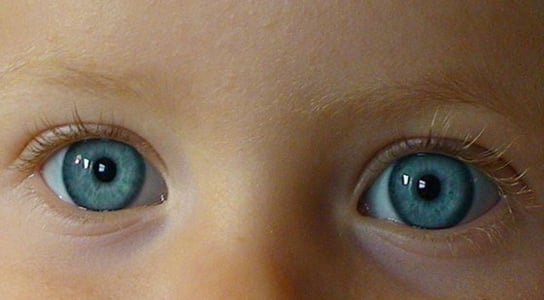
    Young children believe they can conceal themselves by covering or closing their eyes. Credit: Audi insperation/Flickr

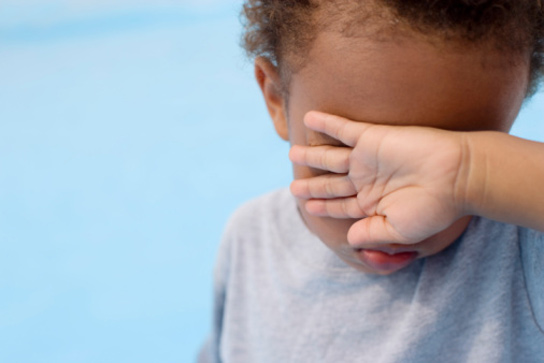
    Young children think that they can hide themselves from others by covering or closing their eyes. This is something that most parents and teachers quickly discover, but why exactly do children believe this?

    A research team at the University of Cambridge set out to discover why and published their findings in The Journal of Cognition and Development. The team was led by James Russell from the Department of Psychology and tested children aged three and four.
    boy-hiding-eyes

    Nearly all the children felt that they were hidden when they were wearing an eye mask and most thought that an adult with a mask was hidden too. The researchers then tested whether children think it is the fact that a person’s eyes are hidden from other people’s view that renders them invisible, or if they think the act of being blinded is the decisive factor. Wearing goggles that were completely blacked out and then goggles that they were mirrored so others couldn’t see their eyes but still allowed the children to see, only 7 out of 37 participants understood that they could see out, but people couldn’t see them. Of the seven, six believed that they were invisible regardless of the goggles that they were wearing, implying that children thought they were invisible because their eyes are hidden, rather than the fact that they couldn’t see.

    Nevertheless, the children agreed that their head and body were visible. They seemed to make a distinction between the concealment of the “self” and that of the body. Using these clues, researchers started wondering if children thought that people only saw each other when they made eye contact.

    Many of the children felt that they were hidden so long as they didn’t meet the gaze of the researcher and felt that the researcher was hidden if his or her gaze was averted while the child looked on. “It seems that children apply the principle of joint attention to the self and assume that for somebody to be perceived, experience must be shared and mutually known to be shared, as it is when two pairs of eyes meet,” Russell said.

    This data raises some interesting questions for future research. Children with autism are known to engage in less sharing of attention with other people, perhaps they will be less concerned with the role of mutual gaze in working out who is visible. Another avenue could be to explore the invisibility beliefs of children born blind. The researchers speculate that skin-to-skin touching may serve as a proxy for eye-contact in the congenitally blind.

    Reference: “Why Do Young Children Hide by Closing Their Eyes? Self-Visibility and the Developing Concept of Self” by James Russell, Brioney Gee and Christina Bullard, 13 September 2012, The Journal of Cognition and Development.
    DOI: 10.1080/15248372.2011.594826

    Never miss a breakthrough: Join the SciTechDaily newsletter.
    Follow us on Google and Google News.

    Behavioral Science Children Cognition Developmental Psychology Neuroscience
    Share. Facebook Twitter Pinterest LinkedIn Email Reddit

    Related Articles

    Canadian Man in Vegetative State Communicates That He’s Not in Pain

    Magnesium Supplements Could Improve Memory and Cognitive Ability

    Young Blood Reverses Some of the Effects of Age-Related Cognitive Decline

    Optimism Bias Disrupted With a Small Magnetic Field

    Microscopic Parasite Toxoplasma Gondii Linked to Personality Changes

    Brain Scans Help Predict Whether Patients Will Respond to Therapy

    Mysterious Gene Mutation Provides Window into the Biology of Language Cognition

    Odor Processing Function of Fly Resembles Mammalian Brain

    Sex Deprived Fruit Flies Consume More Alcohol

    1 Comment

    1. Kelly VanParys on November 29, 2023 3:19 pm

      During child custody exchanges, my 4 year old, who is fighting and crying that she does not want to go with Dad, often covers herself, including her head with the blanket her grandma made her. I was told to NOT let her cover herself. Why is she covering herself and why am I being told NOT to let her?

      Reply
    Leave A Reply Cancel Reply

    • Facebook
    • Twitter
    • Pinterest
    • YouTube

    Don't Miss a Discovery

    Subscribe for the Latest in Science & Tech!

    Trending News

    New Study Reveals Why Ozempic Works Better for Some People Than Others

    Climate Change Is Altering a Key Greenhouse Gas in a Way Scientists Didn’t Expect

    New Study Suggests Gravitational Waves May Have Created Dark Matter

    Scientists Discover Why the Brain Gets Stuck in Schizophrenia

    Scientists Engineer “Tumor-Eating” Bacteria That Devour Cancer From Within

    Even “Failed” Diets May Deliver Long-Term Health Gains, Study Finds

    NIH Scientists Discover Powerful New Opioid That Relieves Pain Without Dangerous Side Effects

    Collapsing Plasma May Hold the Key to Cosmic Magnetism

    Follow SciTechDaily
    • Facebook
    • Twitter
    • YouTube
    • Pinterest
    • Newsletter
    • RSS
    SciTech News
    • Biology News
    • Chemistry News
    • Earth News
    • Health News
    • Physics News
    • Science News
    • Space News
    • Technology News
    Recent Posts
    • 35-Million-Year-Old Mystery: Strange Arachnid Discovered Preserved in Amber
    • Revolutionary Gas Turbine Generates Power Without Air Compression
    • Is AI Really Just a Tool? It Could Be Altering How You See Reality
    • JWST Reveals a “Forbidden” Planet With a Baffling Composition
    • New Research Challenges 30-Year-Old Theory of Eye Development
    Copyright © 1998 - 2026 SciTechDaily. All Rights Reserved.
    • Science News
    • About
    • Contact
    • Editorial Board
    • Privacy Policy
    • Terms of Use

    Type above and press Enter to search. Press Esc to cancel.