
Close Menu
    Facebook X (Twitter) Instagram
    SciTechDaily
    • Biology
    • Chemistry
    • Earth
    • Health
    • Physics
    • Science
    • Space
    • Technology
    Facebook X (Twitter) Pinterest YouTube RSS
    SciTechDaily
    Home»Biology»Optimism Bias Disrupted With a Small Magnetic Field
    Biology

    Optimism Bias Disrupted With a Small Magnetic Field

    By SciTechDailySeptember 25, 2012No Comments3 Mins Read
    Facebook Twitter Pinterest Telegram LinkedIn WhatsApp Email Reddit
    Share
    Facebook Twitter LinkedIn Pinterest Telegram Email Reddit
    chalkboard-brain
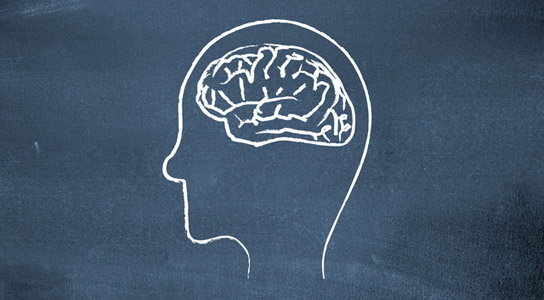
    Researchers found a way to eliminate humans’ optimism bias by using a magnetic field on a brain region called the left inferior frontal gyrus (IFG). Credit: Lasse Kristensen

    Humans will embrace good news and attenuate bad news. People tend to overestimate their odds in a number of different things, while underplaying the risks of cancer, divorce or unemployment. Researchers from the University of College London (UCL) have found a way of removing the optimism bias that humans suffer from by using a magnetic field on a small region of the brain called the left inferior frontal gyrus (IFG).

    The scientists published their findings in the Proceedings of the National Academy of Sciences. Much of the previous evidence of this was based upon decades of correlations. This is a rare example of a direct manipulation with a result.
    chalkboard-brain

    The optimism bias isn’t something new, it was recognized decades ago and seems to exist fairly uniformly among humans of all ages. Tali Sharot, of the UCL, has been studying this bias since 2007. Previously, she used a functional magnetic resonance imaging scan (fMRI) and had linked the IFG to people’s ability to update their beliefs with new information.

    fMRI only gave a correlation. To show causation, they needed to manipulate these brain regions and alter how people learn from blood and bad information. The scientists used a transcranial magnetic stimulation (TMS) to temporarily shut off parts of the brain to disrupt the right IFG, the left IFG, or an unrelated area in 30 volunteers. Then, the researchers asked the volunteers to estimate their chances of experiencing 40 different dooming scenarios, from Alzheimer’s to robberies.

    Optimism bias was working well among volunteers receiving TMS to the right IFG or the unrelated region, but it vanished in people who had their left IFGs disrupted. They gave equal weight to statistics showing that events were either more or less likely than they had expected. TMS didn’t affect other traits that could have explained the volunteers’ behavior, such as emotional arousal or negativity.

    With the left area shut down, people were just as likely to adjust their beliefs based on good news, but were better at adjusting their beliefs based on bad news. Such research could reveal the mechanisms of depression. More research needs to be carried out to further validate these findings.

    The scientists also found some individual variations. Even with their left IFG disrupted, 40% of the volunteers still showed the bias. This could mean that some people have a greater or lesser ability to resist cognitive biases. Targeting this area could help boost optimism in people who tend to lack it.

    [via PNAS, chalkboard image by Lasse Kristensen]

    Reference: “Selectively altering belief formation in the human brain” by Tali Sharot, Ryota Kanai, David Marston, Christoph W. Korn, Geraint Rees and Raymond J. Dolan, 24 September 2012, Proceedings of the National Academy of Sciences.
    DOI: 10.1073/pnas.1205828109

    Never miss a breakthrough: Join the SciTechDaily newsletter.
    Follow us on Google and Google News.

    Behavioral Science Brain Activity Neurology Neuroscience
    Share. Facebook Twitter Pinterest LinkedIn Email Reddit

    Related Articles

    Yale Study Shows Risk Avoidance in Older Adults is Related to Brain Anatomy, Not Age

    Neuroscientists Reveal Neuron-Firing Patterns That Underlie Time Measurement

    Hunger Affects Behavior and Changes Pathways in the Brain

    Odor Processing Function of Fly Resembles Mammalian Brain

    Sex Deprived Fruit Flies Consume More Alcohol

    DRD2 May Protect Brain Regions from Alcohol-Induced Brain Damage

    Researchers Use FDDNP–PET Scanning to Predict Cognitive Decline

    Neuroscientists Create Model to Study Burst Suppression and Brain States

    Researchers Use fMRI to Study How Humor Activates Kids’ Brain Regions

    Leave A Reply Cancel Reply

    • Facebook
    • Twitter
    • Pinterest
    • YouTube

    Don't Miss a Discovery

    Subscribe for the Latest in Science & Tech!

    Trending News

    Scientists Uncover Potential Brain Risks of Popular Fish Oil Supplements

    Scientists Discover a Surprising Way To Make Bread Healthier and More Nutritious

    After 60 Years, Scientists Uncover Unexpected Brain Effects of Popular Diabetes Drug Metformin

    New Research Uncovers Hidden Side Effects of Popular Weight-Loss Drugs

    Scientists Rethink Extreme Warming After Surprising Ocean Discovery

    Landmark Study Links Never Marrying to Significantly Higher Cancer Risk

    Researchers Discover Unknown Beetle Species Just Steps From Their Lab

    Largest-Ever Study Finds Medicinal Cannabis Ineffective for Anxiety, Depression, PTSD

    Follow SciTechDaily
    • Facebook
    • Twitter
    • YouTube
    • Pinterest
    • Newsletter
    • RSS
    SciTech News
    • Biology News
    • Chemistry News
    • Earth News
    • Health News
    • Physics News
    • Science News
    • Space News
    • Technology News
    Recent Posts
    • Not Just Alzheimer’s: Scientists Uncover Clues to a Second, Overlooked Disorder
    • Scientists Uncover Dangerous Connection Between Serotonin and Heart Valve Disease
    • Scientists Discover a “Protector” Protein That Could Help Reverse Hair Loss
    • Powerful Lasers Reveal How Matter Becomes Plasma in Trillionths of a Second
    • A Simpler Path to Super-Resolution: Scientists Reinvent Microscopy
    Copyright © 1998 - 2026 SciTechDaily. All Rights Reserved.
    • Science News
    • About
    • Contact
    • Editorial Board
    • Privacy Policy
    • Terms of Use

    Type above and press Enter to search. Press Esc to cancel.