
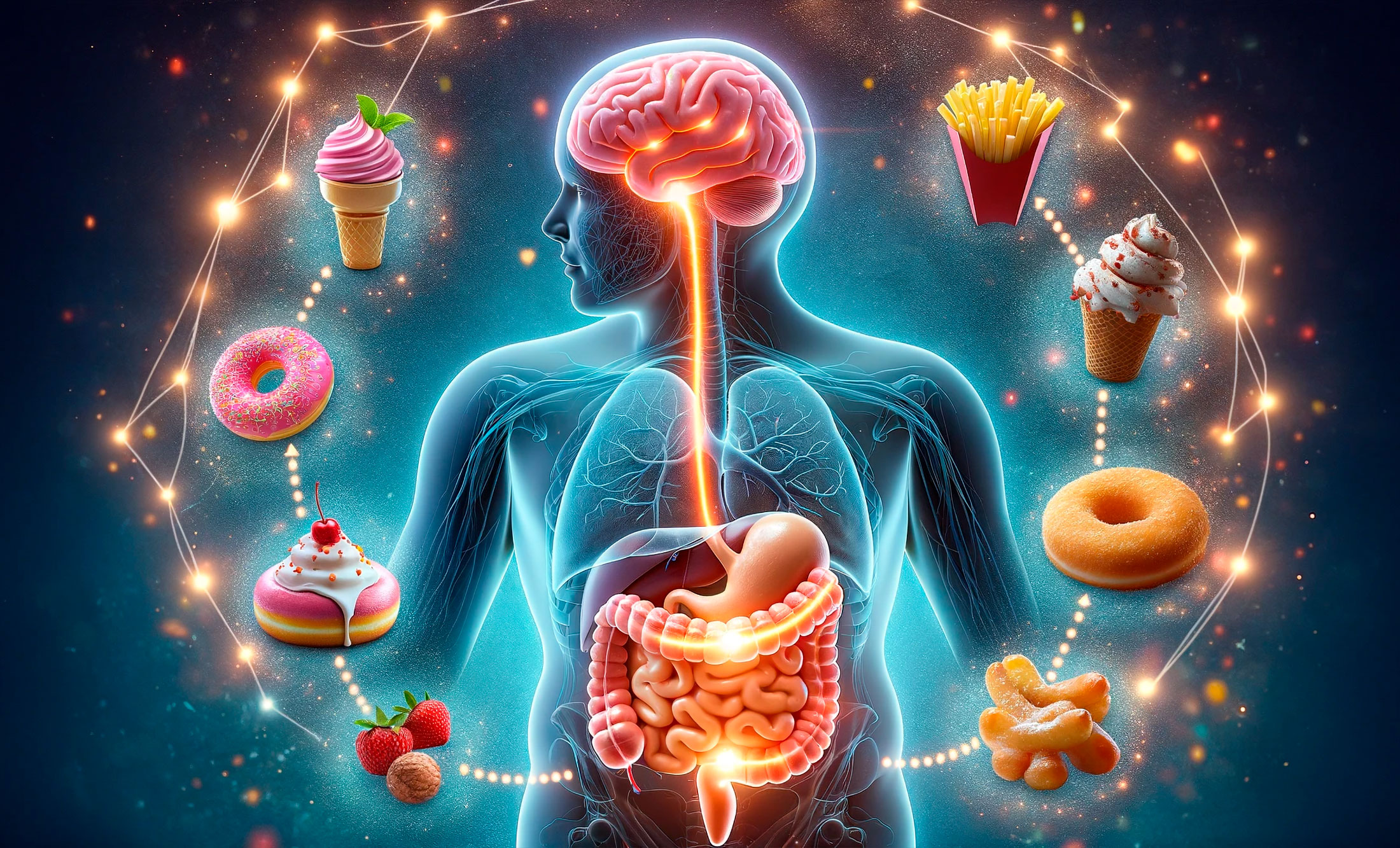
Results reveal a “one-two punch” to the brain’s reward system, possibly impeding dieting efforts.
Understanding why we overeat unhealthy foods has been a long-standing mystery. While we know food’s strong power influences our choices, the precise circuitry in our brains behind this is unclear. The vagus nerve sends internal sensory information from the gut to the brain about the nutritional value of food. But, the molecular basis of the reward in the brain associated with what we eat has been incompletely understood.
Fat and Sugar Craving Pathways Revealed
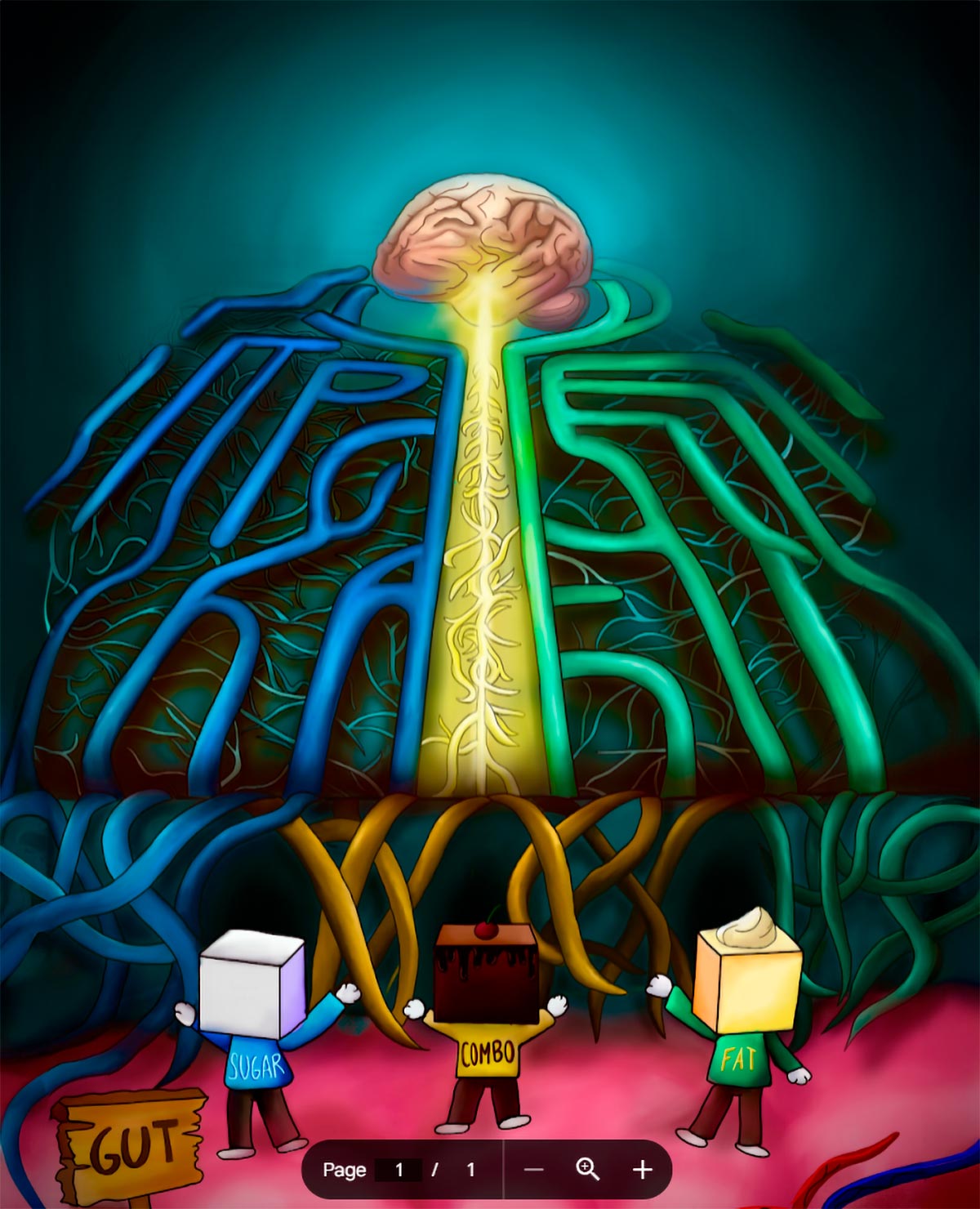
Now, a new study published in Cell Metabolism by a team from the Monell Chemical Senses Center, unravels the internal neural wiring, revealing separate fat and sugar craving pathways, as well as a concerning result: Combining these pathways overly triggers our desire to eat more than usual.
“Food is nature’s ultimate reinforcer,” said Monell scientist Guillaume de Lartigue, PhD, lead author of the study. “But why fats and sugars are particularly appealing has been a puzzle. We’ve now identified nerve cells in the gut rather than taste cells in the mouth are a key driver. We found that distinct gut-brain pathways are recruited by fats and sugars, explaining why that donut can be so irresistible.”
Ultimately this research provides insights on what controls “motivated” eating behavior, suggesting that a subconscious internal desire to consume a diet high in both fats and sugar has the potential to counteract dieting efforts.
Advanced Technology Uncovers Gut-Brain Connections
The team used cutting-edge technology to directly manipulate fat or sugar neurons in the vagus nerve system and demonstrated that both types of neurons cause a dopamine release in the brain’s reward center in mice. They discovered two dedicated vagus nerve pathways: one for fats and another for sugars. These circuits, originating in the gut, relay information about what we have eaten to the brain, setting the stage for cravings.
To determine how fats and sugars affect the brain, the team stimulated gut vagal nerves with light. This, in turn, induced the mice to actively seek stimuli, in this case food, that engage these circuits. The results indicated that sugar and fat are sensed by discrete neurons of the vagus nerve and engage parallel but distinct reward circuits to control nutrient-specific reinforcement.
The Impact of Combining Fats and Sugars
But the story doesn’t end there. The team also found that simultaneously activating both the fat and sugar circuits creates a powerful synergy. “It’s like a one-two punch to the brain’s reward system,” said de Lartigue. “Even if the total calories consumed in sugar and fats stays the same, combining fats and sugars leads to significantly more dopamine release and, ultimately, overeating in the mice.”
This finding sheds light on why dieting can be so challenging. Human brains may be subtly programmed to seek out high-fat, high-sugar combinations, regardless of conscious efforts to resist. “The communication between our gut and brain happens below the level of consciousness,” said de Lartigue. “We may be craving these types of food without even realizing it.”
Future Implications and Anti-Obesity Strategies
The team predicts that this line of research offers hope for future development of anti-obesity strategies and treatments. Targeting and regulating gut-brain reward circuits could offer a novel approach to curb unhealthy eating habits.
“Understanding the wiring diagram of our innate motivation to consume fats and sugars is the first step towards rewiring it,” said de Lartigue. “This research unlocks exciting possibilities for personalized interventions that could help people make healthier choices, even when faced with tempting treats.”
Reference: “Separate gut-brain circuits for fat and sugar reinforcement combine to promote overeating” by Molly McDougle, Alan de Araujo, Arashdeep Singh, Mingxin Yang, Isadora Braga, Vincent Paille, Rebeca Mendez-Hernandez, Macarena Vergara, Lauren N. Woodie, Abhishek Gour, Abhisheak Sharma, Nikhil Urs, Brandon Warren and Guillaume de Lartigue, 18 January 2024, Cell Metabolism.
DOI: 10.1016/j.cmet.2023.12.014
de Lartigue’s co-authors are Molly McDougle, Alan de Araujo, Arashdeep Singh, Mingxin Yang, Isadora Braga, Vincent Paille, Rebeca Mendez-Hernandez, and Brandon Warren, all from the Monell Center; Macarena Vergara, Abhishek Gour, Abhisheak Sharma, and Nikhil Urs, all from the University of Florida, and Lauren N. Woodie, University of Pennsylvania.
The research was supported by the National Institutes of Health (R01 DK116004, R01 Q15, DK094871, F31 DK1311773); an AHA postdoctoral fellowship and grants from the SanteDige Foundation and Phillip Foundation.
Never miss a breakthrough: Join the SciTechDaily newsletter.
Follow us on Google and Google News.