
Close Menu
    Facebook X (Twitter) Instagram
    SciTechDaily
    • Biology
    • Chemistry
    • Earth
    • Health
    • Physics
    • Science
    • Space
    • Technology
    Facebook X (Twitter) Pinterest YouTube RSS
    SciTechDaily
    Home»Space»CNES CoRoT Satellite Suffers Computer Failure
    Space

    CNES CoRoT Satellite Suffers Computer Failure

    By SciTechDailyNovember 20, 2012No Comments2 Mins Read
    Facebook Twitter Pinterest Telegram LinkedIn WhatsApp Email Reddit
    Share
    Facebook Twitter LinkedIn Pinterest Telegram Email Reddit
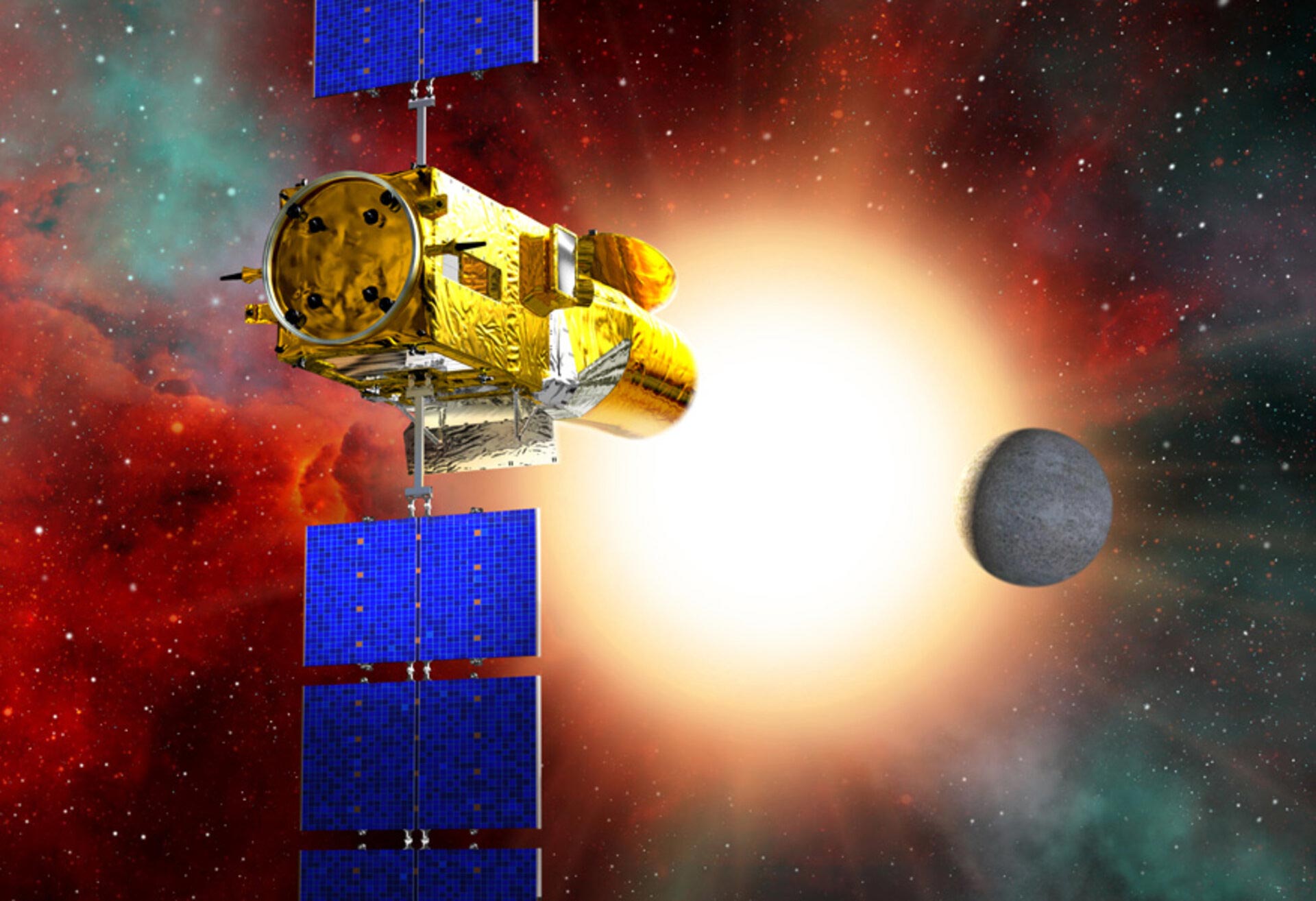
    COROT Satellite
    Artist’s view of the CoRoT satellite. Credit: CNES/D. Ducros

    The French space agency CNES has announced that the Convection, Rotation, and Planetary Transits (CoRoT) satellite is on its last legs.

    The satellite suffered a computer failure on November 2. The spacecraft is still functioning, but it can no longer retrieve data from its 30-centimeter (11.8-inch) telescope, which has spotted exoplanets by looking for transits, a dimming in the brightness of stars as a planet crosses its path.
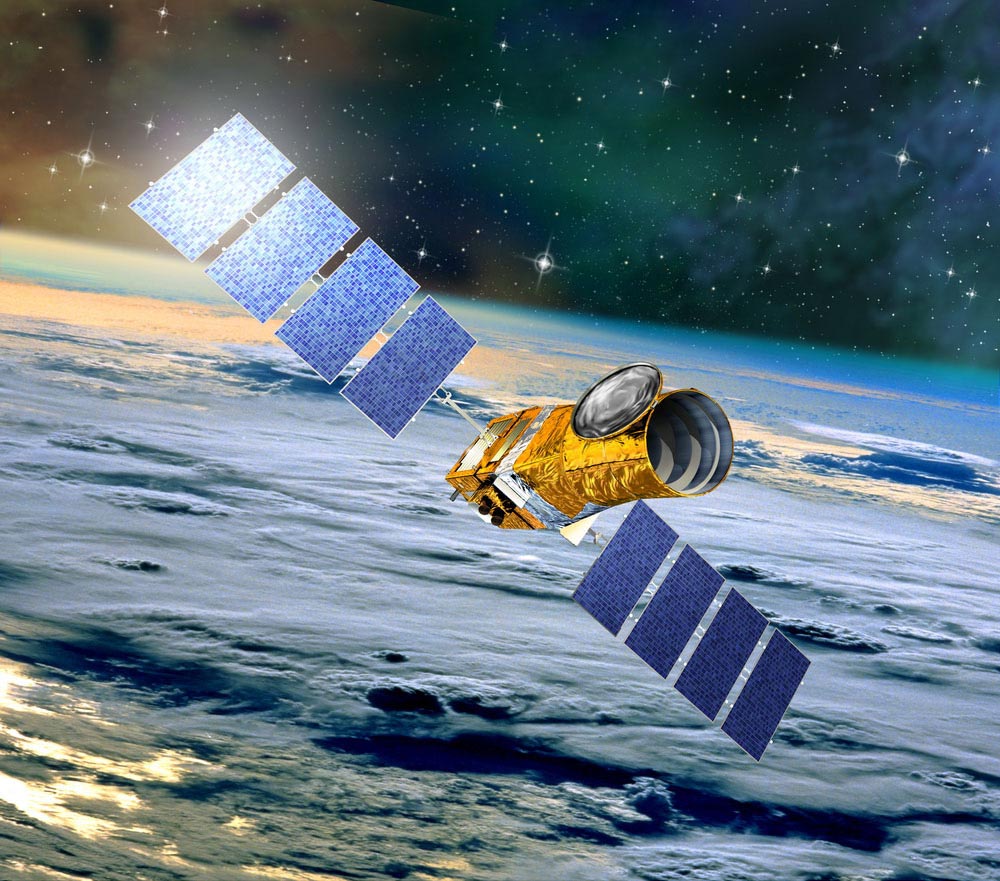
    COROT Satellite in Space

    CoRoT was launched in 2006 and has been monitoring thousands of stars. In 2009, the satellite survived its first computer failure by relying on a second, redundant unit. The team has tried to reboot the second computer many times, but have been unsuccessful. The engineering team hasn’t given up yet, and sometime in December, they will try to reboot the first computer using an alternate power chain.

    The CoRoT space mission has discovered 31 new exoplanets, including five new ones that will be described in a new paper. There are also some 200 candidate exoplanets that haven’t yet been confirmed. CoRoT had already doubled its three-year design life, and was about to embark on another extension.

    CoRoT was the first space mission to discover new planets using the transit technique. With its smaller mirror, it was never a match for Kepler, which has discovered some 3,000 candidate planets.

    CoRoT discovered that red giant stars oscillated in a way that theorists had not expected, giving astronomers new insight into the structure and evolution of aging stars. It also discovered CoRoT-7b, a rocky planet 1.7 times the diameter of Earth, which was the first in a whole new category of exoplanets, called super-Earths.

    CoRoT has been flying in a 900-kilometer (560 miles) polar orbit, and has had to cope with high doses of radiation and seesawing temperatures as it crosses in and out of the Earth’s shadow. In comparison, Kepler drifted further away from Earth in its own orbit around Sol, a much cleaner radiation environment.

    Never miss a breakthrough: Join the SciTechDaily newsletter.
    Follow us on Google and Google News.

    Astronomy CNES CoRoT Exoplanet France
    Share. Facebook Twitter Pinterest LinkedIn Email Reddit

    Related Articles

    Astronomy & Astrophysics: How To Find an Exoplanet

    Scientists Determine the Interior Rotation of a Sun-Like Star

    Kepler-76b: A Hot Jupiter With Superrotation

    BEER Algorithm Identifies Exoplanet Kepler-76b

    NASA Data Reveals Significant Changes in Exoplanet’s Atmosphere

    Astronomers Obtain Precise Measurements of the Two Kepler-16 Stars

    Three Earthlike Planets Could be Hospitable to Life

    Atmosphere of Super-Earth GJ1214b Possibly Includes Abundant Water Vapor

    NASA’s Kepler Mission Discovers 11 New Extrasolar Systems with 26 Exoplanets

    Leave A Reply Cancel Reply

    • Facebook
    • Twitter
    • Pinterest
    • YouTube

    Don't Miss a Discovery

    Subscribe for the Latest in Science & Tech!

    Trending News

    JWST Finds a “Star” 100 Billion Times Brighter Than Any Star Should Be

    Scientists Find a Hidden Biological Link Across Different Forms of Autism

    Astronomers Discover a Ghostly River of Stars That Could Reveal Dark Matter

    Why Is Colorectal Cancer Rising in People Under 50? New Clues Point to the Environment

    Quantum Fluctuations Break a Crystal’s Symmetry Rules

    Why Does an Irregular Heartbeat Strike 40 Years Early in Some People?

    Scientists Reveal How ADHD Could Fuel Creative Thinking

    Scientists Find Just 3 Minutes of Sprinting Can Transform Blood Chemistry

    Follow SciTechDaily
    • Facebook
    • Twitter
    • YouTube
    • Pinterest
    • Newsletter
    • RSS
    SciTech News
    • Biology News
    • Chemistry News
    • Earth News
    • Health News
    • Physics News
    • Science News
    • Space News
    • Technology News
    Recent Posts
    • A Vast Clean Energy Source May Be Hiding Beneath Australia’s Red Soil
    • Scientists Uncover Signs of an Ancient Climate “Tipping Point”
    • Cleaner Cars May Be Hiding a New Pollution Problem
    • Common Plant Chemical Linked to Widespread Organ Damage in Aquatic Animals
    • Scientists Discover a Hidden Baobab Species in Madagascar
    Copyright © 1998 - 2026 SciTechDaily. All Rights Reserved.
    • Science News
    • About
    • Contact
    • Editorial Board
    • Privacy Policy
    • Terms of Use

    Type above and press Enter to search. Press Esc to cancel.