

Close Menu
    Facebook X (Twitter) Instagram
    SciTechDaily
    • Biology
    • Chemistry
    • Earth
    • Health
    • Physics
    • Science
    • Space
    • Technology
    Facebook X (Twitter) Pinterest YouTube RSS
    SciTechDaily
    Home»Science»Special Fishing Weights Could Help Save Hammerhead Sharks
    Science

    Special Fishing Weights Could Help Save Hammerhead Sharks

    By SciTechDailyDecember 3, 2012No Comments2 Mins Read
    Facebook Twitter Pinterest Telegram LinkedIn WhatsApp Email Reddit
    Share
    Facebook Twitter LinkedIn Pinterest Telegram Email Reddit
    hammerhead-fishing-lines
    The new specialized fishing lines incorporate a mild induced electric field to deter sharks. Coastal shark species, such as hammerheads, rely on electrically sensitive organs in their snouts for navigation and prey detection. Credit: Barry Peters/Wikimedia; (inset) Melanie Hutchinson

    The global population of hammerhead sharks, a group of sharks in the family Sphyrnidae, has plummeted by 89% in the last 20 years, largely due to illegal poaching and accidental fishing. Scientists have come up with a way to reduce the bycatch of hammerhead sharks.

    The scientists published their findings in the journal Fisheries Research. The new specialized fishing lines carry a mild, induced electric field near fishing lines to keep the sharks away. Coastal shark species, like hammerheads, use electrically sensitive organs in their snouts to navigate and find prey.
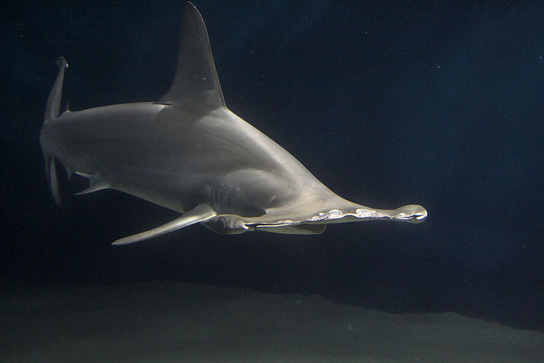
    scalloped-hammerhead-shark
    A scalloped hammerhead shark (Sphyrna lewini). Credit: Flickr/Suneko

    In order to save the sharks, attaching pieces of rare-earth lanthanide metals, like neodymium and praseodymium, to longline fishing gear in place of lead weights appears to repel the sharks. Test lines in Hawaii caught less than half as many endangered scalloped hammerhead shark (Sphyrna lewini) pups as lines without.

    Open shark species, which use other senses to find prey, weren’t affected. And for some commonly fished species, like halibut and tuna, electric fields didn’t impact catch rates. This strategy could help preserve hammerhead sharks in coastal fisheries. However, lanthanide metals are difficult and costly to work with, and dissolve rather quickly in water. The weights would have to be replaced periodically.

    Reference: “The effects of a lanthanide metal alloy on shark catch rates” by Melanie Hutchinson, John H. Wang, Yonat Swimmer, Kim Holland, Suzanne Kohin, Heidi Dewar, James Wraith, Russ Vetter, Craig Heberer and Jimmy Martinez, 20 July 2012, Fisheries Research.
    DOI: 10.1016/j.fishres.2012.07.006

    Never miss a breakthrough: Join the SciTechDaily newsletter.
    Follow us on Google and Google News.

    Conservation Marine Biology Sharks Zoology
    Share. Facebook Twitter Pinterest LinkedIn Email Reddit

    Related Articles

    Miami’s Close Encounters With Sharks: They May Be Closer Than You Think

    Body Size of Extinct Gigantic Megatooth Shark – Otodus Megalodon – Indeed off the Charts in the Shark World

    Protecting a Nearly Endangered Species: Tracking Hammerhead Sharks Reveals Conservation Targets

    Six-Year Whale Shark Study Offers New Behavior and Conservation Insights [Video]

    Tracking Basking Sharks Yields Fascinating Insights Into Their Behavior

    Visual Repellants May Help Prevent Shark Attacks

    Captive Beluga Whale Was Able to Mimic Speech

    Rare Northern Bald Ibis Killed Illegally By Hunters in Italy

    Pacific Islanders Weapons Indicate That Three Shark Species Disappeared

    Leave A Reply Cancel Reply

    • Facebook
    • Twitter
    • Pinterest
    • YouTube

    Don't Miss a Discovery

    Subscribe for the Latest in Science & Tech!

    Trending News

    One of Earth’s Driest Deserts Just Turned White

    A Century-Old Mystery in Cat Kidneys May Finally Have an Answer

    Black Hole Winds Are 100 Times More Powerful Than Astronomers Thought

    “Cancer Melted Away”: Immunotherapy Delivers Striking Results in Bowel Cancer Trial

    Captive Crocodiles Released Into the Wild Did Something Researchers Didn’t Expect

    A Massive 29-Square-Mile Iceberg Hit an Island and Kept Going

    New Mexico’s Largest Reservoir Was Nearly Full. Now It’s at 1.4%

    This Southern-Style Mediterranean Diet Helped People Lose 10 Pounds

    Follow SciTechDaily
    • Facebook
    • Twitter
    • YouTube
    • Pinterest
    • Newsletter
    • RSS
    SciTech News
    • Biology News
    • Chemistry News
    • Earth News
    • Health News
    • Physics News
    • Science News
    • Space News
    • Technology News
    Recent Posts
    • UCLA Scientists Develop Cancer-Fighting Cells That Tumors Struggle to Escape
    • Healthy Foods Like Spinach May Worsen Gut Inflammation in IBD
    • Could a Decades-Old Diabetes Drug Help the Body Age More Slowly?
    • Scientists Say the Universe Isn’t Slowing Down After All
    • A Century-Old Mystery in Venus’s Clouds Just Got Even Stranger
    Copyright © 1998 - 2026 SciTechDaily. All Rights Reserved.
    • Science News
    • About
    • Contact
    • Editorial Board
    • Privacy Policy
    • Terms of Use

    Type above and press Enter to search. Press Esc to cancel.