
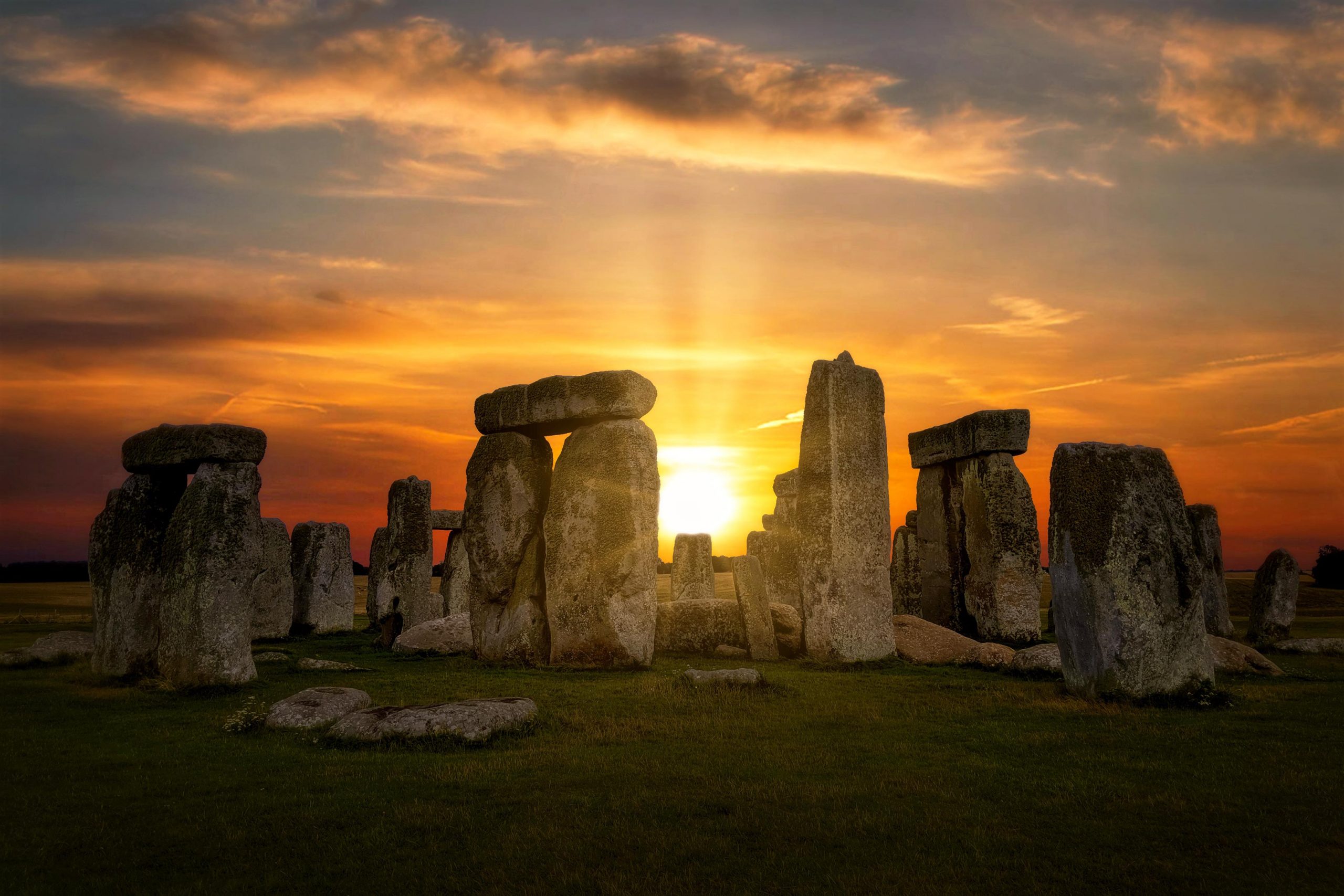
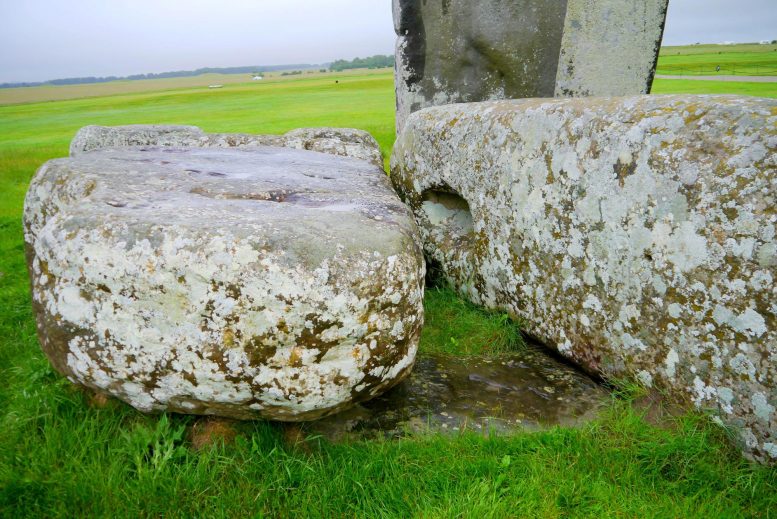
Stonehenge’s six-ton Altar Stone has led scientists from Wales to Scotland, yet even its most detailed geological examination has failed to reveal where it came from.
Scientists have spent more than a century trying to determine where Stonehenge’s six-ton Altar Stone came from. Once thought to originate in Wales, the massive sandstone slab has since been traced geologically to northeast Scotland, but its exact source remains unknown. Now, the most comprehensive geological investigation yet has ruled out several proposed locations and provided new clues to guide the search.
Published in the Journal of the Geological Society, the study examined the stone’s mineral composition, chemistry, and other geological characteristics. Measuring 4.9 meters (16 feet) long and weighing about six metric tons (6.6 US tons), the Altar Stone could offer important insights into how prehistoric people transported massive stones across Britain thousands of years ago.
Searching For A Geological Match
The latest investigation brought together observations of the Altar Stone itself and detailed examinations of fragments held in museum collections. By comparing its structure, mineral content, chemical composition, and isotopic characteristics, the team assembled a set of identifying features that potential sources must match.
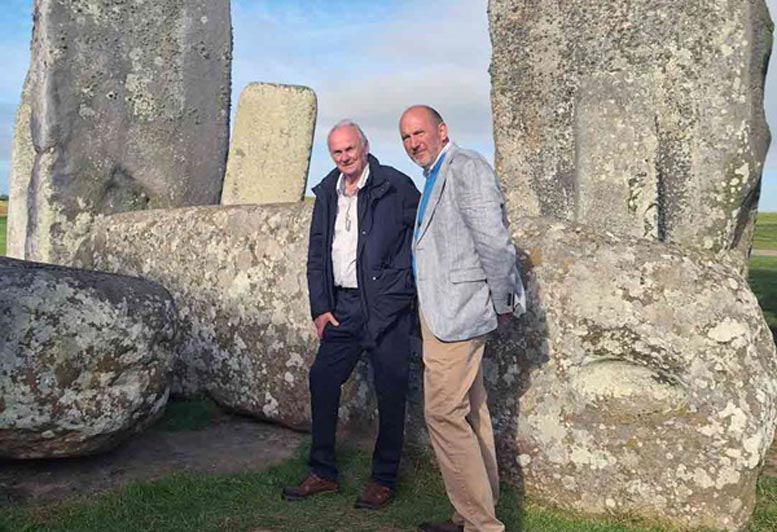
No location examined so far in northeast Scotland’s Orcadian Basin has met all those criteria. That leaves the stone’s birthplace unresolved but gives future fieldwork a clearer target. Study leader Duncan Pirrie, emeritus professor at the University of South Wales, said:
“This is the most comprehensive geological investigation of the Altar Stone ever undertaken. By combining a wide range of analytical techniques, we have built the clearest picture yet of the stone’s composition and tested the leading theories about its origins. So far, none of the locations examined have the same set of characteristics as the Altar Stone. That tells us the search is not over, but we are now far better equipped to focus on the areas most likely to yield an answer.”
From Wales to Scotland
The findings build on earlier work that redirected the search away from Wales. Richard Bevins, honorary professor in Aberystwyth University’s Department of Geography and Earth Sciences, said:
“For almost a century, the prevailing view was that the Altar Stone came from west Wales. Our previous research overturned that assumption and pointed instead to Scotland as the most likely source. This latest study significantly refines the search by identifying the specific geological characteristics we need to look for, allowing future investigations to be targeted more effectively. With each new piece of evidence, we move closer to solving one of Stonehenge’s most enduring mysteries.”
Nick Pearce, emeritus professor of geochemistry in the same department at Aberystwyth University, emphasized the value of eliminating candidates: “In a geological detective story such as this, ruling out potential source areas is just as important as identifying new ones. Every location eliminated narrows the search and brings us closer to discovering where the Altar Stone originated. The stone is unique among those at Stonehenge, and tracing its source would provide valuable new insights into its remarkable journey to Salisbury Plain thousands of years ago.”
Tracing A Prehistoric Engineering Feat
Stonehenge took shape through several construction phases between around 3000 and 1600 BC. Moving its stones across great distances was part of that achievement: the smaller bluestones traveled approximately 225 kilometers (140 miles) from west Wales.
Establishing where the Altar Stone began would give researchers a crucial geographical anchor for investigating how it reached the monument. The researchers hope that fingerprint will ultimately lead them to the source and shed new light on the effort behind one of prehistory’s most remarkable engineering achievements.
Reference: “Searching for the origin of the Stonehenge Altar Stone: new sedimentological, petrographical, mineralogical, geochemical and isotopic constraints” by Duncan Pirrie, Richard E. Bevins, Rob A. Ixer, Nick J. G. Pearce, Peter Turner, Matthew R. Power, Stephen Hillier, Andrew C. Morton, Ian Saunders, Sergio Andò, Marta Barbarano, Andrew Horbury and Gregory D. Price, 5 November 2026, Journal of the Geological Society.
DOI: 10.1144/jgs2026-090
Never miss a breakthrough: Join the SciTechDaily newsletter.
Follow us on Google and Google News.