
Close Menu
    Facebook X (Twitter) Instagram
    SciTechDaily
    • Biology
    • Chemistry
    • Earth
    • Health
    • Physics
    • Science
    • Space
    • Technology
    Facebook X (Twitter) Pinterest YouTube RSS
    SciTechDaily
    Home»Biology»Scientists Discover Mysterious New Fish in the Red Sea – and Have Never Seen It Again
    Biology

    Scientists Discover Mysterious New Fish in the Red Sea – and Have Never Seen It Again

    By Pensoft PublishersNovember 13, 2026No Comments4 Mins Read
    Facebook Twitter Pinterest Telegram LinkedIn WhatsApp Email Reddit
    Share
    Facebook Twitter LinkedIn Pinterest Telegram Email Reddit
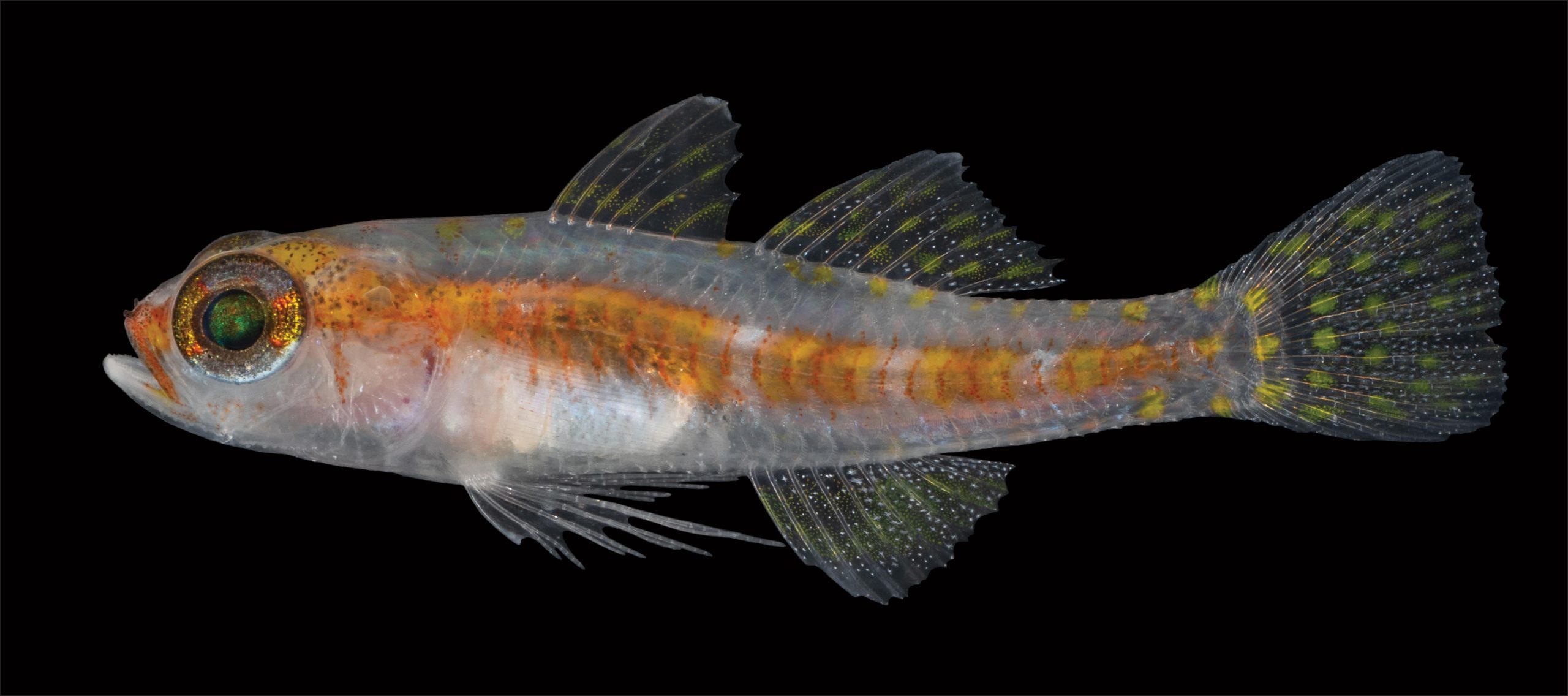
    Trimma Charon Goby Specimen
    Freshly collected Trimma charon sp. nov., paratype, live, ROMI118237, 12.1 mm SL. Credit: Viktor N. Peinemann

    Scientists discovered a tiny new fish species in the Red Sea but have never found it again, suggesting it may live mostly on deeper reefs that remain largely unexplored.

    In Greek mythology, Charon ferried the dead across a river into the underworld. People were traditionally buried with a coin to pay for the crossing. That tradition helped inspire the name of a newly described fish species from the northern Red Sea, Charon’s pygmygoby (Trimma charon).

    “One of the most striking features of the new species is the golden spots scattered across its tail fin,” said study leader Viktor Nunes Peinemann of King Abdullah University of Science and Technology (KAUST) in Saudi Arabia. “They cover most of the fin and resemble small gold coins.”

    The tiny fish is translucent, with a broad orange-red stripe and an unusual four-part eye. The two known specimens measure just 12 and 17 millimeters long, roughly half an inch and two-thirds of an inch.

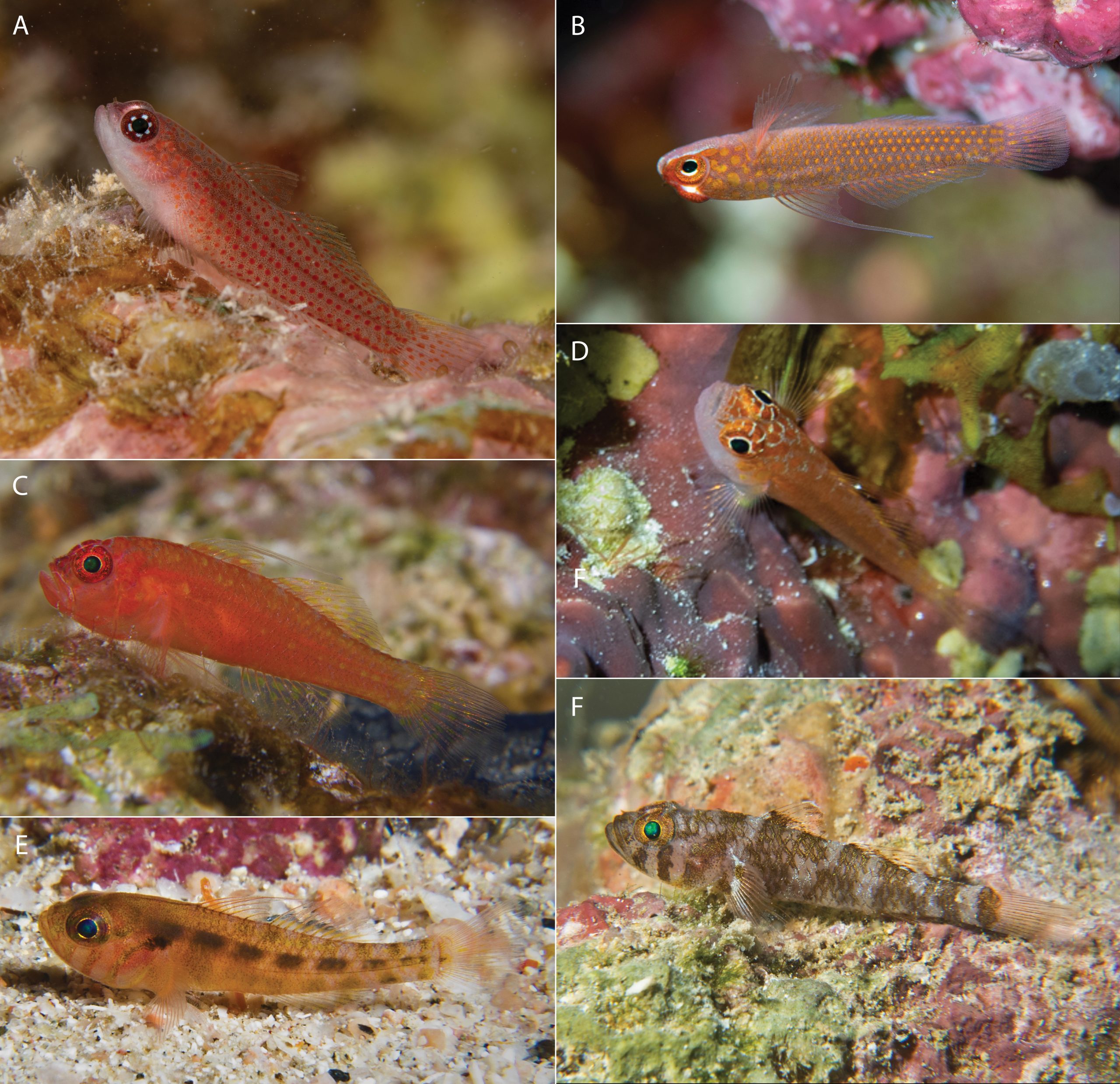
    Photo Collage of Each Red Sea Species of Trimma
    Photo collage of each Red Sea species of Trimma. Credit: V.N. Peinemann

    A possible relative across two oceans

    The new species resembles the pallid pygmygoby (Trimma anaima), a fish found from East Africa to the Pacific but never recorded in the Red Sea. Genetic data suggest the two are close relatives, although further work is needed to confirm that relationship.

    “While one species seems to have spread across much of the Indian and Pacific Oceans, its closest relative appears to have stayed in the Red Sea and evolved separately for millions of years,” said Peinemann.

    Two specimens hint at a deeper habitat

    Researchers collected the two specimens in May 2023 at Walih Island, at the entrance to a cave on a steep reef slope. They were found 30 meters, about 98 feet, below the surface, the maximum depth of the team’s scientific diving. Extensive searches of similar habitats since then have produced no further sightings. “So far, the entire species is known from only a single encounter and two specimens,” said Peinemann.
    Trimma avidori
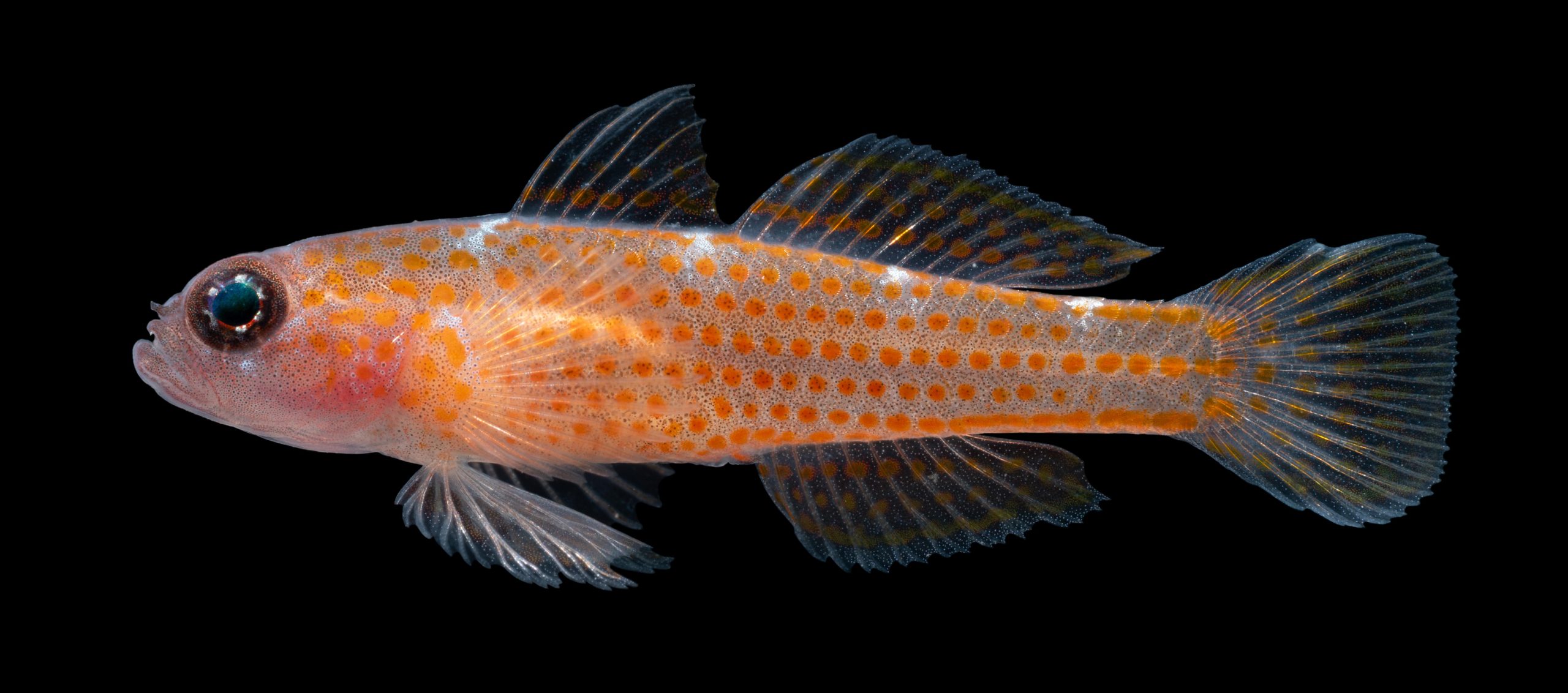
    Trimma avidori – an abundant Red Sea species. Credit: V.N. Peinemann

    The team suspects that the encounter took place at the shallow edge of the species’ range. The fish may be more common on largely unexplored mesophotic reefs below 30 meters, where sunlight is faint. That possible habitat provides another connection to its mythological namesake.

    “These dark, deeper, unexplored reefs could be viewed as a kind of ‘underworld’ beneath the shallow, well-lit, and better studied reefs most of us are more familiar with,” he said.

    “Red Sea reefs below that depth almost certainly hold more undiscovered gobies.”

    Many pygmygobies appear confined to the Red Sea

    The discovery brings the number of known Trimma species in the Red Sea to 11, making it the region’s most species-rich goby genus. At least nine appear to live nowhere else in the world. To help researchers distinguish them, the paper provides an illustrated identification key to all 11 species, along with photographs and field notes describing where each lives.
    Photographic Comparison of Six Red Sea Trimma Gobies
    In situ photographs of Red Sea Trimma species. A. T. avidori; B. T. filamentosus; C, D. T. barralli; E. T. sheppardi; F. T. quadrimaculatum. All photographs were taken in the Red Sea. Credit: V.N. Peinemann (panels A, D); by F. Krasovec (panel B); by S.V. Bogorodsky (panels C, E, F)

    The study is published in the open-access journal ZooKeys. Peinemann is based in the Marine Science Program within KAUST’s Division of Biological and Environmental Science and Engineering. His co-authors are Matthew D. Tietbohl Talas and Michael L. Berumen of KAUST, and Sergey V. Bogorodsky of the Senckenberg Research Institute and Natural History Museum Frankfurt, Germany.

    “Knowing which species are present, how to accurately identify them, and where they live, is the most foundational step to building a stronger understanding of these species and ecosystems,” said Peinemann. “They still have many secrets and deserve much more attention.”

    Reference: “Trimma charon, a new species of pygmygoby (Teleostei, Gobiidae) from the Red Sea with a key to the Red Sea species of the genus” by Viktor N. Peinemann, Sergey V. Bogorodsky, Matthew D. Tietbohl Talas and Michael L. Berumen, 24 September 2026, ZooKeys.
    DOI: 10.3897/zookeys.1293.204097

    Never miss a breakthrough: Join the SciTechDaily newsletter.
    Follow us on Google and Google News.

    Fish Marine Biology Pensoft Publishers Red Sea Taxonomy
    Share. Facebook Twitter Pinterest LinkedIn Email Reddit

    Related Articles

    The “Popcorn” Parasite: Scientists Discover 14 Bizarre New Marine Species

    Scientists Discover “Grumpy” New Fish Species in the Red Sea

    Scientists Discover Two Stunning New Fish Species in Pearl River

    Presence of Cryptic and Elusive Tiny Creatures Betrayed by Facebook and Instagram

    Old Theory on How Piranhas Keep Their Teeth Sharp Finally Proven With New Technology

    Research Outcomes Can Be Affected by Anesthetizing Fish

    Nopili Goby, The Waterfall Climbing Fish

    European Catfish Learn to Catch Pigeons

    Marine Bacteria Use Bioluminescence to Lure Zooplankton and Fish

    Leave A Reply Cancel Reply

    • Facebook
    • Twitter
    • Pinterest
    • YouTube

    Don't Miss a Discovery

    Subscribe for the Latest in Science & Tech!

    Trending News

    Scientists Discover a Hidden Weakness in One of the Deadliest Cancers

    Scientists Discover That Male and Female Hearts Age in Surprisingly Different Ways

    A Common Plastic Could Solve a Major Problem With Living on the Moon

    NASA Warns a Monster El Niño Could Surpass the Historic 1997 Event

    “This Should Not Happen”: Scientists Discover a Strange New Way To Control Atoms

    Massive Study of 2.8 Million People Reveals New Secrets of Alzheimer’s Disease

    An Ancient Virus May Hold the Secret to What Makes the Human Brain Different

    Scientists Discover a Strange Form of Iron on the Moon That Shouldn’t Be There

    Follow SciTechDaily
    • Facebook
    • Twitter
    • YouTube
    • Pinterest
    • Newsletter
    • RSS
    SciTech News
    • Biology News
    • Chemistry News
    • Earth News
    • Health News
    • Physics News
    • Science News
    • Space News
    • Technology News
    Recent Posts
    • Scientists Discover Mysterious New Fish in the Red Sea – and Have Never Seen It Again
    • A 6-Million-Year-Old Whale Had a Face So Strange Scientists Thought It Was Crushed
    • CT Scans Reveal the Secret of a Mysterious 400-Year-Old Lock
    • Stonehenge’s Mysterious Six-Ton Stone Has Scientists Searching Across Britain
    • Ancient Tomb Reveals That People Were Getting High on Cannabis 2,800 Years Ago
    Copyright © 1998 - 2026 SciTechDaily. All Rights Reserved.
    • Science News
    • About
    • Contact
    • Editorial Board
    • Privacy Policy
    • Terms of Use

    Type above and press Enter to search. Press Esc to cancel.