
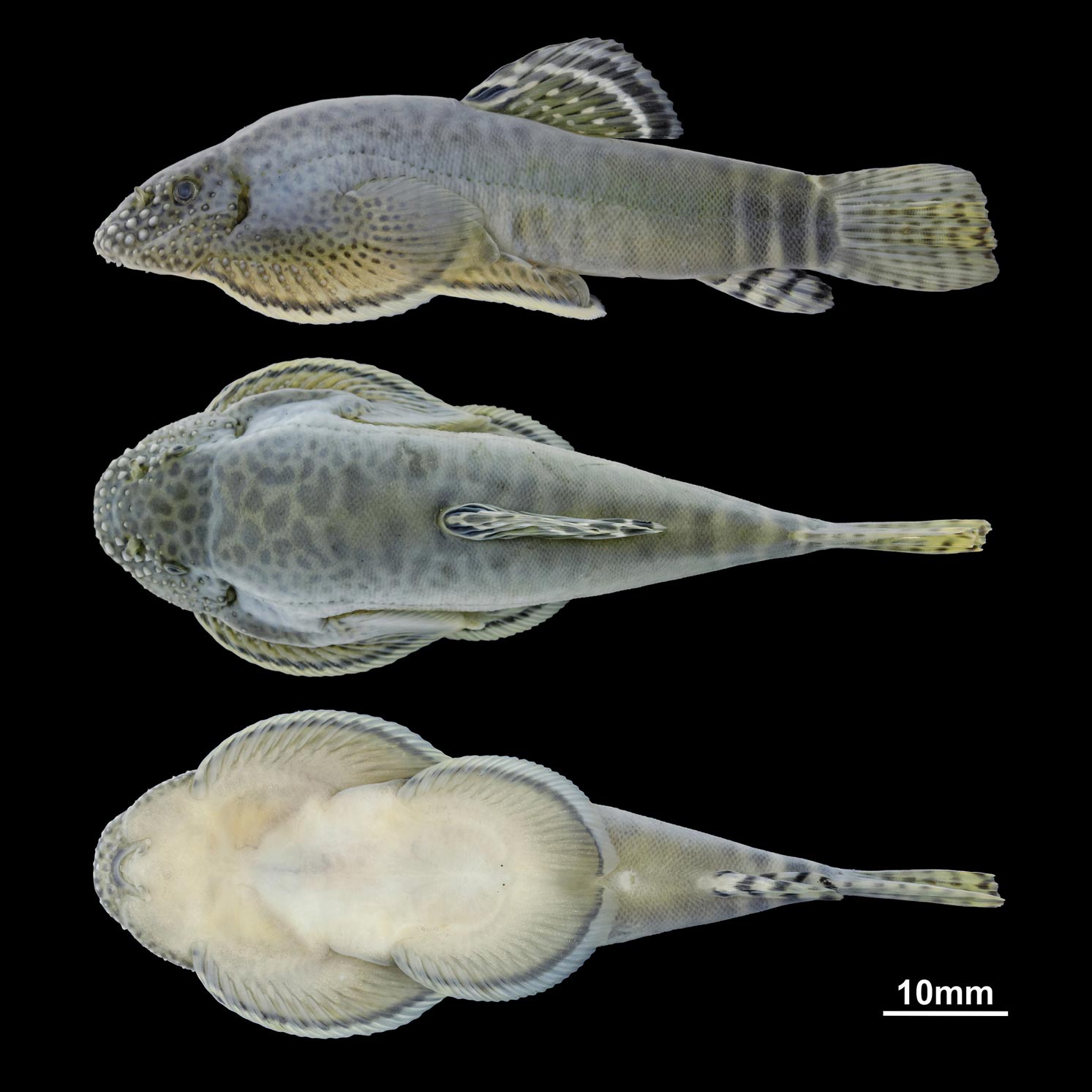
Two new species of hillstream suck-loach, Beaufortia granulopinna and Beaufortia viridis, discovered in China, exhibit specialized adaptations and face significant threats from environmental changes.
Researchers from Shanghai Ocean University and Yunnan Agricultural University have discovered two new species of hillstream suck-loach, Beaufortia granulopinna and Beaufortia viridis, in southwest China’s upper Pearl River system. The research, led by Jing-Chen Chen, provides new insights into the taxonomy and molecular phylogeny of the Beaufortia pingi species group and emphasizes the critical need for habitat conservation due to environmental threats.
Unique Characteristics of Beaufortia Species
Beaufortia granulopinna is distinguished by its prominent tubercles, or round bumps, on the first 6-9 pectoral fin rays in adults, and a unique pattern of blurriness or absence of vertical stripes in the mid-section of the lateral body upon reaching adulthood. The species name “granulopinna” is derived from the Latin words “granulo” (grainy) and “pinna” (fin), reflecting the bumps on its fins.
Beaufortia viridis is characterized by consistent vertical stripes of uniform length, width, and spacing across all growth stages, and a striking dark cyan-to-green body coloration. The species name “viridis” comes from the Latin word for “green.”

Habitat and Behavioral Observations
These species exhibit significant morphological specializations, including a compressed body, a flattened ventral surface, and greatly expanded paired fins forming a suction cup-like structure. These adaptations enable them to adhere to rocky substrates, resisting currents while feeding on algae and invertebrates.
The discoveries were made during surveys studying aquatic life in various waterways in Yunnan and Guangxi between 2022 and 2024. During these surveys, some fish exhibited strong territorial behavior, flaring their fins and headbutting rivals to drive them away.
Conservation Challenges and Opportunities
The discovery highlights the rich biodiversity of the upper Pearl River system and underscores the importance of continued taxonomic and molecular research to understand and preserve these species. Species of the Beaufortia pingi group are popular ornamental fish in China, contributing to substantial profits in the aquarium trade. However, unsustainable harvesting practices threaten their populations. Their sensitivity to pollution and changes in water quality further exacerbates their decline.
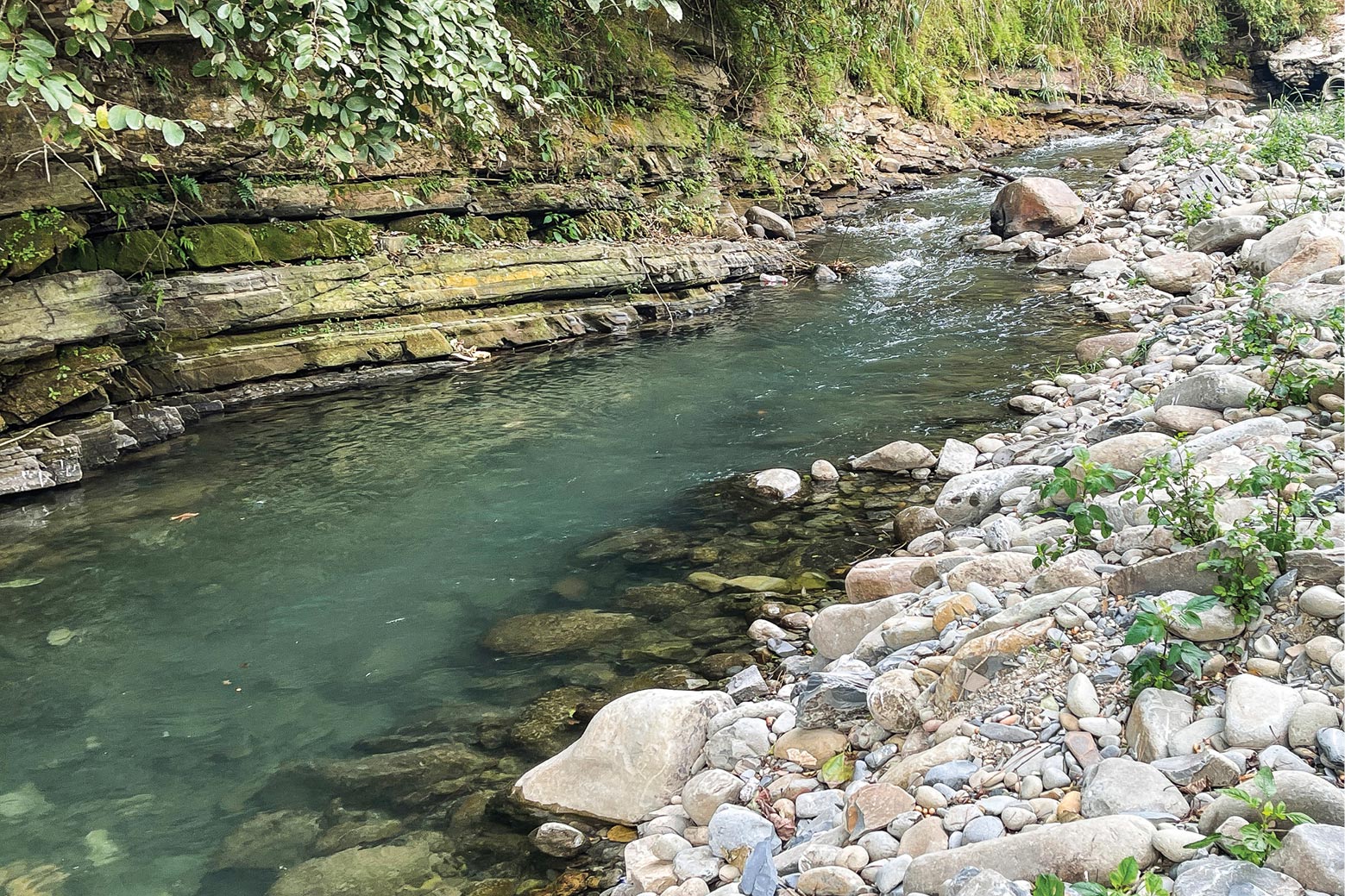
In the type locality of B. viridis sp. nov., Wuming District, Nanning City, many small tributaries have been modified into reservoirs for water storage, and those near agricultural areas are polluted, making them unsuitable for their survival. Interestingly, a stable population was found inside a commercial eco-camping site, where some river sections have been left undeveloped, providing a refuge for this species.
The researchers emphasize the need for increased attention to these species, further research, and habitat conservation. Sustainable planning and development are crucial to ensure the harmonious coexistence of humans and nature.
Reference: “Taxonomic resolution of the hillstream suck-loach Beaufortia pingi species group (Cypriniformes, Gastromyzontidae) and two new species from Southwest China– Beaufortia granulopinna and Beaufortia viridis” by Jing-Chen Chen, Jia-Jia Li, Wen-Qiao Tang, Xin-Rui Pu and Hao-Tian Lei, 9 July 2024, Zoosystematics and Evolution.
DOI: 10.3897/zse.100.124370
Never miss a breakthrough: Join the SciTechDaily newsletter.
Follow us on Google and Google News.