
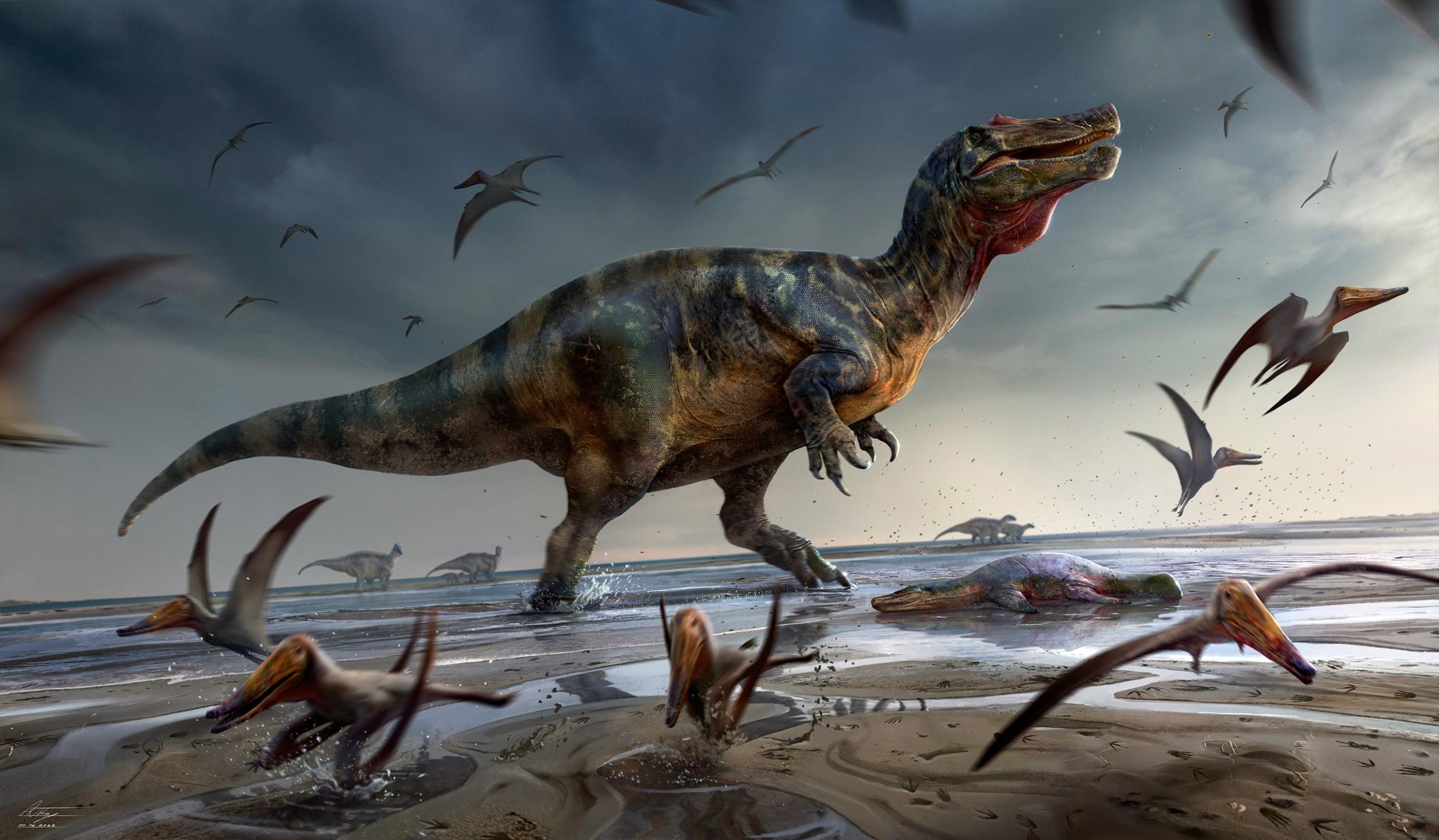
Paleontologists have identified the remains of one of Europe’s largest ever land hunters.
Spinosaurids, or spinosauridae (meaning “spined lizards”) is a family of carnivorous theropod dinosaurs that originated in the Jurassic period and came to prominence during the Cretaceous period. Paleontologists have found spinosaurid fossils in many locations around the world, including Asia, Europe, South America, Africa, and Australia.
New research has identified the remains of one of Europe’s largest ever land hunters. The research was led by paleontologists at the University of Southampton and will be published today (June 9, 2022) in the journal PeerJ Life & Environment.
Unearthed on the south coast of England, on the Isle of Wight, the new finds belong to a group of two-legged, crocodile-faced predatory dinosaurs known as spinosaurids. The discovery follows previous work on this group of dinosaurs by the University of Southampton team, which published about the discovery of two new species in 2021.
Dubbed the “White Rock spinosaurid” after the geological layer in which it was found, this was a predator of impressive proportions.
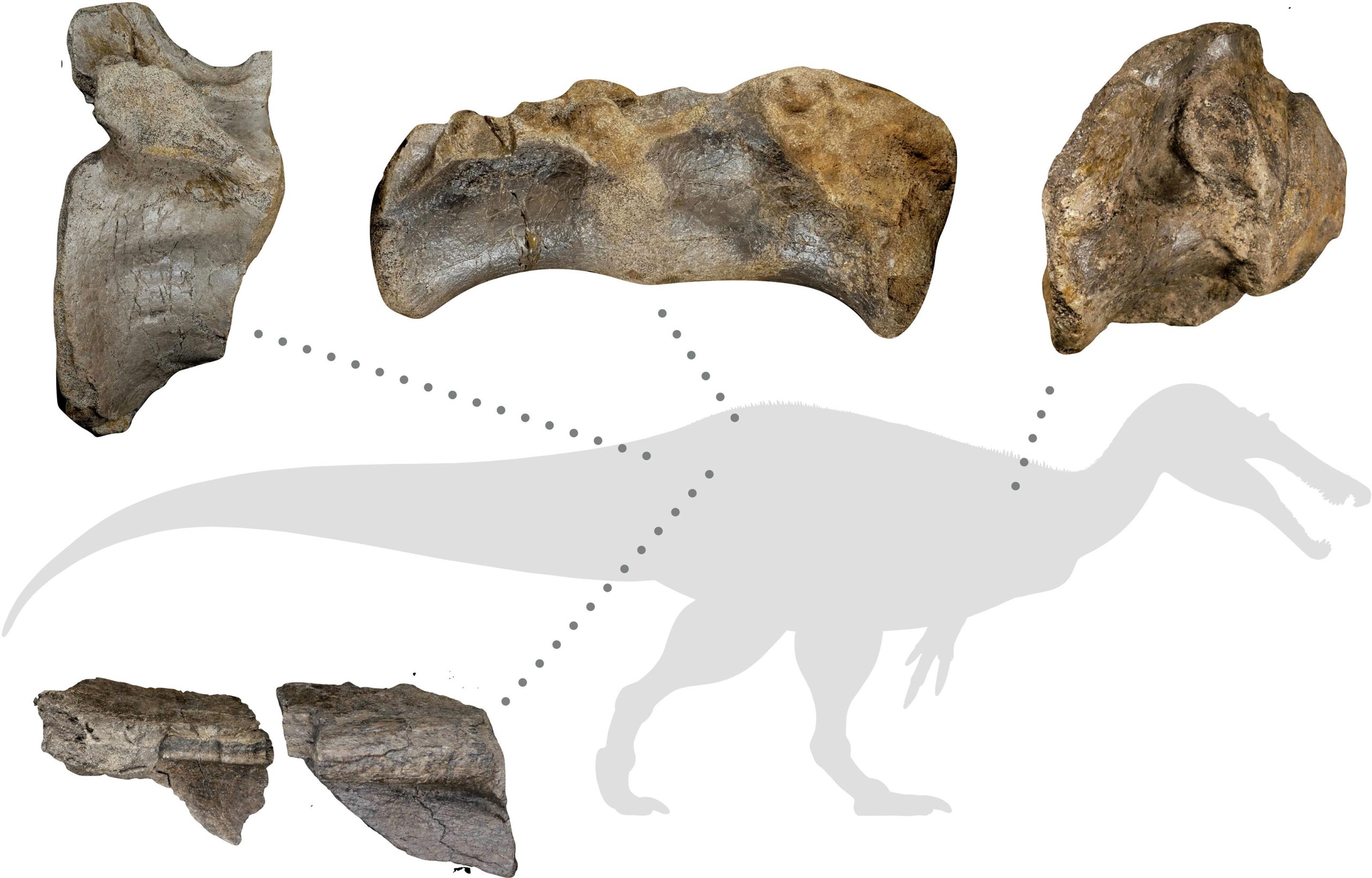
“This was a huge animal, exceeding 10 m (33 feet) in length, and judging from some of the dimensions, probably represents the largest predatory dinosaur ever found in Europe,” said PhD student Chris Barker, who led the study. “It’s just a shame it’s only known from such scant material.”
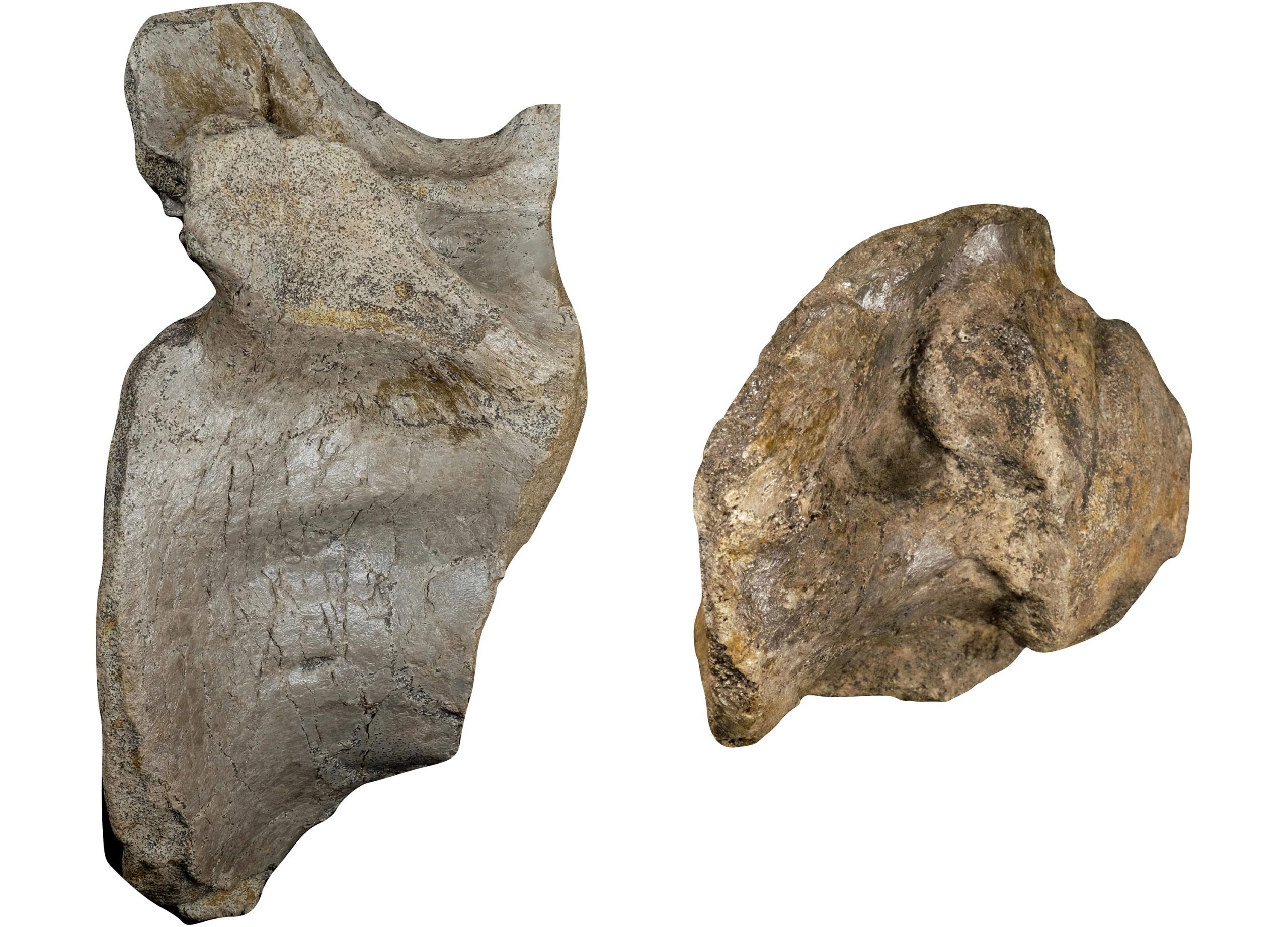
The bones, which include large pelvic and tail vertebrae amongst other pieces, were discovered near Compton Chine, on the southwest coast of the Isle of Wight. The Cretaceous rocks might be famous for their dinosaurs, but little appreciated is the fact that the island’s fossil record preserves dinosaurs from more than one section of dinosaur history. And some of those sections, even today, are poorly known.
The Vectis Formation and Its Significance
“Unusually, this specimen eroded out of the Vectis Formation, which is notoriously poor in dinosaur fossils,” said corresponding author Neil Gostling, who teaches evolution and palaeobiology at the University of Southampton. “It’s likely to be the youngest spinosaur material yet known from the UK.”
The 125 million-year-old Vectis Formation preserves the beginning of a period of rising sea levels, where the “White Rock spinosaurid” stalked lagoonal waters and sandflats in search of food.
“Because it’s only known from fragments at the moment, we haven’t given it a formal scientific name,” said co-author Darren Naish. “We hope that additional remains will turn up in time.”
“This new animal bolsters our previous argument – published last year – that spinosaurid dinosaurs originated and diversified in western Europe before becoming more widespread.”
Evidence of Post-Mortem Scavenging
Marks on the bone also showed how, even after death, the body of this giant probably supported a range of scavengers and decomposers.
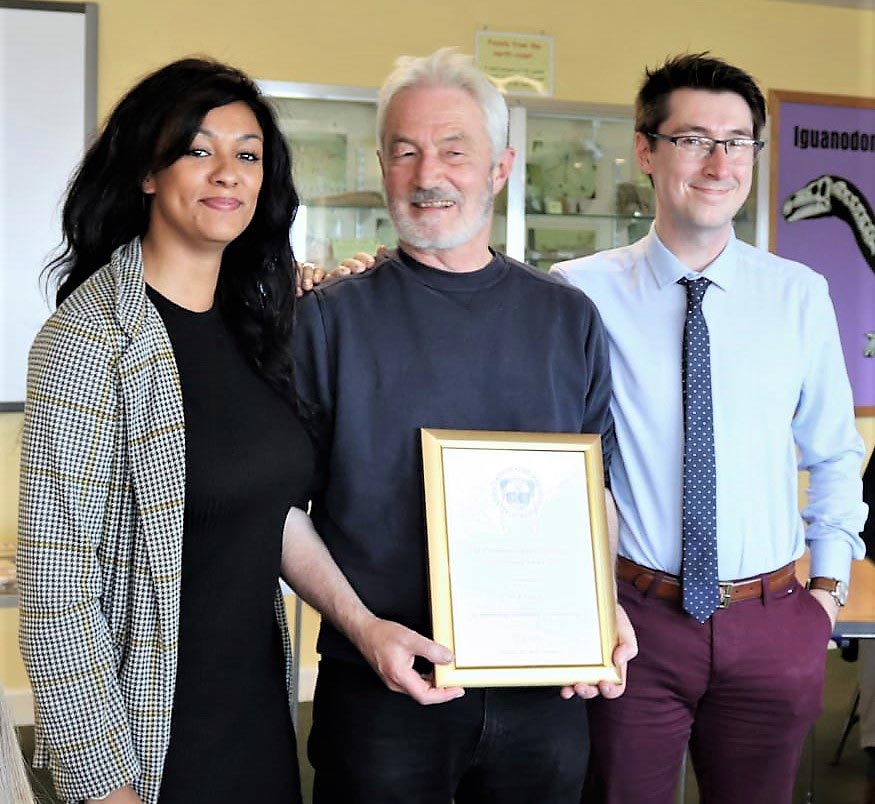
“Most of these amazing fossils were found by Nick Chase, one of Britain’s most skilled dinosaur hunters, who sadly died just before the Covid epidemic,” said co-author Jeremy Lockwood, a PhD student at the University of Portsmouth and Natural History Museum. “I was searching for remains of this dinosaur with Nick and found a lump of pelvis with tunnels bored into it, each about the size of my index finger. We think they were caused by bone-eating larvae of a type of scavenging beetle. It’s an interesting thought that this giant killer wound up becoming a meal for a host of giant insects.”
The researchers hope to generate thin sections of the material to look at the microscopic internal properties of the bones in the near future, which may provide information about its growth rate and possible age.
Reference: “A European giant: a large spinosaurid (Dinosauria: Theropoda) from the Vectis Formation (Wealden Group, Early Cretaceous), UK” by Chris T. Barker, Jeremy A.F. Lockwood, Darren Naish, Sophie Brown, Amy Hart, Ethan Tulloch and Neil J. Gostling, 9 June 2022, PeerJ.
DOI: 10.7717/peerj.13543
Never miss a breakthrough: Join the SciTechDaily newsletter.
Follow us on Google and Google News.