
Research Finds That Eating More Fruits and Veggies Can Result in Less Inattention
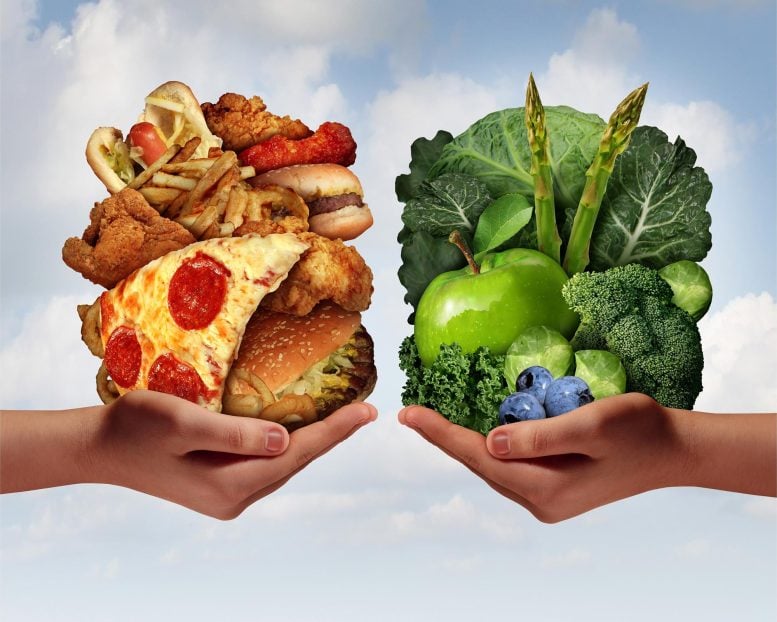
It might be a good idea for children with attention deficit hyperactivity disorder (ADHD) to eat their fruits and vegetables. Recent research has revealed that it might help reduce inattention problems.
A thorough questionnaire describing the usual meals the children consumed, including portion sizes during a 90-day period, was given to the parents of 134 children with ADHD symptoms as part of a larger study.
Another survey asked parents to rate their children’s inattention symptoms, which are a common characteristic of ADHD and include difficulties focusing, following directions, remembering things, and controlling their emotions.

According to Irene Hatsu, co-author of the research and an assistant professor of human nutrition at the Ohio State University, the results indicated that children who ate more fruits and vegetables had less severe signs of inattention.
“Eating a healthy diet, including fruits and vegetables, maybe one way to reduce some of the symptoms of ADHD,” Hatsu said.
The study was published online on May 10th in the journal Nutritional Neuroscience. The data for this research was collected as part of the Micronutrients for ADHD in Youth (MADDY) Study, which examined the efficacy of a 36-ingredient vitamin and mineral supplement to treat symptoms of ADHD and poor emotional control in the 134 kids aged 6 to 12.
The study that evaluated the effectiveness of the supplement showed that children who took the micronutrients were three times as likely to show significant improvement in their ADHD and emotional dysregulation symptoms than those who took a placebo. That study was published last year in the Journal of the American Academy of Child and Adolescent Psychiatry.
Food Insecurity and ADHD Symptom Severity
Another study involving the same children, published earlier this year in the journal Nutrients, showed that kids whose families had higher levels of food insecurity were more likely than others to show more severe symptoms of emotional dysregulation, such as chronic irritability, angry moods, and outbursts of anger.
Hatsu states that the three studies all paint a similar picture, that a healthy diet that provides all the nutrients that children require can help reduce the symptoms of ADHD in children.
“What clinicians usually do when kids with ADHD start having more severe symptoms is increase the dose of their treatment medication, if they are on one, or put them on medication,” Hatsu said.
“Our studies suggest that it is worthwhile to check the children’s access to food as well as the quality of their diet to see if it may be contributing to their symptom severity.”
Children in the MADDY study, all of whom met the criteria for ADHD, were recruited from three sites: Columbus, Ohio; Portland, Oregon; and Lethbridge, Alberta, Canada. The study took place between 2018 and 2020. Participants were either not taking medication or stopped using it two weeks before the study began.
The studies on fruit and vegetable intake and the role of food insecurity were based on data collected when the children were first enrolled in the study before they began taking the micronutrient supplement or placebo.
Why May Diet Be So Important in ADHD?
Researchers believe that ADHD is related to low levels of some neurotransmitters in the brain – and vitamins and minerals play a key role as cofactors in helping the body make those important neurochemicals and in overall brain function, Hatsu said.
Food insecurity may play an additional role.
“Everyone tends to get irritated when they’re hungry and kids with ADHD are no exception. If they’re not getting enough food, it could make their symptoms worse,” she said.
Also, the stress of parents who are upset about not being able to provide enough food for their children can create family tension that could lead to more symptoms for children with ADHD.
The MADDY study is one of the first to look at the relationship between ADHD symptoms and diet quality among children in the United States and Canada, Hatsu said.
That’s important because Western diets are more likely than many others, such as the Mediterranean diet, to fall short on fruit and vegetable intake, she said.
“We believe clinicians should assess the food security status of children with ADHD before creating or changing a treatment program,” Hatsu said.
“Some symptoms might be more manageable by helping families become more food secure and able to provide a healthier diet.”
Reference: “Fruit and vegetable intake is inversely associated with severity of inattention in a pediatric population with ADHD symptoms: the MADDY Study” by Lisa M. Robinette, Irene E. Hatsu, Jeanette M. Johnstone, Gabriella Tost, Alisha M. Bruton, Brenda M. Y. Leung, James B. Odei, Tonya Orchard, Barbara L. Gracious and L. Eugene Arnold, 10 May 2022, Nutritional Neuroscience.
DOI: 10.1080/1028415X.2022.2071805
Never miss a breakthrough: Join the SciTechDaily newsletter.
Follow us on Google and Google News.
1 Comment
This article was very informative – thank you SciTechDaily and the respective Ohio State University contributors for sharing! I think that this article raised awareness on the association, rather than causation, between fruits and vegetables consumption and reduced ADHD inattention symptoms. However, I would like to mention an alternative explanation that was not addressed in this article: sensory sensitivity. A common symptom in neurodevelopmental disorders is an impairment in sensory processing, and a study conducted by Smith et al. (2020) have found that children with ADHD have significantly higher levels of food fussiness compared to children with typical development. This may explain the lack of nutrients in the dietary patterns of children with ADHD. Furthermore, Mian et al. (2019) have found significant associations in ADHD-to-diet models, not in the diet-to-ADHD model, which supports the aforementioned study and counters the claim made in this article. Again, thank you for sharing this information on the relationship between dietary patterns and ADHD symptoms in children!
• Smith et al. (2020) study link: https://doi.org/10.1016/j.appet.2020.104643
• Mian et al. (2019) study link: https://doi.org/10.1093/jn/nxy273