
Close Menu
    Facebook X (Twitter) Instagram
    SciTechDaily
    • Biology
    • Chemistry
    • Earth
    • Health
    • Physics
    • Science
    • Space
    • Technology
    Facebook X (Twitter) Pinterest YouTube RSS
    SciTechDaily
    Home»Space»NASA’s Mars Perseverance Rover’s Exploration of Hogwallow Flats – “The Bacon Strip”
    Space

    NASA’s Mars Perseverance Rover’s Exploration of Hogwallow Flats – “The Bacon Strip”

    By NASAJuly 7, 2022No Comments3 Mins Read
    Facebook Twitter Pinterest Telegram LinkedIn WhatsApp Email Reddit
    Share
    Facebook Twitter LinkedIn Pinterest Telegram Email Reddit
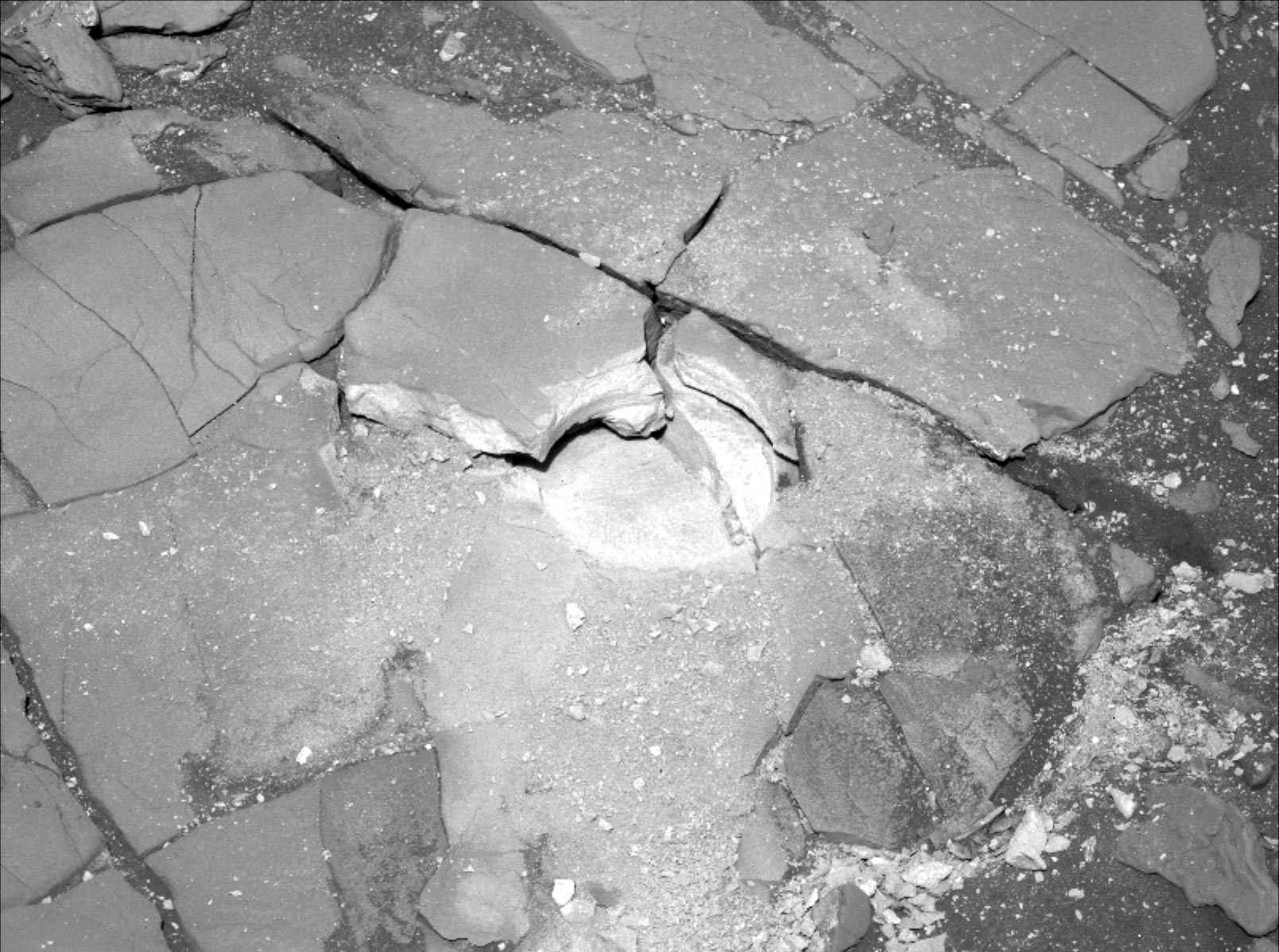
    Mars Perseverance Sol 472
    Mars Perseverance Sol 472 – Left Mastcam-Z Camera: NASA’s Perseverance rover acquired this image using its Left Mastcam-Z camera. Mastcam-Z is a pair of cameras located high on the rover’s mast. This image was acquired on June 18, 2022 (Sol 472). Credit: NASA/JPL-Caltech/ASU

    Fine-Grained Rocks at Hogwallow Flats

    NASA’s Mars Perseverance Rover’s exploration of the Hawksbill Gap area of the Jezero Delta continues! Over the last few weeks, the rover has abraded at two different locations. First, the rover abraded in the Devil’s Tanyard region. Unfortunately, the force of the abrasion broke and moved the crumbly rocks at Devils Tanyard. Nonetheless, the team was able to gather valuable scientific data of the abrasion patch and surrounding area using the SuperCam and Mastcam-Z instruments.

    Next, the rover made its way up the delta to abrade at Hogwallow Flats, an area the science team nicknamed “the Bacon Strip” due to its light-colored striped rocks, which look like a strip of bacon in images taken by the HiRISE orbiter. The rocks at Hogwallow Flats appear to be particularly fine-grained, which is exciting to mission scientists as fine-grained rocks may have the best chance of preserving evidence of life. In order to understand why, we need to talk a little about organic molecules.

    Organic molecules are the primary building blocks of life on Earth and are composed mostly of carbon, hydrogen, and oxygen. Some small organic molecules can be produced without the presence of life (and have been detected on Mars and in meteorites in the past), so the presence of organic molecules in a rock does not automatically mean that life was present. However, the detection of particularly large and complex organic molecules, or specific patterns of organic molecules, could be considered a biosignature. Unfortunately, large and complex molecules break down into smaller ones over time due to radiation from the sun and reactions with the rocks and atmosphere. If there was life in Jezero crater 3-4 billion years ago, most of the large organic molecules created by it would have been destroyed, leaving little evidence of the presence of life.

    Why Fine-Grained Rocks Are Ideal for Detecting Biosignatures

    To have a chance of detecting evidence of life in the samples that Perseverance will eventually send back, we need to sample rocks that have the highest probability of preserving complex organic molecules – fine-grained rocks. This is because fine-grained rocks are more likely to contain large amounts of clay minerals than rocks with lots of sand, pebbles, and gravel. Clay minerals have charged surfaces that can bind to organic molecules, kind of like how magnets with opposite charges stick together. By being attached to clay minerals in this way, complex organic molecules can be protected from damage in the harsh Martian environment, and preserved over a much longer period of time than they would be otherwise.

    Before deciding where it will sample next, the team plans for Perseverance to explore several more sites on the delta front. We will continue to keep an eye out for more fine-grained rocks as we continue on from Hogwallow!

    Written by Lydia Kivrak, Student Collaborator at the University of Florida.

    Never miss a breakthrough: Join the SciTechDaily newsletter.
    Follow us on Google and Google News.

    JPL Mars Mars 2020 Perseverance Rover NASA
    Share. Facebook Twitter Pinterest LinkedIn Email Reddit

    Related Articles

    NASA’s Perseverance Rover Discovers Mysterious Striped Rock on Mars

    NASA’s Perseverance Rover Begins Ambitious Ascent of Jezero Crater Rim

    NASA’s Perseverance Mars Rover To Begin Epic Climb up Steep Martian Crater Rim

    Potential Evidence of Life Discovered on Mars by NASA’s Perseverance Rover

    Is There Life on Mars? NASA’s AI Rovers Might Soon Tell Us

    Charting the Red Planet: How Open Science Fuels Mars Exploration

    Perseverance Triumphs: How SHERLOC Was Brought Back to Life on Mars

    Atmospheric Time Capsules: Why Scientists Are Intrigued by Air in NASA’s Mars Sample Tubes

    NASA’s Perseverance Rover Crosses Ancient Martian River To Reach New Scientific Frontiers

    Leave A Reply Cancel Reply

    • Facebook
    • Twitter
    • Pinterest
    • YouTube

    Don't Miss a Discovery

    Subscribe for the Latest in Science & Tech!

    Trending News

    Breakthrough Bowel Cancer Trial Leaves Patients Cancer-Free for Nearly 3 Years

    Natural Compound Shows Powerful Potential Against Rheumatoid Arthritis

    100,000-Year-Old Neanderthal Fossils in Poland Reveal Unexpected Genetic Connections

    Simple “Gut Reset” May Prevent Weight Gain After Ozempic or Wegovy

    2.8 Days to Disaster: Scientists Warn Low Earth Orbit Could Suddenly Collapse

    Common Food Compound Shows Surprising Power Against Superbugs

    5 Simple Ways To Remember More and Forget Less

    The Atomic Gap That Could Cost the Semiconductor Industry Billions

    Follow SciTechDaily
    • Facebook
    • Twitter
    • YouTube
    • Pinterest
    • Newsletter
    • RSS
    SciTech News
    • Biology News
    • Chemistry News
    • Earth News
    • Health News
    • Physics News
    • Science News
    • Space News
    • Technology News
    Recent Posts
    • Alzheimer’s May Begin Decades Earlier Than You Think, New Mayo Clinic Study Finds
    • The Hidden Risk of Taking Breaks From Weight-Loss Drugs Like Ozempic
    • Total Solar Eclipse Made Cities Go Eerily Quiet Beneath the Surface
    • This Common Plant Could Be an Unexpected New Source of Protein
    • Birds in Cities Fear Women More Than Men and Scientists Don’t Know Why
    Copyright © 1998 - 2026 SciTechDaily. All Rights Reserved.
    • Science News
    • About
    • Contact
    • Editorial Board
    • Privacy Policy
    • Terms of Use

    Type above and press Enter to search. Press Esc to cancel.