
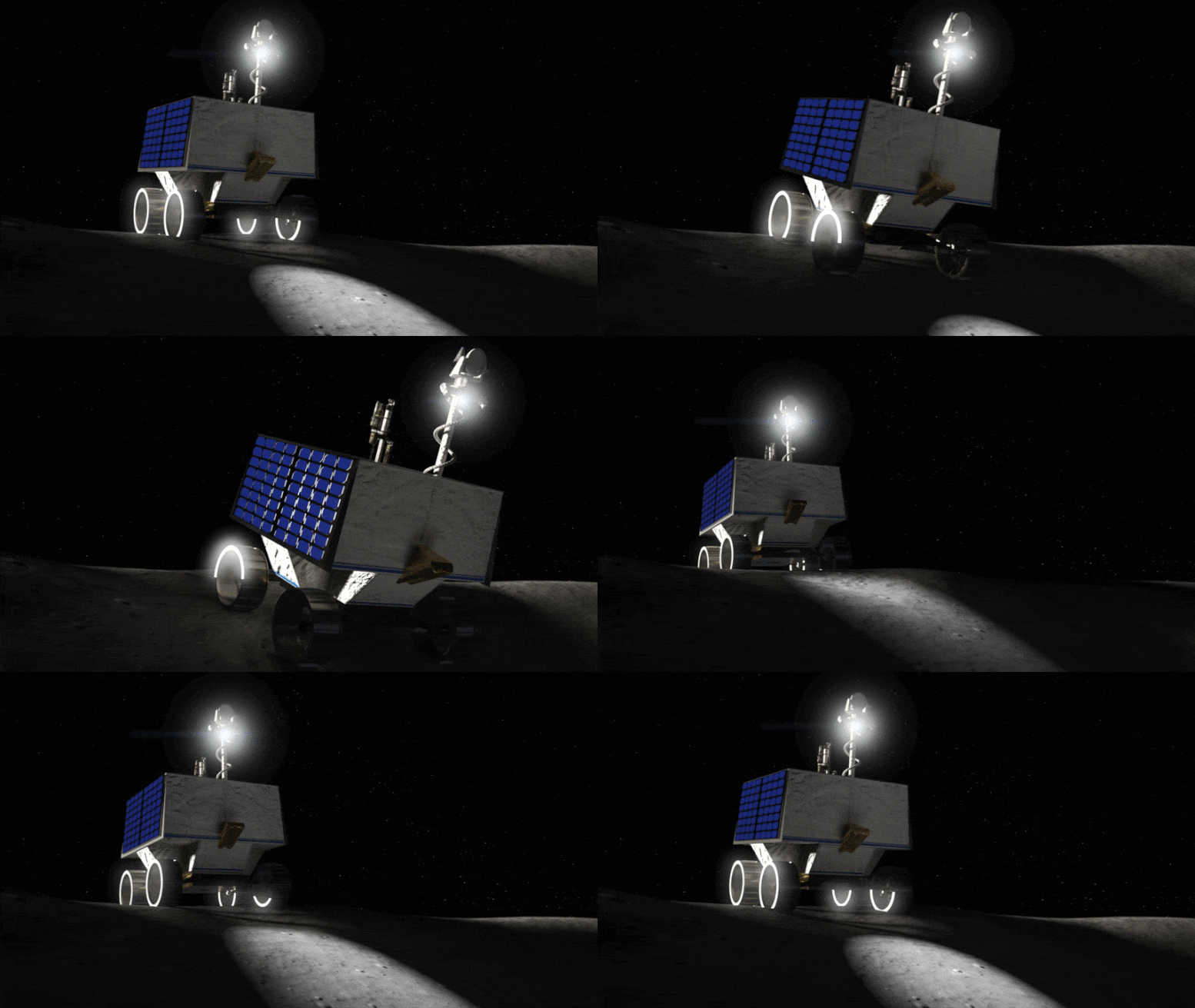
NASA’s VIPER rover prototype successfully passed rigorous tests simulating the Moon’s challenging terrain, ensuring its ability to navigate autonomously.
NASA’s Volatiles Investigating Polar Exploration Rover (VIPER) prototype recently endured the most realistic tests to date of its ability to drive through the most challenging terrain during its mission to the Moon’s South Pole. The lunar rover prototype faced the quicksand-like soil in the “sink tank,” climbed the “tilt bed,” and conquered boulders and craters.
Engineers put the latest VIPER mobility engineering test unit, known as Moon Gravitation Representative Unit 3 (MGRU3), through its paces in the Simulated Lunar Operations (SLOPE) Laboratory at NASA’s Glenn Research Center in Cleveland. MGRU3 features motor controllers specially designed for the Moon rover. It is a critical piece of hardware in the rover’s mobility system that controls the motors that send power to the rover’s four wheels.
NASA’s Volatiles Investigating Polar Exploration Rover (VIPER) prototype recently endured the most realistic tests to date of its ability to drive through the most difficult terrain during its mission to the Moon’s South Pole – all at the Simulated Lunar Operations (SLOPE) Laboratory at NASA’s Glenn Research Center in Cleveland. Credit: NASA
“Unlike most car engines, which use a throttle and brake to speed up and slow down all four wheels, VIPER’s motor controllers make the rover wheels turn at the force and rate the drivers want, with extreme precision to allow for better performance,” said Arno Rogg, test director and rover systems engineer at NASA’s Ames Research Center in California’s Silicon Valley. “These tests allowed us to verify the performance of the rover mobility system and know it will work well on the Moon.”
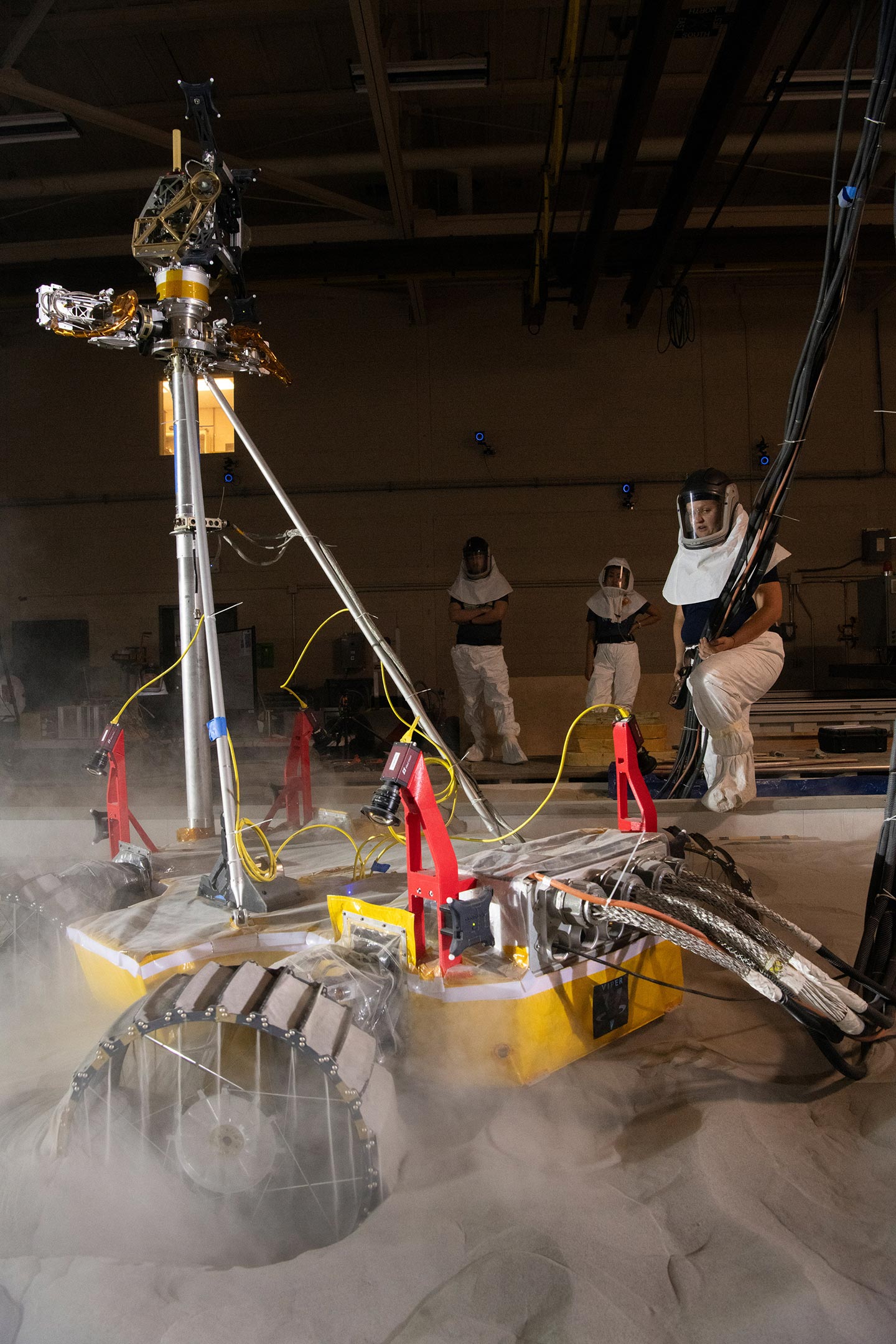
Engineers also used the tests to help determine how well the rover will handle difficult terrain conditions on the lunar surface.
“We wanted to see if the rover is capable of moving forward in an extreme sinkage environment, and how much slower VIPER might drive or how much additional power the rover would use because of tricky soil conditions,” said Mercedes Herreras-Martinez VIPER risk manager and mission systems engineering technical interchange lead at Ames.
Using the latest build of the rover software, engineers also tested out the prototype’s ability to “inch-worm.” This special technique is a way to help the rover get itself unstuck by moving its wheels in a special, caterpillar-like coordinated way. The rover prototype also demonstrated that it will autonomously stop moving if it approaches a slope that is too steep for it to climb or if it were to ever lose track of its location on the Moon.
“We’ve captured a lot of data with these tests about what happens when the rover wheels grind over a rock or slip on loose terrain, and any sensor drifts – when the rover gets slightly off-course,” said Rogg.
All the Moon-like terrain and other hazards the rover prototype encountered were methodically and deliberately placed in the SLOPE lab following the recommendations of the VIPER science team. The engineering test team then carefully selected the soil simulants, hand-picked rocks, and even carefully crafted the shape and size of the craters to realistically mimic actual features at the surface of the Moon’s South Pole.
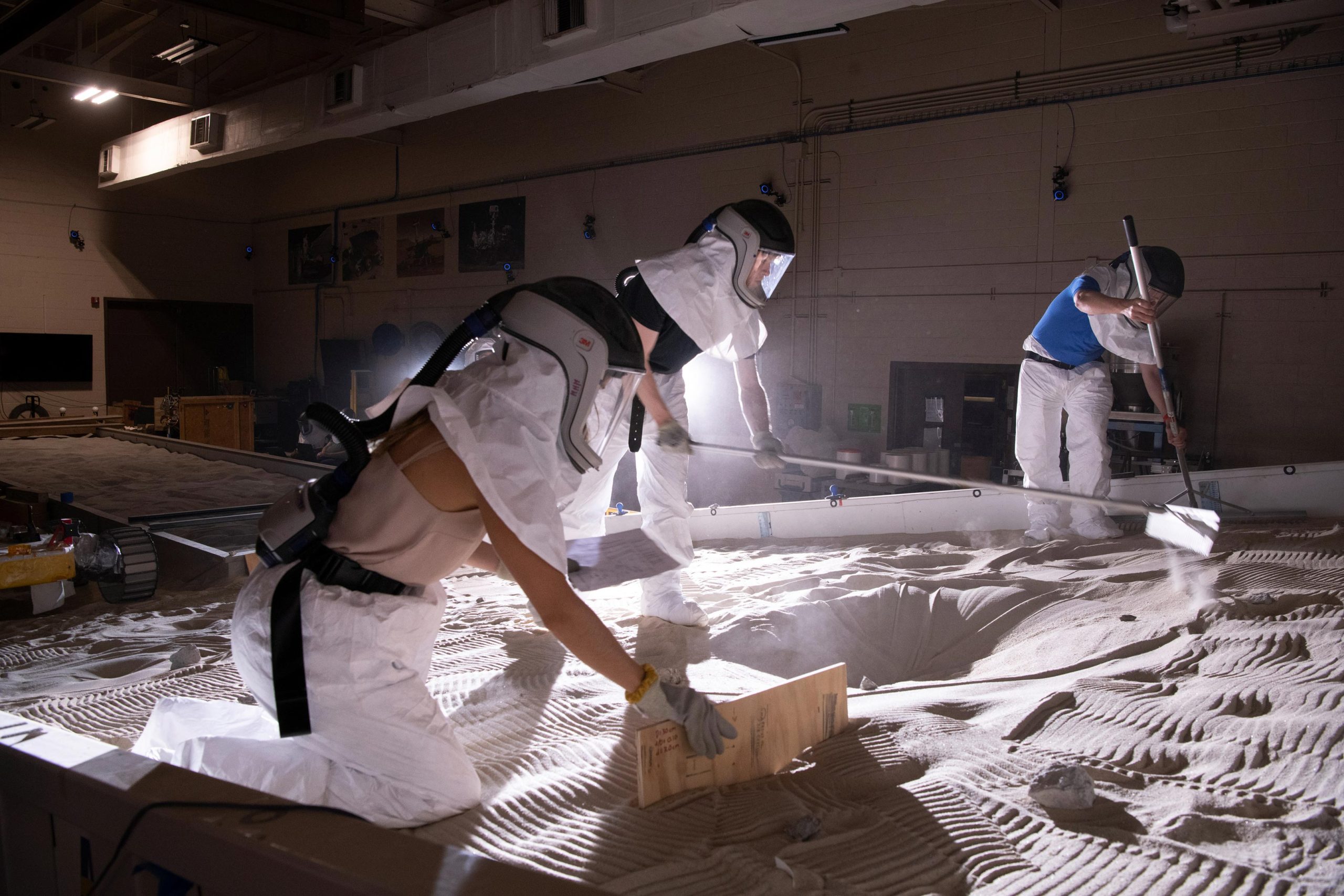
Along with testing the rover’s ability to drive over difficult terrain features, another goal was to test the rover’s performance over lunar terrain the team expects the rover to encounter most of the time.
“Using data and imagery from previous lunar missions, we created various randomized scenes to mimic the surface terrain of the Moon, with craters and rocks of different sizes and shapes scattered over the SLOPE tilt bed,” said Kevin May, rover and mission systems engineering intern at Ames who led the terrain preparation for the test. “With help from the VIPER science team, which generated cut-out templates of crater profiles, we were able to form features out of the terrain and shape more accurate craters than ever before. By recreating realistic Moon-like environments, we can get a much better idea of how VIPER will perform on the surface.”
Never miss a breakthrough: Join the SciTechDaily newsletter.
Follow us on Google and Google News.