
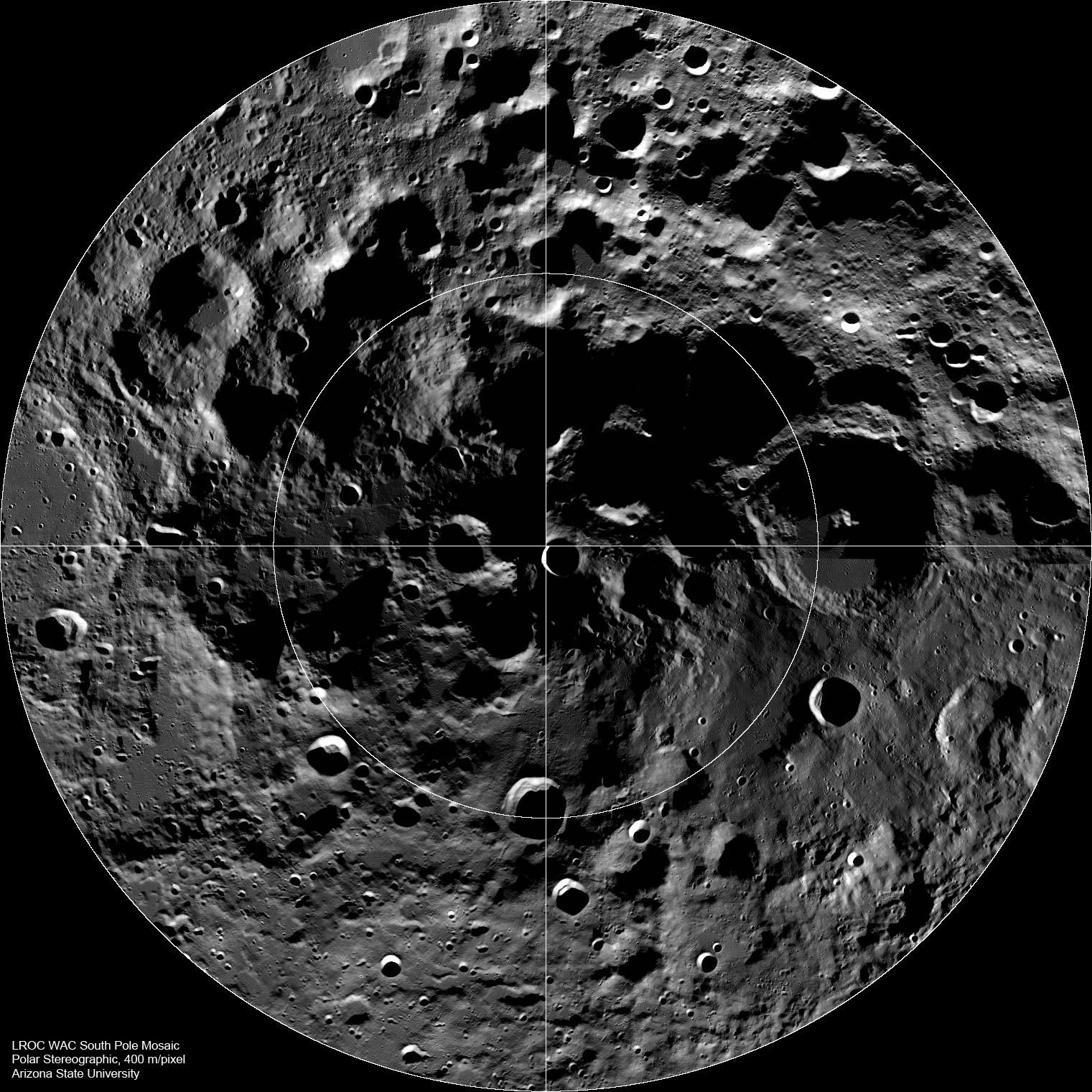
NASA has named a Moon crater after Arctic explorer Matthew Henson, honoring his leadership in the 1909 North Pole expedition.
The International Astronomical Union has named a crater at the Moon’s south pole after the Arctic explorer Matthew Henson, a Black man who in 1909 was one of the first people to stand at the very top of the world. The proposal to name the crater after Henson came from Jordan Bretzfelder, an Exploration Science summer intern with the Lunar and Planetary Institute, in Houston, TX, which is a member of the Solar System Exploration Research Virtual Institute, headquartered at NASA’s Ames Research Center in California’s Silicon Valley.
“Creating an inclusive community and achieving equity in the sciences begins by recognizing the contributions of people from all backgrounds,” said Bretzfelder, who is a PhD student at the University of California Los Angeles. “It felt like a disservice that Henson hasn’t been appropriately recognized for his contributions to polar science, and I’m proud to be a part of rectifying that.”
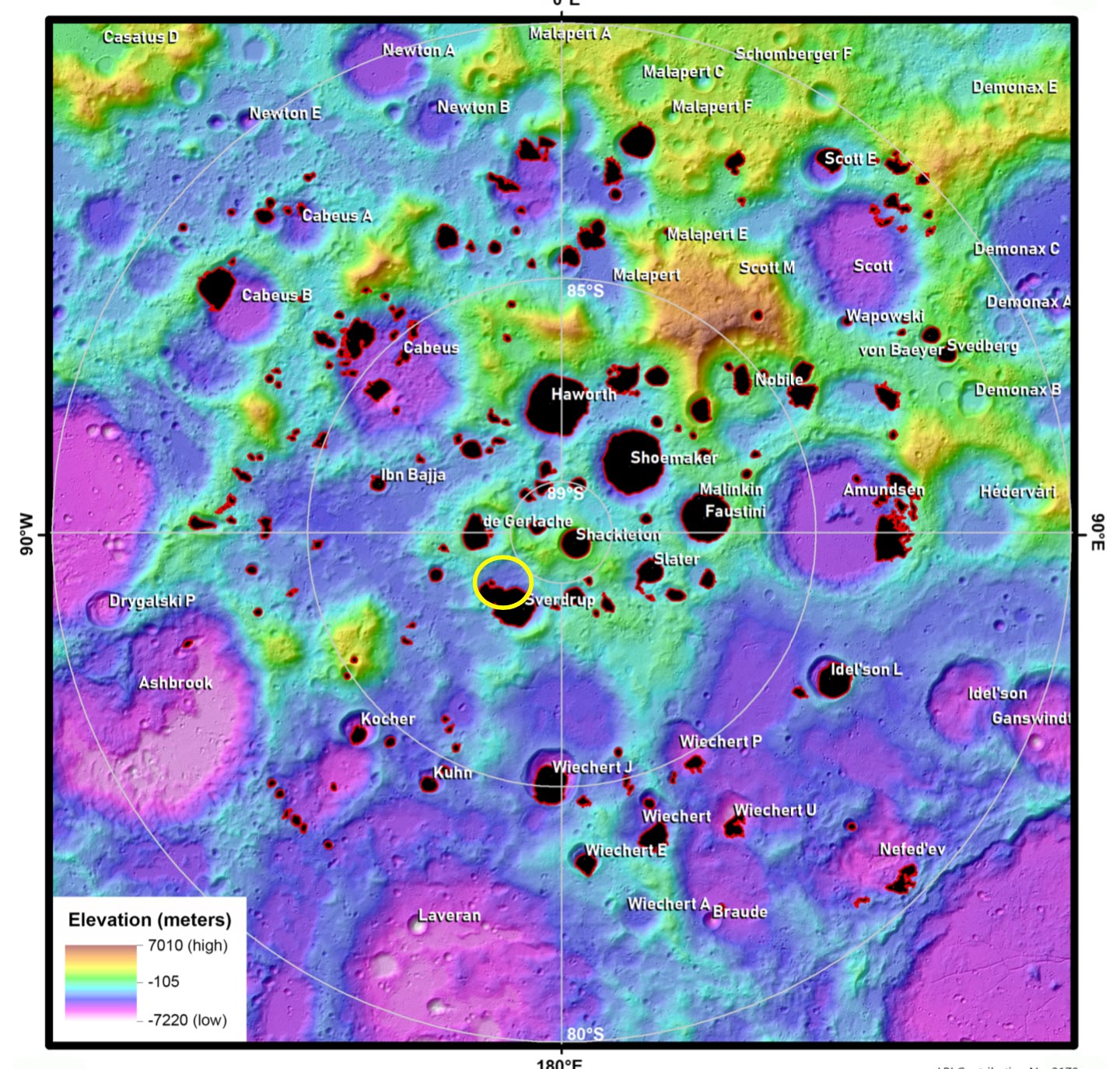
In NASA’s missions today, putting the diverse backgrounds of humanity at the forefront of space exploration is a core part of the agency’s values. Located between Sverdrup and de Gerlache craters at the south pole of the Moon, Henson Crater is in the same region the Artemis program aims to land the next slate of lunar explorers, which will be selected from NASA’s increasingly diverse astronaut pool.
NASA’s Artemis program provides a cornerstone both to study planetary processes and to create the infrastructure to advance human exploration at the Moon and then Mars – a fitting continuation of the incredible journeys Earth explorers like Henson took over a century ago.
Mapping the Moon’s Future
Bretzfelder spent her internship working with David Kring of the Lunar and Planetary Institute, mapping out potential landing sites for future Artemis missions at the Moon’s south pole with collaborating students Indujaa Ganesh of the University of Arizona, Nandita Kumari of Stony Brook University, and Antonio Lang of the State University of New York at Buffalo. With so many unnamed features in that region, Bretzfelder thought that naming this crater would both make discussions regarding landing site selection smoother and be an opportunity to highlight an overlooked historical figure in polar exploration.
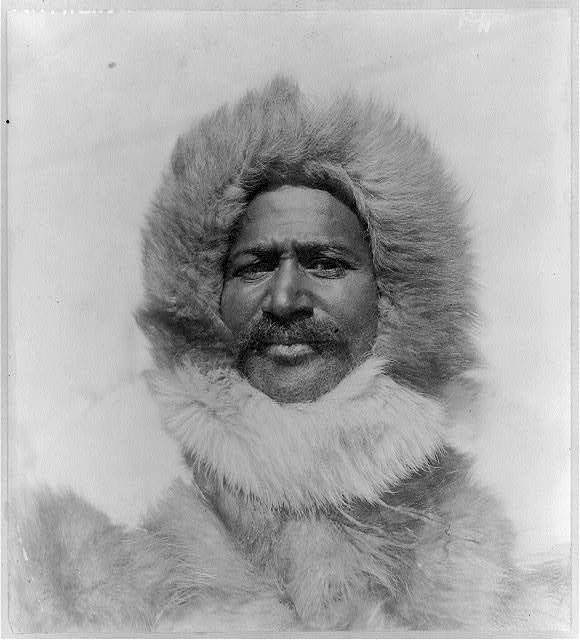
Henson was an experienced explorer and skilled as a carpenter and craftsman. He was on the front lines of almost a dozen Arctic expeditions organized by Robert Peary over the course of 18 years, including the one that ultimately reached the North Pole.
Leading the Way to the North Pole
The final push of that expedition was made by Henson, Peary, and four Inuit companions named Ooqueah, Ootah, Eningwah, and Seegloo, all traveling by dog sled. Henson was in the lead of the group as they searched for the pole.
On that day, because of a mist that covered the Sun, they were unable to tell their precise location. The next morning, they discovered they had overshot the Pole by several miles the day prior – when Henson was out in front. Circling back, Henson found his footprints were first at the North Pole.
Whether Henson was the very first human to ever reach the North Pole is hard to know, as it’s very possible Indigenous people in the Arctic explored the area in the thousands of years they have been present in the region. But it’s clear by his account that he was the first at the pole in Peary’s expedition, and the first person in recent history to have reached the very top of our globe.
Henson was born in 1866 in Maryland, the year after slavery was abolished in the United States. Henson did receive accolades at the time for his historic achievement. However, because many were hesitant to credit a Black man with successfully completing a mission that many others had attempted and failed for centuries, there was a controversy that diminished Henson’s role, often giving credit to Peary instead.
“Henson exemplifies the kind of exploration the NASA of today strives to do,” said Jim Green, chief scientist at NASA Headquarters. “When Artemis sends the next generation of astronauts to the lunar surface, it will be our honor to have Henson’s name on our lunar maps.”
Never miss a breakthrough: Join the SciTechDaily newsletter.
Follow us on Google and Google News.
1 Comment
If you ever want to get rid of racism, you really shouldn’t mention the man’s race. That in itself is racist behaviour.