
Close Menu
    Facebook X (Twitter) Instagram
    SciTechDaily
    • Biology
    • Chemistry
    • Earth
    • Health
    • Physics
    • Science
    • Space
    • Technology
    Facebook X (Twitter) Pinterest YouTube RSS
    SciTechDaily
    Home»Space»Epsilon Indi “Starquake” Shatters Astronomical Records and Expectations
    Space

    Epsilon Indi “Starquake” Shatters Astronomical Records and Expectations

    By University of BirminghamMarch 26, 2024No Comments4 Mins Read
    Facebook Twitter Pinterest Telegram LinkedIn WhatsApp Email Reddit
    Share
    Facebook Twitter LinkedIn Pinterest Telegram Email Reddit
    Starquake Art Concept
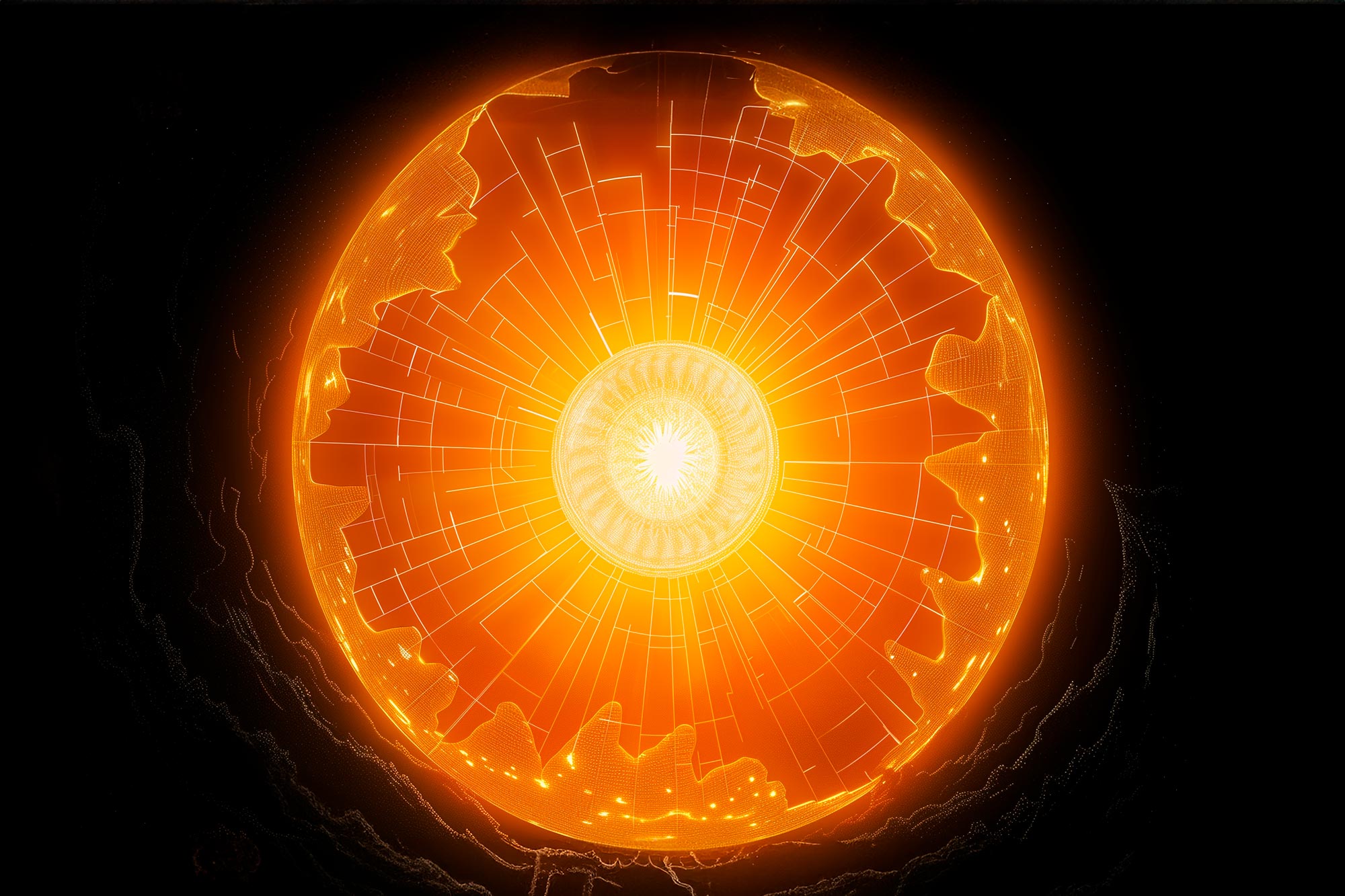
    Epsilon Indi has been identified as the smallest and coolest dwarf star with solar-like oscillations, known as “starquakes,” offering insights into stellar composition. Credit: SciTechDaily.com

    An orange dwarf star has yielded the tiniest ‘starquakes’ ever recorded, measured by an international team of scientists.

    Named Epsilon Indi, the star is the smallest and coolest dwarf star yet observed with solar-like oscillations – “starquakes” like those shown by the Sun. These oscillations provide indirect glimpses of stellar interiors – just as earthquakes tell us about Earth’s interior – and so are important sources of information about the makeup of the star.

    International Research Collaboration

    The measurements were taken by an international team, led by the Institute of Astrophysics and Space Sciences in Portugal, and including researchers from the University of Birmingham. The results are published in Astronomy & Astrophysics Letters.

    The quakes were detected using a technique dubbed asteroseismology, which measures oscillations in stars. Using the ESPRESSO spectrograph, mounted at the European Southern Observatory’s (ESO) Very Large Telescope (VLT), the team was able to record the oscillations with unprecedented precision.
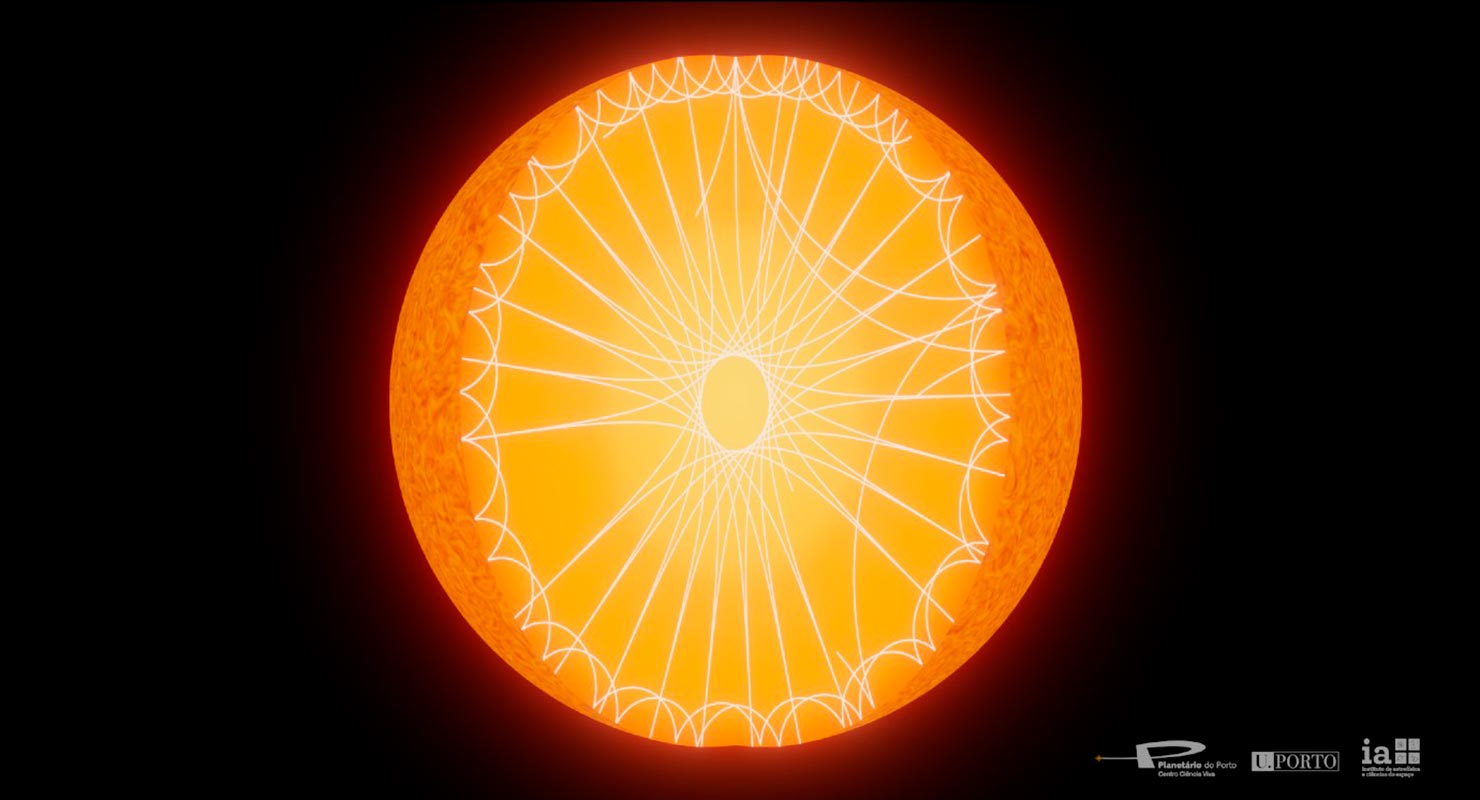
    Sound Waves With Different Frequencies Inner Layers of a Star
    Artist’s impression of sound waves (p modes), with different frequencies, traveling across the inner layers of a star. Credit: Tania Cunha (Planetário do Porto – Centro Ciência Viva)/Instituto de Astrofísica e Ciências do Espaço)

    Technological Breakthrough and Astronomical Implications

    Lead author Tiago Campante, of the Institute of Astrophysics and Space Sciences at the University of Porto, said: “The extreme precision level of these observations is an outstanding technological achievement. Importantly, this detection conclusively shows that precise asteroseismology is possible down to cool dwarfs with surface temperatures as low as 4200 degrees Celsius, about 1000 degrees cooler than the Sun’s surface, effectively opening up a new domain in observational astrophysics.”

    Orange dwarf stars have recently become a focus in the search for habitable planets and extraterrestrial life. Professor Bill Chaplin, Head of the School of Physics & Astronomy at Birmingham, and a member of the team, said: “The mismatch between the predicted and observed sizes of these stars has implications for finding planets around them. If we use the most successful planet-finding technique – the so-called transit method – we get the size of the planet relative to the size of the star; if we don’t size up the star correctly, the same will be true of any small planet we have found.

    “The detection of oscillations will help to understand and minimize these discrepancies, and improve the theoretical models of stars.”

    “The mismatch between the predicted and observed sizes of these stars has implications for finding planets around them.”
    Professor Bill Chaplin, School of Physics and Astronomy

    Future Explorations

    The detection of starquakes in Epsilon Indi will now inform plans to use the upcoming European Space Agency’s (ESA) PLATO Mission, scheduled to be launched in 2026, to detect oscillations in many more orange dwarfs. PLATO will also be searching for planets around these stars. Birmingham has responsibility for the design and delivery of much of the asteroseismology pipeline for PLATO, the results of which will be used by thousands of researchers around the world.

    Reference: “Expanding the frontiers of cool-dwarf asteroseismology with ESPRESSO – Detection of solar-like oscillations in the K5 dwarf ϵ Indi” by T. L. Campante, H. Kjeldsen, Y. Li, M. N. Lund, A. M. Silva, E. Corsaro, J. Gomes da Silva, J. H. C. Martins, V. Adibekyan, T. Azevedo Silva, T. R. Bedding, D. Bossini, D. L. Buzasi, W. J. Chaplin, R. R. Costa, M. S. Cunha, E. Cristo, J. P. Faria, R. A. García, D. Huber, M. S. Lundkvist, T. S. Metcalfe, M. J. P. F. G. Monteiro, A. W. Neitzel, M. B. Nielsen, E. Poretti, N. C. Santos and S. G. Sousa, 26 March 2024, Astronomy & Astrophysics.
    DOI: 10.1051/0004-6361/202449197

    Never miss a breakthrough: Join the SciTechDaily newsletter.
    Follow us on Google and Google News.

    Astronomy Astrophysics Popular University of Birmingham
    Share. Facebook Twitter Pinterest LinkedIn Email Reddit

    Related Articles

    James Webb Detects Strongest Evidence Yet of an Atmosphere on a Rocky Exoplanet

    Cosmic Gold Factory: Single Kilonova Produced 1,000x the Mass of the Earth in Very Heavy Elements

    Mysterious Astronomical Signal Is Black Hole Jet Pointing Straight Toward Earth

    Astronomers Discover Two “Super-Earth” Planets About 100 Light-Years Away

    New Evidence of Gravitational Wave Background Permeating All of Spacetime

    Astrophysicists on the Hunt for “Hierarchical” Black Holes

    Asteroseismologists Confirm That Older Stars Rotate Faster Than Expected

    Chance Discovery on New Telescope: Rare Eclipsing Binary Brown Dwarf System

    Advanced LIGO Looks to Reveal the Mystery of Merging Black Holes

    Leave A Reply Cancel Reply

    • Facebook
    • Twitter
    • Pinterest
    • YouTube

    Don't Miss a Discovery

    Subscribe for the Latest in Science & Tech!

    Trending News

    Largest-Ever Study Finds Medicinal Cannabis Ineffective for Anxiety, Depression, PTSD

    250-Million-Year-Old Egg Solves One of Evolution’s Biggest Mysteries

    Living With Roommates Might Be Changing Your Gut Microbiome Without You Knowing

    Century-Old Cleaning Chemical Linked to 500% Increased Risk of Parkinson’s Disease

    What if Your Memories Never Happened? Physicists Take a New Look at the Boltzmann Brain Paradox

    One of the Universe’s Largest Stars May Be Getting Ready To Explode

    Scientists Discover Enzyme That Could Supercharge Ozempic-Like Weight Loss Drugs

    Popular Sweetener Linked to DNA Damage – “It’s Something You Should Not Be Eating”

    Follow SciTechDaily
    • Facebook
    • Twitter
    • YouTube
    • Pinterest
    • Newsletter
    • RSS
    SciTech News
    • Biology News
    • Chemistry News
    • Earth News
    • Health News
    • Physics News
    • Science News
    • Space News
    • Technology News
    Recent Posts
    • Scientists Say This Overlooked Organ Could Hold the Key to Longer Life
    • Want Less Stress? Landmark Study Points to a Simple Habit
    • Scientists Reveal Eating Fruits and Vegetables May Increase Your Risk of Lung Cancer
    • AI Reveals Explosive Growth of Floating Algae Across the World’s Oceans
    • 5.5 Million Bees Discovered Living Beneath a New York Cemetery
    Copyright © 1998 - 2026 SciTechDaily. All Rights Reserved.
    • Science News
    • About
    • Contact
    • Editorial Board
    • Privacy Policy
    • Terms of Use

    Type above and press Enter to search. Press Esc to cancel.