
Science fiction often imagines our future on Mars and other planets as run by machines, with metallic cities and flying cars rising above dunes of red sand. But the reality may be even stranger – and “greener.” Instead of habitats made of metal and glass, NASA is exploring technologies that could grow structures out of fungi to become our future homes in the stars, and perhaps lead to more sustainable ways of living on Earth as well.
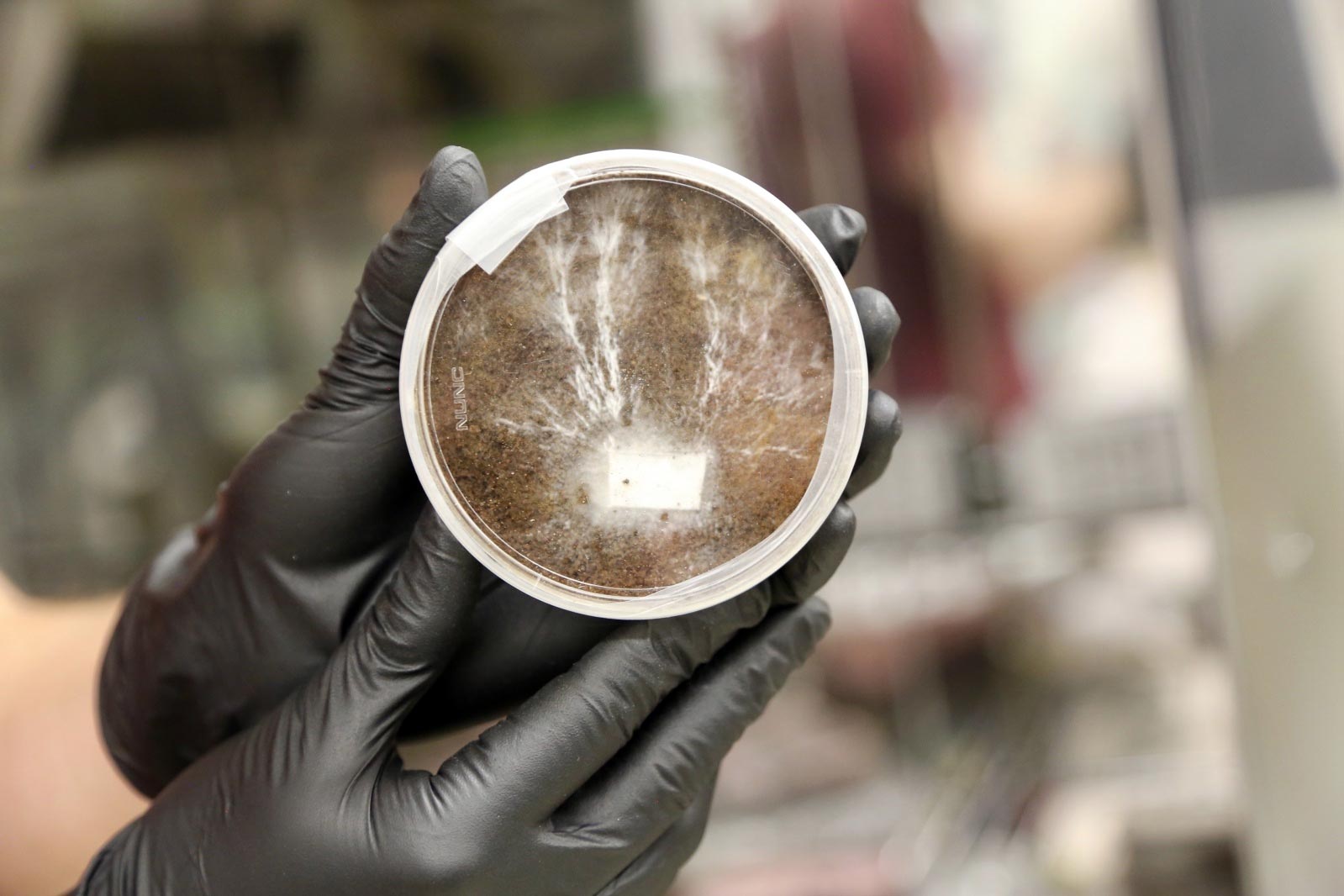
The myco-architecture project out of NASA’s Ames Research Center in California’s Silicon Valley is prototyping technologies that could “grow” habitats on the Moon, Mars and beyond out of life – specifically, fungi and the unseen underground threads that make up the main part of the fungus, known as mycelia.
“Right now, traditional habitat designs for Mars are like a turtle — carrying our homes with us on our backs – a reliable plan, but with huge energy costs,” said Lynn Rothschild, the principal investigator on the early-stage project. “Instead, we can harness mycelia to grow these habitats ourselves when we get there.”
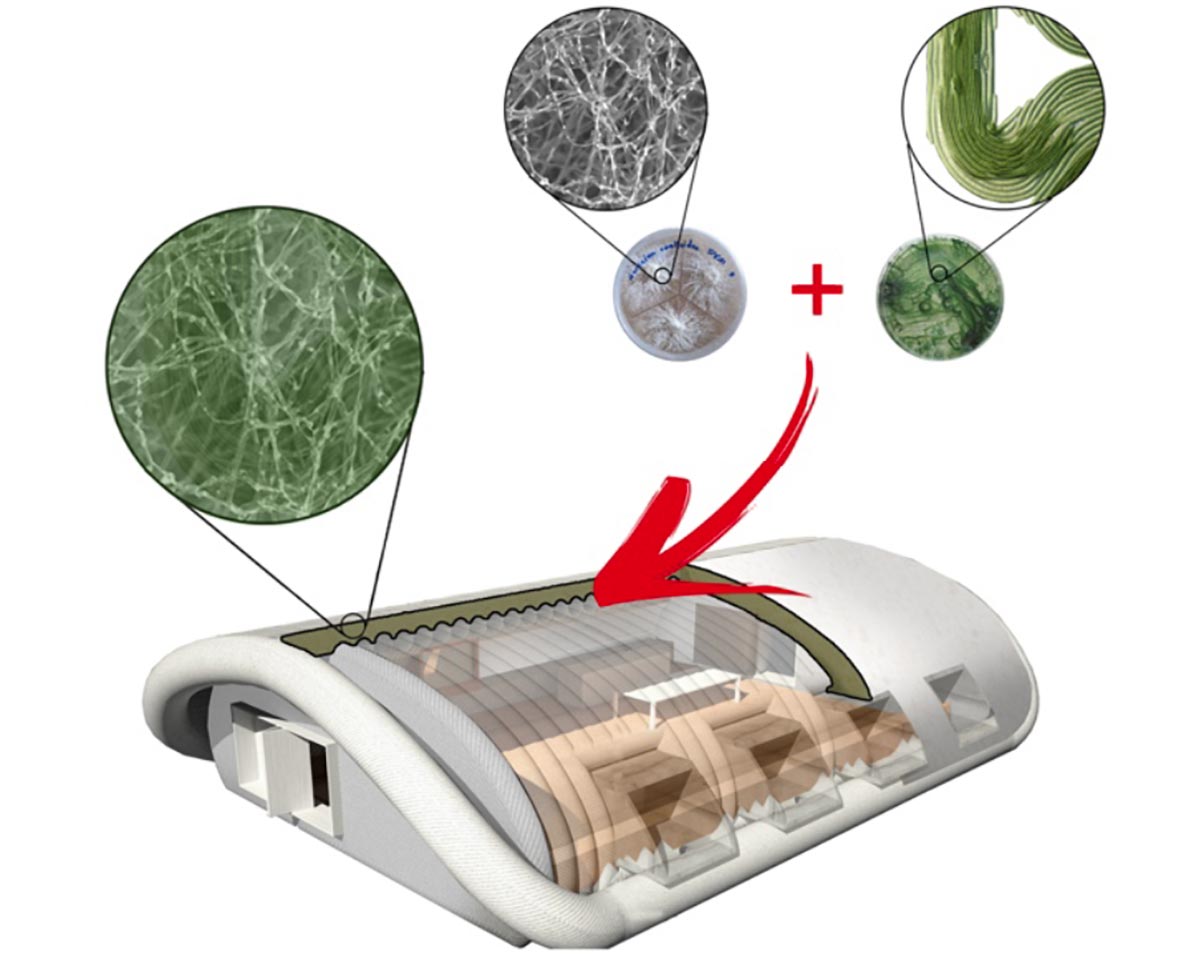
Ultimately, the project envisions a future where human explorers can bring a compact habitat built out of a lightweight material with dormant fungi that will last on long journeys to places like Mars. Upon arrival, by unfolding that basic structure and simply adding water, the fungi will be able to grow around that framework into a fully functional human habitat – all while being safely contained within the habitat to avoid contaminating the Martian environment.
This research is supported through the NASA Innovative Advanced Concepts program, known as NIAC, and is part of a field known as synthetic biology – the study of how we can use life itself as technology, in this case fungi. We’re a very long way from being able to grow useable habitats for Mars, but the early-stage research is well under way to prove the potential of these creative solutions. That work all starts with experimenting with fungi.
The Fungus Among Us
A fungus is a group of organisms that produces spores and eats up organic material, like the yeasts in bread or beer, the mushrooms in your salad, the mold that may grow if you let that salad sit in the refrigerator for too long or even the organisms that produce antibiotics like penicillin.
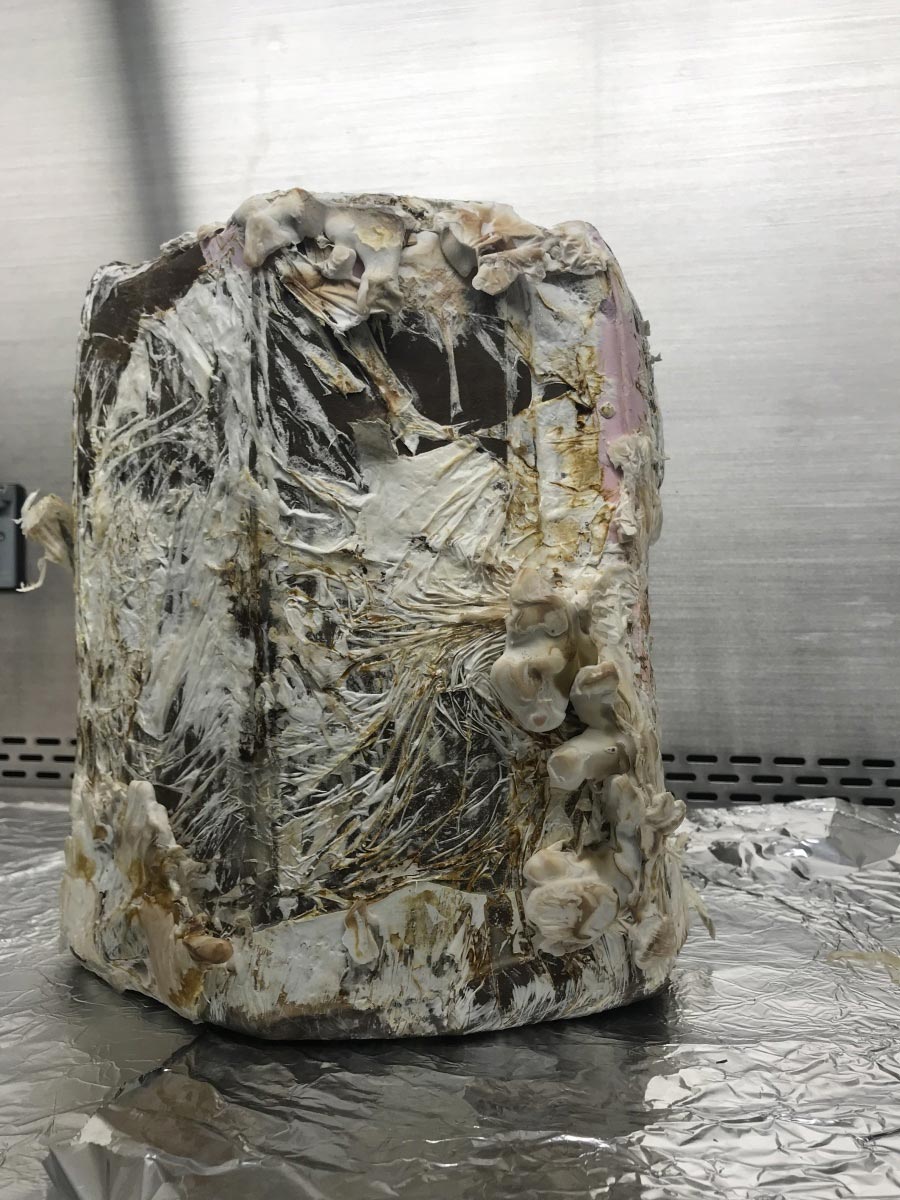
But the part of a fungus you probably haven’t seen is mycelia. These tiny threads build complex structures with extreme precision, networking out into larger structures like mushrooms. With the right conditions, they can be coaxed into making new structures – ranging from a material similar to leather to the building blocks for a Mars habitat.
Living on the Moon and Mars
Creating a livable home for future astronauts means doing more than growing a roof to go over their heads. Astronauts will need to have all their basic needs met, just like on Earth, and face the additional challenges of living in a harsh environment on a distant world.
The myco-architecture project can’t just design a shell – it’s designing a home. That home is more than a set of walls – it has its own ecosystem of sorts, with multiple kinds of organisms alongside the humans it’s designed to protect.
Just like the astronauts, fungal mycelia is a lifeform that has to eat and breathe. That’s where something called cyanobacteria comes in – a kind of bacterium that can use energy from the Sun to convert water and carbon dioxide into oxygen and fungus food.
These pieces come together in an elegant habitat concept with a three-layered dome. The outer-most layer is made up of frozen water ice, perhaps tapped from the resources on the Moon or Mars. That water serves as a protection from radiation and trickles down to the second layer – the cyanobacteria. This layer can take that water and photosynthesize using the outside light that shines through the icy layer to produce oxygen for astronauts and nutrients for the final layer of mycelia.
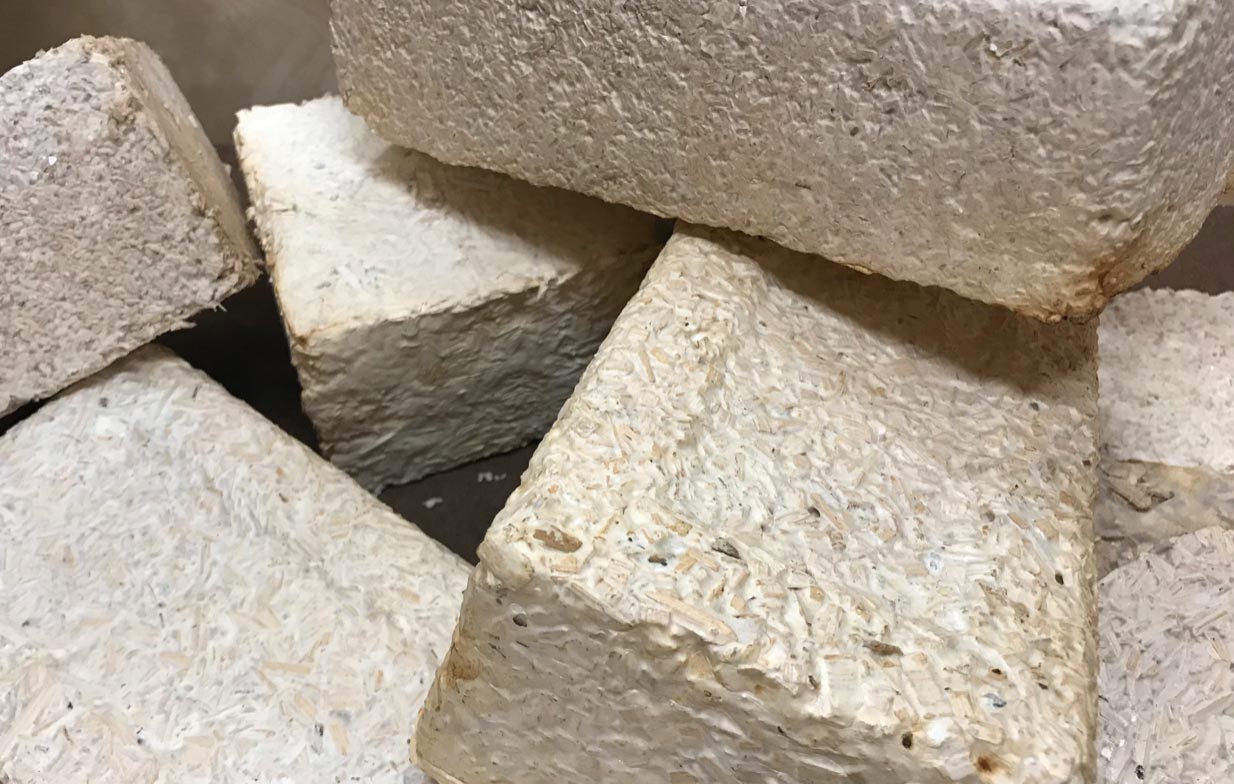
That last layer of mycelia is what organically grows into a sturdy home, first activated to grow in a contained environment and then baked to kill the lifeforms – providing structural integrity and ensuring no life contaminates Mars and any microbial life that’s already there. Even if some mycelia somehow escaped, they will be genetically altered to be incapable of surviving outside the habitat.
Future astronauts might one day live in habitats that were fabricated with fungus. The revolutionary concept called Myco-architecture explores the impressive properties of fungal mycelium which is, in some ways, stronger than reinforced concrete and is capable of growing and repairing itself. Credit: NASA
Bringing Synthetic Biology Back to Earth
But this is just the start. Mycelia could be used for water filtration and biomining systems that can extract minerals from wastewater – another project active in Rothschild’s lab – as well as bioluminescent lighting, humidity regulation and even self-generating habitats capable of healing themselves. And with about 40% of carbon emissions on Earth coming from construction, there’s an ever-increasing need for sustainable and affordable housing here as well.
“When we design for space, we’re free to experiment with new ideas and materials with much more freedom than we would on Earth,” said Rothschild. “And after these prototypes are designed for other worlds, we can bring them back to ours.”
The harsh environments of the Moon and Mars will require new ways of living – growing homes instead of building them, mining minerals from sewage instead of rock. But by turning to the elegant systems of our own natural world, we can design solutions that are green and sustainable. Whether on distant worlds or our own ever-changing Earth, fungi could be what brings us boldly into the future.
Never miss a breakthrough: Join the SciTechDaily newsletter.
Follow us on Google and Google News.
2 Comments
If water is the outer shell, it seems someone is assuming the water supply is abundant. Otherwise, what keeps the outer water shell from sublimating away?
This is an absurd idea. To get the fungi to grow, you need to supply copious quantities of organic materials for it to eat. Will they bake a huge dome made out of bread dough on Mars? If so, how will they get it there? What will they make it out of? Where is the base of the organic material? The cyanobacteria? Where are the bacteria going to get their food? From a Martian atmosphere than is less than 1% as dense as the earth’s atmosphere? Ok, fine, you claim that it is richer in CO2? How about nitrogen? A critical element for growing stuff.
Here’s a more practical idea. We might, just maybe, be able to use the very high quantities of iron oxide in the Mars regolith to build structures made of iron or low-carbon steel. It might, just maybe, might, be be possible to manufacture steel on Mars, although finding a sufficient power source (probably nuclear) is going to be hard. But, it stands more chance of success than trying to grow mushrooms.