
Close Menu
    Facebook X (Twitter) Instagram
    SciTechDaily
    • Biology
    • Chemistry
    • Earth
    • Health
    • Physics
    • Science
    • Space
    • Technology
    Facebook X (Twitter) Pinterest YouTube RSS
    SciTechDaily
    Home»Science»Smithsonian Ecologists Study the Realtionship Between Fungi-Filled Forests and Endangered Orchids
    Science

    Smithsonian Ecologists Study the Realtionship Between Fungi-Filled Forests and Endangered Orchids

    By Smithsonian InstitutionJanuary 24, 2012No Comments4 Mins Read
    Facebook Twitter Pinterest Telegram LinkedIn WhatsApp Email Reddit
    Share
    Facebook Twitter LinkedIn Pinterest Telegram Email Reddit
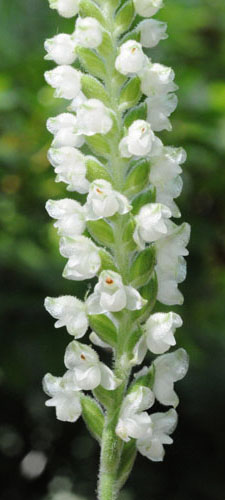
    Goodyera pubescens
    Flowers of a Goodyera pubescens (Downy Rattlesnake Plantain / Downy Rattlesnake Orchid), the most common species of orchid in New England, which researchers from the Smithsonian Environmental Research Center (SERC) have shown to germinate more often and grow larger in the presence of abundant fungi in the soil. Credit: Melissa McCormick, Smithsonian

    Smithsonian ecologists are publishing new research that shows how an orchid’s survival depends on fungi and the age of the forest that it is growing in. Orchids are the largest plant family on Earth and depend on microscopic fungi as a food source for the nutrients that ensure that their seeds will germinate. Due to this relationship with soil, many are now endangered and threatened by habitat loss.

    When it comes to conserving the world’s orchids, not all forests are equal. In a paper to be published on January 25 in the journal Molecular Ecology, Smithsonian ecologists revealed that an orchid’s fate hinges on two factors: a forest’s age and its fungi.

    Roughly 10 percent of all plant species are orchids, making them the largest plant family on Earth. But habitat loss has rendered many threatened or endangered. This is partly due to their intimate relationship with the soil. Orchids depend entirely on microscopic fungi in the early stages of their lives. Without the nutrients orchids obtain by digesting these host fungi, their seeds often will not germinate and baby orchids will not grow. While researchers have known about the orchid–fungus relationship for years, very little is known about what the fungi need to survive.

    Biologists based at the Smithsonian Environmental Research Center launched the first study to find out what helps the fungi flourish and what that means for orchids. Led by Melissa McCormick, the researchers looked at three orchid species, all endangered in one or more U.S. states. After planting orchid seeds in dozens of experimental plots, they also added particular host fungi needed by each orchid to half the plots. Then they followed the fate of the orchids and fungi in six study sites: three in younger forests (50 to 70 years old) and three in older forests (120 to 150 years old).

    After four years they discovered orchid seeds germinated only where the fungi they needed were abundant—not merely present. In the case of one species, Liparis liliifolia (lily-leaved twayblade), seeds germinated only in plots where the team had added fungi. This suggests that this particular orchid could survive in many places, but the fungi they need do not exist in most areas of the forest.

    Meanwhile, the fungi displayed a strong preference for older forests. Soil samples taken from older forest plots had host fungi that were five to 12 times more abundant compared to younger forests, even where the research team had not added them. They were more diverse as well. More mature plots averaged 3.6 different Tulasnella fungi species per soil sample (a group of fungi beneficial to these orchids), while the younger ones averaged only 1.3. Host fungi were also more abundant in plots where rotting wood was added. These host fungi, which are primarily decomposers, may grow better in places where decomposing wood or leaves are plentiful.

    All this implies that to save endangered orchids, planting new forests may not be enough. If the forests are not old enough or do not have enough of the right fungi, lost orchids may take decades to return, if they return at all.

    “This study, for the first time, ties orchid performance firmly to the abundance of their fungi,” said McCormick. “It reveals the way to determine what conditions host fungi need, so we can support recovery of the fungi needed by threatened and endangered orchids.”

    Never miss a breakthrough: Join the SciTechDaily newsletter.
    Follow us on Google and Google News.

    Forests Fungi Habitat Nature Orchids Smithsonian Institution
    Share. Facebook Twitter Pinterest LinkedIn Email Reddit

    Related Articles

    “Sensorial” – Scientists Discover How To Create Different Colors of Cheese

    Solar Panels vs Planting Trees – Which Triumphs in the Fight Against Global Warming?

    Genetic Cluster in Root Fungus Found To Be the “On/Off” Switch for Disease-Causing Behavior

    Rainfall Sparks Electric Chatter Among Forest Mushrooms

    The Magic of Sunrise and Sunset: New Research Quantifies the “Wow” Factor

    Wood-Wide Web: Do Forest Trees Really “Talk” Through Underground Fungi?

    Psychedelic Sorcery: How Do Mushrooms Become Magic?

    MIT Pioneers Technology To Grow Customizable Wood Products in the Lab With Little Waste

    “Microbial Protein” – Fungi-Based Meat Alternatives Can Help Save Earth’s Forests

    Leave A Reply Cancel Reply

    • Facebook
    • Twitter
    • Pinterest
    • YouTube

    Don't Miss a Discovery

    Subscribe for the Latest in Science & Tech!

    Trending News

    The Universe Is Expanding Too Fast and Scientists Can’t Explain Why

    “Like Liquid Metal”: Scientists Create Strange Shape-Shifting Material

    Early Warning Signals of Esophageal Cancer May Be Hiding in Plain Sight

    Common Blood Pressure Drug Shows Surprising Power Against Deadly Antibiotic-Resistant Superbug

    Scientists Uncover Dangerous Connection Between Serotonin and Heart Valve Disease

    Scientists Discover a “Protector” Protein That Could Help Reverse Hair Loss

    Bone-Strengthening Discovery Could Reverse Osteoporosis

    Scientists Uncover Hidden Trigger Behind Stem Cell Aging

    Follow SciTechDaily
    • Facebook
    • Twitter
    • YouTube
    • Pinterest
    • Newsletter
    • RSS
    SciTech News
    • Biology News
    • Chemistry News
    • Earth News
    • Health News
    • Physics News
    • Science News
    • Space News
    • Technology News
    Recent Posts
    • A Common Diabetes Drug May Hold the Key to Stopping HIV From Coming Back
    • Ancient “Syphilis-Like” Disease in Vietnam Challenges Key Scientific Assumptions
    • Drinking Alcohol To Cope in Your 20s Could Damage Your Brain for Life
    • Scientists Crack Alfalfa’s Chromosome Mystery After Decades of Debate
    • Ancient Ant-Plant Alliance Collapses As Predatory Wasps Move In
    Copyright © 1998 - 2026 SciTechDaily. All Rights Reserved.
    • Science News
    • About
    • Contact
    • Editorial Board
    • Privacy Policy
    • Terms of Use

    Type above and press Enter to search. Press Esc to cancel.