
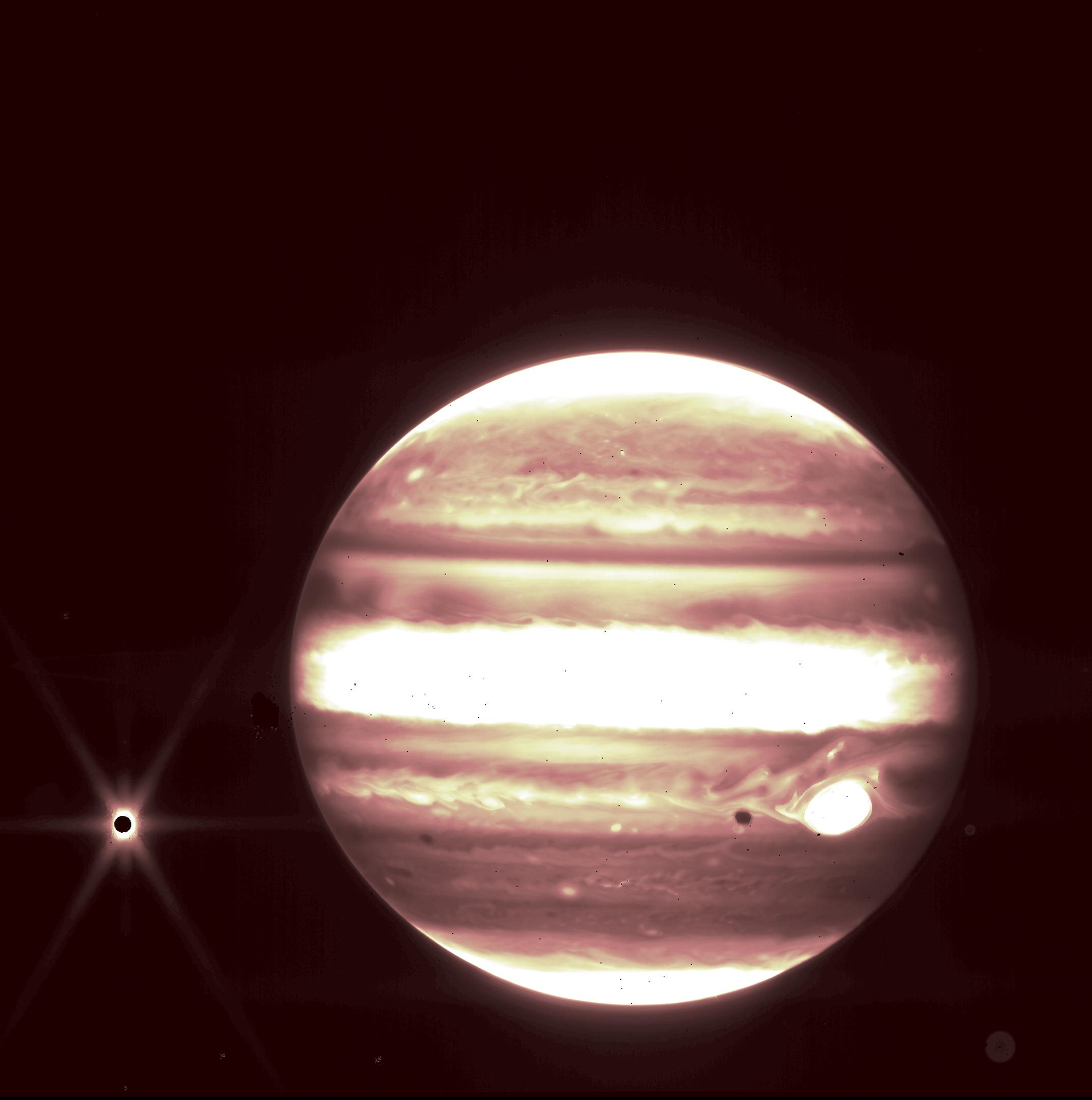
The James Webb Space Telescope captured detailed infrared images of Jupiter, including its Great Red Spot and moons.
After the recent release of the first images from NASA’s James Webb Space Telescope, data from the telescope’s commissioning period is now being released on the Space Telescope Science Institute’s Mikulski Archive for Space Telescopes. The data includes images of Jupiter and images and spectra of several asteroids. They were captured to test the telescope’s instruments before science operations officially began July 12. Webb’s ability to track solar system targets and produce images and spectra with unprecedented detail is demonstrated in the data.
Fans of Jupiter will recognize some familiar features of our solar system’s gigantic planet in these images seen through Webb’s infrared gaze. A view from the NIRCam instrument’s short-wavelength filter shows distinct bands that encircle the planet as well as the Great Red Spot, a storm big enough to swallow the Earth. Because of the way Webb’s infrared image was processed, the iconic spot appears white in this image.
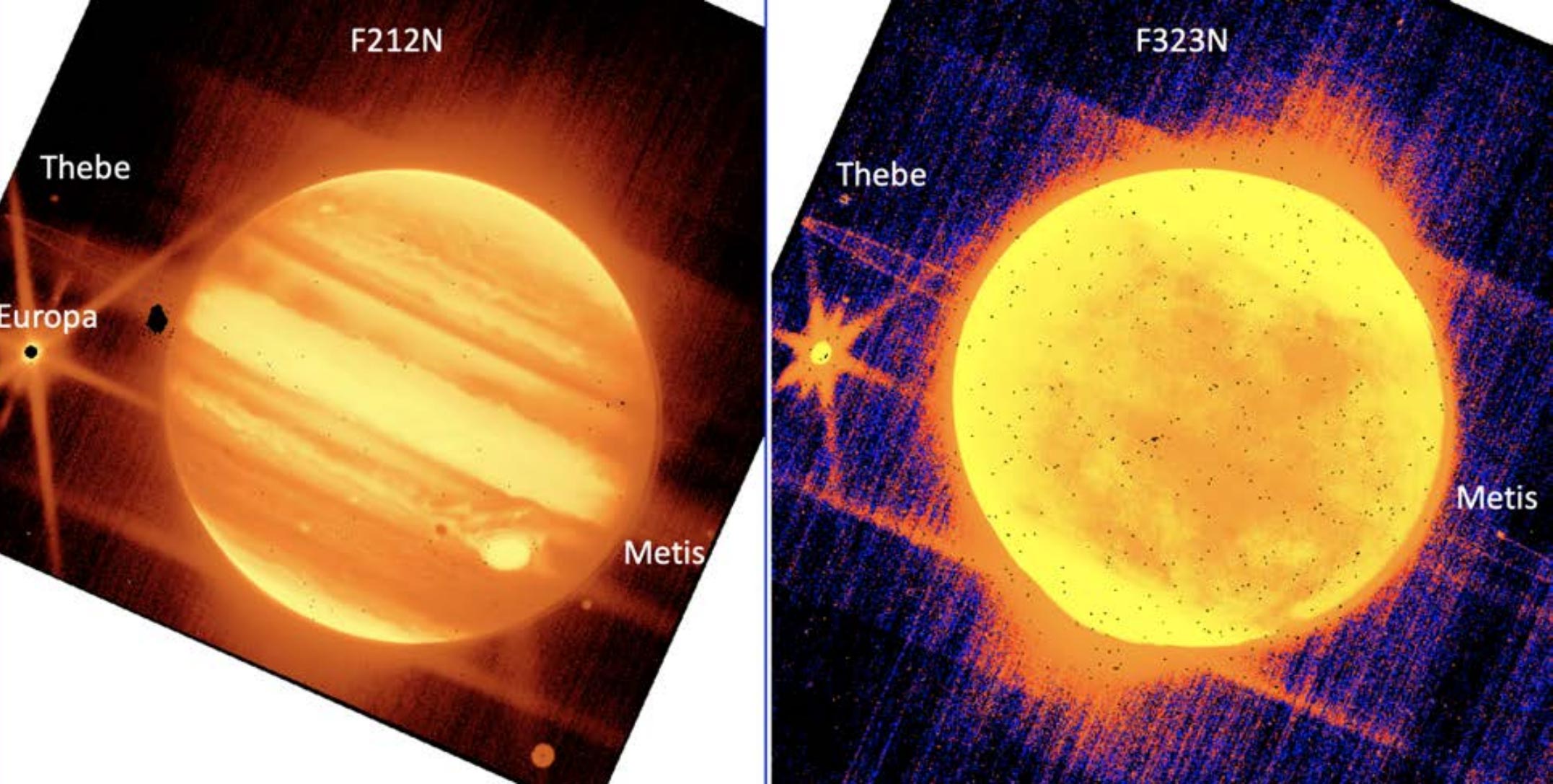
“Combined with the deep field images released the other day, these images of Jupiter demonstrate the full grasp of what Webb can observe, from the faintest, most distant observable galaxies to planets in our own cosmic backyard that you can see with the naked eye from your actual backyard,” said Bryan Holler. He is a scientist at the Space Telescope Science Institute in Baltimore, who helped plan these observations.
Clearly visible at the left is Europa, a moon with a probable ocean below its thick icy crust. It is the target of NASA’s forthcoming Europa Clipper mission. Moreover, Europa’s shadow can be seen to the left of the Great Red Spot. Other visible Jovian moons in these images include Thebe and Metis.
“I couldn’t believe that we saw everything so clearly, and how bright they were,” said Stefanie Milam, Webb’s deputy project scientist for planetary science based at NASA’s Goddard Space Flight Center in Greenbelt, Maryland. “It’s really exciting to think of the capability and opportunity that we have for observing these kinds of objects in our solar system.”
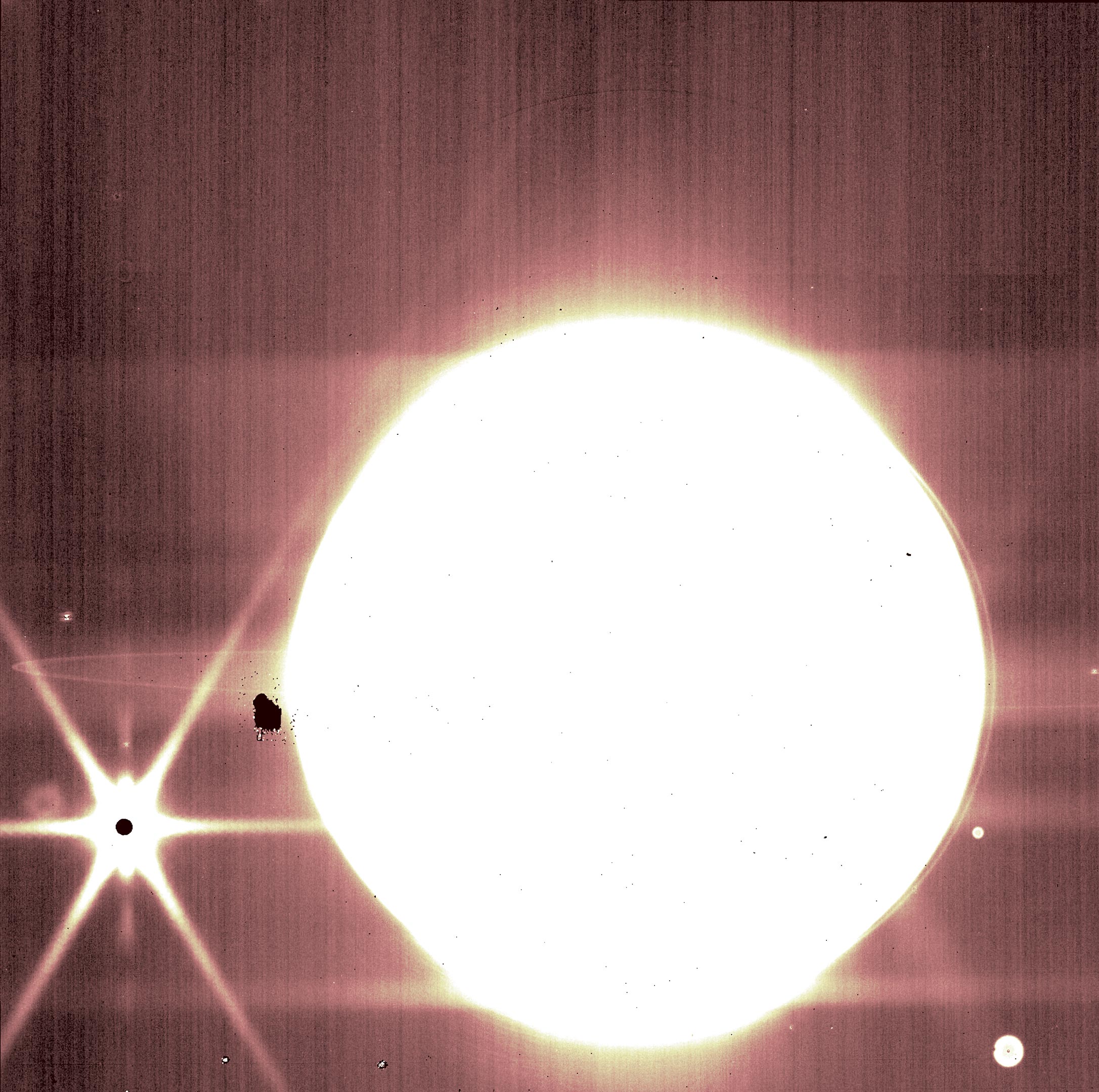
Scientists were especially enthusiastic to see these images because they are proof that Webb can observe the satellites and rings near bright solar system objects such as Jupiter, Saturn, and Mars. Researchers will use Webb to explore the tantalizing question of whether we can see plumes of material spewing out of moons like Europa and Saturn’s moon Enceladus. Webb may even be able to see the signatures of plumes depositing material on the surface of Europa. “I think that’s just one of the coolest things that we’ll be able to do with this telescope in the solar system,” Milam said.
In addition, Webb easily captured some of Jupiter’s rings, which especially stand out in the NIRcam long-wavelength filter image. That the rings showed up in one of Webb’s first solar system images is “absolutely astonishing and amazing,” Milam said.
“The Jupiter images in the narrow-band filters were designed to provide nice images of the entire disk of the planet, but the wealth of additional information about very faint objects (Metis, Thebe, the main ring, hazes) in those images with approximately one-minute exposures was absolutely a very pleasant surprise,” said John Stansberry, observatory scientist and NIRCam commissioning lead at the Space Telescope Science Institute.
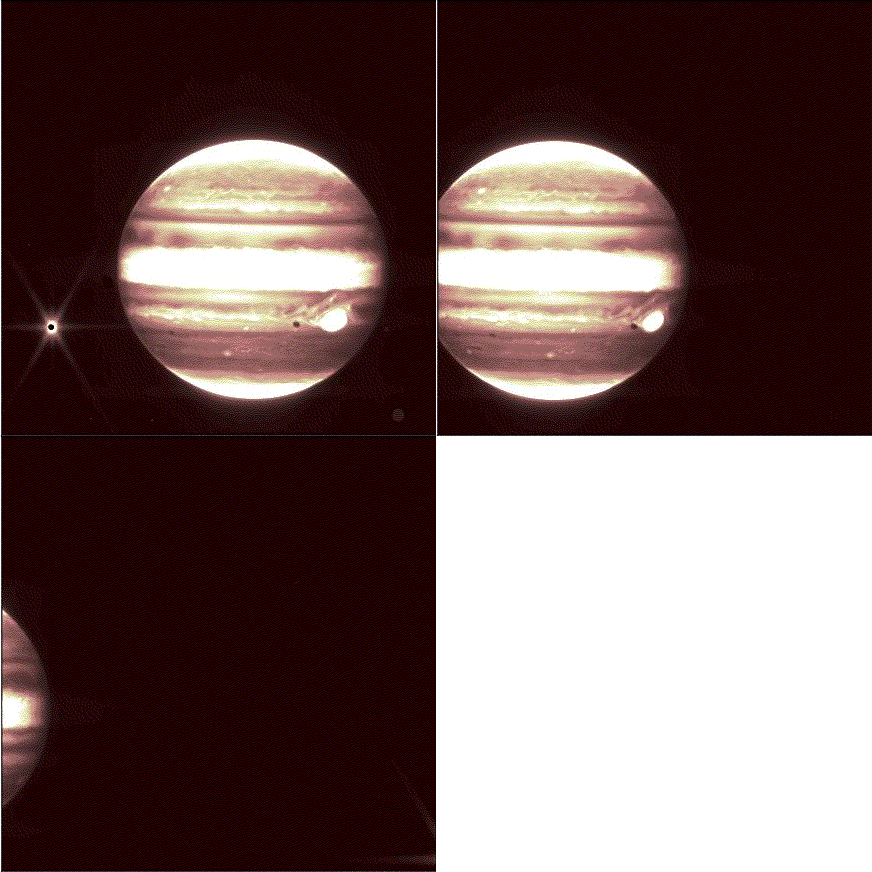
Webb also obtained these images of Jupiter and Europa moving across the telescope’s field of view in three separate observations. This test demonstrated the ability of the observatory to find and track guide stars in the vicinity of bright Jupiter.
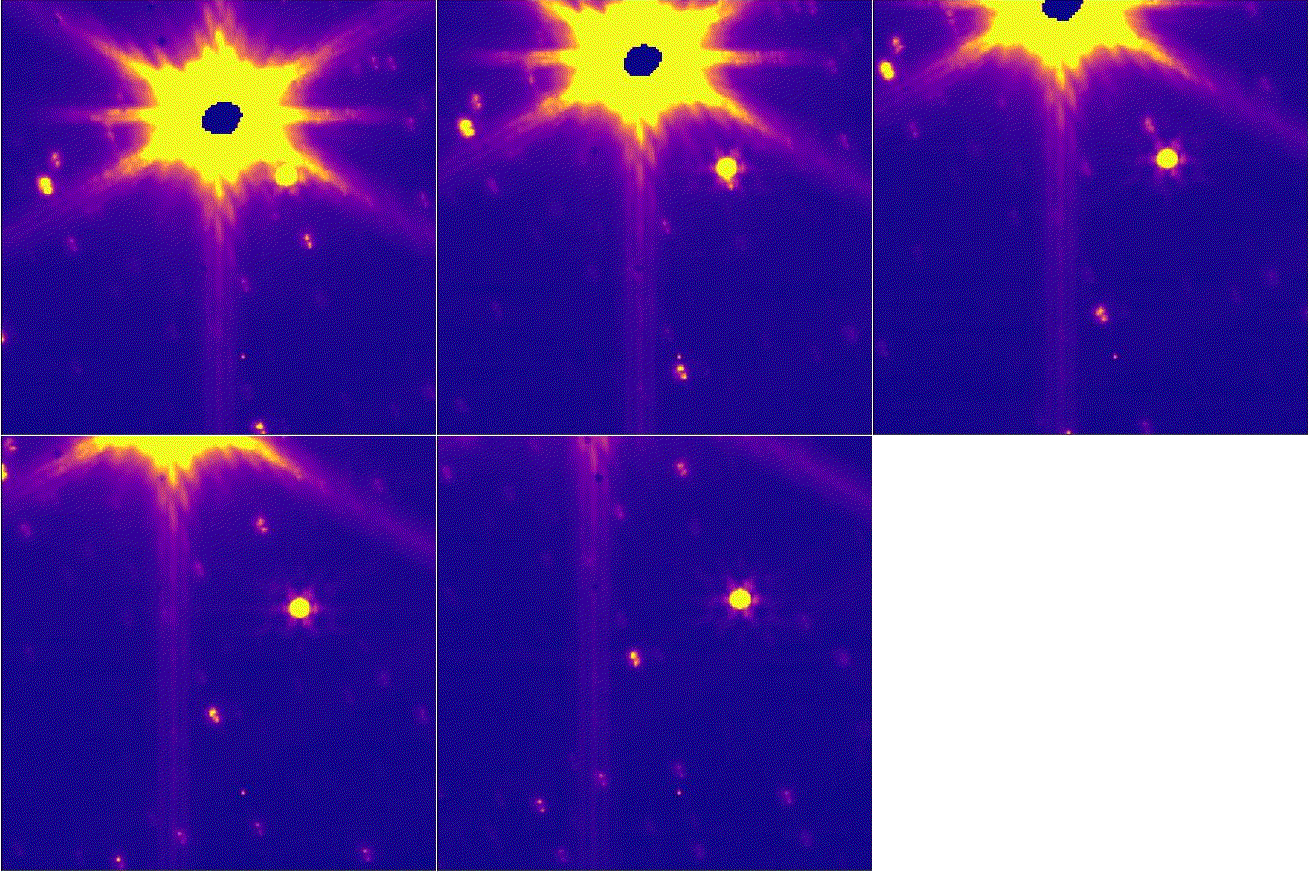
But just how fast can an object move and still be tracked by Webb? This was an important question for scientists who study asteroids and comets. During commissioning, Webb used an asteroid called 6481 Tenzing, located in the asteroid belt between Mars and Jupiter, to start the moving-target tracking “speed limit” tests.
Webb was designed with the requirement to track objects that move as fast as Mars, which has a maximum speed of 30 milliarcseconds per second. During commissioning, the Webb team conducted observations of various asteroids, which all appeared as a dot because they were all small. The team proved that Webb will still get valuable data with all of the science instruments for objects moving up to 67 milliarcseconds per second, which is more than twice the expected baseline – similar to photographing a turtle crawling when you’re standing a mile away. “Everything worked brilliantly,” Milam said.
Never miss a breakthrough: Join the SciTechDaily newsletter.
Follow us on Google and Google News.
2 Comments
These images are exciting and technically interesting. Thanks for sharing!
So, what is this black thing to the left of Jupiter that shows up on one photo but is never being mentioned anywhere? Do only I see that?