
Close Menu
    Facebook X (Twitter) Instagram
    SciTechDaily
    • Biology
    • Chemistry
    • Earth
    • Health
    • Physics
    • Science
    • Space
    • Technology
    Facebook X (Twitter) Pinterest YouTube RSS
    SciTechDaily
    Home»Biology»Researchers Uncover Molecular Pathway to Grow New Arteries
    Biology

    Researchers Uncover Molecular Pathway to Grow New Arteries

    By Helen Dodson, Yale UniversityApril 30, 2013No Comments3 Mins Read
    Facebook Twitter Pinterest Telegram LinkedIn WhatsApp Email Reddit
    Share
    Facebook Twitter LinkedIn Pinterest Telegram Email Reddit
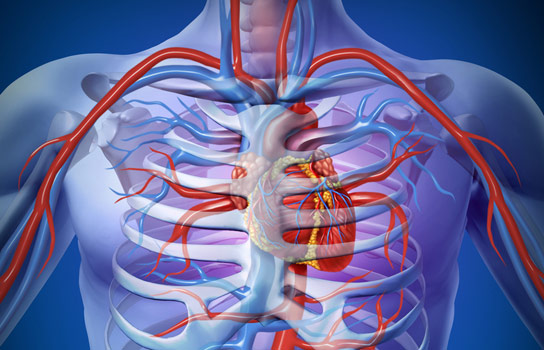
    Researchers Uncovered Molecular Pathway to Grow New Arteries
    Scientists have identified the molecular pathway for the formation of new arteries after heart attacks, strokes, and other acute illnesses, allowing a bypass of blocked arteries.

    Scientists from Yale and UCL have identified a new mechanism that regulates VEGFR2 transport in vascular cells, opening new therapeutic opportunities for developing drugs to stimulate or inhibit blood vessel formation.

    Scientific collaborators from Yale School of Medicine and University College London (UCL) have uncovered the molecular pathway by which new arteries may form after heart attacks, strokes, and other acute illnesses — bypassing arteries that are blocked. Their study appears in the April 29 issue of Developmental Cell.

    Arteries form in utero and during development, but can also form in adults when organs become deprived of oxygen — for example, after a heart attack. The organs release a molecular signal called VEGF. Working with mice, the Yale-UCL team discovered that in order for VEGF-driven artery formation to occur, VEGF must bind with two molecules known as VEGFR2 and NRP1, and all three must work as a team.

    The researchers examined mice that were lacking a particular part of the NRP1 molecule that transports VEGF and VEGFR2 to a signaling center inside blood vessel walls. They observed that the internal organs of these mice contained poorly constructed arterial branches. Further, the mice were unable to efficiently repair blood vessel blockage through the formation of new arteries.

    “We have identified an important new mechanism that regulates VEGFR2 transport in vascular cells,” said corresponding author Michael Simons, professor of medicine and cell biology, and director of the cardiovascular research center at Yale School of Medicine. “This opens new therapeutic opportunities for developing drugs that would either stimulate or inhibit blood vessel formation — important goals in cardiovascular and anti-cancer therapies, respectively.” Simons also has an appointment as an honorary professor of medicine at UCL.

    The Yale-UCL collaboration began more than three years ago, as an intensive global effort to improve the human condition through biomedical research and translational medicine. The Yale-UCL alliance has provided many opportunities to date for high-level scientific research, and clinical and educational collaboration.

    Reference: “The Neuropilin 1 Cytoplasmic Domain Is Required for VEGF-A-Dependent Arteriogenesis” by Anthony Lanahan, Xi Zhang, Alessandro Fantin, Zhen Zhuang, Felix Rivera-Molina, Katherine Speichinger, Claudia Prahst, Jiasheng Zhang, Yingdi Wang, George Davis, Derek Toomre, Christiana Ruhrberg and Michael Simons, 29 April 2013, Developmental Cell.
    DOI: 10.1016/j.devcel.2013.03.019

    Co-senior author is Christiana Ruhrberg, professor of neuronal and vascular development at the Institute of Ophthalmology at University College London. Ruhrberg also has an appointment as adjunct professor of medicine at Yale School of Medicine.

    Other authors are A. Lanahan, X. Zhang, Z.W. Zhuang, F. Rivera-Molina, C. Prahst, J. Zhang, Y. Wang, D. Toomre of Yale; A. Fantin of University College London, and K.R. Speichinger and G.E. Davis of the University of Missouri.

    The study was supported by grants from the National Institutes of Health (HL62289) and a Wellcome Trust Junior Investigator award.

    Never miss a breakthrough: Join the SciTechDaily newsletter.
    Follow us on Google and Google News.

    Cell Biology Yale University
    Share. Facebook Twitter Pinterest LinkedIn Email Reddit

    Related Articles

    Mitochondria Can Either Spur or Stop Obesity

    Researchers Identify Molecular Factors that Push the Domino of Life into Motion

    Researchers Solve Biological Mystery about the Common Genesis of Many Serious Diseases

    Cancer Scientists Prove Long-Standing Theory on How Cancer Spreads

    Combination of Immune Stimulating Antibodies Shows Promising Results Against Advanced Melanoma

    Scientists Peer Into a Cell in Real Time

    A Closer Look at the Antifreeze Protein That Allows Siberian Beetles to Survive

    Understanding How Cells Package Fat

    Optogenetics Regulates Metabolic Activity in the Membranes of Cells

    Leave A Reply Cancel Reply

    • Facebook
    • Twitter
    • Pinterest
    • YouTube

    Don't Miss a Discovery

    Subscribe for the Latest in Science & Tech!

    Trending News

    Bees Have a Hidden Nutritional Superpower, Oxford Study Reveals

    A Century-Old Belief About Diamond Has Just Been Overturned

    The Universe Can Expand Faster Than Light Without Breaking Physics

    The Exercise Paradox: Why Workouts Don’t Guarantee Weight Loss

    This Ancient Sea Animal Fights Viruses in the Opposite Way Humans Do

    39 Sweeteners Put to the Test Produced Surprising Gut Changes

    This Experimental Drug Repaired the Gut and Reversed Severe Fatty Liver Disease

    Physicists Just Turned a Black Hole Energy Theory Into Reality

    Follow SciTechDaily
    • Facebook
    • Twitter
    • YouTube
    • Pinterest
    • Newsletter
    • RSS
    SciTech News
    • Biology News
    • Chemistry News
    • Earth News
    • Health News
    • Physics News
    • Science News
    • Space News
    • Technology News
    Recent Posts
    • 3.1-Billion-Year-Old Rocks Rewrite the History of Earth’s Early Tectonics
    • Ancient DNA Reveals a Medieval Burial Mystery: They Weren’t Family
    • The Truth About Vikings Is More Complicated Than Museums Admit
    • Chromosome Chaos Reveals 81 New Cancer-Causing Genes
    • Rare Autism-Linked Syndrome Is Far More Common Than Scientists Thought
    Copyright © 1998 - 2026 SciTechDaily. All Rights Reserved.
    • Science News
    • About
    • Contact
    • Editorial Board
    • Privacy Policy
    • Terms of Use

    Type above and press Enter to search. Press Esc to cancel.