
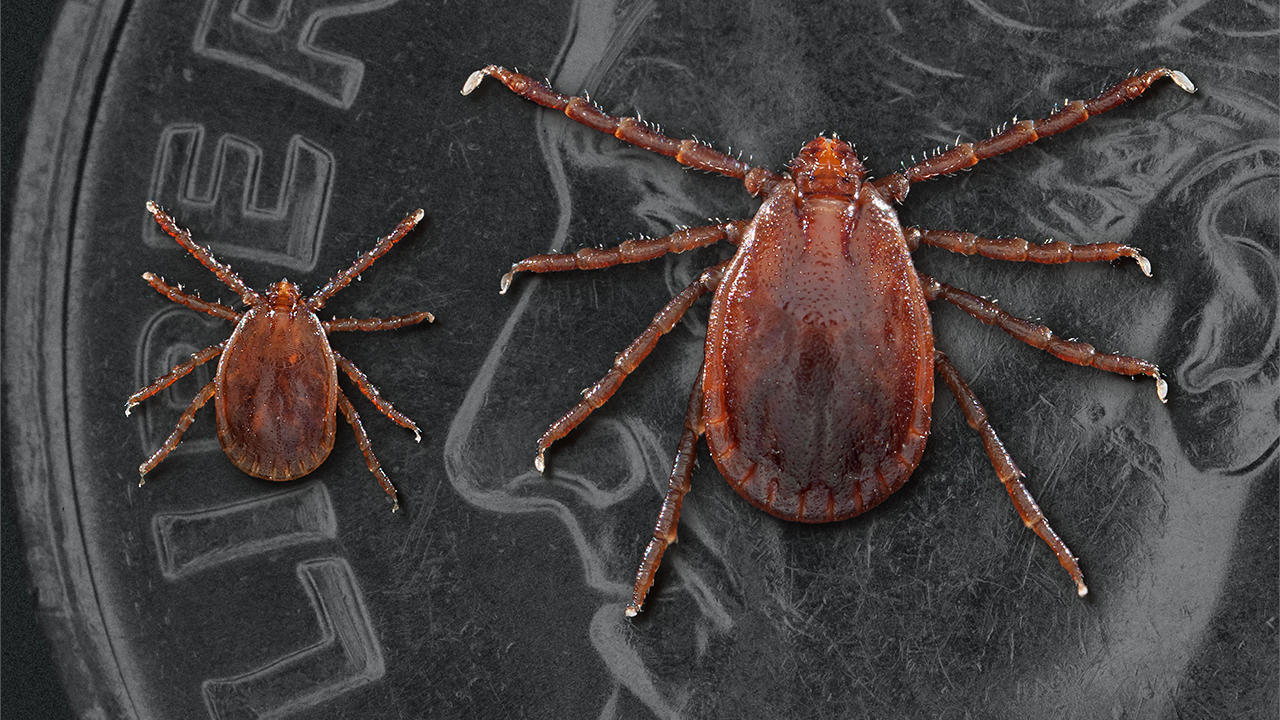
The New Finding Indicates a Looming Problem for Cattle Health in the Midwest
Worldwide, the Longhorned tick costs livestock farmers millions of dollars in lost agricultural income, and it is now in northern Missouri.
This tick, which was originally found in eastern Russia and the Australasian region, was discovered in the United States for the first time in 2017 in New Jersey. Since then, it has spread throughout the Mid-Atlantic, New England, and Midwestern regions of the United States. Now, researchers from the University of Missouri have made the first discovery of it in northern Missouri.
Last year, the Longhorned tick was found in the southern part of the state. This recent finding signals an additional economic burden to cattle farmers owing to ticks. This is because the Longhorned tick infestation might lead to a considerable loss in weight gain for cattle, similar to an already widely widespread condition called anaplasmosis; but so far, the threat from this species of tick to cattle — and humans and their pets — in Missouri remains low. However, researchers note that the finding of the Longhorned tick in the state increases the need for more vigilance towards ticks in general.
While most ticks reproduce traditionally, female Longhorned ticks can lay thousands of eggs without the help of a male, which makes it easier for them to quickly establish in new areas. Infestation of the Longhorned tick can lead to possible transmission of bovine theileriosis, a disease that kills red blood cells in cattle.
Implications for Missouri’s Cattle Industry
While there have currently not been any confirmed cases of bovine theileriosis in Missouri cattle, this discovery further heightens the need for Missouri cattle ranchers to make informed decisions regarding quarantining protocols when introducing new cattle into their herds in an effort to protect the health of their livestock, which has significant economic implications.
“Studying the prevalence of invasive ticks in different geographical regions can help veterinarians and farmers take proactive, preventative steps that may ultimately protect the health of livestock, which has huge economic implications,” said Rosalie Ierardi, an anatomic pathologist at the MU College of Veterinary Medicine who recently discovered two Longhorned ticks in Linn County, Missouri, while conducting anaplasmosis surveillance research.
Ierardi collaborated on the project with Ram Raghavan, a professor at the MU College of Veterinary Medicine and MU School of Health Professions. Raghavan, who has been tracking the spread of various species of ticks in the U.S. for 15 years, predicted the potential geographic distribution of the Longhorned tick back in 2019. So far, the tick appears to be establishing in the areas that he had predicted in that study. He said there not only appears to be an increase in the abundance of all ticks in the Midwest in the past decade, but also an increase in the pathogens and diseases they transmit to cattle, humans, and pets.
Climate Change and Tick Proliferation
“Warmer temperatures in the Midwest seem to be creating perfect conditions for ticks and the pathogens they carry to thrive, and this problem may get worse going forward as the planet continues to warm, which is concerning,” Raghavan said. “We must be vigilant and devote resources toward trying to prevent these ticks from spreading diseases that harm the health of cattle, humans, and their pets. The discovery of Longhorned ticks in northern Missouri greatly increases the need for more vigilance towards ticks in general and the need for routine monitoring of the pathogens they transmit.”
Ierardi encourages cattle ranchers who notice weakness, jaundice, and pregnancy loss in their cattle to contact their local veterinarian and the MU Veterinary Medical Diagnostic Laboratory for assistance with tracking down the causes for such signs.
“Symptoms of this disease can be often mistaken for anaplasmosis, so we encourage producers and practitioners to be vigilant and get their animals tested whenever there is a doubt,” Ierardi said. “Although these Longhorned ticks are known to transmit a number of human disease pathogens, at the moment the threat from them appears to be mostly bovine theileriosis, which impacts cattle.”
Never miss a breakthrough: Join the SciTechDaily newsletter.
Follow us on Google and Google News.
3 Comments
“… this problem MAY get worse going forward as the planet continues to warm, …”
Except that some of the worst infestations of ticks can be found in moose in New England and particularly Isle Royale in Lake Superior. Ticks survive cold Winters. So, maybe warmer weather (1 deg F per century) will allow predators, such as birds, to keep their population in check. The speculations involving such assurances as “may,” “could,” and “possibly” are no better than science fantasy if not backed up by studies providing probabilities and good evidence. Mark Twain famously wrote, “There is something fascinating about science. One gets such wholesale returns of conjecture out of such a trifling investment of fact.” Things seem to have gotten even worse since his time.
First discovered in 2017 in America, in New Jersey? Seriously? All those huge herds of cattle on feed lots was it? And in five years the little fellas have made it all the way to Missouri? Did they follow the cattle migration from New Jersey to the Midwest? At least the Realtors aren’t suppressing this information about ticks as they did in Connecticut.
I got rocky mountain spotted tick fever over three years ago. It’s got me down.i don’t have the strength to do anything. Most doctors don’t know anything about it