
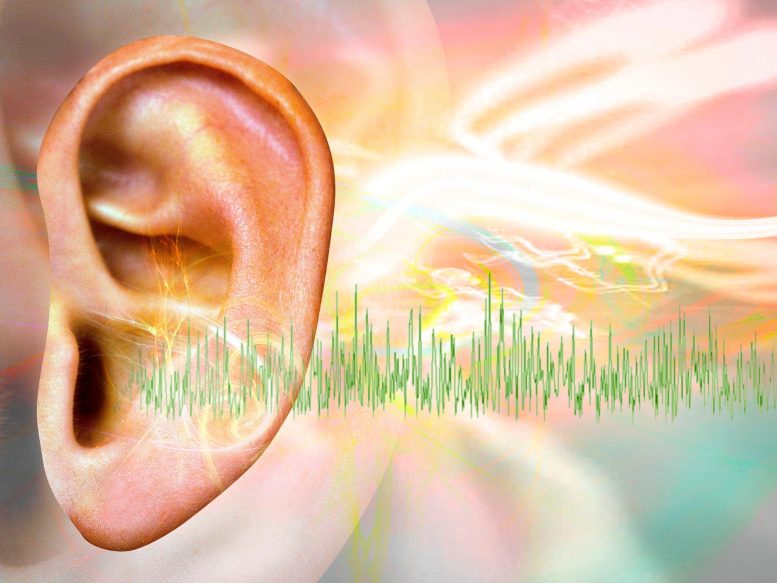
Tinnitus impacts millions, but relief is possible through innovative therapies and coping strategies that address the underlying triggers and stress cycle.
Tinnitus is a common condition characterized by the perception of noise or ringing in the ears without an external sound source. Typically experienced as ringing, buzzing, hissing, or clicking, it can stem from various causes, such as age-related hearing loss, loud noise exposure, ear infections, or head injuries. Although tinnitus is often regarded as a symptom rather than a disease, it can significantly impact a person’s quality of life.
Not a week goes by when I don’t see someone in my clinic complaining of a strange and constant phantom sound in one of their ears, or in both ears. The noise is loud, distracting and scary – and it doesn’t go away.
The kind of sound varies from patient to patient: buzzing, blowing, hissing, ringing, roaring, rumbling, whooshing, or a combination thereof. But whatever the sound, the condition is called tinnitus. And one thing tinnitus patients have in common is that the sound is not an external one. Instead, the noise is literally inside their head.
As a neurotologist – that’s an ear specialist – I have seen approximately 2,500 tinnitus patients during my 20-year career. That might sound like a lot, but it shouldn’t be a surprise – up to 15% of the U.S. population experiences tinnitus. That’s more than 50 million Americans.
Roughly 20 million of those have burdensome, chronic tinnitus, and another 2 million struggle with extreme and debilitating tinnitus. The condition seems to strike middle-aged people the most, but I have seen younger patients and even teenagers with tinnitus.
One way to stop tinnitus before it starts: Wear hearing protection when in noisy places.
Frustration With Doctors
What causes the noise? Some researchers say tinnitus is generated in the ear. Others hypothesize that it happens in the brain. But no one is certain. At the moment, there is no cure.
Unfortunately, as many patients have told me over the years, a lot of doctors are dismissive about tinnitus. They say little to nothing can be done, tell patients to go live with it and bid them goodbye. This unsympathetic attitude leaves patients disappointed and angry.
True, tinnitus has no cure. But it’s also true that hearing specialists have many strategies to help patients cope. For most people, a lot can be done to lessen the discomfort.
Much about this condition remains a mystery, but clinicians and researchers do know that loud noise can trigger tinnitus. Firearms, power tools, heavy machinery, MRI scans and blaring music from even a single rock concert are often the culprits. Just one loud noise exposure – what doctors call acoustic trauma – can kick-start tinnitus, although in most of those cases it’s temporary.
This is why many people in the military have tinnitus, perhaps acquired after exposure to loud gunfire or vehicular and aircraft noise. Indeed, more than 2.5 million veterans receive disability benefits for tinnitus.
Other factors that can cause or contribute to tinnitus include sinus infections, fevers, flu, emotional stress, caffeine, nicotine, alcohol and some medications, like aspirin, ibuprofen and other non-steroidal anti-inflammatory drugs. When people stop drinking these beverages or taking the medications, the tinnitus typically resolves itself or, at least, is reduced.
Among the strategies that may quiet the tinnitus: sound-generating videos.
Keys to Recovery
People who are experiencing tinnitus should have an ear exam to rule out simple causes such as earwax buildup, an infection or a hole in the eardrum. They should also undergo a comprehensive hearing test to evaluate their tinnitus.
By the time they see a doctor, many patients are already caught in a cycle of stress: The tinnitus increases stress, the stress then increases the tinnitus, which increases the stress, and so on.
That’s why it’s critical for the doctor to reassure them that the tinnitus is not dangerous or life threatening, nor a sign or symptom of something more serious. This simple reassurance is often enough for most people to successfully manage their tinnitus. The goal is to get patients to a place where the condition doesn’t distract them as they go about their day, or keep them awake at night.
Treatments That Can Help
Background noise often drowns out tinnitus, and many external sources will work. YouTube has many sound-generating videos that can help cancel out the uncomfortable sound, and some of these have black screens that will run all night. Free smartphone apps are available; for some people, air conditioners, fans, sound machines, television and radio can be effective at masking the tinnitus.
There are also sound-producing devices that fit in the ear to help counteract tinnitus. Programmed by an audiologist, these sound maskers emit a tone at the same pitch as the user’s tinnitus, helping to neutralize the internal sound. These devices are typically not covered by insurance carriers or Medicare.
For those with hearing loss, regular hearing aids may camouflage the tinnitus by bringing in background noise while at the same time helping patients hear.
Some types of antidepressants and anti-anxiety medications work.
Another approach is cognitive behavioral therapy – that is, talk therapy. This particularly helps those with other conditions such as depression, anxiety, post-traumatic stress disorder, a history of concussion or other traumatic brain injury. By reducing this underlying stress, people can learn to live with it rather than fight against it.
For some patients, tinnitus retraining therapy works. It combines cognitive behavioral therapy with a programmed, noise-canceling device that plays pleasant music – with the tone of the patient’s tinnitus embedded in the music.
The theory is that because the patient associates the tinnitus with pleasant music, the tinnitus no longer triggers anxiety or stress. Research shows 80% of patients derive at least some benefit from the therapy.
But be careful about the many supplements on the market claiming to cure or decrease tinnitus. No scientific study has ever shown these supplements cure this condition.
Other Types of Tinnitus
People who hear their pulse in one or both ears – this is called pulsatile or pulse-synchronous tinnitus – should seek medical attention. The cause of pulsatile tinnitus, often described as a whooshing sound coinciding with the pulse, may be due to an abnormality in one of the blood vessels near the ear. Often, these abnormalities are treatable and the pulsatile tinnitus can be reduced or even eliminated.
Likewise, those complaining of a clicking or thumping-type tinnitus should also have a more thorough evaluation, along with those awakened by the noise; that can be a sign of a rare form of tinnitus.
There is some additional good news here. For many tinnitus patients, the passage of time can make a huge difference. It may take several months, or even a few years, but at some point, the condition often largely resolves itself – and its impact is greatly diminished.
Written by Bradley Kesser, Professor of Otology and Neurotology, University of Virginia.
This article was first published in The Conversation.
Never miss a breakthrough: Join the SciTechDaily newsletter.
Follow us on Google and Google News.
5 Comments
The ability to produce the perception of audio can be accomplished by telepathy. This can be performed from over a 1000 miles away. The Cia has declassified documents stating such. I can provide them. They do this by heterodyning the brain neural activity giving them the ability to insert there own data. This can manipulate the senses or even be used to see through the eyes. There are over 10,000 us citizens currently being experienced on in a cia psychological operation. With the ability to record one’s consciousness and everything it perceives. I’m telling you that remote neural monitoring is real. They can render an image gathered by the data. This is being used for machine learning. I am a current victim of this using telepathy they put my under hypnosis and tried making me a programmed assassin to kill a federal prosecutor morely swingle. They were unsuccessful. Then they tried to get me to molest my step daughter to burn my character. Typical Cia behavior. Read a book called project soul catcher by Dr. Robert Duncan he is a Cia contractor trying to expose this. They have remote neural monitoring and can pipe in a voice at anytime. We have the ability to read minds using ai. So with these abilities they are performing suggestions to ones head to make this an ai driven world.
Nice try but you blew it right here: “heterodyning the brain neural activity”
I have suffered with tinnitus for over 17 years. As the result of an autoimmune disease, I am hard of hearing and wear hearing aids. The white noise suggestions do not work for me at night. I can’t hear them! I have “made peace” with my tinnitus through the years – it’s just something that’s there now. I started taking Xanax for anxiety and noticed that it helped my tinnitus some.
Yes’ and Eustachian Tube Dysfunction renders hearing aids usless
I have found that simply drinking enough water consistently (measuring it out each day, because you’ll otherwise way underestimate how much you are drinking) completely eliminates my tinnitus. I drink 96 oz per day and weigh 175. My tinnitus disappears when I maintain that level of hydration, and comes back when I don’t.