
Close Menu
    Facebook X (Twitter) Instagram
    SciTechDaily
    • Biology
    • Chemistry
    • Earth
    • Health
    • Physics
    • Science
    • Space
    • Technology
    Facebook X (Twitter) Pinterest YouTube RSS
    SciTechDaily
    Home»Earth»Tropical Cyclone Freddy Hits Madagascar
    Earth

    Tropical Cyclone Freddy Hits Madagascar

    By Emily Cassidy, NASA Earth ObservatoryFebruary 22, 2023No Comments2 Mins Read
    Facebook Twitter Pinterest Telegram LinkedIn WhatsApp Email Reddit
    Share
    Facebook Twitter LinkedIn Pinterest Telegram Email Reddit
    Cyclone Freddy Hits Madagascar Annotated
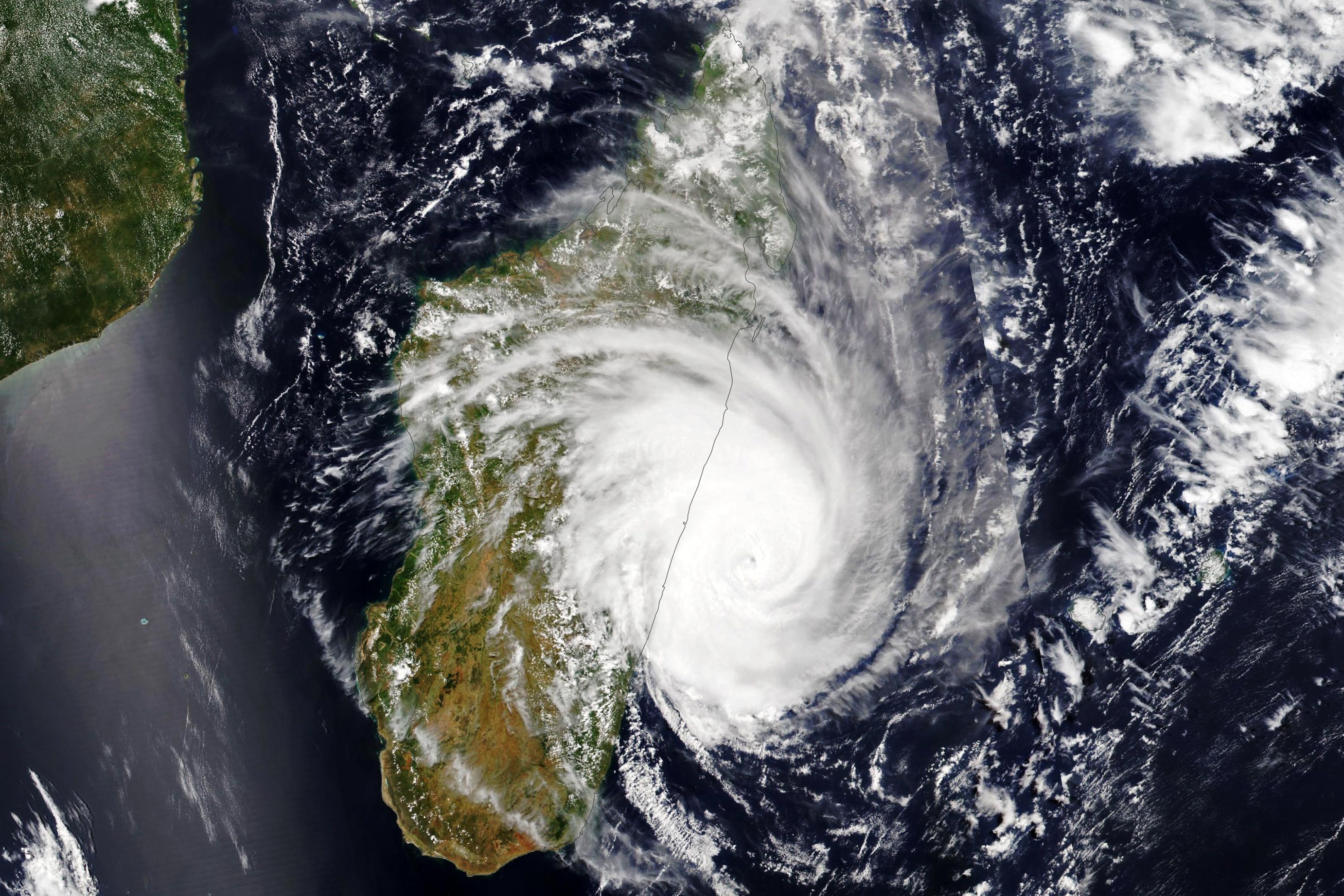
    Image of tropical cyclone Freddy acquired on February 21, 2023, by the Visible Infrared Imaging Radiometer Suite (VIIRS) on the NOAA-20 satellite.

    The tropical cyclone made landfall on February 21, 2023, after traveling for more than two weeks across the Indian Ocean.

    After traveling for 15 days across the Indian Ocean, Tropical Cyclone Freddy made landfall on the east coast of Madagascar on the evening of February 21, 2023.

    This image shows Freddy just east of Madagascar at 1:50 p.m. local time (10:50 Universal Time) on February 21. It was acquired by the Visible Infrared Imaging Radiometer Suite (VIIRS) on the NOAA-20 satellite.

    As Freddy made landfall north of Mananjary around 7:20 p.m. local time, its winds measured about 130 kilometers (80 miles) per hour, but precise wind speeds at landfall were yet to be confirmed. The coastal town of Mananjary, home to 25,000 people, was previously hit hard in February 2022 by the deadly Cyclone Batsirai.

    Forecasts called for Freddy to bring damaging winds, storm surge, and heavy rains as the storm moves inland. Rainfall may be especially damaging in places still recovering from Cyclone Cheneso, which killed dozens of people and left thousands homeless in the island nation in January 2023.

    Since forming near Indonesia on February 6, Freddy has traveled about 7,200 kilometers across the Indian Ocean, according to the UK Met Office. The 15-day lifespan of the cyclone is unusual; few cyclones travel so far and are sustained for so long. The longest-lived tropical cyclone in the southern hemisphere was Leon-Eline in 2000, which was sustained for 18.5 days and traveled a similar path to Freddy.

    Freddy was forecasted to continue moving westward and cross into the Mozambique Channel before strengthening and landing on Mozambique later in the week. Freddy was the second cyclone to hit Madagascar during the 2022–2023 season, which runs from around late October to May in the southwest Indian Ocean.

    NASA Earth Observatory image by Lauren Dauphin, using VIIRS data from NASA EOSDIS LANCE, GIBS/Worldview, and the Joint Polar Satellite System (JPSS).

    Never miss a breakthrough: Join the SciTechDaily newsletter.
    Follow us on Google and Google News.

    Cyclone NASA NASA Earth Observatory Storms
    Share. Facebook Twitter Pinterest LinkedIn Email Reddit

    Related Articles

    Six Cyclones, Two Oceans, One Rare Storm Surge Shaking the Southern Hemisphere

    Before and After: Mayotte’s Shocking Makeover by Cyclone Chido

    Bomb Cyclone Batters the Pacific Northwest Leaving 600,000 in the Dark

    Filipo’s Fury: Unleashing Nature’s Wrath on Mozambique

    Cyclone Jasper’s Fury: From Roaring Category-4 to Queensland’s Doorstep

    Nightlights in Libya: Tracking the Aftermath of a Powerful Medicane

    Unprecedented Wonder: Tropical Cyclone Freddy’s Record-Breaking Month-Long Journey Across the Indian Ocean

    Typhoon Hinnamnor: First Category 5 Cyclone on Earth in 2022

    Intense Extratropical “Bomb Cyclones” Drench US West Coast

    Leave A Reply Cancel Reply

    • Facebook
    • Twitter
    • Pinterest
    • YouTube

    Don't Miss a Discovery

    Subscribe for the Latest in Science & Tech!

    Trending News

    Doctors May Need To Rethink Calcium and Vitamin D Recommendations After Major Review

    Scientists Discover a Hidden Cause of Cellular Aging That Can Be Reversed

    Archaeologists Have Found Something Unexpected Inside a 1,600-Year-Old Egyptian Mummy

    Scientists May Have Found a Completely New Way To Treat Depression

    New 7-Dimensional Theory May Finally Solve the Black Hole Information Paradox

    Scientists Made Older Mice Biologically Younger Using Gut Microbes

    Scientists Finally Uncover Why Ozempic Stops Working for Some People

    Wasp Colonies Explode Into Violence After Losing Their Queen

    Follow SciTechDaily
    • Facebook
    • Twitter
    • YouTube
    • Pinterest
    • Newsletter
    • RSS
    SciTech News
    • Biology News
    • Chemistry News
    • Earth News
    • Health News
    • Physics News
    • Science News
    • Space News
    • Technology News
    Recent Posts
    • Scientists Finally Uncover How a “Forever Chemical” Causes Birth Defects
    • Scientists Uncover the Earliest Brain Changes That May Predict Alzheimer’s Decades Before Symptoms
    • Mystery Solved: The Decades-Old Secret Lurking Beneath North Carolina’s Blueberry Farms
    • Surprising New Study Challenges a Century-Old Theory of Habit Formation
    • Scientists Turn Seawater Into Drinking Water Without Toxic Brine
    Copyright © 1998 - 2026 SciTechDaily. All Rights Reserved.
    • Science News
    • About
    • Contact
    • Editorial Board
    • Privacy Policy
    • Terms of Use

    Type above and press Enter to search. Press Esc to cancel.