
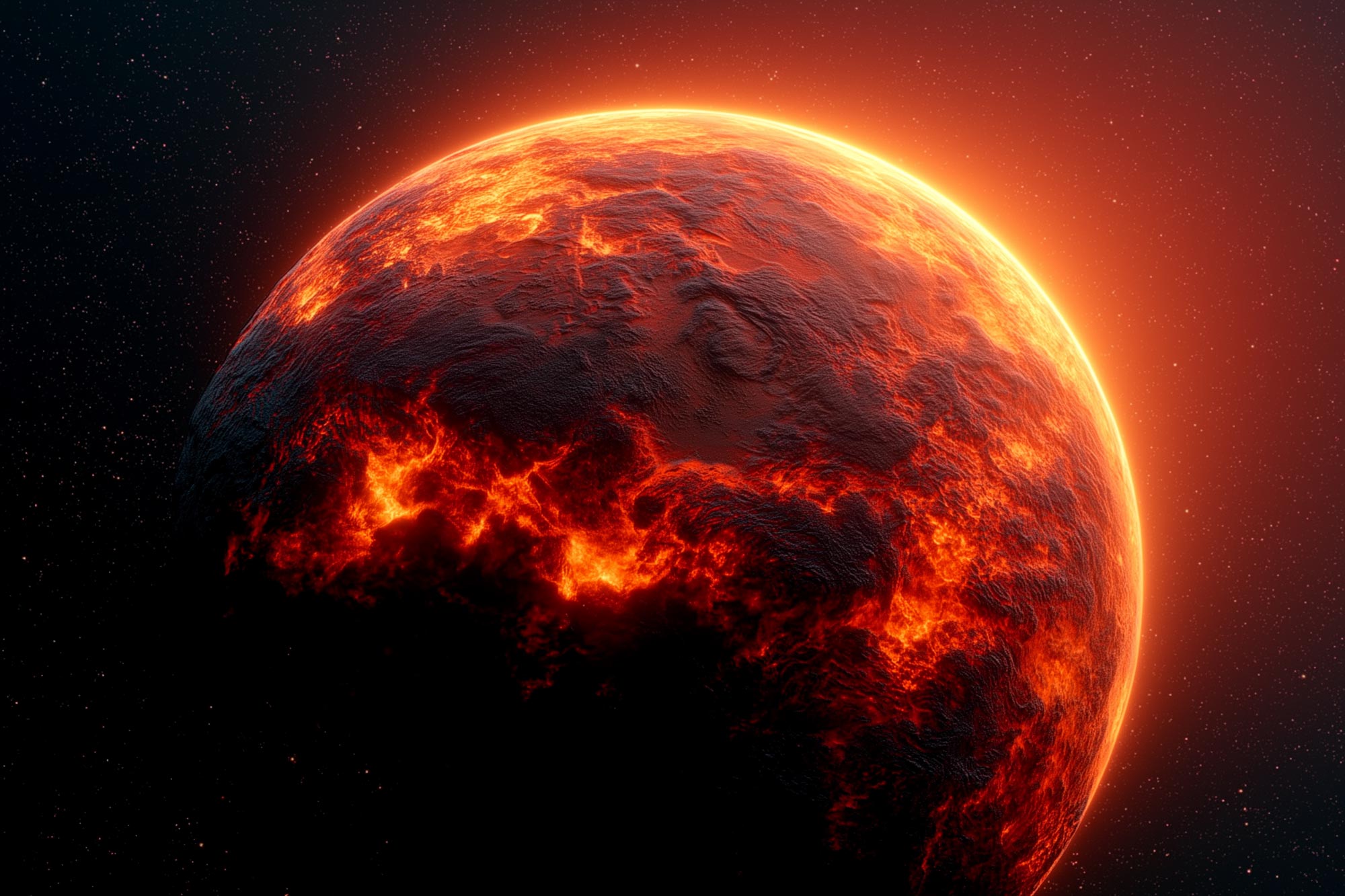
Researchers developed a model showing how lava-covered planets close to their stars can hold onto their atmospheres, which could help guide the search for life beyond our solar system.
Some planets orbit so close to their stars that intense radiation should strip away their atmospheres. Yet several of these scorching, lava-covered worlds still retain thick gaseous envelopes, presenting a challenge to a framework scientists use to predict which rocky planets can hold onto their air.
Stanford researchers now propose an explanation. Their model, published in The Astrophysical Journal Letters, suggests that molten surfaces can regulate how quickly gases escape from a planet’s interior. By slowing that release, lava can allow atmospheric replenishment to keep pace with losses caused by stellar radiation, preserving an atmosphere for billions of years.
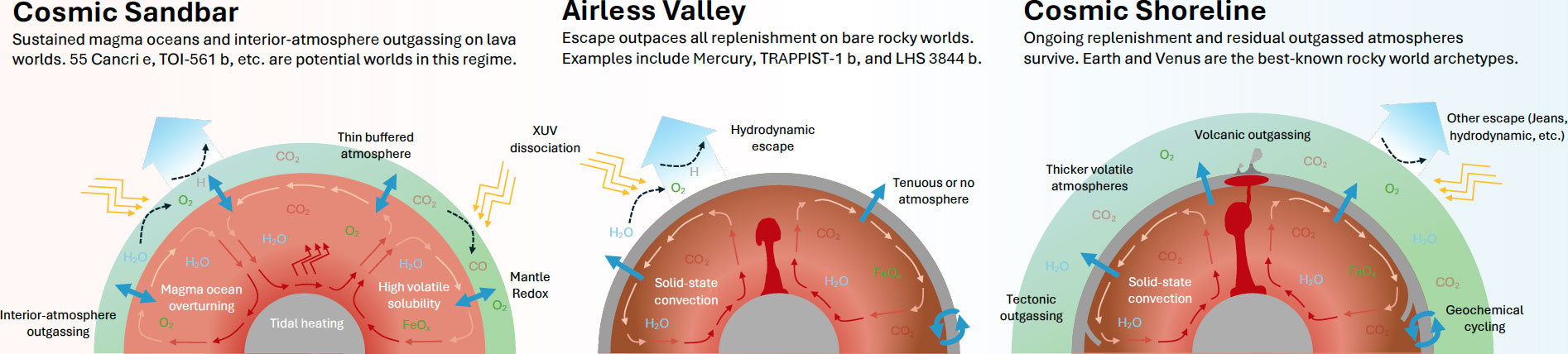
The result expands the idea of the “cosmic shoreline,” which describes the boundary between rocky worlds that can retain atmospheres and those that cannot. Like a shoreline separating land from water, the cosmic version marks where atmospheric survival becomes possible. Some lava worlds, however, lie much closer to their stars than that boundary predicts and still have atmospheres.
“These lava worlds have pointed to something being wrong with the cosmic shoreline boundary, but we’ve found a way for them to preserve their atmospheres by proposing a new regime beyond it,” said lead study author Barron Nguyen, a graduate student in the lab of Laura Schaefer at the Stanford Doerr School of Sustainability.
A new zone fills the gap
Stanford researchers and their collaborators call this newly proposed region the “cosmic sandbar,” drawing an analogy to sandy ridges that form offshore in Earth’s oceans. Between the traditional shoreline and this sandbar lies what they call the “airless valley.” Planets there orbit close enough to lose their atmospheres, yet cool and solidify too quickly after formation to replace the escaping gas.
“Where the shoreline boundary is between airless worlds and those capable of sustaining an atmosphere has been a major open question in planetary science,” said Schaefer, the study’s senior author and an assistant professor of Earth and planetary sciences in the Doerr School of Sustainability. “The new model expands our understanding of this boundary and the factors that go into determining where it lies for specific stars and planets.”
Within our solar system, searches for extraterrestrial life have long emphasized following the water. For planets around other stars, researchers must first determine whether a world can maintain an atmosphere at all.
“Scientists have been interested in figuring out which planets have atmospheres and which do not, because that’s the first step of looking at planetary habitability,” said Nguyen.
55 Cancri e exposed the problem
Over the past decade, the cosmic shoreline has become a promising way to identify potentially hospitable planets for follow-up observations. But recent discoveries have complicated the picture.
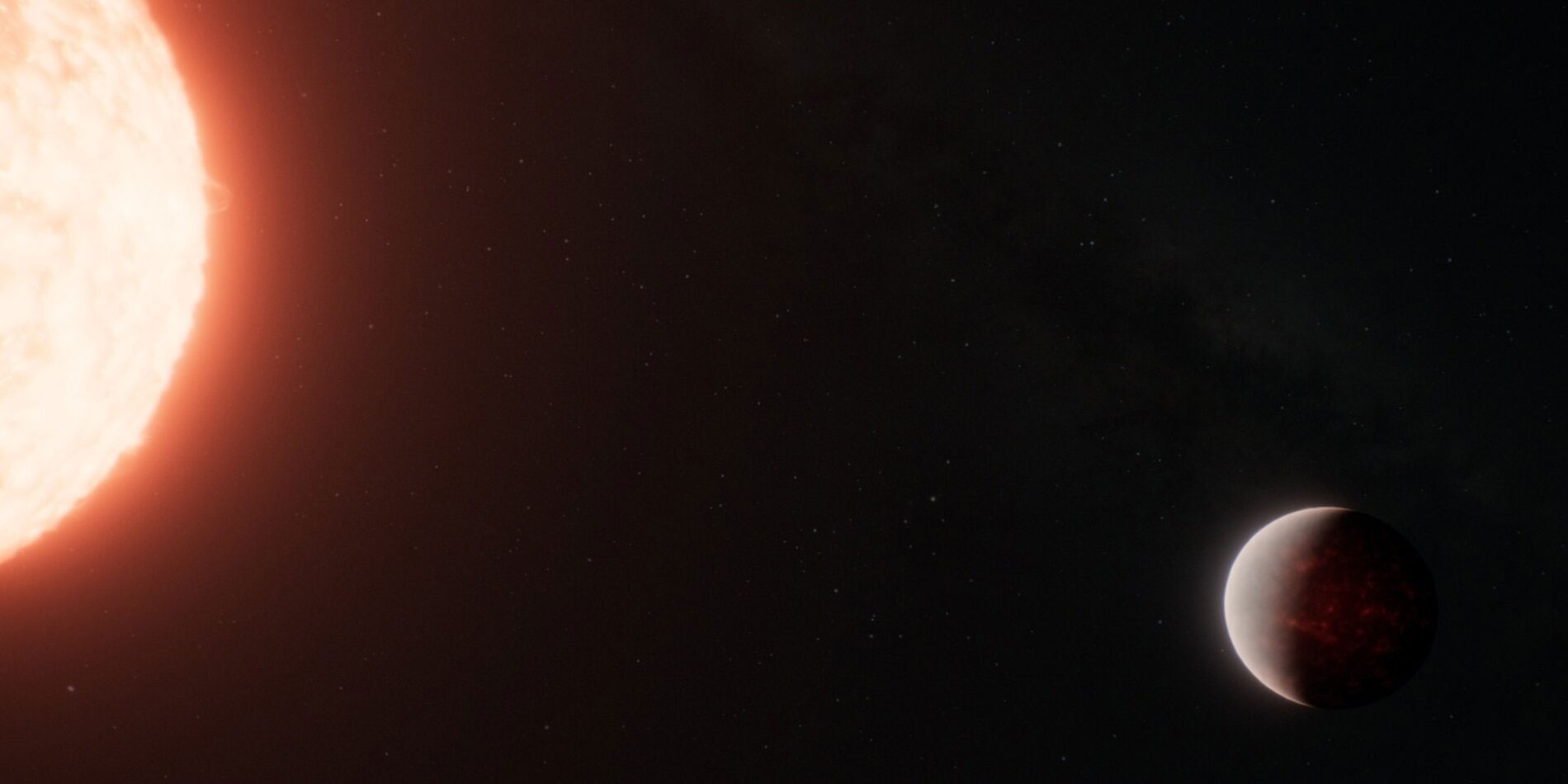
One major example is 55 Cancri e, a “super-Earth” almost eight times as massive as Earth that orbits roughly 20 times closer to its star than Mercury does to our Sun. Despite that extreme location, observations from the James Webb Space Telescope in 2024 showed that 55 Cancri e has a remarkably thick atmosphere. In recent months, observations have revealed a growing number of similar lava worlds with substantial atmospheres.
To understand how these planets could retain their air, Nguyen and colleagues constructed a model that tracks gas moving between a planet’s atmosphere and its molten surface. The simulations also account for atmospheric gas escaping into space, as well as the gradual cooling and eventual solidification of the lava. The researchers then compared atmosphere-retaining lava worlds with other known exoplanets and bodies in our solar system.
Outgassing can balance atmospheric escape
The model showed that atmospheric evolution can be controlled mainly by two competing processes: gas escaping into space and gas released from inside the planet into the atmosphere, a process known as “outgassing.” The cosmic sandbar describes hot worlds close to their stars where those two processes can reach a balance.
Planets in this regime, including 55 Cancri e, tend to be massive super-Earths with lava-covered surfaces. Worlds somewhat farther from their stars, such as Mercury, cool and solidify faster, locking gases inside their interiors. Without enough outgassing to replace atmospheric losses, they fall within the airless valley.
Farther out, along the cosmic shoreline, smaller and cooler planets such as Venus and Earth receive sufficiently less stellar radiation to avoid losing their atmospheres entirely.
The Stanford researchers expect future exoplanet surveys to test and refine this expanded version of the cosmic shoreline framework.
“A major takeaway from our study is that the cosmic shoreline isn’t a lost cause,” says Nguyen. “There had been some pessimism about it because of these lava worlds, but now we know there’s a broader set of parameters that can enable a planet to generate and maintain an atmosphere.”
Reference: “An Evolving Cosmic Shoreline and Sandbar Bounding the Rocky Airless Valley” by Barron K. Nguyen, Laura K. Schaefer, Xuan Ji, Christopher A. Theissen, Fei Dai, Bo Peng, Yao Tang, Andrea Zorzi, Michelle Hill and Megan Weiner Mansfield, 25 August 2026, The Astrophysical Journal Letters.
DOI: 10.3847/2041-8213/ae9743
Never miss a breakthrough: Join the SciTechDaily newsletter.
Follow us on Google and Google News.