
Close Menu
    Facebook X (Twitter) Instagram
    SciTechDaily
    • Biology
    • Chemistry
    • Earth
    • Health
    • Physics
    • Science
    • Space
    • Technology
    Facebook X (Twitter) Pinterest YouTube RSS
    SciTechDaily
    Home»Health»Obstructive Sleep Apnea Tied to Weaker Bones and Teeth in Adults
    Health

    Obstructive Sleep Apnea Tied to Weaker Bones and Teeth in Adults

    By University at BuffaloMarch 27, 2023No Comments3 Mins Read
    Facebook Twitter Pinterest Telegram LinkedIn WhatsApp Email Reddit
    Share
    Facebook Twitter LinkedIn Pinterest Telegram Email Reddit
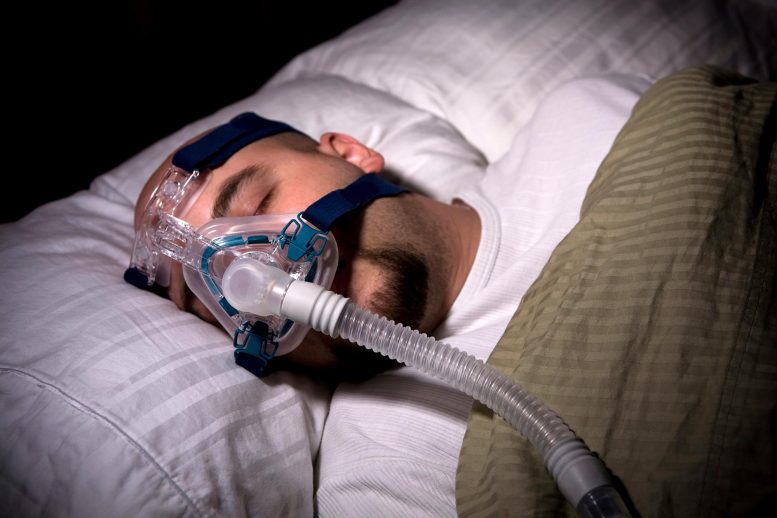
    Sleep Apnea CPAP
    Obstructive Sleep Apnea (OSA) is a common sleep disorder that affects millions of people worldwide. It is characterized by repeated cessation of breathing during sleep, which can last from a few seconds to several minutes. These breathing pauses can occur several times throughout the night and can lead to a fragmented sleep pattern, causing feelings of excessive daytime sleepiness, fatigue, and irritability.

    Research suggests obstructive sleep apnea may lead to reduced bone mineral density, increasing the risk of osteoporosis.

    Research led by the University at Buffalo suggests a potential link between obstructive sleep apnea and low bone mineral density in adults.

    These findings hold significant importance for individuals with sleep apnea, as low bone mineral density is a warning sign for osteoporosis, a condition that weakens and makes bones fragile. Senior author Thikriat Al-Jewair, DDS, Associate Professor of Orthodontics at the UB School of Dental Medicine and Director of the school’s Advanced Education Program in Orthodontics, highlights that in addition to increasing the likelihood of fractures, low bone mineral density also has a negative impact on oral health, causing teeth to become loose and dental implants to fail.

    The study was published in The Journal of Craniomandibular and Sleep Practice. The researchers used cone beam computed tomography (CBCT) – a type of X-ray – to measure bone density in the head and neck of 38 adult participants, half of whom had obstructive sleep apnea.

    When controlling for age, sex, and weight, the participants with obstructive sleep apnea had significantly lower bone mineral density than the participants without the condition.

    How Sleep Apnea May Affect Bone Metabolism

    Obstructive sleep apnea, which is characterized by difficulty breathing while asleep, can cause hypoxia (low levels of oxygen in the body), inflammation, oxidative stress, and shortened breathing patterns. Each of these symptoms may have a chronic negative effect on bone metabolism and, ultimately, bone density, says Al-Jewair.

    “While the link between obstructive sleep apnea and low bone mineral density has yet to be fully explored, this study offers new evidence on their connection that could have several implications for orthodontic treatment,” says Al-Jewair, also assistant dean for equity, diversity, and inclusion in the UB School of Dental Medicine.

    “If a patient has been diagnosed with sleep apnea, this can influence treatment planning and management. CBCT imaging has become an integral part of daily orthodontic practice and could be used as a screening tool for low bone mineral density,” she said. “Orthodontists could then inform their patients of their propensity for low bone mineral density and encourage them to seek further consultation with their physician, as well as warn the patient of possible adverse outcomes, increased risks, and effects on treatment time.”

    Future research with larger sample sizes is needed, says Al-Jewair.

    Reference: “Association between obstructive sleep apnea syndrome and bone mineral density in adult orthodontic populations” by Mira Daljeeta, DMD, MS; Stephen Warunek, DDS, MS; David A. Covell, DDS, Ph.D.; Alberto Monegro, MD; Terry Giangreco, DDS, MS and Thikriat Al-Jewair, DDS, MSc, MS, FRCD(C), 11 November 2022, The Journal of Craniomandibular & Sleep Practice.
    DOI: 10.1080/08869634.2022.2142724

    Never miss a breakthrough: Join the SciTechDaily newsletter.
    Follow us on Google and Google News.

    Bones Osteoporosis Sleep Apnea Sleep Science Teeth University at Buffalo
    Share. Facebook Twitter Pinterest LinkedIn Email Reddit

    Related Articles

    Could Getting Enough Sleep Help Prevent Osteoporosis?

    New Sleep Apnea Drug Shows Promising Results in Human Trials

    Johns Hopkins Researchers Have Identified a Potential New Treatment Target for Sleep Apnea

    New Pill Replicates Exercise and Strengthens Muscle

    New Treatment Target Could Counter Bone Loss

    Study Finds Vitamin D Supplements Do Not Reduce Risk of Broken Bones

    Sweet Coating for Sour Bones: Bridge-Burning Coating for Bone Implants

    Improve Sleep Apnea by Losing Fat in an Unexpected Body Part — The Tongue

    Warning for Children With Sleep Apnea: Treatment Solely Based on Sleep Studies Is Unreliable

    Leave A Reply Cancel Reply

    • Facebook
    • Twitter
    • Pinterest
    • YouTube

    Don't Miss a Discovery

    Subscribe for the Latest in Science & Tech!

    Trending News

    The Best Exercise Combination for Longevity, According to a 30-Year Study

    Popular Weight-Loss Drug Found To Slow Biological Aging in Landmark Human Trial

    NASA’s Fermi Telescope Caught a Supernova Doing Something Never Seen Before

    This Dinosaur Had the Claws of a Raptor but Hunted Like a Heron

    Doctors May Need To Rethink Calcium and Vitamin D Recommendations After Major Review

    Scientists Discover a Hidden Cause of Cellular Aging That Can Be Reversed

    Archaeologists Have Found Something Unexpected Inside a 1,600-Year-Old Egyptian Mummy

    Scientists May Have Found a Completely New Way To Treat Depression

    Follow SciTechDaily
    • Facebook
    • Twitter
    • YouTube
    • Pinterest
    • Newsletter
    • RSS
    SciTech News
    • Biology News
    • Chemistry News
    • Earth News
    • Health News
    • Physics News
    • Science News
    • Space News
    • Technology News
    Recent Posts
    • A Newly Found Cellular Shift May Explain Why Aging Leads to Disease
    • A Normal Kidney Test Could Still Signal Serious Risk
    • Scientists Discover Gut Signal That Turns Off Sugar Cravings
    • NASA Captures Typhoon Jangmi’s Massive Eye in Stunning Nighttime Image
    • Super Typhoon Sinlaku Was So Powerful It Made the Sky Ripple With Gravity Waves
    Copyright © 1998 - 2026 SciTechDaily. All Rights Reserved.
    • Science News
    • About
    • Contact
    • Editorial Board
    • Privacy Policy
    • Terms of Use

    Type above and press Enter to search. Press Esc to cancel.