
Close Menu
    Facebook X (Twitter) Instagram
    SciTechDaily
    • Biology
    • Chemistry
    • Earth
    • Health
    • Physics
    • Science
    • Space
    • Technology
    Facebook X (Twitter) Pinterest YouTube RSS
    SciTechDaily
    Home»Biology»Microbes Meet Machine Learning: A pHenomenal Discovery
    Biology

    Microbes Meet Machine Learning: A pHenomenal Discovery

    By University of Colorado at BoulderApril 28, 2023No Comments5 Mins Read
    Facebook Twitter Pinterest Telegram LinkedIn WhatsApp Email Reddit
    Share
    Facebook Twitter LinkedIn Pinterest Telegram Email Reddit
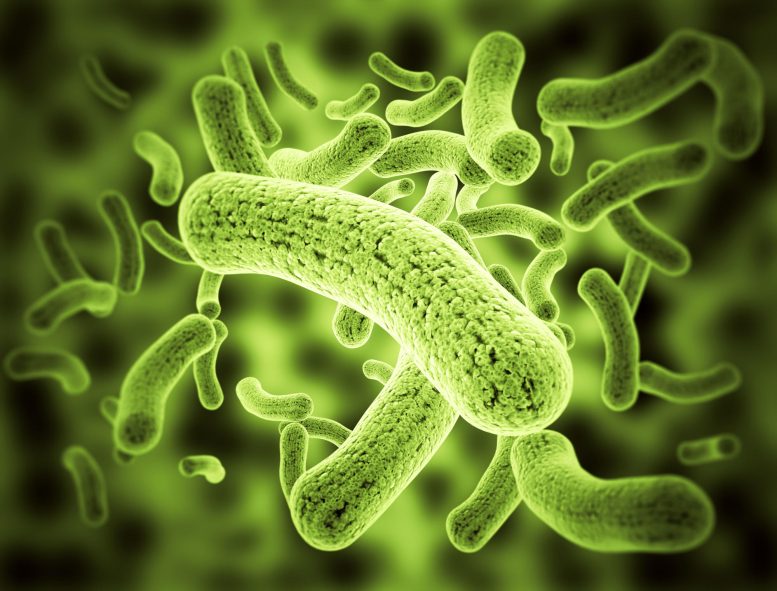
    Green Glowing Bacteria
    Researchers have developed a machine learning method to predict the environmental pH preferences of bacteria by analyzing their genomes. The method, which could revolutionize ecological restoration efforts, agriculture, and the development of probiotics, was applied to over 250,000 types of bacteria from nearly 1,500 samples of soil, lake, and stream. The method’s significance lies in its potential to significantly expedite the process of culturing bacteria, which is traditionally time-consuming. It could also provide agricultural and forestry experts with crucial insights into the types of bacteria that may aid in the restoration of different environments or crops based on local pH.

    A machine learning approach can predict bacteria’s pH preferences from their genomes. This breakthrough could enhance ecological restoration, agriculture, and the development of probiotics, as well as expedite the process of bacterial culturing.

    Researchers have figured out a way to predict bacteria’s environmental pH preferences from a quick look at their genomes, using machine learning. Led by experts at the University of Colorado Boulder, the new approach promises to help guide ecological restoration efforts, agriculture, and even the development of health-related probiotics.

    “We know that in any environment, there’s a ton of bacteria with important ecological functions, but their environmental preferences often remain unknown,” said Noah Fierer, a fellow of the Cooperative Institute for Research in Environmental Sciences (CIRES) and professor of ecology and evolutionary biology at CU Boulder. “The idea is to use this technique to figure out the basics of their natural history.”

    Understanding whether certain bacteria are most likely to thrive in acidic, neutral, or basic environments is just a first step, said lead author Josep Ramoneda, a CIRES visiting scholar. “You could use this approach to anticipate how microbes will adapt to almost any environmental change,” he said. Say, for example, sea-level rise is bringing more saline water into a coastal wetland. “We can anticipate how microbes will respond to these environmental changes,” Ramoneda said.

    Machine Learning Meets Genomic Data

    The new work was published today (April 28, 2023) in the journal Science Advances, and co-authors include others from CIRES and CU Boulder as well as colleagues from Canada.
    Corinne Walsh Soil Samples
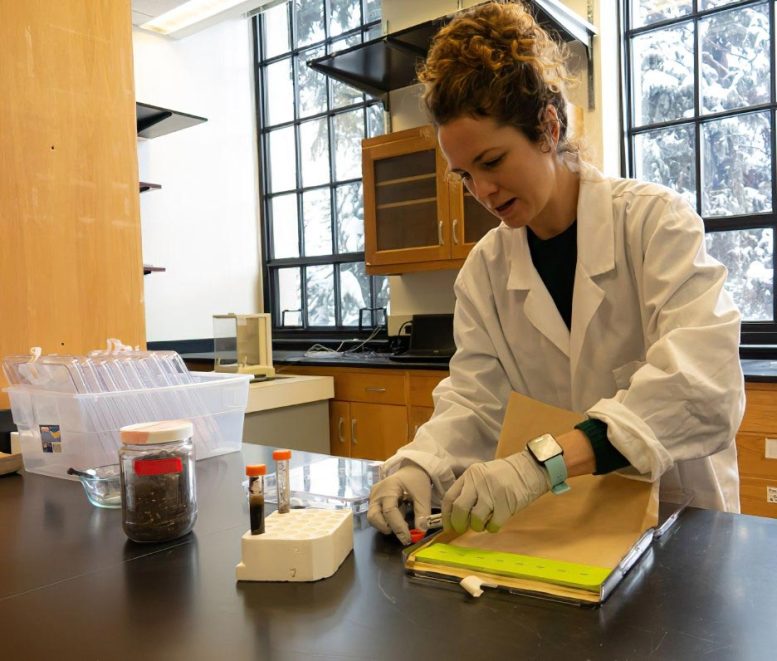
    University of Colorado Boulder Ph.D. student Corinne Walsh works with soil samples containing microbes associated with wheat plants. A new machine-learning approach may help microbial ecologists like Walsh figure out the environmental preferences of bacteria from a quick look at their genomes, making some lab work more efficient and agricultural science more successful. Credit: Cooperative Institute for Research in Environmental Sciences (2020)

    Microbes, including bacteria, are critical to the functioning of ecosystems; helping plants grow, enabling nutrient cycling in lakes, and even supporting human digestion. But often, they’re impossible to isolate and grow in the lab, so we often know little about them, Ramoneda and Fierer said—except for their genetic makeup. Genetic “fishing” techniques of recent decades have led to exponentially growing databases of bacterial genomes.

    So the research team drew on what scientists know about a few bacterial groups, which thrive at one particular pH or another, and then used machine learning to link those groups’ environmental pH preferences with their genetic makeup. The work involved sorting through the genomes of more than 250,000 types of bacteria from nearly 1,500 soil, lake, and stream samples.

    “What we found is we can make inferences about their pH preferences based on genomic data alone,” Ramoneda said. For scientists, one of the finding’s most immediate implications is that it could help them grow colonies of finicky bacteria they’ve never been able to grow before, by giving them a first guess at what pH to use. It can take years to figure out how to “culture” bacteria so they can be studied in the laboratory and the machine-learning method could make that process far, far more efficient, Fierer said.

    Agricultural and forestry experts also often add live bacteria to “inoculate” growing plants with helpful communities of bacteria, Ramoneda said. Now, they may get quicker, better insight into the types of bacteria that might help restore a native prairie vs. pine forests, or to better grow corn or soybeans, by ensuring that inoculants will be adapted to the local pH.

    Next, the team plans to try to get insight into the temperature preferences of bacteria, another complex system likely involving many, many genes. That could help them better understand how warming will influence soil bacterial communities, for example.

    “The alternative is to try to grow them all in the lab, and that’s painful,” Fierer said.

    Reference: “Building a genome-based understanding of bacterial pH preferences” by Josep Ramoneda, Elias Stallard-Olivera, Michael Hoffert, Claire C. Winfrey, Masumi Stadler, Juan Pablo Niño-García and Noah Fierer, 28 April 2023, Science Advances.
    DOI: 10.1126/sciadv.adf8998

    Funding for this work came from the Swiss National Science Foundation, U.S. National Science Foundation, Natural Sciences and Engineering Research Council of Canada, U.S. Department of Energy, and U.S. Department of Agriculture.

    Never miss a breakthrough: Join the SciTechDaily newsletter.
    Follow us on Google and Google News.

    Bacteria Ecology Machine Learning Microbiology University of Colorado at Boulder
    Share. Facebook Twitter Pinterest LinkedIn Email Reddit

    Related Articles

    The Silent Warriors: Predatory Bacteria Battling Superbugs

    9000 Feet Deep – Magnetic Bacteria Discovered in Deep-Sea Vents

    Permafrost Pandora’s Box: Unleashing “Time-Traveling” Pathogens From the Icy Past

    Probiotic Protection? Gut Bacteria Discovered That Protects the Intestine From Invasion of the COVID-19 Virus

    Study Across 60 Cities in 32 Countries and Six Continents Reveals: New Species Are All Around Us!

    A Perilously “Profound Ignorance” – As Plant/Animal Diversity Wanes, Is Microbial Life Changing Too?

    Oxygen Depletion and Acidification Accelerate Coral Death

    Marine Worm Thrives on Steady Diet of Deadly Poisons

    Widespread Presence of Antibiotic Resistant Bacteria in Agricultural Soils

    Leave A Reply Cancel Reply

    • Facebook
    • Twitter
    • Pinterest
    • YouTube

    Don't Miss a Discovery

    Subscribe for the Latest in Science & Tech!

    Trending News

    First-of-Its-Kind Discovery: Homer’s Iliad Found Embedded in a 1,600-Year-Old Egyptian Mummy

    Beyond Inflammation: Scientists Uncover New Cause of Persistent Rheumatoid Arthritis

    A Simple Molecule Could Unlock Safer, Easier Weight Loss

    Scientists Just Built a Quantum Battery That Charges Almost Instantly

    Researchers Unveil Groundbreaking Sustainable Solution to Vitamin B12 Deficiency

    Millions of People Have Osteopenia Without Realizing It – Here’s What You Need To Know

    Researchers Discover Boosting a Single Protein Helps the Brain Fight Alzheimer’s

    World-First Study Reveals Human Hearts Can Regenerate After a Heart Attack

    Follow SciTechDaily
    • Facebook
    • Twitter
    • YouTube
    • Pinterest
    • Newsletter
    • RSS
    SciTech News
    • Biology News
    • Chemistry News
    • Earth News
    • Health News
    • Physics News
    • Science News
    • Space News
    • Technology News
    Recent Posts
    • New Research Challenges Long-Held Beliefs About How the Brain Makes Decisions
    • Breakthrough Technology Reveals New Treatment Targets for Cancer
    • Scientists Discover New Way To Make Drug-Resistant Cancer Treatable Again
    • This Simple Exercise Trick Builds Muscle With Less Effort, Study Finds
    • Middle Age Is Becoming a Breaking Point in America, Study Reveals
    Copyright © 1998 - 2026 SciTechDaily. All Rights Reserved.
    • Science News
    • About
    • Contact
    • Editorial Board
    • Privacy Policy
    • Terms of Use

    Type above and press Enter to search. Press Esc to cancel.