
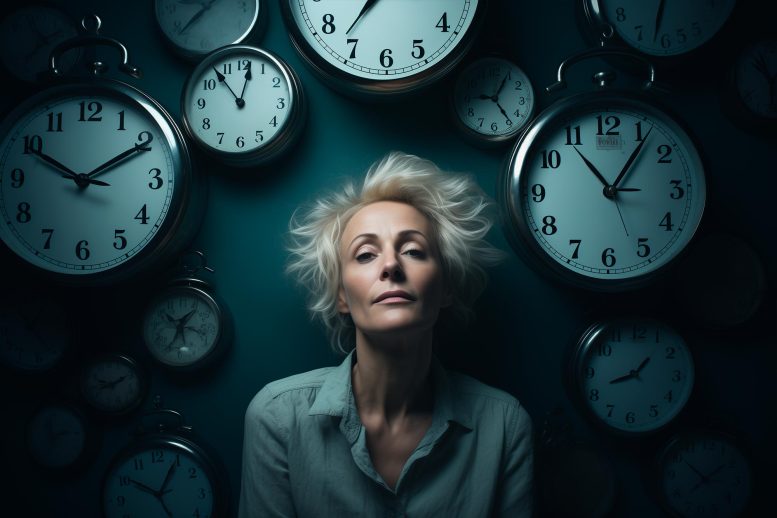
New study shows that working night shifts favors development of sleep disorders, particularly in young adults with a lower education.
Sleep is critical for daytime and neurocognitive functioning, as well as physical and mental health. When people work shifts – in 2015, 21% of workers in the European Union did – their circadian sleep-wake rhythms are commonly disrupted. Now, researchers in the Netherlands have investigated the relationship between different shift working patterns, sociodemographic factors, and sleep disorders.
“We showed that compared to working regular shifts during daytime hours, working other shift types is associated with a higher occurrence of disordered sleep, particularly in rotating and regular night shift work,” said Dr. Marike Lancel, a researcher at GGZ Drenthe’s Mental Health Institute and senior author of the study published in Frontiers in Psychiatry. “Of note, 51% of people working nights scored positive for at least one sleep disorder.”
Questioning Sleep
“There is a lot of evidence that shift work reduces the quality of sleep. However, little is known about the influence of different types of shifts on the prevalence of various sleep disorders, and how this may vary depending on demographic characteristics,” Lancel continued.
To fill these gaps, the researchers recruited more than 37,000 participants who provided demographic information, indicating their shift work patterns (regular morning, evening, night, or switching between shifts).
They also completed a questionnaire screening for six common sleep disorder categories: insomnia, hypersomnia, parasomnia, sleep-related breathing disorders, sleep related movement disorders, and circadian rhythm sleep-wake disorders.
The responses suggested that working regular night shifts was the most debilitating condition concerning sleep. Half of the night shift workers reported to sleep less than six within 24 hours, 51% reported one sleep disorder, and 26% reported two or more sleep disorders.
Across the entire study population, approximately a third scored positive for at least one sleep disorder, while 12.6% screened positive for two or more.
Demographic Factors and Sleep Health
The researchers also investigated if demographic factors, such as sex, age, and highest level of education impacted sleep health. They also considered if participants lived alone, with a partner and/or children, or with others, such as friends or parents.
Their results showed that males slept fewer hours than females, but that sleep disorders were more common in women. Age also influenced sleep health: older participants tended to sleep shorter hours, but most sleep disorders and their comorbidities were found to be more prevalent among the youngest participant group, aged 30 and below.
Concerning education level and the likeliness to have disrupted sleep, the researchers found a correlation: “The effects of shift work on sleep are most prominent in young adults with a lower education,” Lancel pointed out. This group slept shorter hours and had a significantly higher prevalence of sleep disorders and comorbidities thereof.
Night Shifts and Sleep Challenges
It is possible that some people working night shifts may experience fewer sleep related problems than others, the researchers said, but that for the average night shift worker, this out-of-rhythm work pattern will increase the likeliness of them struggling with regular, healthy sleep. “Because those working night shift will remain de-synchronized with the day-work focused environment they live in, it is unlikely to completely prevent all negative consequences of night work,” explained Lancel.
The researchers also pointed to certain limitations of their study. For example, individuals with sleep disorders might participate in sleep-focused studies more readily than healthy sleepers. Nevertheless, the authors said that their findings can provide crucial information for employers in professions where shift work is common. They also might be used to educate on strategies on how to best deal with and reduce consequences of working nights and sleeping days.
Reference: “Shift work is associated with extensively disordered sleep, especially when working nights” by G. J. Boersma, T. Mijnster, P. Vantyghem, G. A. Kerkhof and Marike Lancel, 17 October 2023, Frontiers in Psychiatry.
DOI: 10.3389/fpsyt.2023.1233640
Never miss a breakthrough: Join the SciTechDaily newsletter.
Follow us on Google and Google News.