
Close Menu
    Facebook X (Twitter) Instagram
    SciTechDaily
    • Biology
    • Chemistry
    • Earth
    • Health
    • Physics
    • Science
    • Space
    • Technology
    Facebook X (Twitter) Pinterest YouTube RSS
    SciTechDaily
    Home»Earth»Plastic Planet: The Unseen Invasion of Microplastics in Our Lives
    Earth

    Plastic Planet: The Unseen Invasion of Microplastics in Our Lives

    By Santa Fe InstituteFebruary 15, 2024No Comments4 Mins Read
    Facebook Twitter Pinterest Telegram LinkedIn WhatsApp Email Reddit
    Share
    Facebook Twitter LinkedIn Pinterest Telegram Email Reddit
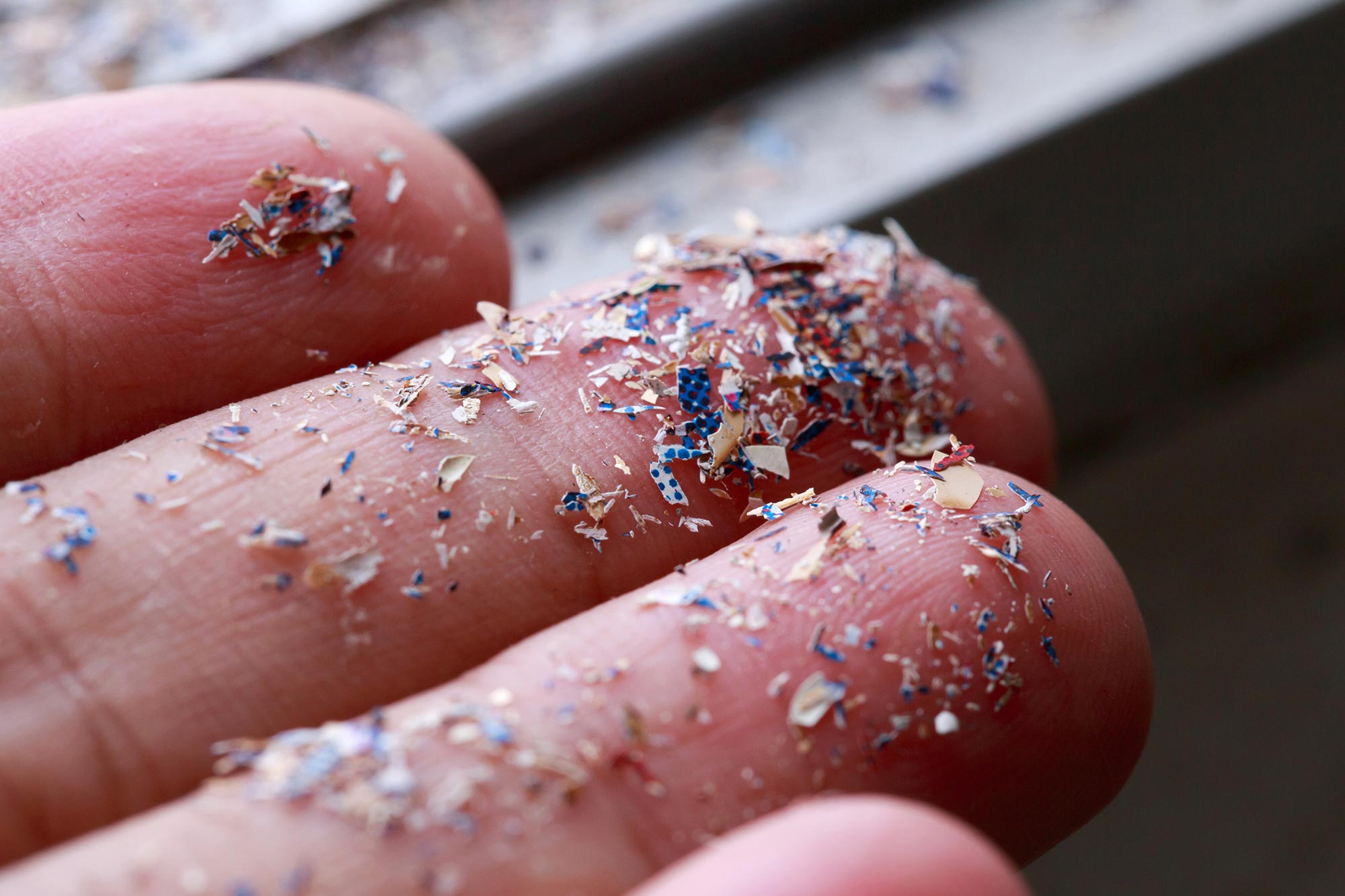
    Microplastic Particles on Fingers
    New research explores the scaling of waste production in urban systems, finding that solid waste increases linearly with population growth, while wastewater and greenhouse gas emissions scale differently. This highlights the need for improved waste management strategies in growing urban areas and the development of a new science of waste to ensure sustainability and reduce environmental impact.

    Waste is an inherent outcome of life on Earth and the functioning of human economies. Over time, living systems have adapted to transform waste, with organisms such as dung beetles playing a crucial role in decomposing the feces of other species. However, managing waste continues to be a significant challenge within human societies.

    As the world population continues to grow and rapidly urbanize — two-thirds of humans will be city dwellers by 2050, according to the United Nations — our waste is driving a mounting worldwide crisis. Microplastics blanket the planet and infiltrate our bodies, wastewater pollutes our waterways, and greenhouse gas emissions are driving global climate change.

    “We as a society tend to ignore the unpleasant side of our production,” says Mingzhen Lu, an Assistant Professor at New York University and former SFI Omidyar Complexity Fellow.

    Lu and SFI Professor Chris Kempes are co-corresponding authors on a new paper published in Nature Cities that explores waste production as a function of urban systems.

    Findings and Implications for Urban Planning

    “The key question is whether waste is produced more or less efficiently as systems scale up, and how big a recycling burden there is as a consequence,” says Kempes.

    To address this question, the authors used scaling theory to analyze waste products — municipal solid waste, wastewater, and greenhouse gas emissions — from more than one thousand cities around the world. Scaling theory has been used in biology to describe how organism physiology changes with body mass, and it proved relevant for understanding how waste production scales with the growth of a city.
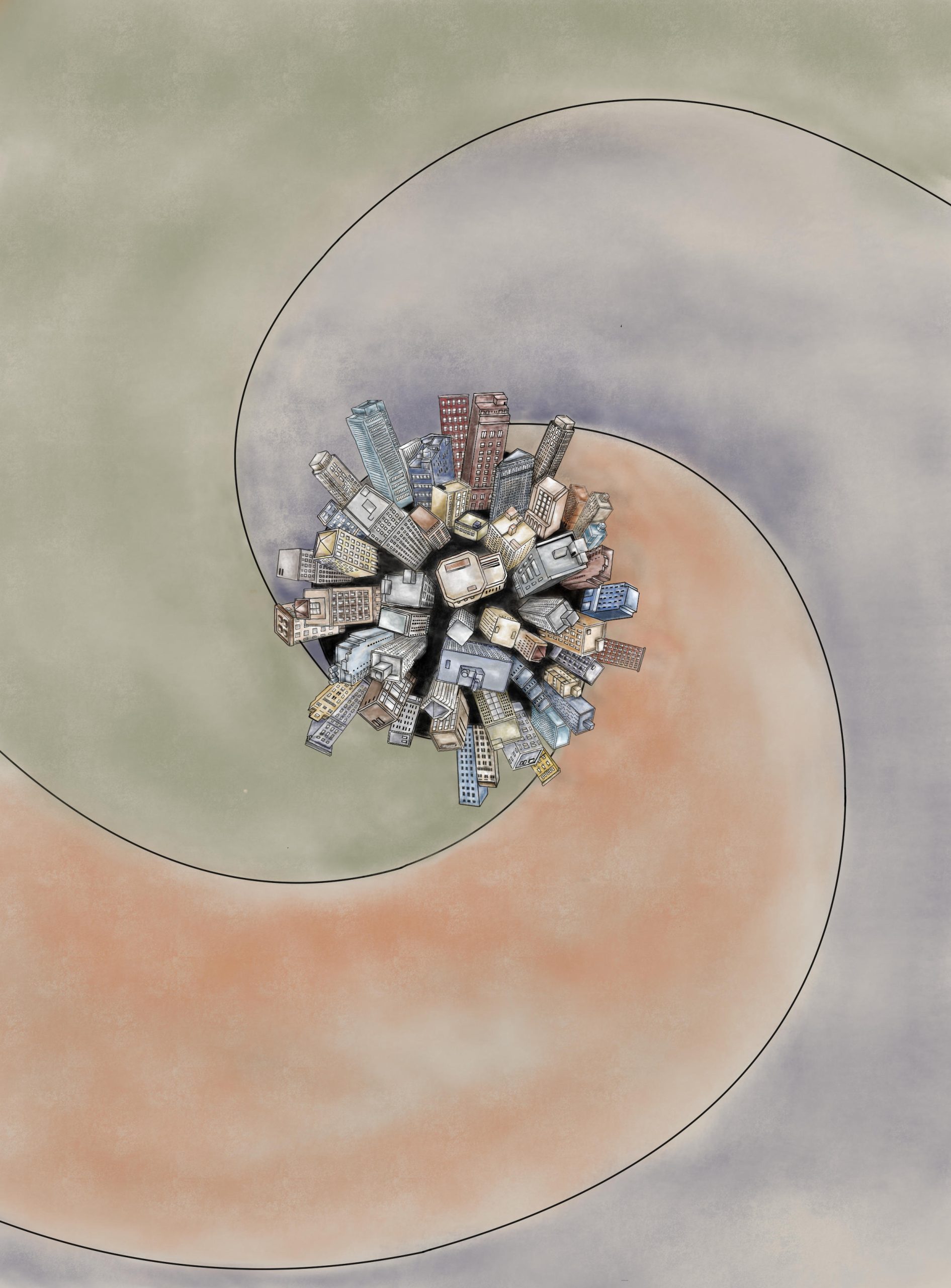
    City Earth Spiral
    In a new paper, Mingzhen Lu and Chris Kempes explore how three types of waste production — municipal solid waste, wastewater, and greenhouse gas emissions — scale with city size. Credit: Elisa Heinrich Mora

    “Scaling theory allowed us to extract overarching broad stroke patterns and transcend the individuality of each city,” explains Lu.

    The resulting patterns show distinct differences in waste production as cities grow. Solid waste scales linearly — because it is tied to individual consumption, it increases at the same rate as population growth. In contrast, wastewater production scales superlinearly while emissions scale sub-linearly. In other words, bigger cities contribute disproportionately more liquid waste than smaller cities, but expel fewer greenhouse gasses. The results suggest an economy of scale for emissions as growth typically brings more efficient energy and transportation infrastructure, but a diseconomy for liquid waste.

    Cities tend to deviate from the universal scaling law as they grow wealthier. Cities with higher per-capita GDP generate more waste across the board, which underscores the relationship between waste generation and economic growth.

    Towards a New Science of Waste

    The findings emphasize the need for a new science of waste that can help predict the future state of urban ecosystems and inform policies to reduce waste and enhance sustainability.

    “Fungi figured out how to decompose lignin waste from trees and created sustainable ecosystems that have lasted hundreds of million years,” says Lu. “We take it in and throw it away — we can no longer overlook waste from our societies.”

    Reference: “Worldwide scaling of waste generation in urban systems” by Mingzhen Lu, Chuanbin Zhou, Chenghao Wang, Robert B. Jackson and Christopher P. Kempes, 17 January 2024, Nature Cities.
    DOI: 10.1038/s44284-023-00021-5

    Never miss a breakthrough: Join the SciTechDaily newsletter.
    Follow us on Google and Google News.

    Plastic Santa Fe Institute Sustainability Urbanization
    Share. Facebook Twitter Pinterest LinkedIn Email Reddit

    Related Articles

    Chemical Time Bomb: Scientists Demand a Ban on Harmful Plastics Chemicals

    New Bioplastic Straw Degrades Even Faster in the Ocean Than Paper

    Turning the Tables: How Bioplastics Could Transform the Climate Crisis

    Startling Discovery: 60% of Home “Compostable” Plastic Doesn’t Fully Decompose, Contaminating Our Soil

    Scientists Track the Effects of Climate Change on kelp Forests

    Illinois Researchers Develop Synthetic Materials that Self-Repair

    Hong Kong Temperatures to Rise by 2-3 Degrees Celsius in 30 Years

    Changes in the Andes Cause Flood Risks for South American Cities

    Projections of Urban Growth Highlight at Risk Areas

    Leave A Reply Cancel Reply

    • Facebook
    • Twitter
    • Pinterest
    • YouTube

    Don't Miss a Discovery

    Subscribe for the Latest in Science & Tech!

    Trending News

    Researchers Warn Widely Prescribed Blood Pressure Drugs Could Be Harming Diabetic Kidneys

    James Webb Spots Something Strange Between Day and Night on an Alien Planet

    How Ancient People Moved a 6-Ton Stone 700 Kilometers to Stonehenge

    The Unexpected Gut Health Risk of Cutting Out Sugar

    Popular Weight-Loss Drugs Like Ozempic Linked to Lower Breast Cancer Risk

    AI Learned the Rules of the Universe and That Became a Problem

    Scientists Found a Hidden Brain Signal That Predicts Social Behavior

    Even GPT-5 Failed This Human Attention Test

    Follow SciTechDaily
    • Facebook
    • Twitter
    • YouTube
    • Pinterest
    • Newsletter
    • RSS
    SciTech News
    • Biology News
    • Chemistry News
    • Earth News
    • Health News
    • Physics News
    • Science News
    • Space News
    • Technology News
    Recent Posts
    • Women’s Brains May Be More Vulnerable to Dementia Risk Factors Than Scientists Realized
    • Scientists Say We’ve Been Wrong About the Aging Brain
    • More Weight Loss, Fewer Fractures? New Study Points to Semaglutide
    • These Tiny Birds Became Giants on Remote Scottish Islands
    • A Fatal Deer Disease May Be Spreading in Ways No One Expected
    Copyright © 1998 - 2026 SciTechDaily. All Rights Reserved.
    • Science News
    • About
    • Contact
    • Editorial Board
    • Privacy Policy
    • Terms of Use

    Type above and press Enter to search. Press Esc to cancel.